40+ Must-Know AI Marketing Tools in 2026 for B2B
Three years ago, a marketing team needed a copywriter, a designer, an SEO specialist, a data analyst, and an automation engineer to run a full campaign. In 2026, a single marketer with the right AI tools can do the work of that entire team in a fraction of the time. The best AI marketing tools making this possible include ChatGPT and Claude for general marketing work, Jasper and Blaze.ai for content creation, Surfer SEO and MarketMuse for search optimization, Gumloop and Zapier for automation, and HubSpot AI for CRM-embedded intelligence. Together, these tools help marketing teams produce content faster, personalize at scale, optimize campaigns in real time, and automate repetitive work.
The adoption numbers confirm the shift. 74% of marketers now use AI in their daily work, up from just 21% in 2023, and the global AI marketing market has reached $47.32 billion. With Gartner forecasting a 25% decline in traditional search traffic by 2026, the tools marketers rely on are changing just as fast as the channels they operate in.
This guide covers 40+ AI marketing tools organized by function: content creation, SEO and answer engine optimization, video production, automation, analytics, and paid advertising. Each tool includes what it does, why it matters for your marketing, and current pricing.
As Raja Rajamannar, Chief Marketing and Communications Officer of Mastercard, has put it: "AI is probably going to be the single biggest disruptor and enabler of marketing in total."
Below, you'll find a quick comparison table for scanning, followed by detailed reviews organized by category.

Free Download
43+ Curated AI Tools for 2025
Optimize your workflows with this hand-picked list of AI tools – categorized by use case and packed with direct links to help you scale smarter, faster.
Duplicate the Notion page for easy access anytime.
AI Marketing Tools at a Glance
{{freebie}}
How AI is Changing Marketing
AI in marketing has shifted from experimental to essential. According to recent data, 74% of marketers now use AI in their roles, up from 21% in 2023. The global AI marketing market is valued at $47.32 billion in 2026, and that number is growing as more teams move from testing individual tools to building AI-integrated marketing operations.
Here's what the shift looks like in practice:
Content production is faster, not optional
AI drafts reduce content production time by 40–60%, and posts created with AI assistance receive 22% higher engagement on average. Content is no longer the bottleneck for most marketing teams. The new bottleneck is strategy, distribution, and measurement.
{{cta}}
Traditional search is declining
Gartner forecasts a 25% decline in traditional search traffic by 2026 as AI Overviews and LLM-generated answers capture more queries. Brands that appear in AI-generated responses see 35% more organic clicks and 91% more paid clicks. Visitors referred by LLMs convert at 2x the rate of traditional organic visitors.
Personalization is becoming real-time
AI enables marketers to move beyond basic segmentation to genuine 1:1 personalization at scale. Predictive models analyze customer behavior in real time, adjusting messaging, offers, and timing automatically.
Automation is becoming agentic
The 2024–2025 era was about connecting apps (Zapier, Make). The 2026 era is about AI agents that can execute multi-step marketing workflows autonomously, from lead enrichment to email sequencing to report generation.
As Bob Sabra, Founder and CEO of Hovi Digital Lab, puts it: "AI marketing tools aren't replacing marketers. They're giving marketers superpowers."
What is AI used for in marketing?
AI Platforms for Marketing (The Foundation)
Before diving into specialized tools, these are the general-purpose AI platforms that most marketers use daily for everything from brainstorming to drafting to analysis. They're not marketing-specific, but they've become the backbone of modern marketing work.
AI for Personalization & CRM
Consumers expect tailored experiences, and AI delivers hyper-personalization at scale.
🔍 How to Use AI for Personalization:
✔ Analyze customer behavior and automate audience segmentation.
✔ Use AI-powered email tools to send messages at the right time.
✔ Leverage AI chatbots to engage customers in real-time.
AI for Content Creation & Copywriting
AI doesn’t replace human creativity—but it removes bottlenecks in content production.
🔍 How to Use AI for Content Creation:
✔ Generate blog outlines and fill in key points manually for authenticity.
✔ Use AI to create multiple ad variations and test performance.
✔ Speed up social media content without losing brand voice.
AI for SEO & Search Optimization
Want to rank higher on Google? AI-powered SEO tools analyze data at scale so you don’t have to.
🔍 How to Use AI for SEO:
✔ Optimize existing content based on AI recommendations.
✔ Use AI-generated topic clusters to plan high-performing blog posts.
✔ Automate keyword research to find content gaps.
AI Tools for AEO and AI Search Visibility
Traditional SEO isn't dying, but the landscape is shifting. Gartner forecasts a 25% decline in traditional search traffic by 2026 as AI-generated answers capture more queries. Research shows that brands cited by AI engines see 35% more organic clicks and that visitors referred by LLMs convert at 2x the rate of traditional organic search visitors.
A new category of tools is emerging to help marketers track and optimize their visibility in AI-generated answers:
This category is still emerging, but marketers who start tracking AI search visibility now will have a significant advantage as the shift accelerates.
AI for Social Media & Video Marketing
Social media moves fast—AI helps keep up with trends and engagement.
🔍 How to Use AI for Social Media:
✔ AI tools suggest viral content ideas and trending hashtags.
✔ Automate engagement tracking to see what resonates.
✔ Speed up video editing with AI-powered tools.
AI for Ad Optimization & Performance Marketing
AI removes the guesswork from paid ads by optimizing in real-time.
🔹 Albert.ai – AI-powered ad tool for automated targeting, bidding, and creative testing.
🔹 Pattern89 – Uses AI to predict which ad creatives will perform best before launch.
🔹 Smartly.io – AI-driven platform for managing and optimizing social media ads at scale.
🔍 How to Use AI for Ads:
✔ Let AI optimize bidding and targeting instead of relying on manual adjustments.
✔ A/B test ad creatives automatically with AI-driven insights.
✔ Use AI to predict ad performance before launch.
AI for Automation & Workflow Management
In Marketing we all rely on wayyyy too many tools – AI can help them work together seamlessly.
🔍 How to Use AI for Automation:
✔ Automate lead generation by syncing form submissions to your CRM.
✔ Use AI-powered workflows to trigger personalized email sequences.
✔ Reduce manual data entry by letting AI handle repetitive tasks.
The Best Hand-Picked AI Marketing Tools at a Glance
HubSpot
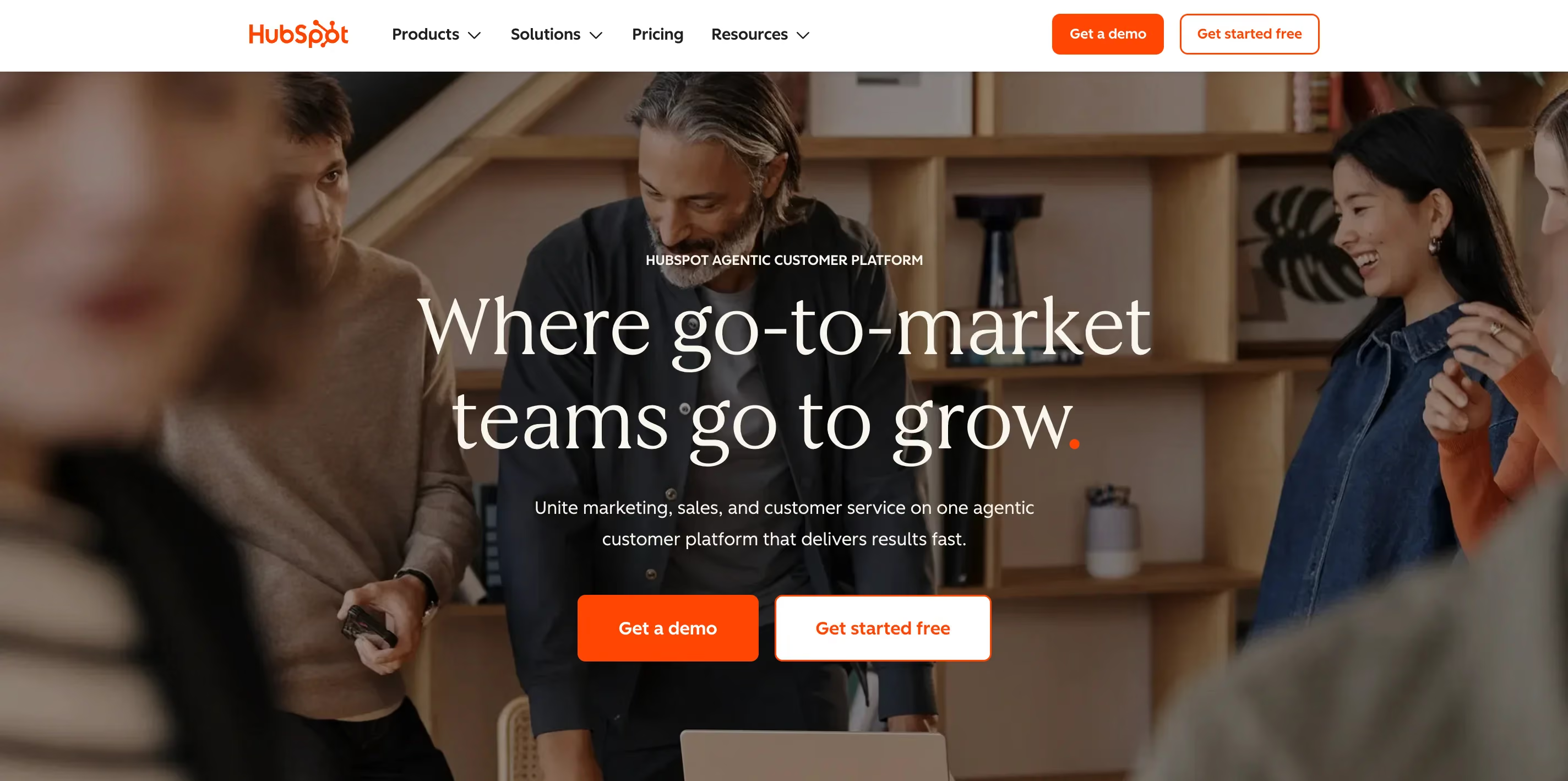
Category: AI-Powered CRM and Marketing Automation
🛠 What it does: HubSpot has built AI directly into its CRM and Marketing Hub. Its tools include a blog post generator, social post generator, email content assistant, AI website builder, reporting assistant, and an AI chatbot that answers visitor questions from your knowledge base.
🌟 Why it matters: All of these AI features live inside the same platform as your CRM, email marketing, and sales pipeline, so the AI pulls from your actual customer data instead of working in isolation. This makes it a strong option for teams that want AI-powered marketing without stitching together multiple tools.
Jasper.ai

Category: AI Copywriting & Content Generation
👉 What it does: Jasper is one of the most advanced AI writing assistants for marketers. It can generate blog posts, ad copy, and product descriptions while maintaining brand voice consistency. It also offers integrations with Surfer SEO to optimize content for search rankings.
👉 Why it matters: If content production is a bottleneck for your marketing team, Jasper helps speed up the process while keeping quality high.
GrowthBar

Category: AI-Powered SEO & Content Generation
👉 What it does: GrowthBar helps marketers with keyword research, competitor analysis, and AI-driven content creation.
👉 Why it matters: It streamlines SEO workflows and improves search visibility
VEED

Category: AI Video Editing & Transcription
👉 What it does: VEED automatically generates subtitles, removes background noise, and translates video content.
👉 Why it matters: AI simplifies video production, making it easier for marketers to repurpose content across platforms.
VEED is the ultimate solution for converting your text into engaging videos. With its AI text to video feature, it allows you to effortlessly turn your written content into dynamic video content, perfect for boosting engagement and expanding your reach. Some other great features of VEED are:
- AI-Powered Editing: Simplify the video editing process by automatically generating subtitles, removing filler words, translating content into multiple languages, and even correcting eye contact in videos, ensuring your content is engaging.
- Screen Recording and Live Streaming: Seamlessly record your screen – perfect for tutorials and presentations. It also offers live streaming capabilities, allowing you to go live on multiple platforms like YouTube, Facebook, and LinkedIn. You can customize your live stream in the "Green Room" before going live.
- AI Avatars: You can create realistic a AI avatar that can deliver scripts in a natural and human-like manner. This feature is perfect for creating educational or marketing content where a consistent and engaging on-screen presence is needed.
- Collaboration Tools: For teams, VEED offers smart collaboration features, including brand kits and custom templates, making it easier to maintain consistent branding across all video content. The platform supports real-time collaboration, which is ideal for businesses that require teamwork in content creation.
Flick

Category: AI-Powered Social Media Assistant
👉 What it does: Flick suggests captions, analyzes hashtags, and schedules social media posts based on AI-driven insights.
👉 Why it matters: AI social media tools improve engagement by helping brands post more strategically.
Neuroflash
Category: AI Marketing Content Writer & Image Generator
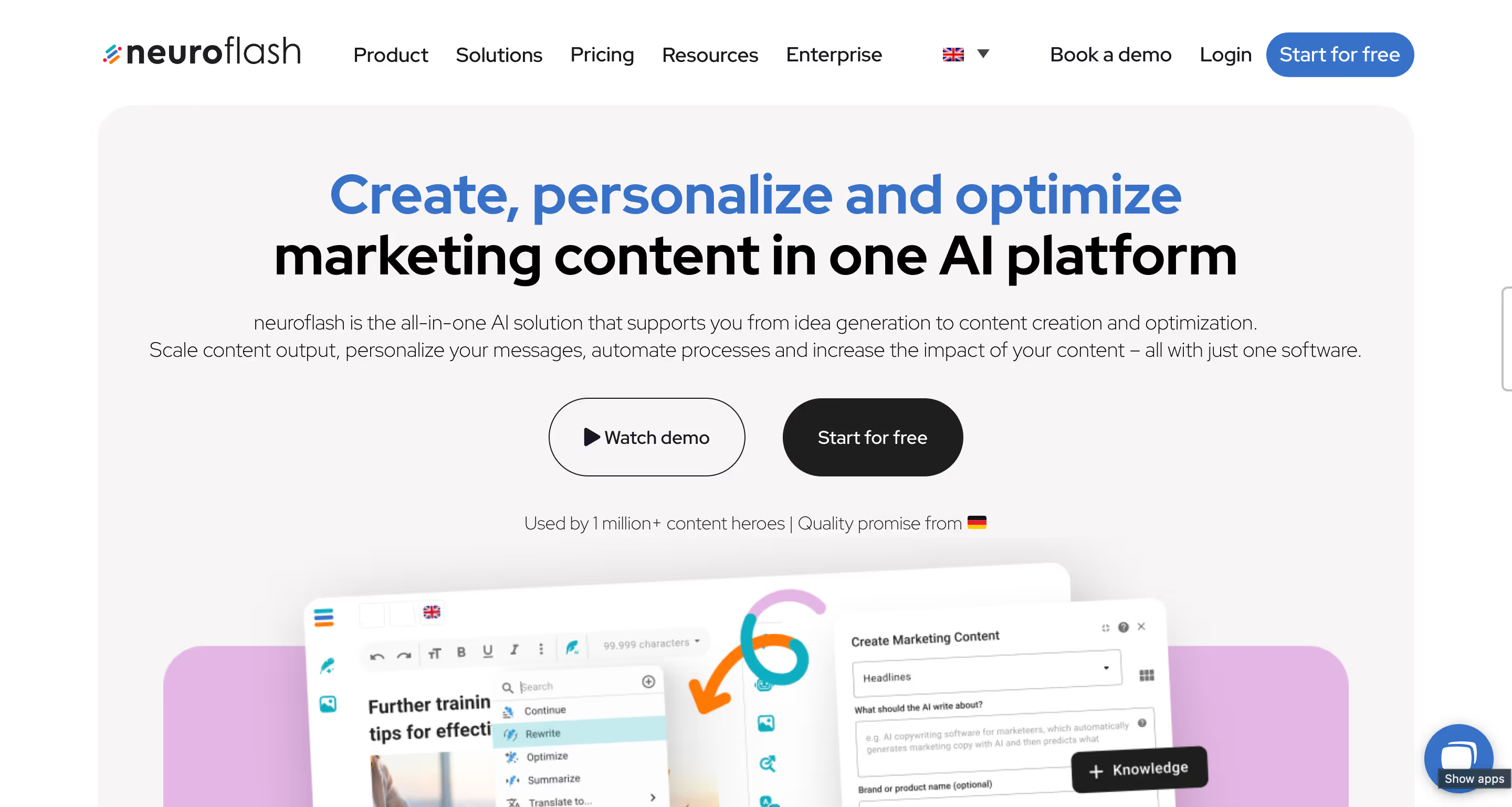
👉 What it does: Neuroflash is an AI content creation platform that can help you generate, optimize, and scale content across various formats. It includes tools for AI-assisted writing, SEO analysis, plagiarism checking, image generation, and content performance prediction.
👉 Why it matters: The tool streamlines content creation, makes sure you're on-brand always, while saving time. It allows you to produce high-quality, SEO-optimized content efficiently, without all the manual effort and improving engagement. Plus, with GDPR-compliant data security and AI-powered performance insights, it’s a future-proof solution for content teams.
Elsa from M1-PROJECT

Category: AI-Powered Marketing Strategy & Execution
👉 What it does: M1-Project offers an AI Marketing Assistant named Elsa that helps businesses streamline their marketing efforts from strategy to execution, functioning as a 24/7 marketer at your service.
👉 Why it matters: M1-Project enables data-driven decision-making, ensuring that marketing efforts are aligned with audience needs and industry trends.
Curious? Try it today
Optimove

Category: AI-Powered CRM & Personalization
👉 What it does: Optimove uses AI to segment audiences and deliver personalized marketing campaigns at scale. It predicts customer behavior and automates targeted messaging.
👉 Why it matters: AI-driven customer segmentation allows for highly relevant messaging, improving customer retention and conversion rates.
Respona
Category: AI for Link Building & Outreach
👉 What it does: Respona automates outreach efforts for link-building, PR, and influencer collaborations. It identifies relevant contacts, crafts personalized pitches, and tracks responses to improve outreach success.
👉 Why it matters: AI-driven outreach improves efficiency in securing backlinks, media mentions, and influencer partnerships, enhancing brand authority and organic growth.
InstaText

Category: AI-Powered Writing & Editing
👉 What it does: InstaText improves content readability and fluency by suggesting rewrites, grammar fixes, and clarity enhancements while keeping the original meaning intact.
👉 Why it matters: AI elevates writing quality, ensuring marketing copy is clear, professional, and easy to understand – without losing brand voice.
Grammarly

Category: AI Content Editing & Proofreading
👉 What it does: Grammarly improves writing by checking for grammar, tone, and clarity. The premium version also suggests rewording sentences for better readability.
👉 Why it matters: AI-assisted editing ensures marketing copy is clear, professional, and error-free, improving engagement and brand credibility.
ManyChat

Category: AI Chatbots & Lead Nurturing
👉 What it does: ManyChat automates customer interactions on Facebook Messenger, WhatsApp, and SMS, guiding leads through sales funnels.
👉 Why it matters: AI chatbots provide real-time engagement without requiring human intervention, making them great for lead generation and customer support.
Brandwatch Consumer Intelligence

Category: AI for Social Listening & Sentiment Analysis
👉 What it does: Brandwatch scans social media, news sites, and forums to track brand mentions, sentiment, and industry trends.
👉 Why it matters: AI-powered listening tools help brands stay ahead of public sentiment and emerging conversations.
SE Ranking
Category: AI-powered SEO platform
👉 What it does: SE Ranking runs the full SEO workflow in one platform. It covers rank tracking, keyword research, backlink analysis, technical site audits, and competitive research — with AI-powered on-page analysis, an AI content editor for optimizing drafts, AI insights and reporting. It also tracks how your brand shows up in AI search, monitoring mentions and links across ChatGPT, Gemini, Perplexity, AI Overviews, and AI Mode alongside your regular keyword rankings.
👉 Why it matters: AI sits both under the data (traffic estimates, search-intent detection, prioritized insights) and inside the writing and reporting tools, so you run SEO optimization from one place instead of stitching separate tools together.
Surfer SEO

Category: AI-Powered SEO Optimization
👉 What it does: Surfer SEO analyzes top-ranking pages and provides AI-driven recommendations to improve your content’s search performance. It scores your writing based on keyword density, structure, and backlinks.
👉 Why it matters: AI-driven SEO optimization ensures that your content is structured in a way that aligns with search intent, helping it rank higher on Google.
Emplifi

Category: AI-Powered Social Media Management
👉 What it does: Emplifi provides AI-driven social media insights, automates content scheduling, and offers audience sentiment analysis to optimize engagement.
👉 Why it matters: AI removes guesswork from social media strategy, helping brands post at the right time with the right content.
Free Download
43+ Curated AI Tools for 2025
Optimize your workflows with this hand-picked list of AI tools – categorized by use case and packed with direct links to help you scale smarter, faster.
Duplicate the Notion page for easy access anytime.
Albert

Category: AI for Ad Optimization
👉 What it does: Albert.ai automates digital advertising, managing audience targeting, bidding, and creative testing across platforms like Google and Facebook.
👉 Why it matters: AI-driven ad optimization ensures marketing budgets are spent more effectively, reducing wasted ad spend.
Keyword Insights

Category: AI for SEO & Content Strategy
👉 What it does: Keyword Insights helps with keyword research, clustering, and competitive analysis to find high-impact SEO opportunities. It provides AI-powered topic suggestions and search intent analysis.
👉 Why it matters: Instead of guessing what content to create, AI ensures your SEO strategy is data-driven and aligned with search trends.
Copy.ai

Category: AI Copywriting & Content Ideation
👉 What it does: Copy.ai generates social media captions, product descriptions, and ad copy in seconds. It also helps with brainstorming content angles.
👉 Why it matters: If you struggle with writer’s block or need quick variations of marketing messages, this tool speeds up content creation without sacrificing creativity.
Writesonic

Category: AI-Powered Content Writing
👉 What it does: Writesonic generates high-quality blog posts, product descriptions, and landing page copy. It uses AI to mimic different tones and styles, adapting to your brand voice.
👉 Why it matters: AI content generation saves time and reduces writer’s block, allowing marketers to produce more content, faster.
Byword

Category: AI for Bulk SEO Content Generation
👉 What it does: Byword.ai creates long-form, SEO-optimized blog posts at scale. It uses AI to generate high-quality, structured content that aligns with search trends.
👉 Why it matters: AI-powered content writing saves time, allowing brands to publish more while keeping quality high.
Hemingway Editor

Category: AI for Readability & Content Editing
👉 What it does: Hemingway Editor highlights complex sentences, passive voice, and readability issues, making content clearer and more engaging.
👉 Why it matters: AI editing tools ensure marketing copy is simple, persuasive, and easy to read, improving engagement and conversions.
Writer

Category: AI-Powered Brand Voice & Editing
👉 What it does: Writer helps companies enforce brand voice consistency across all content. It suggests grammar, style, and clarity improvements while ensuring messaging aligns with brand guidelines.
👉 Why it matters: AI maintains a cohesive brand voice across marketing, reducing inconsistencies in messaging.
Fullstory

Category: AI-Powered User Experience Analytics
👉 What it does: Fullstory records user sessions and uses AI-driven insights to identify website friction points, user frustrations, and behavior trends. It provides heatmaps, session replays, and engagement metrics.
👉 Why it matters: AI insights help optimize website performance, reduce bounce rates, and improve conversion rates by understanding real user interactions.
Zapier

Category: AI-Powered Marketing Automation
👉 What it does: Zapier connects apps and automates workflows by triggering actions across platforms like Slack, Mailchimp, Google Ads, and more. It enables non-technical users to build complex marketing automations.
👉 Why it matters: AI-powered automation eliminates manual work and inefficiencies, ensuring that marketing runs on autopilot.
Make

Category: AI-Powered Workflow Automation
👉 What it does: Make allows users to automate workflows between apps and services without coding. It integrates with AI tools like OpenAI, Google Cloud Vision, and Eden AI to streamline processes like email summarization, lead nurturing, and data management.
👉 Why it matters: AI automation saves hours of manual work, making marketing teams more efficient and reducing human error.
Bardeen AI

Category: AI for Workflow Automation & Data Scraping
👉 What it does: Bardeen automates repetitive tasks, such as pulling data from websites, organizing leads, and syncing information between apps like Notion, Google Sheets, and CRM tools.
👉 Why it matters: AI handles data-heavy tasks instantly, freeing up time for marketers to focus on strategy and creativity.
Final Thoughts: Is AI Worth It?
AI isn’t magic – duh – it’s a tool. It won’t replace us marketers, but it will give you an edge if used right. Actual real world experience is still king.
✔ Focus on AI that actually solves problems – not just hype.
✔ Use AI to enhance creativity and strategy, not replace them.
✔ Experiment, optimize, and integrate AI where it drives real value.
Want the full list of 40+ AI marketing tools? Grab your free Notion overview:
Free Download
43+ Curated AI Tools for 2025
Optimize your workflows with this hand-picked list of AI tools – categorized by use case and packed with direct links to help you scale smarter, faster.
Duplicate the Notion page for easy access anytime.
FAQ
1. How do I know if an AI tool is actually worth the investment?
Not all AI tools are created equal. The best way to evaluate an AI tool is by asking:
✔ Does it integrate with my current stack? If it requires heavy workarounds, it’s a red flag.
✔ Does it solve a real problem? If your team isn’t already struggling with a process, an AI tool won’t magically create demand for itself.
✔ Can I quantify its impact? Look at efficiency gains (time saved), revenue impact (higher conversions), or performance improvements (better ROI).
✔ How steep is the learning curve? If it takes too long to onboard, your team won’t adopt it.
Start with a free trial and track before vs. after metrics to justify the investment.
2. Can AI-generated content rank on Google?
Yes — but only if done right. Google doesn’t penalize AI-generated content unless it’s spammy or low-quality.
✔ Use AI for content ideation and structuring, but add original insights and human editing.
✔ AI can help with SEO optimization, but make sure the content is useful, not keyword-stuffed.
✔ Avoid mass-producing generic content — Google rewards expertise, authority, and trust (E-E-A-T).
AI is a tool to enhance content production, not replace good writing.
3. What’s the biggest mistake marketers make with AI?
Two extremes: over-relying on AI or not using it at all.
🚩 Over-reliance: Blindly using AI for ad copy, social posts, or emails without human oversight, leading to generic messaging that lacks emotion and brand personality.
🚩 Avoidance: Assuming AI is just a gimmick and not leveraging it for efficiency and insights, leaving opportunities (and money) on the table.
The best strategy? Use AI for speed, humans for strategy.
4. How do I balance AI automation with brand authenticity?
AI can generate content at scale, but it shouldn’t replace your brand’s unique voice.
✔ Set clear brand voice guidelines before using AI-generated content.
✔ Use AI for first drafts, not final versions—always add human touches.
✔ Don’t fully automate customer interactions—AI chatbots should handle FAQs, but human reps should step in when needed.
5. Will AI replace marketing jobs?
AI won’t replace marketers, but marketers who use AI will replace those who don’t.
✔ AI handles repetitive tasks, giving marketers more time for strategy, creativity, and leadership.
✔ AI can analyze data faster, but humans turn insights into action.
✔ AI improves content production, but human storytelling and emotion still win.
Think of AI as a team extension, not a replacement.
6. How do I prevent AI bias in marketing?
AI is only as good as the data it’s trained on—and data can be biased.
✔ Monitor AI-driven recommendations for unintended biases in audience targeting or messaging.
✔ Diversify training data to avoid reinforcing stereotypes.
✔ Use AI ethically — don’t let automation lead to over-personalization that feels invasive.
AI should enhance customer experience, not manipulate it.
7. What’s an underrated AI use case that most marketers aren’t leveraging?
🔹 AI for customer retention, not just acquisition.
Most marketers focus on AI for ads, content, and lead gen, but AI-powered retention strategies can be really helpful, too.
✔ Predictive AI can identify customers at risk of churn before they leave.
✔ AI-driven personalization keeps customers engaged with relevant content and offers.
✔ Automated retention campaigns bring customers back without increasing ad spend.
8. How can I future-proof my marketing strategy with AI?
✔ Adopt AI now — but don’t just follow trends. Use AI where it creates real impact.
✔ Test new AI tools regularly — what works today might be obsolete next year.
✔ Invest in human-AI collaboration — the future of marketing isn’t AI alone, but marketers who use AI effectively.
9. Which AI tool is best for marketing?
There's no single best tool because it depends on your biggest bottleneck. For content creation and copywriting, Jasper and Blaze.ai are the leading dedicated tools, though most marketers now use ChatGPT or Claude for drafting as well. For SEO, Surfer SEO and MarketMuse are the strongest options. For automation, Gumloop and Zapier handle different complexity levels. For paid ads, Albert.ai provides autonomous optimization. The best approach is to start with the general-purpose AI platforms (ChatGPT, Claude) and add specialized tools as specific needs emerge.
10. What are the top 5 most popular AI tools for marketing?
Based on adoption and industry coverage, the five most widely used AI tools for marketing in 2026 are ChatGPT (for general marketing tasks), Jasper (for content at scale), Surfer SEO (for search optimization), HubSpot AI (for CRM and lifecycle marketing), and Canva (for visual content with AI features). These represent the core stack that covers the majority of marketing functions.
11. Are there free AI marketing tools?
Yes. ChatGPT, Claude, and Gemini all have free tiers that are useful for marketing tasks like brainstorming, drafting, and analysis. Canva's free plan includes basic AI design features. Surfer SEO, MarketMuse, and Gumloop offer limited free tiers. For small businesses and solo marketers, you can build a functional AI marketing stack without paying anything, though the free tiers come with usage limits.
12. Can you make money from AI marketing?
AI marketing tools don't generate revenue directly. They make existing marketing activities more efficient and effective. Teams using AI for content creation, ad optimization, and personalization report reduced production costs (40–60% faster content creation) and improved performance (22% higher engagement, better conversion rates through personalization). The ROI comes from doing more marketing work with the same team size, or doing the same volume at higher quality.
13. What is the 10 20 70 rule for AI?
The 10-20-70 rule is a framework for AI implementation that suggests: 10% of the value comes from the AI algorithm itself, 20% comes from the technology infrastructure (data pipelines, integrations, compute), and 70% comes from the people and processes that use it. For marketers, this means the tool choice matters less than how well you integrate AI into your existing workflows, train your team, and build processes around it.
AI isn’t the future. It’s already here. Marketers who master it will lead the industry.


.avif)