magier vs Design Pickle
magier and Design Pickle both sell design subscriptions, but they're built for different teams. magier is a premium creative partner for SaaS and B2B companies that need design and Webflow development with art-director oversight. Design Pickle is a production platform for teams that need a high volume of static graphics delivered consistently. One costs more and does more. The other costs less and focuses tighter. But there are many other aspects that you need to consider before jumping to conclusion.
This comparison covers magier vs Design Pickle across pricing, services, quality, speed, Webflow, and risk to help you pick the right fit.
magier vs Design Pickle at a glance
The fastest way to understand the difference is to see the two services side by side.
| Criterion | magier | Design Pickle |
|---|---|---|
| Starting price | €2,750/month (approximately $2,950 USD), published on website | Consultation required (historically approximately $1,918/month before pricing was removed in 2026) |
| Services included | Graphic design + Webflow development | Graphic design, illustration, basic motion graphics, video editing |
| Webflow development | Yes (dedicated Webflow subscription plans) | No |
| One-time projects | Yes (branding, web design, Webflow dev) | No |
| Creative capacity | Unlimited tasks, one active at a time | Daily creative hours allocation |
| Revisions | Unlimited, included | Unlimited, but each revision restarts the queue clock |
| Turnaround time | Under 48 hours per active task | 1 to 2 business days (static), 2 to 4 business days (motion/video) |
| Team model | Dedicated team led by an art director | Dedicated "Design Pro," but designer rotation reported in reviews |
| Art-director review | Yes, on every delivery before it reaches the client | Not included as standard |
| Pricing transparency | All plans published on website | Requires a sales consultation as of July 2026 |
| Cancellation | Monthly, with 7-day notice | Non-refundable; access continues until end of billing cycle |
| Ratings | 4.9/5 Trustpilot (105+ reviews) | 4.4/5 G2 (227 reviews), approximately 4.1/5 Trustpilot (255 reviews) |
| Best for | SaaS, startups, and B2B teams needing premium design + Webflow | Mid-market teams needing high-volume static graphic production |
These two services solve different problems for different teams. magier is a premium creative partnership that combines design and Webflow development for growth-stage companies. Design Pickle is a mature, production-scale platform for teams that need a steady flow of graphic assets. The sections below unpack where each one wins and where each one falls short.
What is magier?
magier is a creative subscription service (sometimes called design as a service) that provides both graphic design and Webflow development to businesses on a fixed monthly fee. The company positions itself as an extended design and development team, not a traditional agency.
Key services include:
- Graphic design subscription (€2,750/month): ad creatives, brand design, landing page design, web design, UI/UX, illustrations, presentations, social media content, and more
- Webflow development subscriptions (starter package at €890/month; growth package at €2,750/month ): building designs in Webflow, including new landing pages, complex sections, custom development, and integrations
- One-time projects: for teams that need a full rebrand, website launch, or Webflow migration with a fixed deadline rather than an ongoing subscription
magier serves SaaS companies, B2B startups, fintech, ecommerce brands, agencies, and marketing teams. Clients range from early-stage startups to companies with thousands of employees, and the company's clients have collectively raised over $7 billion from top investors.
{{cta}}
What is Design Pickle?
Design Pickle is a creative-as-a-service platform founded in 2015 by Russ Perry in Scottsdale, Arizona. It's one of the earliest and most recognized names in the unlimited design subscription category, with over 750,000 creative requests completed and 500+ employees globally.
Key services include:
- Graphic design (social ads, print collateral, merchandise, branding variants, presentation decks)
- Custom illustration
- Basic motion graphics and video editing
- Canva conversion and template services (Design Pickle is a Canva Certified Agency Partner)
Design Pickle serves SMBs, in-house marketing teams, agencies, franchises, and ecommerce brands. It's particularly popular with mid-market teams that need high-volume static graphic design on an ongoing basis.
Services and scope compared
magier covers a broader range of services under one subscription. Design Pickle covers a wider variety of static graphic design categories.
| Service | magier | Design Pickle |
|---|---|---|
| Ad creatives | Yes | Yes |
| Brand and logo design | Yes | Yes (variants, not full brand strategy) |
| Social media graphics | Yes | Yes |
| Presentations | Yes | Yes |
| Illustrations | Yes | Yes |
| Print design | Yes | Yes |
| Packaging design | Yes | Yes (product and packaging category) |
| Motion graphics/video | Yes (motion design) | Yes (basic motion, video editing on higher plans) |
| Landing page design | Yes | Limited (higher-tier plans only) |
| Web design and UI/UX | Yes | Limited |
| Webflow development | Yes | No |
| Canva templates/conversion | No | Yes |
| Copywriting | No | No |
| Merchandise and apparel | Limited | Yes (dedicated category) |
| Environmental and event graphics | Limited | Yes (dedicated category) |
| One-time projects | Yes | No |
The core difference isn't the number of design categories. It's the depth of what each service can take from concept to completion. magier can design a landing page and then build it in Webflow, which means the same team that created the design also ships the live page. Design Pickle can design the landing page visual, but you'll need a separate developer to build it.
That's where magier's combined offering changes the math. If your team regularly needs both design and development, working with one vendor instead of two removes a coordination layer that typically costs time and introduces inconsistency.
"Webflow development under the same subscription as design isn't just a convenience feature. It changes how fast teams can move from concept to a live page, because the handoff between designer and developer happens inside one team instead of across two vendors."

Design Pickle has a genuine advantage in two specific areas: Canva template creation (they're an official Canva partner) and a wider range of physical/environmental design categories like merchandise, apparel, and event graphics. If those are core to your workflow, Design Pickle covers them natively.
For teams not ready to commit to a monthly subscription, magier also offers one-time projects with fixed timelines: branding in 2-4 weeks, web design in 2-6 weeks, and Webflow development in 2-6 weeks. Design Pickle is subscription-only. You can learn more about magier's project-based option at magier.com/one-time-project.
Pricing and total cost of ownership
magier costs more per month on the sticker. But the sticker price doesn't tell the full story, especially if your team needs both design and web development.
| Plan | magier | Design Pickle |
|---|---|---|
| Entry-level design | €2,750/month (approximately $2,950 USD) | Approximately $1,918/month (historical; current pricing requires consultation) |
| Webflow starter (small tasks) | €890/month | Not available |
| Webflow grow (larger builds) | €2,750/month | Not available |
| Design + Webflow combined | €4,450/month (approximately $4,770 USD) | Not available |
| One-time projects | Available (fixed timeline and scope) | Not available |
| Pricing visibility | Published on website | Removed from website as of July 2026; requires a sales consultation |
| Cancellation | Monthly, 7-day notice before next cycle | Non-refundable; cancellation stops future renewal but no partial refunds |
| Payment options | Credit card, PayPal, direct debit, bank transfer | Credit card (other methods unconfirmed) |
Please note that Design Pickle no longer publishes pricing . The ~$1,918/month figure comes from G2 and third-party review sites citing pre-removal pricing.
Now let's be honest: €2,750/month is not cheap. But the relevant question isn't what each subscription costs in isolation. It's what your total creative spend looks like at the end of the month.
Here's the math. If a team needs 15 design deliverables per month and also needs two landing pages built in Webflow, here's what each path looks like:
- With magier's combined plan (€4,450/month): both the design and Webflow development are covered under one subscription, one team, one point of contact.
- With Design Pickle plus a freelance Webflow developer: the design subscription runs ~$1,918/month, and a competent freelance Webflow developer typically charges $75-150/hour. Two landing pages might take 20-30 hours, adding $1,500-4,500/month on top of the design subscription. Total: $3,418-6,418/month, with the added overhead of managing two separate vendors.
The total cost of ownership shifts when you factor in the second vendor. And that calculation doesn't include the time your team spends coordinating between a designer and a developer who don't work together.
The pricing transparency difference is also worth noting. magier publishes every plan price on its website. You can see exactly what you'd pay before talking to anyone. Design Pickle removed its pricing from the website in mid-2026 and now requires a 30-minute sales consultation before you see a number. That doesn't mean Design Pickle is hiding something, but it does mean you can't self-serve a price comparison without a call.
"We publish our pricing because we think people making a buying decision deserve to see the numbers before they book a call. The subscription model only works if the buyer knows exactly what they're paying and what they're getting before they commit"

Design Pickle's cancellation policy is also different. All fees are non-refundable. If you cancel mid-cycle, you keep access until the billing period ends, but there are no partial refunds or credits for unused time. magier allows monthly cancellation with 7-day notice before the next billing cycle, and there are no long-term contracts.
Turnaround and delivery speed
Both services are fast for static graphic design. The difference is in what happens during the revision cycle and how the queue system works.
| Turnaround metric | magier | Design Pickle |
|---|---|---|
| Onboarding to first delivery | Under 48 hours | Onboarding call, then first delivery in 1 to 2 business days |
| Static design first draft | Under 48 hours | 1 to 2 business days (24-hour average claimed on homepage) |
| Motion/video first draft | Under 48 hours | 2 to 4 business days |
| Revision turnaround | Update every 48 hours (revision or next task) | Unlimited revisions, but each revision restarts the queue cycle |
| Concurrent active tasks | One per pipeline (design + Webflow on the combined plan) | One per subscription; additional lanes require additional subscriptions |
| Guaranteed update cadence | Every 48 hours | Not specified as a guaranteed cadence |
Design Pickle is likely faster on simple static graphics in many cases, with a claimed 24-hour average first draft. magier's 48-hour window includes the art-director review step, which adds time but catches quality issues before you see the work.
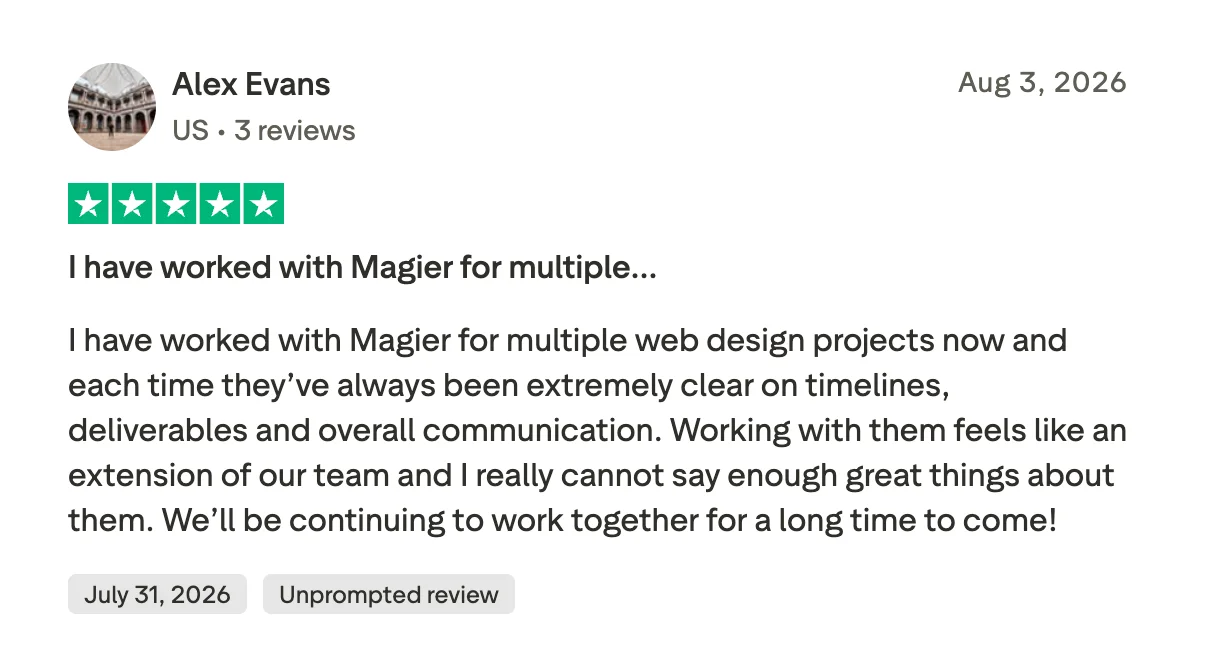
The more meaningful difference shows up in revisions. At Design Pickle, each revision counts as a new item in the queue, which means the turnaround clock resets. If you need two rounds of revisions on a design, that could mean three separate queue cycles. At magier, the team provides an update every 48 hours, whether that's a completed revision or the next task in the pipeline. The rhythm is predictable.
Scaling up also works differently. If you want two tasks worked on at the same time at Design Pickle, you need to purchase a second subscription. magier's combined Design + Webflow plan gives you one active task per pipeline, so a design task and a Webflow task can run in parallel under one subscription.
Design quality and vetting
magier delivers premium, art-directed work with a built-in quality layer. Design Pickle delivers consistent production-quality graphics at scale. Those are different quality targets for different use cases.
| Quality factor | magier | Design Pickle |
|---|---|---|
| Team size | Smaller, specialized team | 320+ creatives and art directors globally |
| Designer location | Europe and internationally distributed | South America and Southeast Asia |
| Quality review | Art-director review on every delivery before client sees it | No pre-delivery quality review as standard |
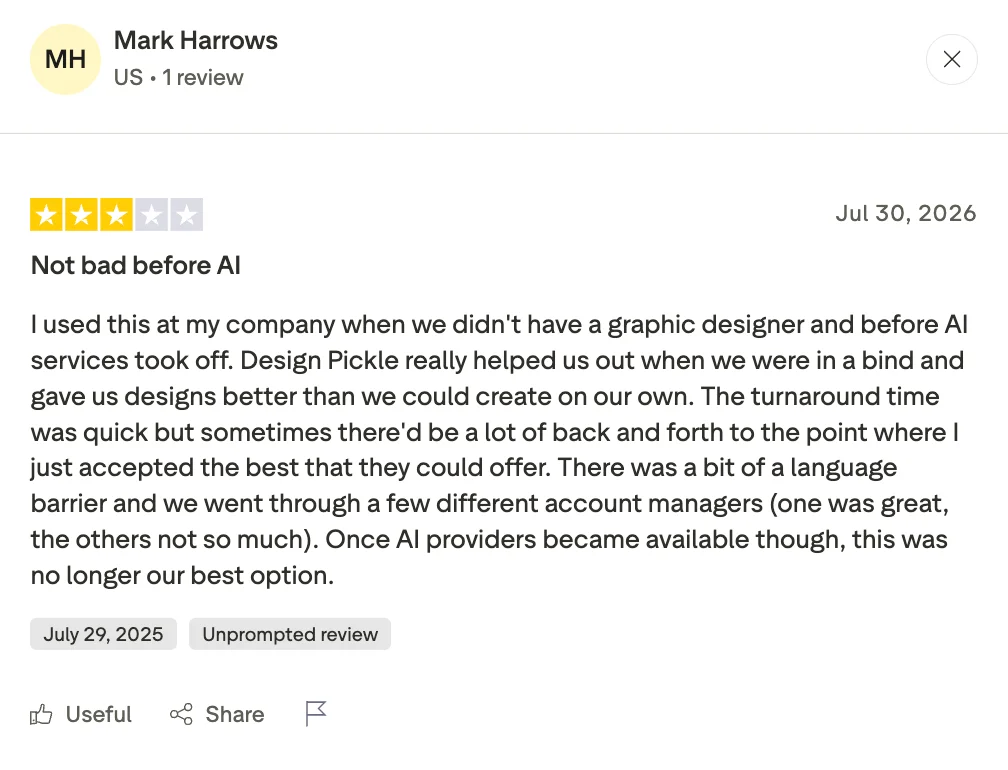
| Designer continuity | Dedicated team stays consistent | Dedicated "Design Pro" assigned, but rotation is common per reviews |
| Vetting process | Pre-qualified, in-house designers | Vetted creatives, supported by AI tools |
| Design style | Premium, conversion-focused (strong on SaaS, B2B, web) | Consistent production design (strong on volume, marketing collateral) |
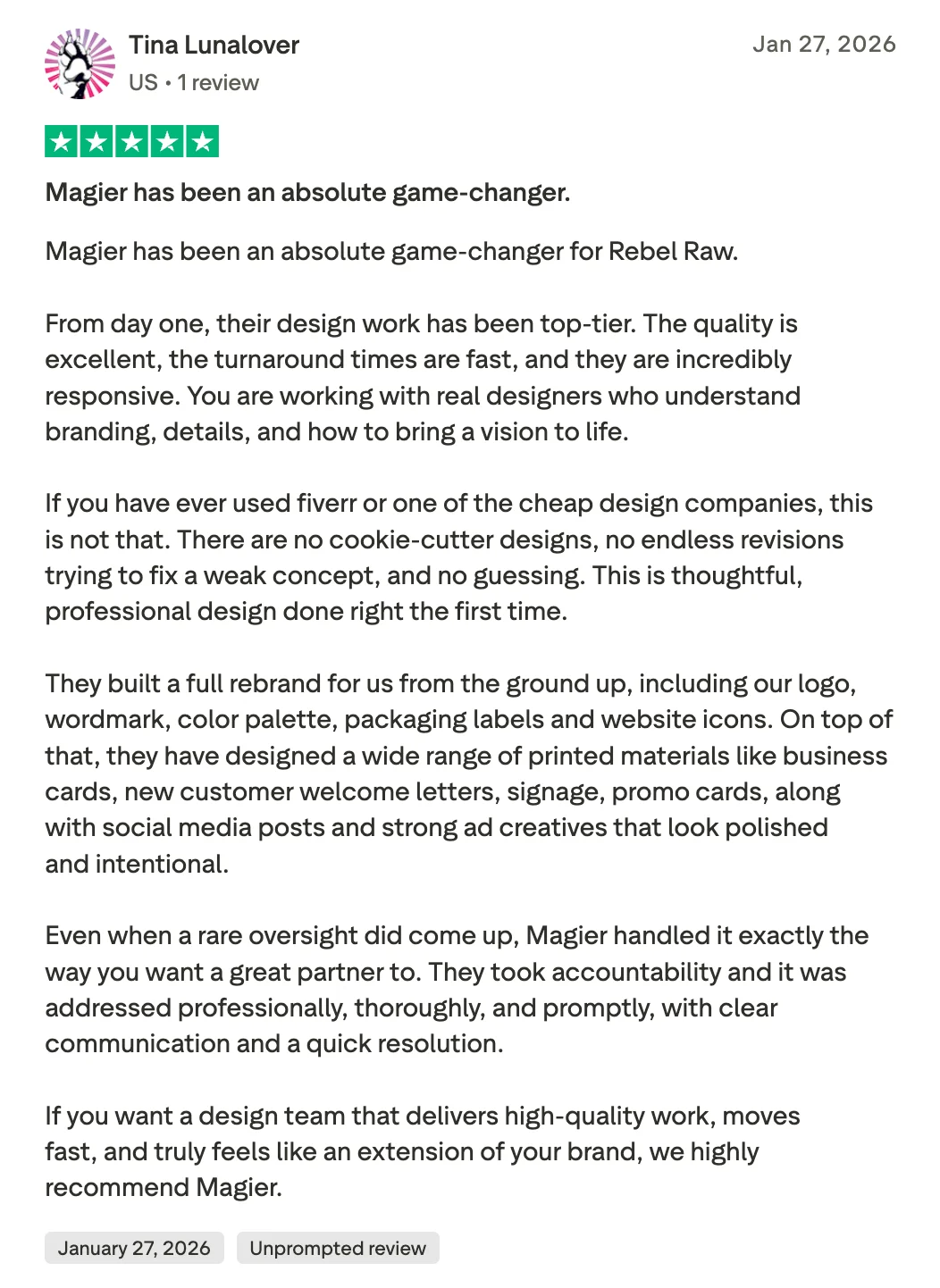
The structural difference is the art-director review. Every design that leaves magier has been checked by an art director for consistency with the brief, brand guidelines, and overall accuracy before it reaches the client. This is a quality layer that most design subscription services don't include, and it's the main reason magier's revision rates tend to be lower.
Design Pickle's larger team means they can handle higher volume, but it also means quality varies more across designers. The most common criticism in Design Pickle's G2 and Trustpilot reviews is designer rotation. When your assigned Design Pro changes, the new designer needs time to learn your brand, which often leads to extra revision cycles that eat into your creative hours.
One G2 reviewer noted that complex branding and detailed illustration work tends to cycle through repeated revisions at Design Pickle, because the platform is optimized for routine production graphics rather than high-concept creative work. That matches the service's positioning: Design Pickle describes itself as "#1 in Design Production," not as a boutique creative agency.
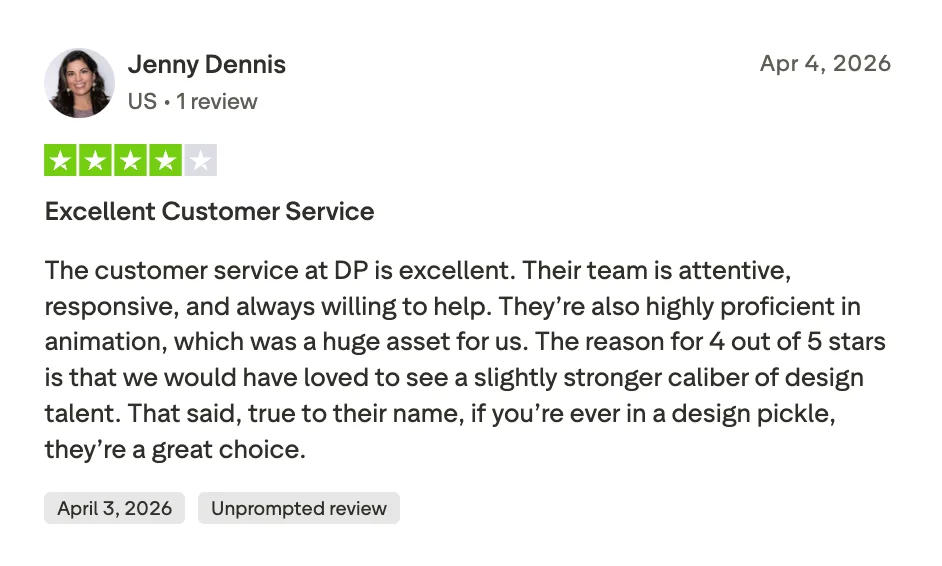
If you need polished, conversion-focused landing pages, SaaS ad creatives, and brand work that holds up next to a premium agency's output, magier is the stronger fit. If you need a high volume of on-brand social graphics, print materials, and marketing collateral produced consistently, Design Pickle's model handles that well.
Creative direction and strategic support
Neither magier nor Design Pickle includes a dedicated Creative Director in the way some competitors (like Designity) do. But the level of creative input you get is different.
| Creative support | magier | Design Pickle |
|---|---|---|
| Art director / creative oversight | Yes, included on every plan | Not included as standard |
| Strategic campaign direction | Not included (client provides business context; art director provides creative oversight) | Not included (execution-focused model) |
| Brand consistency mechanism | Art-director review + dedicated team continuity | Brand profiles in the platform + AI tools |
| AI-powered creative tools | Not a core feature | Yes (AI-assisted briefs, Midjourney, Adobe Firefly, OpenAI image generation) |
magier's art director provides creative oversight in the form of quality review, consistency checks, and brief alignment. The client provides business context and priorities, and the art director translates that into creative direction for the design team. It's not strategic consulting, but it's more than pure execution.
Design Pickle's model is more self-service. You submit a detailed brief, and the designer executes it. Their AI tools (AI-assisted briefs, concept generation with Midjourney and Firefly) help bridge the gap between what you can articulate in a brief and what the designer produces. For teams that have strong internal creative direction and just need execution capacity, this model works well.
If your team lacks internal creative direction entirely and needs someone to lead campaign strategy, specialist assignment, and marketing direction, neither service includes that as standard. That's a different buying decision, and services like Designity are built specifically for it.
Collaboration, platform, and workflow
Design Pickle has the more mature proprietary platform. magier has the more human-led collaboration model.
| Workflow feature | magier | Design Pickle |
|---|---|---|
| Platform | magier dashboard (app.magier.com) | Proprietary Design Pickle portal |
| Request submission | Structured brief format on dashboard | AI-assisted brief builder + text/image options |
| Communication | Direct messaging with art director + Slack for urgent items | In-platform messaging + Slack + Microsoft Teams |
| File delivery | Figma files + dashboard storage; all raw files provided | Platform downloads; layered source files + Canva deliverables |
| Integrations | Slack | Slack, Microsoft Teams, Zapier, Stockpress |
| Brand asset storage | Dedicated Figma file per client | Brand profiles in platform |
| Annotation/feedback | Via dashboard and Figma | In-platform annotation on delivered designs |
| Priority management | Client reorders task queue on dashboard | Client reorders task queue on platform |
You've probably already noticed that you can reorder your task queue on both platforms, which means you can reprioritize what gets worked on next without needing to message anyone.
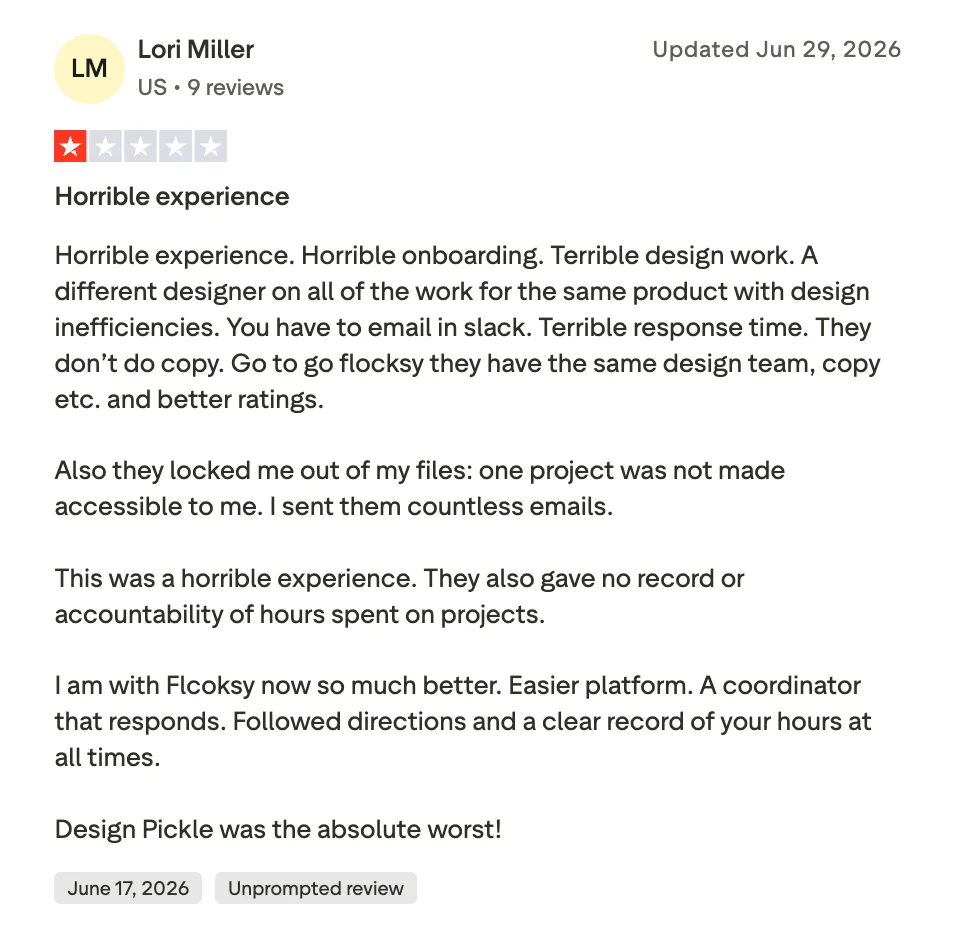
Design Pickle's portal is one of its genuine strengths. After 10 years of iteration, it's polished. The annotation tools, revision threading, brand profile storage, and Zapier integration make it a strong choice for teams that want an automated, self-service workflow. If your team runs design requests through a CRM or form tool and wants automatic submission via Zapier, Design Pickle supports that natively. However, some clients still reported of bad onboarding experience despite all these.
magier's collaboration model is more personal. You message your art director directly, use Slack for quick questions, and get files delivered in Figma with all raw data included. The trade-off is that it's less automated but more relationship-driven. For teams that want a creative partner who knows their brand deeply and can have a quick Slack conversation about a brief, this model tends to feel more like working with a colleague than using a tool.
Reliability and scalability
Design Pickle has a decade of operational history. magier has a team structure that handles scaling and backup more smoothly.
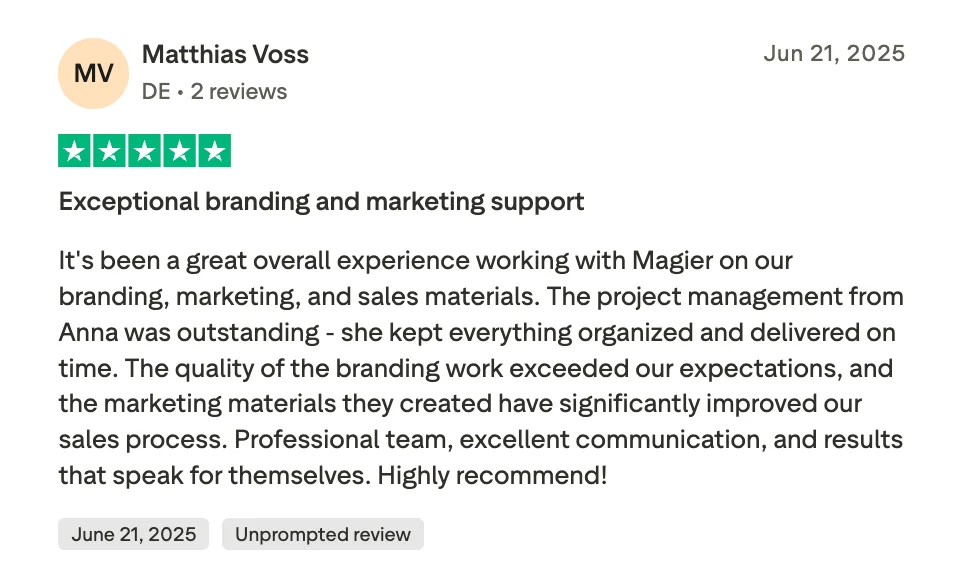
Design Pickle has been operating since 2015, which makes it one of the oldest continuously running names in the unlimited graphic design service category. It has 500+ employees, has completed 750,000+ requests, and is a known, procurement-approved vendor at many mid-market companies. For reliability of the business itself, that track record is worth something.
But scalability works differently at the two services. At Design Pickle, scaling up means buying additional subscriptions. Each subscription gives you one active lane, so if you want two tasks worked on concurrently, you pay twice. If your assigned designer is unavailable, the platform assigns a replacement, but reviews consistently note that this replacement process can mean re-teaching brand guidelines.
At magier, the art director manages the team. If a designer is unavailable, the art director reassigns work to another qualified team member without the client needing to start over. Scaling up means moving to a combined plan or adding a Webflow pipeline, not doubling your subscription count.
Risk, compliance, and brand security
This section covers things most comparison pages skip, but that matter if you're signing a contract.
| Risk/compliance factor | magier | Design Pickle |
|---|---|---|
| IP ownership | Client owns all deliverables | Client owns all deliverables (work-for-hire upon full payment) |
| Stock content licensing | Files delivered in Figma with raw data | Stock elements (Adobe Stock, Envato) licensed single-use only; no extracting, stockpiling, or reuse outside the specific deliverable |
| Liability cap | Not publicly specified in marketing materials | $50 total liability cap per Terms of Service |
| Error review window | Not publicly specified | 7 days from receipt; errors not reported after 7 days are not contractually required to be fixed |
| AI content terms | Human designers; not an AI-first workflow | AI-generated content used at client's risk per TOS; client must independently comply with OpenAI terms |
| Cancellation/refund | Monthly cancellation, 7-day notice, no long-term lock-in | All fees non-cancelable and non-refundable; cancellation stops future renewals only |
| NDA | Available (confirm with magier directly) | Standard terms; NDA availability not specified in public TOS |
Nobody loves reading Terms of Service. But Design Pickle's terms have a few clauses worth knowing about before you sign.
The $50 total liability cap means that if something goes wrong with a deliverable, Design Pickle's contractual exposure is limited to fifty dollars total, regardless of the scope of the issue. The 7-day review window means you need to catch and report errors within a week of receiving files, because the company is not contractually obligated to fix anything reported after that window closes.
The stock content clause is also relevant for teams that reuse assets. Stock photos, videos, and fonts included in Design Pickle deliverables are licensed for single-use only, as incorporated into that specific deliverable. You can't extract a stock photo from one deliverable and use it in another project without purchasing a separate license. If your subscription is terminated for breach, all stock content licenses expire immediately.
For AI-generated content, Design Pickle's TOS states that any AI elements in deliverables are entirely at the client's risk. The company disclaims all warranties regarding accuracy, ownership, or non-infringement of AI-generated content.
magier delivers files in Figma with all raw data provided to the client. The workflow is human-designer-led, with art-director review, rather than AI-first. For specific questions about magier's liability terms, NDAs, or data handling, it's best to ask directly during the demo call.
Who should choose magier
magier is the better fit if your situation matches one or more of these:
- You need both design and Webflow development under one vendor: Coordinating between a designer and a separate developer wastes time and introduces inconsistency. magier's combined plan handles both pipelines with one team, one art director, and one monthly fee.
- You need premium, conversion-focused design for landing pages, ad creatives, and brand work: magier's art-director review ensures consistency and quality before you see the work, which means fewer revision cycles and a higher average quality floor.
- You want transparent, published pricing with monthly cancellation: Every magier plan is listed on the website with the exact monthly price. You can cancel with 7-day notice, no sales call required to see what it costs, and no non-refundable billing policies.
- You have a large, scoped project rather than ongoing monthly needs: A rebrand, a website launch, or a Webflow migration with a fixed deadline is a better fit for magier's one-time project option than a monthly subscription. Design Pickle does not offer project-based work.
- You value designer continuity: magier assigns a dedicated team led by an art director who maintains your brand consistency over time, so you don't re-teach your guidelines every time someone new picks up a task.
Who should choose Design Pickle
Design Pickle is the better fit if your situation matches one or more of these:
- You need high-volume static graphic production and your main concern is throughput: Social media packs, ad variants, print materials, franchise marketing kits, merchandise designs: Design Pickle's large team and mature portal are built for exactly this kind of steady-state graphic production.
- Your budget is under $2,000/month and you want a proven, established vendor: Design Pickle has been operating since 2015 and is one of the most recognized names in the space. If procurement approval and vendor track record matter to your organization, a decade of history helps.
- You want AI tools built into your design workflow: Design Pickle's 2.0 platform includes AI-assisted briefs, image generation with Midjourney and Adobe Firefly, and AI-powered draft suggestions. If your team uses AI-generated concept art as a starting point for design work, this integration is native.
- You need Canva template creation or conversion: Design Pickle is a Canva Certified Agency Partner and offers Canva templates and conversions as a dedicated service category. If your team distributes branded Canva templates to a franchise network or internal team, this is a genuine differentiator.
- You don't need web development and your design needs are primarily graphic: If your workflow is entirely static graphics, presentations, and print, paying for a service that includes Webflow development doesn't make sense for your budget.
Real-world scenarios
These are actual magier client outcomes, matched to the areas where this comparison matters most.
Plancraft: web redesign that increased conversions by 20%
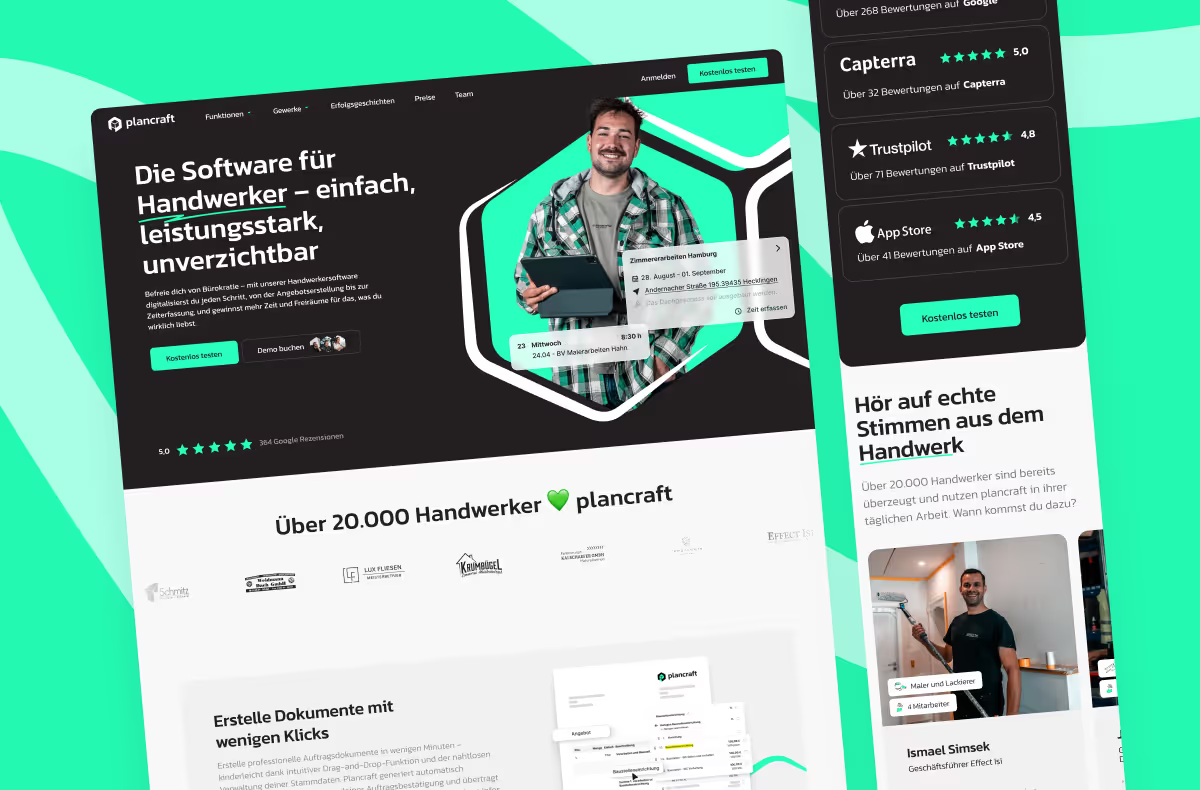
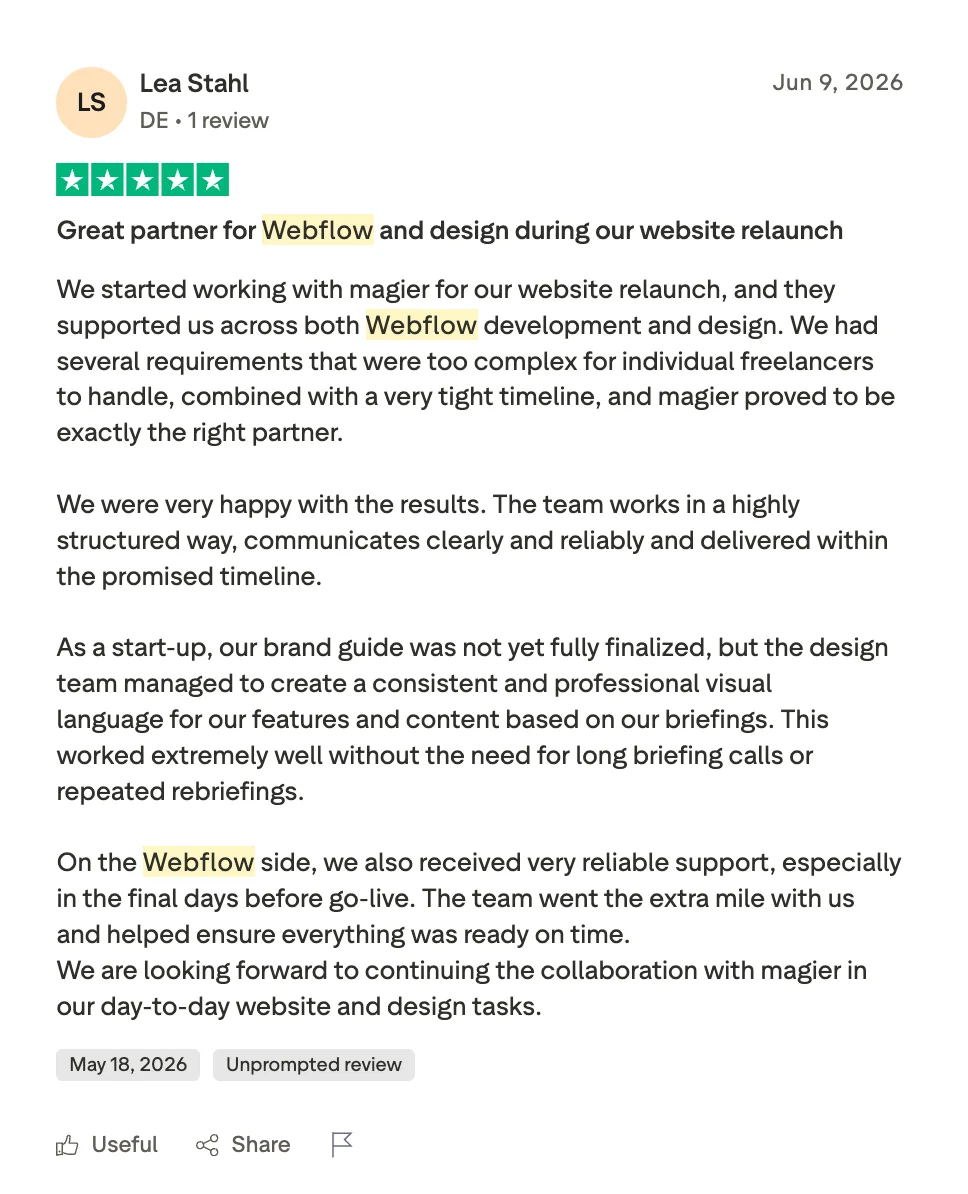
Plancraft, a SaaS company based in Hamburg, needed more than a visual refresh. They needed a web redesign that would actually improve how visitors converted. magier handled both the design and the Webflow development under one subscription, which meant the team that designed the new pages also built them. The result was a 20% increase in conversions. This kind of outcome requires design and development working in sync, which is something a graphic-design-only service can't deliver because the Webflow build would need to be handled by a separate vendor.
Odin: 10+ page responsive Webflow site in under 2 weeks
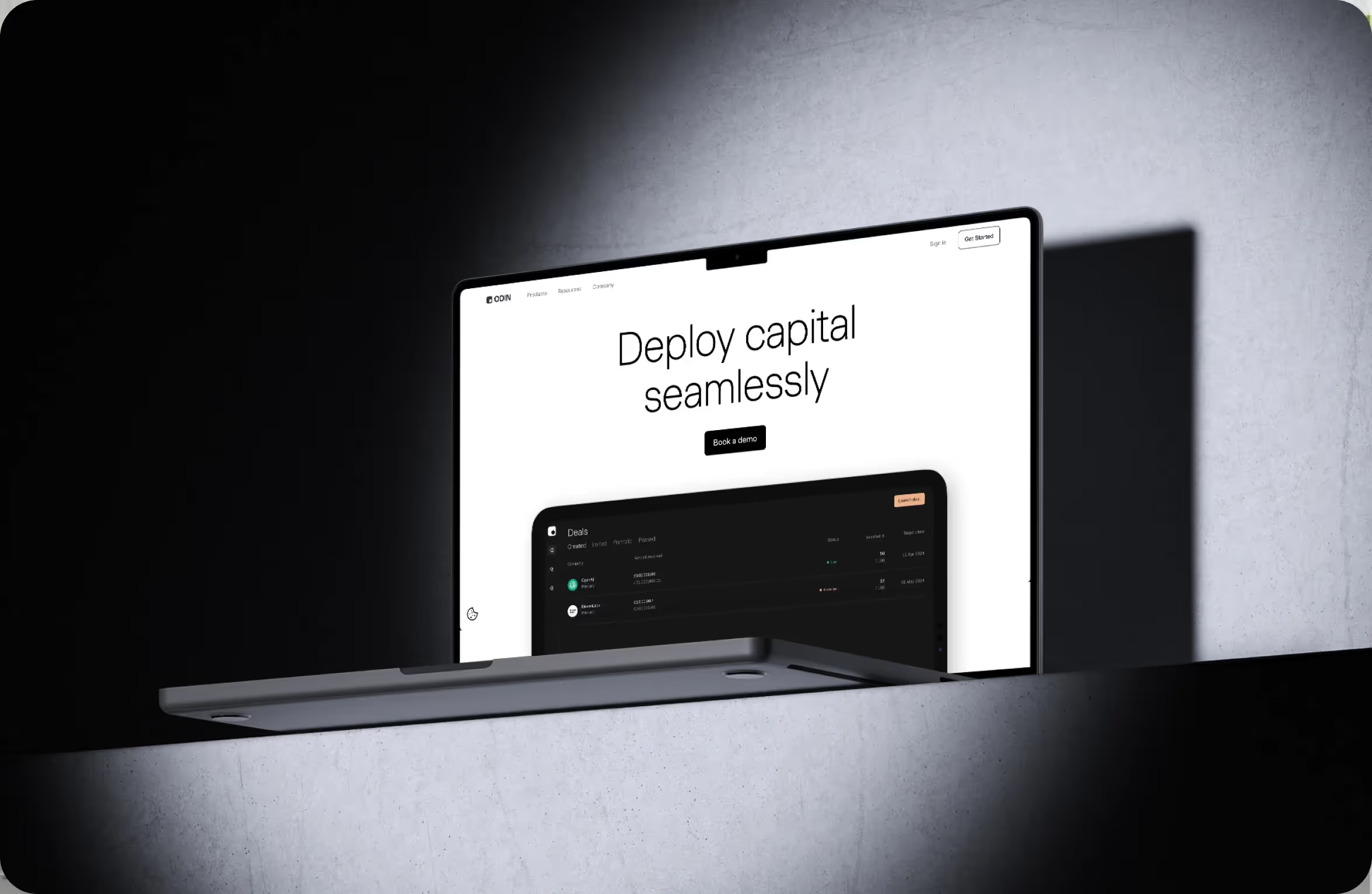
Odin, a fintech company based in London, needed a responsive Webflow website built quickly. magier delivered a complete 10+ page responsive site in under two weeks. Webflow development isn't in Design Pickle's scope at all, so this type of project would require a separate Webflow agency or freelance developer, adding coordination overhead and likely extending the timeline.
How magier works
- Choose your plan on the magier pricing page. All pricing is published, every plan cancels monthly, and you can start with design, Webflow, or both.
- Get matched with a dedicated team led by an art director who will oversee your projects and ensure quality and brand consistency.
- Submit your first brief through the magier dashboard using a structured format that takes minutes to fill out. You can prioritize which tasks get worked on first.
- Receive your first delivery within 48 hours. Every design is reviewed by the art director before it reaches you, which means fewer revision cycles and a higher-quality first draft.
- Request revisions or approve and move on. The team iterates until you're satisfied, then starts the next task in your queue. You get an update every 48 hours.
For teams that need Webflow development alongside design, the combined plan at €4,450/month covers both pipelines with one active task in each. For one-off projects with a fixed deadline, visit magier.com/one-time-project.
Why choose magier
- Design and Webflow under one subscription: Fewer vendors means less coordination, faster execution from design to live page, and a team that understands both sides of the work.
- Art-director review on every delivery: This quality layer catches issues before they reach you, reduces revision cycles, and keeps your brand consistent across deliverables.
- Transparent, published pricing: You see exactly what each plan costs without booking a sales call. No consultation gates, no negotiated quotes.
- Monthly cancellation with 7-day notice: No annual lock-in, no non-refundable billing policies. If the service isn't working for you, you cancel before the next cycle.
- One-time projects for scoped work: For a rebrand, website launch, or Webflow migration with a fixed deadline, magier offers a project-based option that doesn't require a monthly subscription commitment.
- 150+ brands and a 4.9/5 Trustpilot rating: magier's clients include 5 unicorn companies, and its clients have collectively raised over $7 billion from top investors. The rating is across 105+ verified Trustpilot reviews, not a handful of curated testimonials.
The bottom line
Both magier and Design Pickle solve real problems. Design Pickle is a strong, established platform for teams that need consistent, high-volume graphic design production. magier is a premium creative partner for teams that need design and Webflow development working together, with art-director oversight and monthly flexibility.
Whichever service you choose, getting good results depends on clear briefs, consistent feedback, and knowing what you need before you submit. The subscription model works best when you treat it as an extension of your team, not a vending machine.
If your team needs both design and Webflow development, or if you want to see magier's work before committing, book a free intro call with us. If you have a one-time project with a fixed deadline, start here. And if you're comparing more broadly, you might also want to read our magier vs freelancers and magier vs Superside comparisons.
Pick the section most relevant to your situation, whether that's pricing, quality, or Webflow, and start there.
{{cta}}
FAQ
Unlimited. Every magier subscription includes unlimited revisions on active tasks at no extra cost. The team iterates until you approve the work, and you receive an update every 48 hours.
Design Pickle has historically had a lower entry price (around $1,918/month before removing public pricing in 2026). magier's design subscription starts at €2,750/month (~$2,950 USD). However, if you need Webflow development alongside design, magier's combined plan at €4,450/month is typically less expensive than paying for Design Pickle plus a separate Webflow developer.
No. Design Pickle's services cover graphic design, illustration, motion graphics, video editing, and Canva template services. They do not offer Webflow development, web development, or website building of any kind. If you need Webflow alongside design, you would need a separate vendor.
The biggest difference is scope and quality model. magier covers both graphic design and Webflow development, with an art-director review on every delivery before it reaches the client. Design Pickle focuses on graphic design production and does not offer web development. magier publishes all pricing and cancels monthly; Design Pickle requires a sales consultation for pricing and runs non-refundable billing cycles.
Yes. magier offers one-time projects for larger scoped work including branding (2-4 weeks), web design (2-6 weeks), and Webflow development (2-6 weeks). These come with a fixed deadline and scope, and they're designed for teams that need a specific deliverable rather than ongoing monthly capacity.
magier does not currently offer a free trial but provides a demo call where you can see the team's work, understand the process, and ask questions before subscribing. All plans cancel monthly with 7-day notice, so the commitment risk is limited to one billing cycle.
Yes. Design Pickle's 2.0 platform includes AI-assisted briefs, image generation using Midjourney and Adobe Firefly, and AI-powered draft suggestions. According to their Terms of Service, AI-generated content in deliverables is used entirely at the client's risk, and clients must independently comply with the relevant AI platform terms.
Yes. magier has built creative engines producing over 80 ad creatives per month for clients like Valuecase. The art-director review ensures consistent quality across deliverables even at high volume, so production speed doesn't come at the expense of brand consistency.
A subscription gives you predictable monthly costs, faster turnaround (under 48 hours vs. weeks), and a team structure with built-in quality review. Unlike a freelancer, you're not dependent on one person's availability, and unlike a traditional agency, you're not locked into long contracts or per-project billing. For a deeper comparison, see our magier vs freelancers blog post.
magier assigns a dedicated team that learns your brand over time and stores all files in a dedicated Figma file and on the dashboard. The client receives all raw data files. The art director maintains brand consistency across all deliverables, so your brand is protected by both process and personnel continuity.
.avif)

.webp)