.avif)
magier vs ManyPixels
Both magier and ManyPixels offer flat-rate design subscriptions, but they differ on scope, pricing, and how the team behind the work is structured. This magier vs ManyPixels comparison covers services, Webflow development, turnaround, quality, and total cost of ownership.
magier vs ManyPixels at a glance
Undoubtedly, ManyPixels is the more affordable option and a strong choice for teams whose needs start and end with graphic design. On the other hand, magier costs more per month but covers a wider scope, including Webflow development and an art director review layer on every deliverable. If your team regularly needs both design and development, magier is more convenient and cost-efficient. If your needs are design-only and budget matters most, you should consider ManyPixels.
What is magier?

magier is a creative subscription service founded by Sina Sadegh and Maximilian Fleitmann, both with over 10 years of experience building businesses from early-stage startups to unicorn-scale companies. The company provides graphic design and Webflow development on a monthly subscription basis, positioning itself as an extended design and development team. magier is a Webflow Premium Partner and has served over 150 brands worldwide.
Key services:
- Graphic design (ad creatives, brand design, UI/UX, web design, illustrations, presentations, social media, packaging, print, motion design, and more)
- Webflow development (new landing pages, complex sections, custom development, and integrations)
- One-time projects for branding, web design, or Webflow development with fixed deadlines
Target audience: SaaS companies, fintech, ecommerce, agencies, startups, marketing teams, and B2B/B2C brands with ambitious growth goals.
What is ManyPixels?
ManyPixels is a subscription-based graphic design service founded in 2018 and headquartered in Singapore. The company offers unlimited design requests for a flat monthly fee, with a team of vetted designers handling work through its proprietary platform. ManyPixels has delivered over 150,000 designs for more than 2,000 businesses, with named clients including Buffer, Decathlon, SAP, HP, and Teachable.
Key services:
- Graphic design (marketing and advertising creatives, web design mockups in Figma, brand and identity, illustrations, print, presentations)
- Motion graphics and video editing (on Assigned Designer and Design Team tiers)
- "Others" category for miscellaneous design requests
Target audience: Small and mid-sized marketing teams, agencies, startups, and freelancers who need regular design output without hiring in-house.
Services and scope compared
magier has the wider overall scope because it includes development work. If your team needs a landing page designed in Figma and then built and launched in Webflow, magier handles both steps. ManyPixels delivers the design work and your team needs to find a separate developer for the build, because their scope of services page (as of September 2026) explicitly lists Webflow, WordPress, Framer, Wix, and coding (HTML/CSS/JS) under services they do not offer.
ManyPixels has one notable scope advantage, though: video editing is available on higher tiers, which magier does not list as a standalone service. If your team produces video content alongside static design, that inclusion could matter. ManyPixels also includes motion graphics starting from the Assigned Designer tier at $1,399 per month, while magier includes motion design across its design subscription.
For teams not ready for a monthly commitment, magier offers one-time projects with fixed timelines: branding takes 2 to 4 weeks, web design takes 2 to 6 weeks, and Webflow development takes 2 to 6 weeks. ManyPixels does not offer a project-based option, so the subscription is the only way in.
Pricing and total cost of ownership
ManyPixels is significantly cheaper at every comparable tier. Their most expensive plan ($2,599 per month for a two-designer team) costs less than magier's entry-level design subscription (€2,750 per month, approximately $2,970). On sticker price alone, ManyPixels wins by a wide margin, and that difference is real.
But sticker price and total cost are different things. magier's price includes Webflow development, art director review on every deliverable, and a combined design-to-development workflow. If a ManyPixels client also needs Webflow development, they will need a second vendor.
So how does that cost math actually work? A freelance Webflow developer typically charges between $75 and $150 per hour, according to Upwork and similar platforms. At 20 hours per month of development work, that adds $1,500 to $3,000 on top of a ManyPixels subscription. A ManyPixels Business plan at $1,199 plus a mid-range Webflow freelancer at $2,000 per month totals $3,199 per month, which is comparable to magier's design subscription at €2,750 (approximately $2,970), except with two vendors to manage instead of one.
For teams that need both design and Webflow work, magier's combined Design + Webflow subscription at €4,450 per month (approximately $4,810) replaces both a design subscription and a development contractor. Whether that math works in your favor depends on how much development work you actually need each month.
ManyPixels also offers quarterly billing (10% off) and yearly billing (20% off), which can bring the effective monthly cost down further. magier bills monthly with no long-term discount, but also has no long contracts and cancels with 7 days' notice. ManyPixels' $10 per month pause option is a genuine advantage for teams with seasonal design needs, because it preserves your account and files without paying full price during slow months.
Turnaround and delivery speed
ManyPixels' same-day delivery on higher tiers is faster for individual design requests, and that speed matters if your team runs a high-cadence paid ads program or needs rapid iteration on social media assets. Their daily output model also means you can see progress every single business day rather than waiting for one task to finish before the next one starts.
magier's 48-hour turnaround applies to both design and Webflow work. You won't get a Webflow landing page built in the same day, and no reasonable subscription service promises that. But getting a first draft of a responsive page in 48 hours is fast by agency or freelancer standards, where initial timelines often stretch to weeks. The 48-hour update cycle also means your team knows exactly when to expect the next revision or deliverable, which makes it easier to plan around.
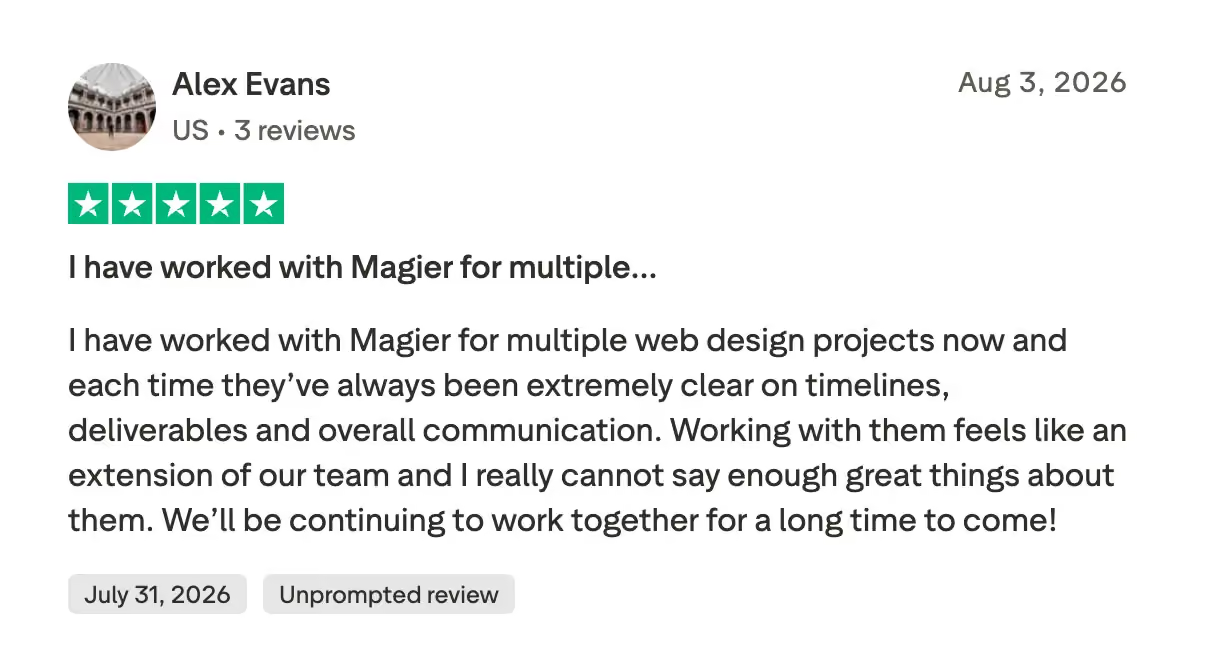
Both services are meaningfully faster than hiring a freelancer (2+ weeks to onboard) or engaging an agency (4+ weeks to get started), which is a big part of why subscription models have gained traction. According to a 2026 Clutch study, 54% of businesses invest between $1,000 and $15,000 annually in outsourced graphic design services, and speed is consistently cited as a top factor in choosing a provider.
Design quality and vetting
magier's art director review layer is a structural quality control mechanism, not just a title. Every design is checked for alignment with the brief and overall accuracy before it reaches the client. That review step catches issues that a single designer working alone might miss, especially on brand-sensitive work where small inconsistencies add up over time.
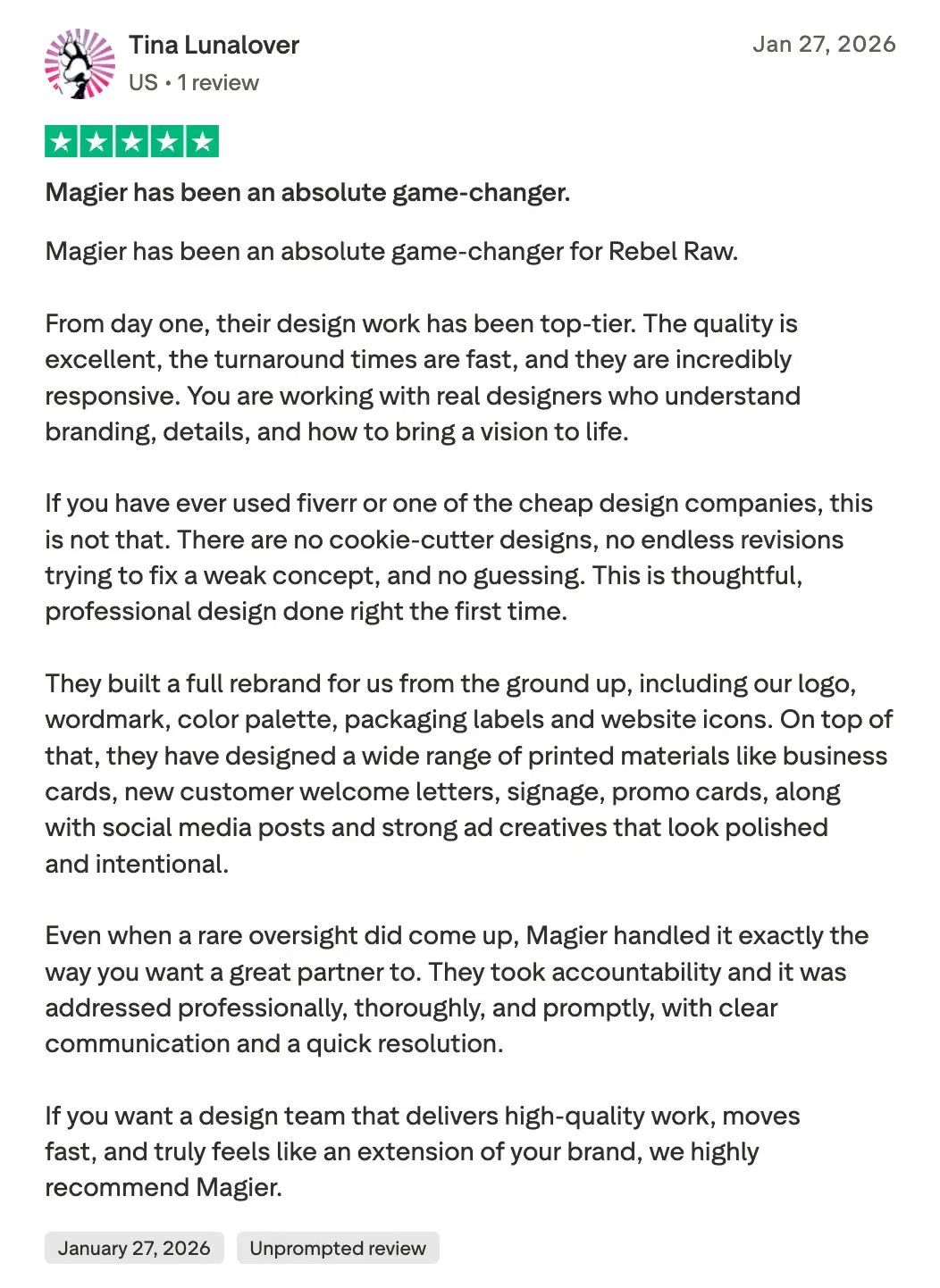
ManyPixels approaches quality differently. On their higher tiers ($1,399 per month and above), clients can choose their own designer, which builds continuity and brand familiarity over time. That model works well for teams that know what they want and can give clear briefs, because the same person sees every request and learns the brand deeply. On lower tiers, designers rotate based on availability, which means the person working on your social media graphics today might not be the same person who designed your logo last week.
Some ManyPixels reviews on Product Hunt and G2 note that quality can vary when designers change mid-project, and that clear, detailed briefs are especially important when working with the rotating team model. This isn't unique to ManyPixels. It's a common trade-off in subscription services that prioritize speed and volume over single-designer consistency, and it's why ManyPixels' dedicated designer tiers cost more.
.avif)
If you've ever had to redo a batch of ads because the designer missed a brand guideline that wasn't in the brief but should have been caught anyway, that's the kind of thing an art director review step is designed to prevent. Whether that layer justifies the price difference depends on how much brand consistency your work requires and how much your team trusts the brief to carry the weight alone.
Creative direction and strategic support
Neither magier nor ManyPixels positions itself as a strategic creative partner in the way that services like Designity (which includes a dedicated Creative Director) or Superside (which offers creative strategy and brand consulting) do. If your team needs someone to develop a campaign strategy, write copy, or plan a content calendar, neither subscription covers that.
The difference is in the creative oversight layer. magier's art director is the same person who manages the project, and they bring creative judgment to every review. They're not just checking that the brief was followed; they're checking that the work is actually good. ManyPixels' project manager coordinates the workflow and assigns requests to the right designer, but the role is described as operational rather than creative.
For teams that have a strong internal creative lead (a CMO, a brand manager, or a senior designer who sets the direction), ManyPixels' execution-focused model works well. The client knows what they want, the brief communicates it clearly, and ManyPixels delivers it. For teams that don't have that internal creative leadership and want someone on the service side to catch problems before they become revisions, magier's art director layer fills that gap.
Collaboration, platform, and workflow
ManyPixels' platform has more built-in collaboration features for design-specific work. The ability to pin and comment directly on a design within the platform is a nice workflow touch that reduces back-and-forth over email or Slack. Brand profiles that store guidelines in one place help maintain consistency, especially when multiple designers work on the same account.
.avif)
magier's workflow centers on Figma and the dashboard. All finished designs live in a dedicated Figma file, which means your team can access, reference, and build on past work inside a tool they probably already use. For teams whose designers, developers, and marketers all live in Figma, that's a workflow advantage because it doesn't require learning a new platform for file management.
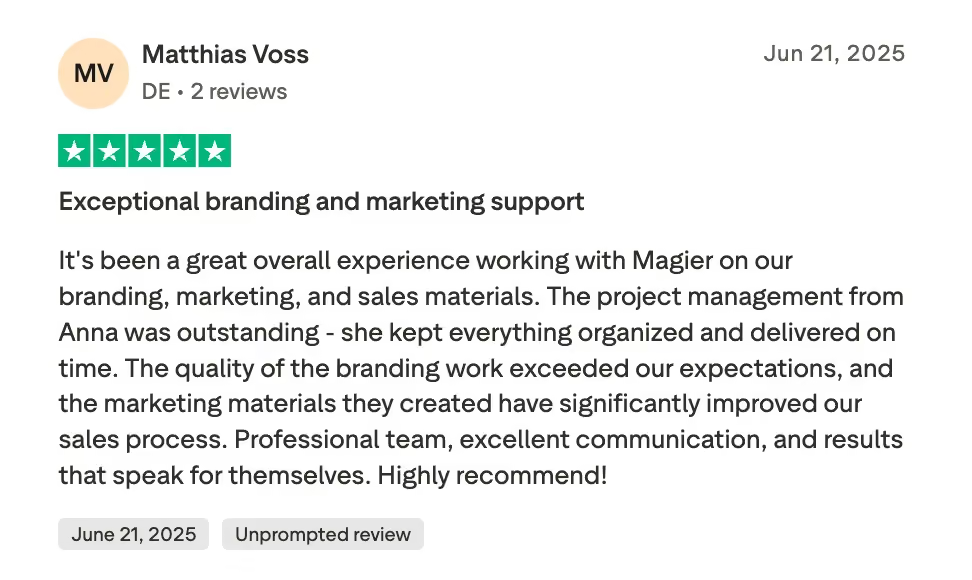
Both services offer Slack integration, but ManyPixels reserves it for their Assigned Designer and Design Team tiers ($1,399 per month and above). magier includes Slack access across all plans for urgent questions, which means real-time communication isn't gated behind a higher price tier.
Reliability and scalability
ManyPixels has the longer track record. They've been operating since 2018, have served over 2,000 customers, and have completed more than 150,000 designs. That volume of work and that length of operation is a credibility signal, because services that deliver inconsistently don't survive eight years and grow to that scale.
magier is newer but has built a strong reputation quickly, with 150+ brands served and a 4.9 out of 5 rating on Trustpilot across 100+ reviews. The company's client base includes five unicorn clients and companies that have collectively raised over $7 billion from top investors, which suggests that teams with high standards and growth pressure have found the service reliable enough to keep using.
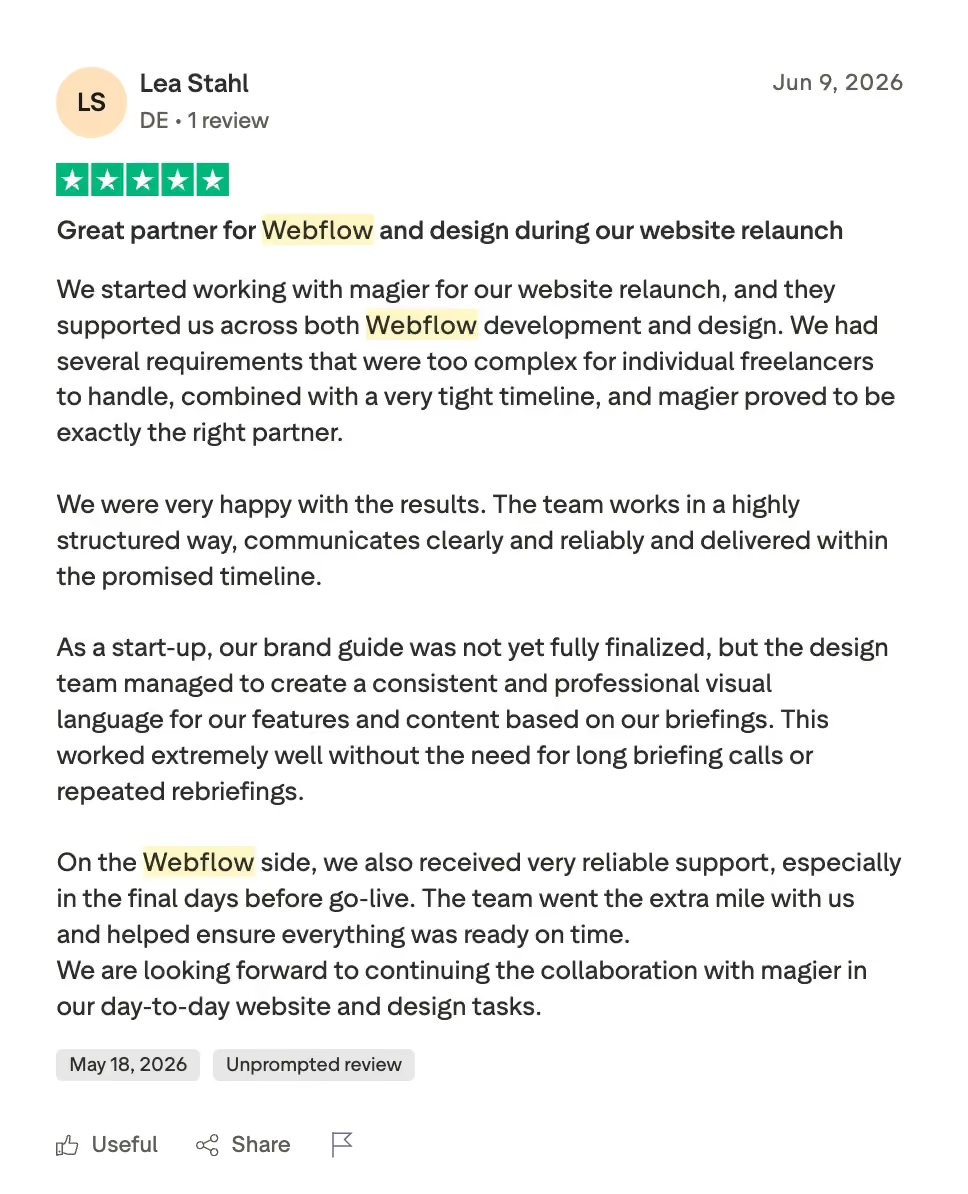
On scalability, the two services flex differently. ManyPixels lets you scale volume by upgrading to a plan with more daily outputs or more designers. You can also pause for $10 per month during slow periods, which is a genuinely useful feature for teams with seasonal demand. magier lets you scale scope by adding Webflow development to a design subscription, or by using one-time projects for defined work like a rebrand or a site launch alongside an ongoing subscription.
.avif)
If your scalability concern is "we need more design output next month," ManyPixels' tiered plan structure handles that well. If your concern is "we need to add development capacity without finding a new vendor," magier's subscription options cover that.
Risk, compliance, and brand security
Both services provide full intellectual property and copyright transfer on all completed work. With ManyPixels, every plan includes full copyright and IP transfer, licensed stock assets, and native source files. With magier, all raw data files are provided and stored in a dedicated Figma file and on the dashboard.
magier uses in-house designers and Webflow developers, which reduces the contractor coordination risk that sometimes comes with platforms relying on a distributed freelance network. ManyPixels uses its own vetted team as well, and names specific designers on its website, which suggests an in-house or retained team model rather than an open marketplace.
Neither service publicly details NDA policies or data handling practices on their main website pages. If your team works with sensitive brand assets or pre-launch materials, it's worth asking both services directly about their confidentiality terms before signing up.
Who should choose magier
- You need both graphic design and Webflow development and want one team handling both, so the designers who create the conversion flow are the same people who build it
- You value art director review on every deliverable before it reaches you, especially for brand-sensitive or conversion-focused work
- You're a SaaS, fintech, or B2B company that regularly ships landing pages, ad creatives, and Webflow updates as part of a growth loop
- You want a one-time project option for a full rebrand, new website, or Webflow migration before deciding whether to commit to a subscription (one-time projects are available here)
- Your monthly design and development budget is €2,750+ and you'd rather pay one vendor than coordinate two
Who should choose ManyPixels
- Your needs are graphic design only and you don't need Webflow development, WordPress, or any coding work built into your subscription
- Budget is a priority and you want the most affordable entry point for an unlimited design subscription ($699 per month is one of the lowest starting prices in the category for the scope it covers)
- You want to choose your own designer rather than having a team assigned to you, so you can build a direct relationship with someone who learns your brand (available on the Assigned Designer tier at $1,399 per month)
- You need motion graphics or video editing included in your subscription, which ManyPixels offers on its higher tiers and magier does not list as a standalone service
- You want to pause your subscription during slow months for $10 per month instead of canceling and restarting, which is a real flexibility advantage for teams with variable workloads
Real-world scenarios
These scenarios feature only magier, because we can speak to our own client outcomes with specifics. We don't have visibility into how ManyPixels clients experienced their work, and we won't pretend otherwise.
Planted: a Webflow website with complex sections, delivered on a tight deadline

Planted, a SaaS company, needed a Webflow website with complex sections built on a tight timeline. For a design-only subscription, this would have been a two-step process: get the Figma mockups done, then find and brief a separate Webflow developer. Each step introduces its own timeline, and coordinating both adds days or weeks before anyone writes a line of code.
Because magier handled both the design and the Webflow build, Planted's team dealt with one workflow, one project manager, and one art director overseeing both the visual design and the technical implementation. The complex sections that make a site feel polished (custom layouts, responsive behavior, interaction details) were built by a team that designed them, not interpreted from a handoff file.
Rebel Raw: a full rebrand in 30 days
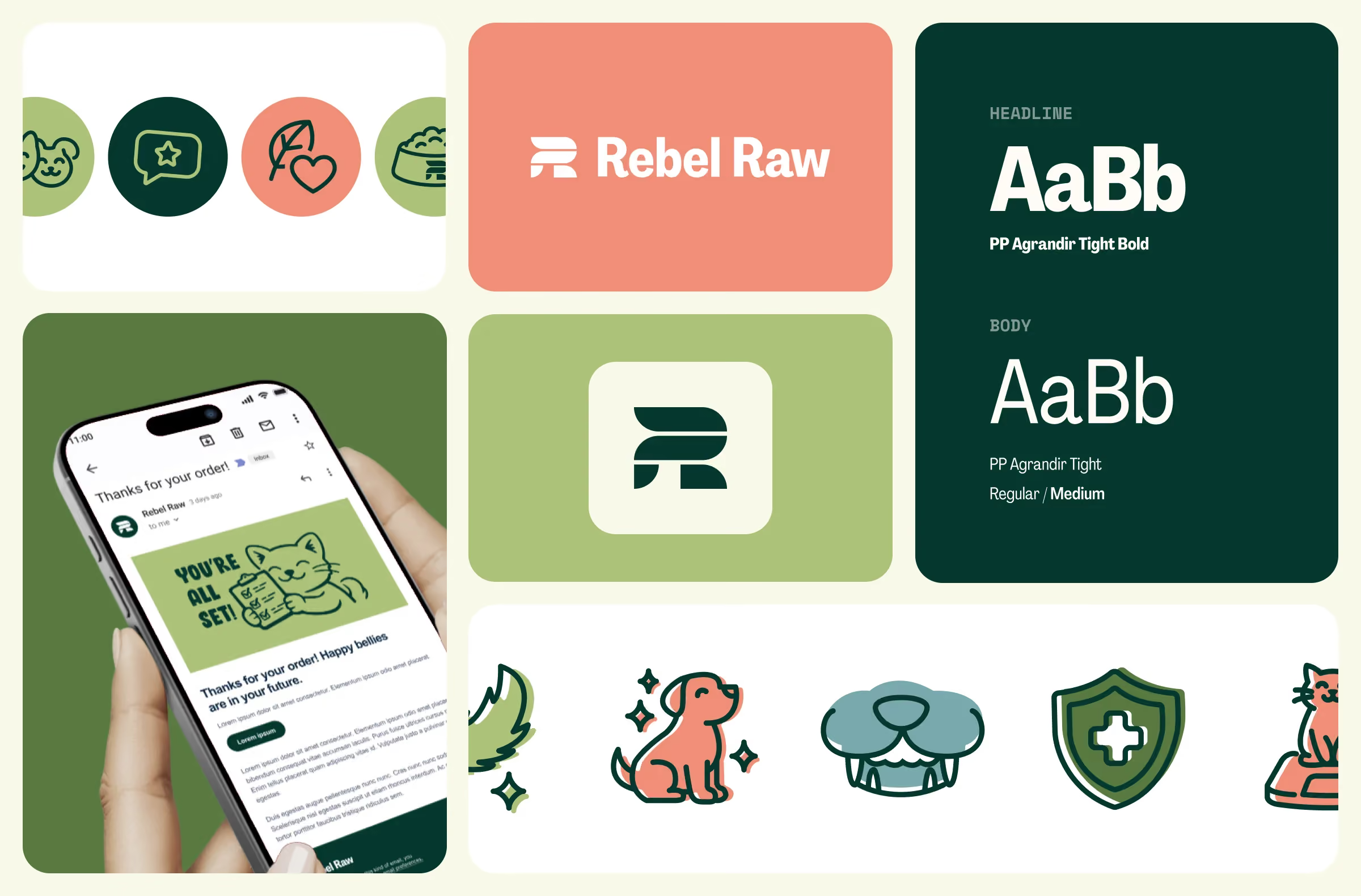
Rebel Raw is a fast-growing small business whose founding team was managing most of the design work themselves. As operations expanded, design became a bottleneck for paid campaigns, packaging updates, and new marketing initiatives. They needed a full rebrand, not just a logo refresh, but a complete visual identity system that would work across every touchpoint.
magier delivered the full rebrand in 30 days, including refreshed packaging across the product line and a design workflow that now produces campaign assets within days instead of weeks. For a team evaluating subscriptions, the relevant detail is that 30 days for a complete rebrand is fast by any standard, and it happened within a standard magier subscription, not as a custom project with separate pricing.
Playmaker: a conversion-ready website from design to Webflow in under 2 months
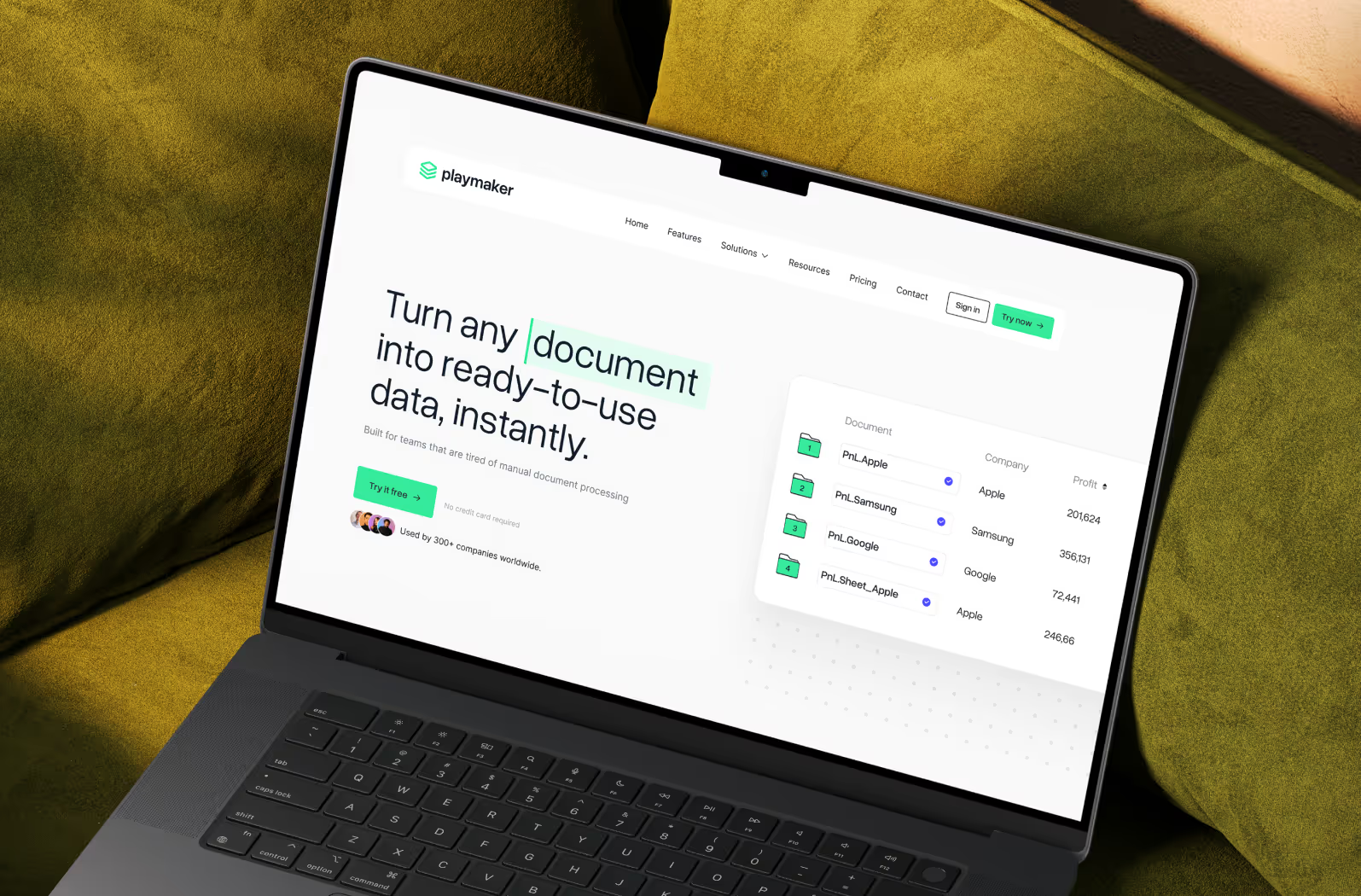
Playmaker (now Portday) is a B2B SaaS company that helps over 300 businesses automate document processing. Their old website was too simple to attract the full range of customers they were targeting, and the messaging wasn't clear enough for visitors to understand what the product does within a few seconds of landing on the page.
magier handled the full scope: light brand adjustments, Figma design, Webflow development, and motion design to explain the product visually. Everything went from kickoff to live site in 8 weeks. The result was a 2x increase in inbound leads and a broader mix of customers reaching out from industries Playmaker hadn't been reaching before. For this comparison, the relevant detail is what Playmaker's co-founder said about why he chose magier: "I like the fact that we could combine design and development with the same team, in a very coherent flow within one project." That's the exact capability a design-only subscription can't offer.
How magier works
- Choose your subscription (design, Webflow, or both) and get matched with a dedicated team led by an art director who also manages your project
- Submit your first brief through the magier dashboard using the structured brief format, which takes minutes to complete
- Prioritize your queue so the most urgent task gets worked on first if you've submitted multiple requests
- Receive your first deliverable within 48 hours, reviewed by your art director before it reaches you
- Review and request revisions directly in the dashboard, and the team iterates until you approve. Once a task is final, the team moves to the next one immediately.
- Access all finished files in your dedicated Figma file and on the dashboard, with all raw data files provided
Why choose magier
- Design and Webflow development under one subscription, so you don't coordinate two vendors or manage handoffs between a designer and a developer
- Art director review on every deliverable, which means quality is checked before work reaches you, not after
- 48-hour turnaround on every active task, including Webflow development work, not just design
- One-time projects available at magier.com/one-time-project for teams that need a defined scope (like a rebrand or site launch) before committing to a subscription
- 150+ brands served with a 4.9 out of 5 Trustpilot rating across 100+ reviews, including five unicorn clients
- Monthly cancellation with 7 days' notice, no long contracts, no lock-in
"The biggest advantage of handling both design and Webflow under one team is that nothing gets lost in translation. The designer who builds the layout in Figma is working alongside the developer who builds it in Webflow, and the art director is reviewing both. That's a different workflow from handing a Figma file to a developer you've never met."

The bottom line
Both magier and ManyPixels are established services with real clients, verified reviews, and years of delivery behind them. The right choice isn't about which one is "better" in the abstract. It's about which one matches what your team actually needs to get done.
If your work is graphic design and you want the most affordable subscription with a wide scope, ManyPixels is a strong option. They've been doing this since 2018, they've served over 2,000 customers, and their starting price of $699 per month is hard to beat for what's included.
If your team needs design and Webflow development from one provider, or you want an art director reviewing every piece of work before it reaches you, magier covers both without needing a second vendor. And if you're not ready for a subscription yet, magier also offers one-time projects for defined work like a rebrand, a new website, or a Webflow migration.
The practical next step: look at the "who should choose" sections above, find the bullet that describes your team, and start there.
{{cta}}
FAQ
A subscription gives you predictable monthly costs, faster turnaround (under 48 hours vs. weeks), and a team structure with built-in quality review. Unlike a freelancer, you're not dependent on one person's availability, and unlike a traditional agency, you're not locked into long contracts or per-project billing. For a deeper comparison, see our magier vs freelancers blog post.
Revisions are unlimited on every magier subscription plan. Your team can request changes until the work is approved, and every revision is reviewed by the art director before delivery.
Yes, ManyPixels is cheaper at every comparable plan level. ManyPixels starts at $699 per month, while magier's design subscription starts at €2,750 per month (approximately $2,970 USD). However, magier includes Webflow development and art director review in its pricing. If you need both design and Webflow development, the total cost of ManyPixels plus a separate developer may be comparable to or higher than magier's combined subscription.
ManyPixels' scope of services page (as of September 2026) lists Webflow under "We don't do," alongside WordPress, Framer, Wix, and coding. However, some ManyPixels blog posts reference a Webflow development add-on. If Webflow development is important to your decision, it's worth confirming the current availability directly with ManyPixels before signing up.
The core difference is scope. magier covers both graphic design and Webflow development under one subscription, with an art director reviewing every deliverable. ManyPixels focuses on graphic design (with motion and video on higher tiers) and does not include Webflow or any other development work as part of its standard subscription. ManyPixels is also significantly more affordable, starting at $699 per month compared to magier's €2,750 per month for design.
Yes. ManyPixels allows you to pause your subscription for $10 per month, which preserves your account and files. This is a useful option for teams with seasonal or variable design needs. magier does not offer a pause option but allows monthly cancellation with 7 days' notice before the next billing cycle.
magier delivers first results within 48 hours on an active task, with an update every 48 hours. ManyPixels delivers next-day on its Advanced and Business plans, and same-day on its Assigned Designer and Design Team plans. ManyPixels' higher tiers are faster for individual design requests. magier's 48-hour cycle covers both design and Webflow work.
Yes. For teams not ready for a monthly subscription, magier offers one-time projects with fixed timelines and scope. Branding projects typically take 2 to 4 weeks, web design takes 2 to 6 weeks, and Webflow development takes 2 to 6 weeks.
On ManyPixels' Assigned Designer ($1,399 per month) and Design Team ($2,599 per month) plans, you can choose your own designer. On the Advanced ($699 per month) and Business ($1,199 per month) plans, a project manager assigns designers based on the type of work, and the specific designer may vary between requests.
Yes. magier offers separate subscriptions for design (€2,750 per month) and Webflow development (starting at €890 per month for the Starter plan), as well as a combined Design + Webflow subscription (€4,450 per month) for teams that need both. magier is a Webflow Premium Partner.
.avif)