magier vs Penji
magier and Penji are two of the most popular design subscriptions. No one is better than the other, however they're built for different stages and different needs.
If you're researching a Penji alternative or comparing Penji pricing against a premium option, this magier vs Penji comparison covers the differences that actually affect your day-to-day needs for design and development: services, quality, speed, team model, Webflow, and total cost.
magier vs Penji at a glance
These two services sit at different price points and serve different buyer profiles. magier is a premium creative partnership for teams that have growing needs design and Webflow and want them under one roof, with art-director oversight on every delivery. Penji is a broader, more affordable creative production platform for teams that need volume across many design categories. The sections below break down where each one is the stronger choice.
What is magier?

magier is a creative subscription service (also called design as a service) that provides both graphic design and Webflow development to businesses for a fixed monthly fee. The company is a Webflow Premium Partner and positions itself as an extended design and development team.
Key services include:
- Graphic design subscription (€2,750/month): ad creatives, brand design, landing page design, web design, UI/UX, illustrations, presentations, social media content, packaging, print, and motion design
- Webflow development subscriptions (starting at €890/month): building designs in Webflow, including landing pages, complex sections, custom development, and integrations
- One-time projects: branding (2-4 weeks), web design (2-6 weeks), and Webflow development (2-6 weeks) for teams that need scoped work with a fixed deadline
magier was built by Sina Sadegh and Maximilian Fleitmann, two founders with 10+ years of experience scaling startups. The company has served 150+ brands, including 5 unicorn clients, and holds a 4.9/5 across 105+ Trustpilot reviews.
{{cta}}
What is Penji?
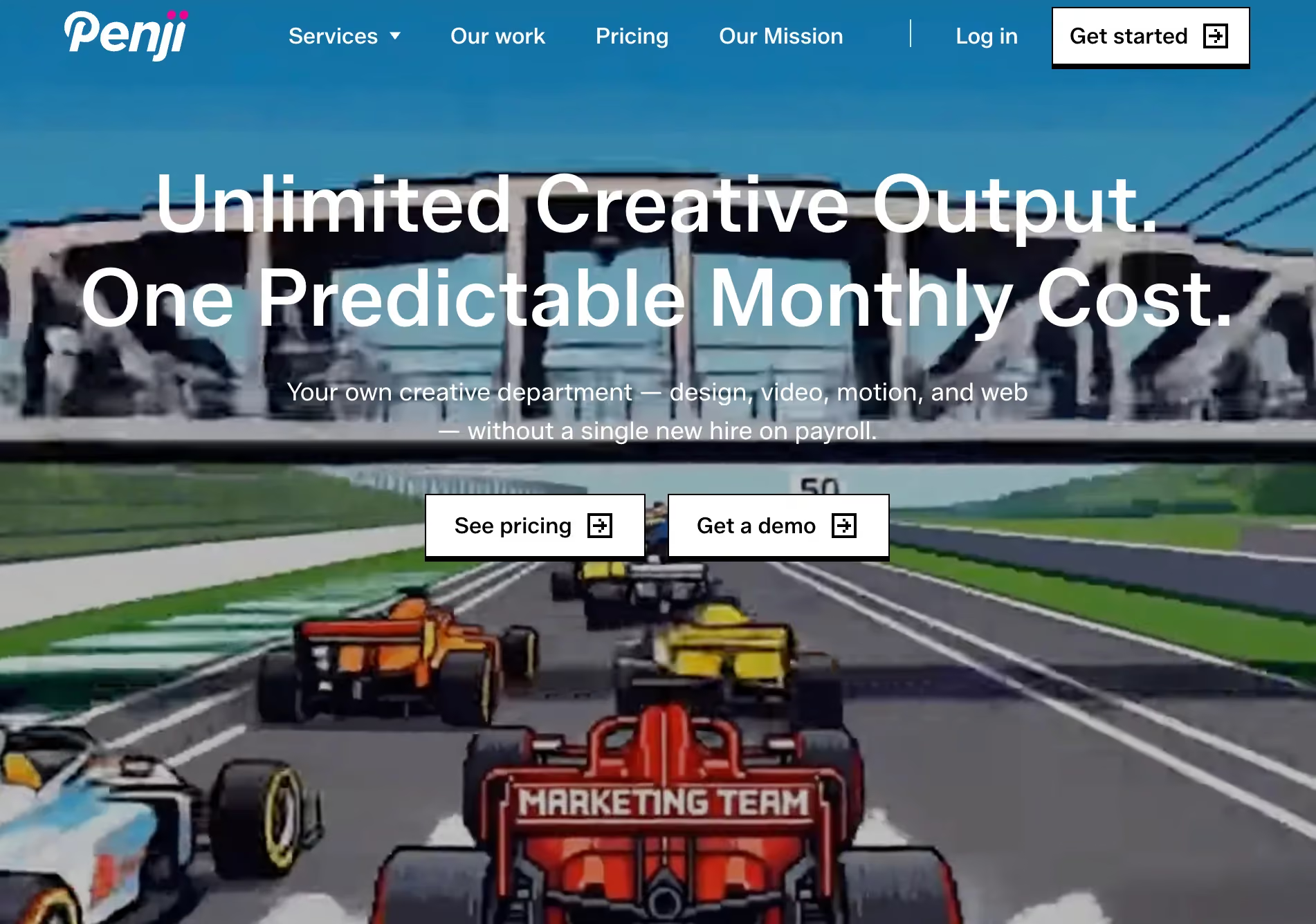
Penji is a graphic design subscription platform that offers unlimited creative deliverables across 120+ categories for a flat monthly fee. The company was founded in 2017, is headquartered in Camden, New Jersey, and has delivered over 4.2 million creative assets for 4,000+ teams.
Key services include:
- Graphic design (branding, ad creatives, social media, email, print, packaging, illustrations, infographics, Canva templates)
- Motion graphics, animation, and short-form video/reels (Agency Partner plan and above)
- Web and landing page design (Agency Partner plan and above)
- Full frontend development and code (Dedicated Team plan only, at $4,500/month)
Penji employs full-time creative talent from over 20 countries and markets itself as "agency-level work, without the agency price." The company uses AI-enhanced workflows for faster ideation and iteration, and offers a 30-day money-back guarantee on all plans. Penji holds a 4.7/5 on G2 (185 reviews), 4.7/5 on Google, and 4.4/5 on Clutch. Notable clients include Uber, CVS, Forbes, 1-800-Flowers, and Coinbase.
Services and scope compared
Penji covers more creative categories in its base plan. magier covers fewer categories but goes deeper, especially on web design and Webflow development.
The biggest scope difference is the post-approval of a design. At magier, the same team that designed a landing page can build it in Webflow, because Webflow development is a core part of the service. At Penji, you can get a landing page designed, but you'll need a separate developer to build it, unless you're on the $4,500/month Dedicated Team plan, which includes frontend code.
That's where magier's combined Design + Webflow subscription (€4,450/month) changes the equation. If your team regularly needs designs built into live Webflow pages, one vendor handling both reduces handoff friction and keeps the design intent intact through the build.
"Having Webflow development under the same subscription as design means the people who designed the page are the same people building it. That eliminates the gap where design intent gets lost in translation during the developer handoff."

Penji has a genuine advantage in breadth. Their base plan at $995/month includes branding, ad creatives, social media, email, print, packaging, Canva templates, presentations, and illustrations. If your team needs steady output across many graphic design categories and doesn't need Webflow, Penji covers more ground at a lower price.
For teams not ready to commit to a monthly subscription, magier offers one-time projects with fixed timelines for branding, web design, and Webflow development. Penji is subscription-only.
Pricing and total cost of ownership
Penji is significantly less expensive at the entry level. But the comparison changes when you factor in what's included at each tier and whether you need Webflow development.
The sticker price difference is something you should consider. Penji's Essentials plan at $995/month is roughly a third of magier's design subscription at €2,750/month. For teams that need standard graphic design production across many categories, Penji offers more volume capacity at a lower cost, since you get 2 active workstreams compared to magier's 1 active task.
But the total cost of ownership shifts when Webflow is in the picture. If a team needs 10 design deliverables per month plus 2 landing pages built in Webflow, here's how the math looks:
- With magier's combined plan (€4,450/month): both design and Webflow development are covered under one subscription, one team, one art director.
- With Penji's Agency Partner ($1,995/month) plus a freelance Webflow developer: the design subscription covers the landing page designs and other creative work. But a freelance Webflow developer typically charges $75-150/hour. Two landing page builds might take 15-25 hours, adding $1,125-3,750/month. Total: $3,120-5,745/month across two vendors.
When you need both design and Webflow, magier's combined plan is often comparable in cost to Penji plus a separate developer, with the added benefit of one team and one point of contact.
Penji's 30-day money-back guarantee is a genuine advantage for teams testing a design subscription for the first time. You can try the service for a full month and get a refund if it's not the right fit. magier doesn't offer a money-back guarantee, but all plans cancel monthly with 7-day notice, so the commitment risk is limited to one billing cycle.
"We publish all our pricing and keep cancellation simple because the subscription model only works if clients choose to stay, not because they're locked in. If you need to see the numbers before talking to anyone, they're all on the website."

Turnaround and delivery speed
Penji is faster on paper, especially for simple graphic design requests. magier includes a quality review step that adds time but reduces the number of revision cycles.
Penji's 1-day turnaround on the Essentials plan is fast, and the priority and same-day turnaround on higher tiers is even faster. For teams that need a high volume of standard graphic assets produced quickly, Penji's speed is a real advantage.
magier's 48-hour window includes the art-director review step, where every design is checked for consistency with the brief, brand guidelines, and overall accuracy before it reaches the client. That extra step takes time, but it's designed to reduce the number of revision rounds needed after delivery. If you're spending two rounds of revisions correcting issues that a quality check would have caught, the 48-hour model with a review layer can end up being faster in total elapsed time.
The concurrency difference is also significant. Penji lets you run 2-4 active workstreams at the same time depending on your plan, which means multiple projects can move forward in parallel. magier works one active task at a time per pipeline (though the combined Design + Webflow plan gives you one active task per pipeline, so a design task and a Webflow task can run in parallel).
So how does this work in practice? If your team submits 20 social media graphics a month and speed on each individual asset is the priority, Penji's model gets more done faster. If your team submits fewer, higher-stakes projects like landing page designs, ad creative systems, or brand work, magier's model with the quality review layer produces cleaner first drafts that need fewer rounds of back-and-forth.
Design quality and vetting
Both services try to give the best design service, but the quality models are different. magier's is review-layered. On the other hand Penji's is process-driven with AI acceleration.
The quality difference shows up most clearly in what each service is optimized for. magier produces fewer deliverables per month at a higher quality ceiling, with every piece reviewed by an art director before it reaches the client. The team is smaller and more specialized, which means there's less variation in output quality across projects. Just to be clear, we also use AI for brainstorming, but the final output is always done by a human expert.
Penji produces a higher volume of deliverables and covers more categories. Their AI-enhanced workflows let teams explore more creative directions faster, which is valuable for teams that need to test many variants. On the Essentials plan, you get "best assigned" creatives, which means you might not always work with the same designer. The Agency Partner plan guarantees the same assigned creatives, which improves brand consistency over time.

If you need polished, conversion-focused landing pages, SaaS ad creatives, or brand systems that look like they came from a boutique agency, magier is the stronger fit. If you need a broad range of graphic assets produced quickly and consistently, Penji's larger team and AI tools handle that well.
Creative direction and strategic support
Penji includes Art Director oversight on every plan. magier includes art-director review on every delivery. Thus, the scope of what "creative direction" means is different at each service.
Penji's Agency Partner and Dedicated Team plans include more layers of creative management than most competitors at similar price points. The Agency Partner plan includes a dedicated creative pod, same assigned creatives, and light strategic planning support. The Dedicated Team plan adds a Senior Art Director, roadmap planning, and launch support. For agencies managing multiple client brands, Penji's white-label platform on the Agency Partner plan is a genuine differentiator.

magier's art director provides creative oversight in the form of quality review, consistency checks, and brief alignment. The client provides business context and priorities, and the art director translates that into creative direction for the design team. It's a more focused role than Penji's tiered creative management structure, but it's included on every plan at no extra cost, not gated behind a higher tier.
If your team needs embedded creative leadership with strategic planning and launch support, Penji's Dedicated Team plan at $4,500/month includes more of that than magier's model. If you need consistent creative oversight and quality control without managing the creative process yourself, magier's art-director review layer handles that on every plan.
Collaboration, platform, and workflow
Both services have purpose-built platforms. Penji's is more feature-rich for high-volume collaboration. magier's is more personal and relationship-driven.
Penji's point-and-click revision tool is worth mentioning specifically. Instead of writing out revision notes or taking screenshots, you click directly on the design to leave feedback, which reduces miscommunication. It's a small feature, but teams that process a high volume of revisions will notice the difference.
If your team already uses Figma as your design system, magier's approach of delivering everything in a dedicated Figma file per client keeps all your assets in one place with full version history and raw files. That's useful for teams that hand off designs to internal developers or maintain a centralized brand library.
Penji's platform is built for high volume work: multiple active workstreams, stakeholder permissions, and client-specific brand folders make it easier to manage design production across a larger team or multiple brands. magier's platform is simpler and more focused, because the model is built around a single dedicated team relationship rather than high-volume queue management.
Reliability and scalability
Penji helps you scale wider. magier helps you scale deeper.
Penji's model is built around volume. You can run 2-4 active workstreams simultaneously, cover 120+ creative categories, and increase throughput by upgrading your plan. The team is large (200+ designers across 20+ countries), and the 30-day money-back guarantee lowers the risk of trying the service. For agencies managing multiple client brands, the white-label platform and multi-brand folder system make it practical to scale across accounts.
magier's model is built around depth. You get a dedicated team led by an art director who learns your brand over time. If a designer is unavailable, the art director reassigns work without the client needing to start over. Scaling up means moving to the combined Design + Webflow plan or adding a Webflow pipeline, not simply adding more concurrent lanes.
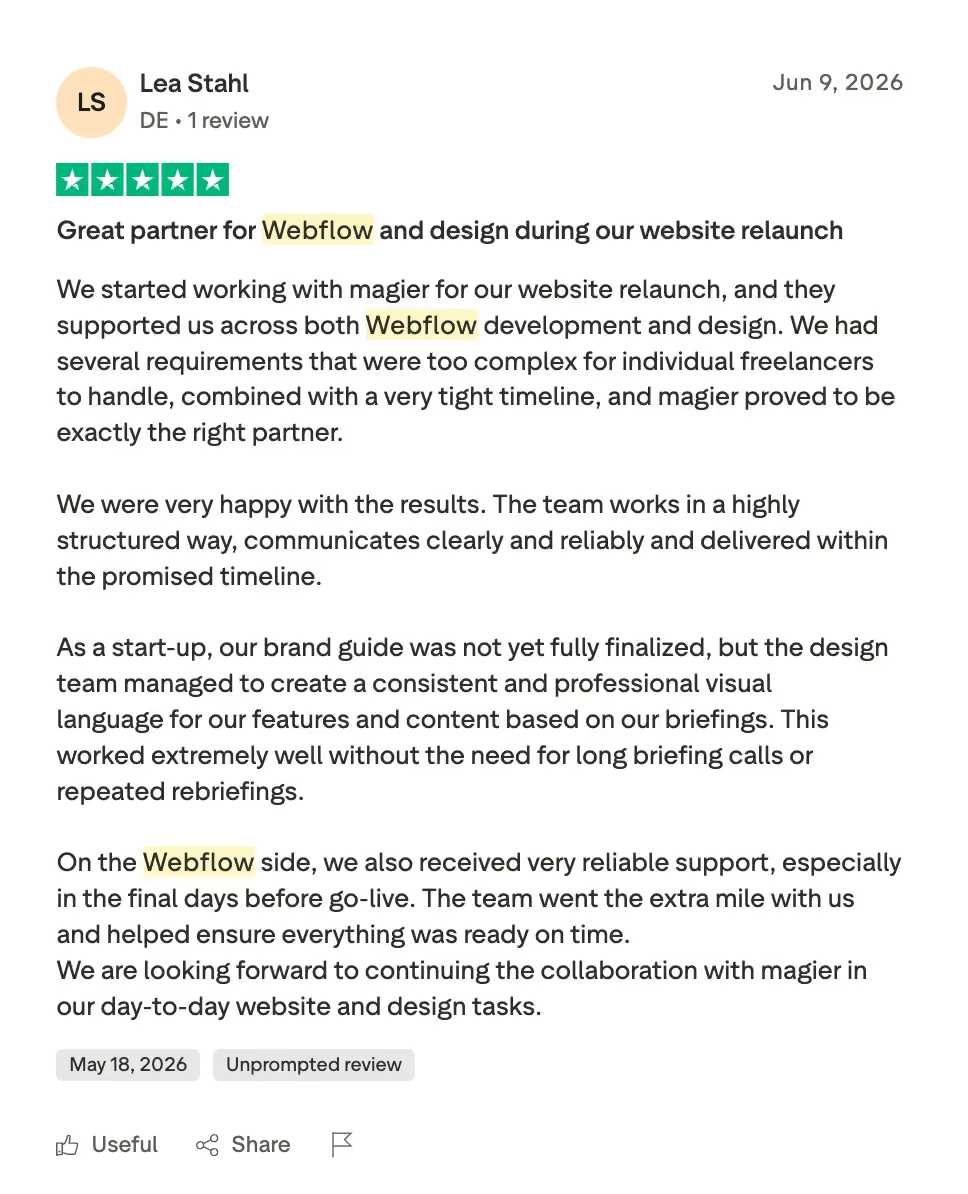
If you need more creative throughput across many categories and your primary concern is volume, Penji's model handles that better. If you need fewer, higher-quality deliverables with consistent brand oversight and Webflow development, magier's model is designed for that.
Risk, compliance, and brand security
Both services employ their designers as full-time employees rather than freelancers, which reduces worker classification risk compared to freelance marketplace models. Both assign IP to the client for completed work.
Penji's 30-day money-back guarantee is a meaningful difference for risk-averse buyers. You try the full service for a month, and if it doesn't work, you get your money back. magier doesn't offer a money-back guarantee, but monthly cancellation with 7-day notice keeps the financial exposure to one billing cycle.
One thing you should always ask either (or all) service directly: how are your files handled if you cancel? With magier, files are delivered in Figma and on the dashboard with all raw data, so you have everything before and after cancellation. With Penji, files are accessible through the platform, so it's worth confirming what happens to access after your subscription ends.
Who should choose magier
magier is the better fit if your situation matches one or more of these:
- You need a fixed-scope project, not a subscription. A full rebrand, a website launch from scratch, or a Webflow migration with a set deadline is better suited to magier's one-time project option. Penji is subscription-only with no project-based alternative.
- You need premium, conversion-focused design for SaaS, B2B, or startup marketing: magier's art-director review ensures a higher quality floor on every delivery, which matters most for landing pages, ad systems, and brand work where every detail affects performance.
- You prefer fewer, higher-quality deliverables over high-volume production: If your team submits 5-15 carefully briefed tasks per month rather than 30+ quick assets, magier's one-active-task model with quality review is built for that cadence.
- You have a one-time project that needs a fixed deadline: A rebrand, website launch, or Webflow migration with a defined scope and timeline is a better fit for magier's one-time project option than a monthly subscription. Penji doesn't offer project-based work.
- Your team works in Figma: magier delivers everything in a dedicated Figma file per client with full raw data, which integrates directly into Figma-based design workflows.
Who should choose Penji
Penji is the better fit if your situation matches one or more of these:
- You need a high volume of creative assets across many categories at a lower monthly cost: Penji's Essentials plan at $995/month includes 2 active workstreams and covers branding, ad creatives, social media, email, print, packaging, presentations, illustrations, and Canva templates. That's a lot of ground for under $1,000/month.
- You're an agency that needs white-label design production for client work: Penji's Agency Partner plan includes a white-label platform, same assigned creatives, and support for multiple client brands. That's a differentiator most design subscriptions don't offer.
- You want a 30-day money-back guarantee to test the service risk-free: Penji lets you try the full service for a month and get a refund if it doesn't fit. If you're testing a design subscription for the first time and want to minimize financial risk, that guarantee matters.
- You want AI-enhanced creative workflows: Penji's AI-assisted ideation and iteration tools accelerate the creative process and let you explore more directions. If your team values speed and creative range over manual art-directed precision, Penji's model is built for that.
- You don't need Webflow development: If your workflow is entirely graphic design, video, and motion, paying for Webflow capability you won't use doesn't make sense. Penji's broader creative scope at a lower price covers more categories than magier's design-only subscription.
Real-world scenarios
These are actual magier client outcomes, matched to the areas where this comparison matters most.
Plancraft: web redesign that increased conversions by 20%
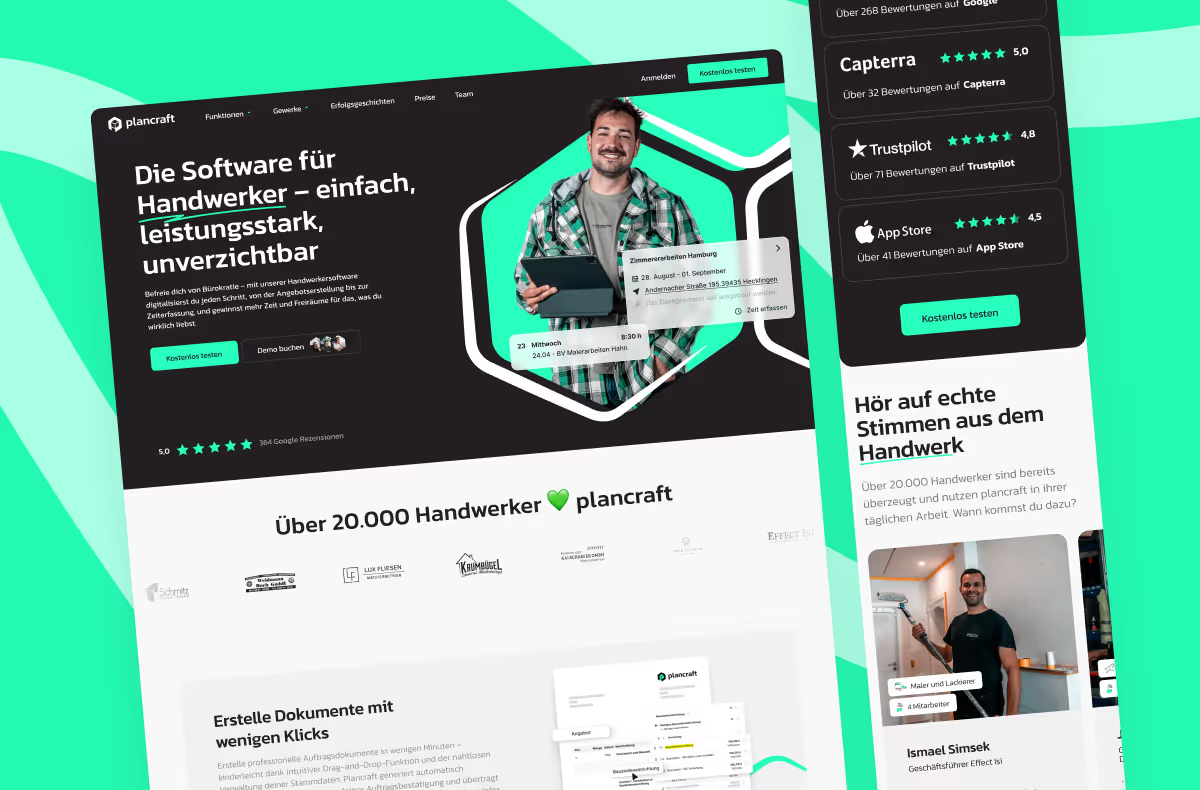
Plancraft, a SaaS company in Hamburg, wasn't just looking for a better-looking website. They needed the redesign to actually move their conversion numbers. What made the difference was having one team handle both the design and the Webflow build, because the designers who mapped out the conversion flow were the same people writing the code. The result was a 20% lift in conversions. With a service like Penji, the landing page design would be covered, but the Webflow development would need a second vendor, and that's where design decisions tend to get diluted in the handoff.
Odin: 10+ page responsive Webflow site in under 2 weeks
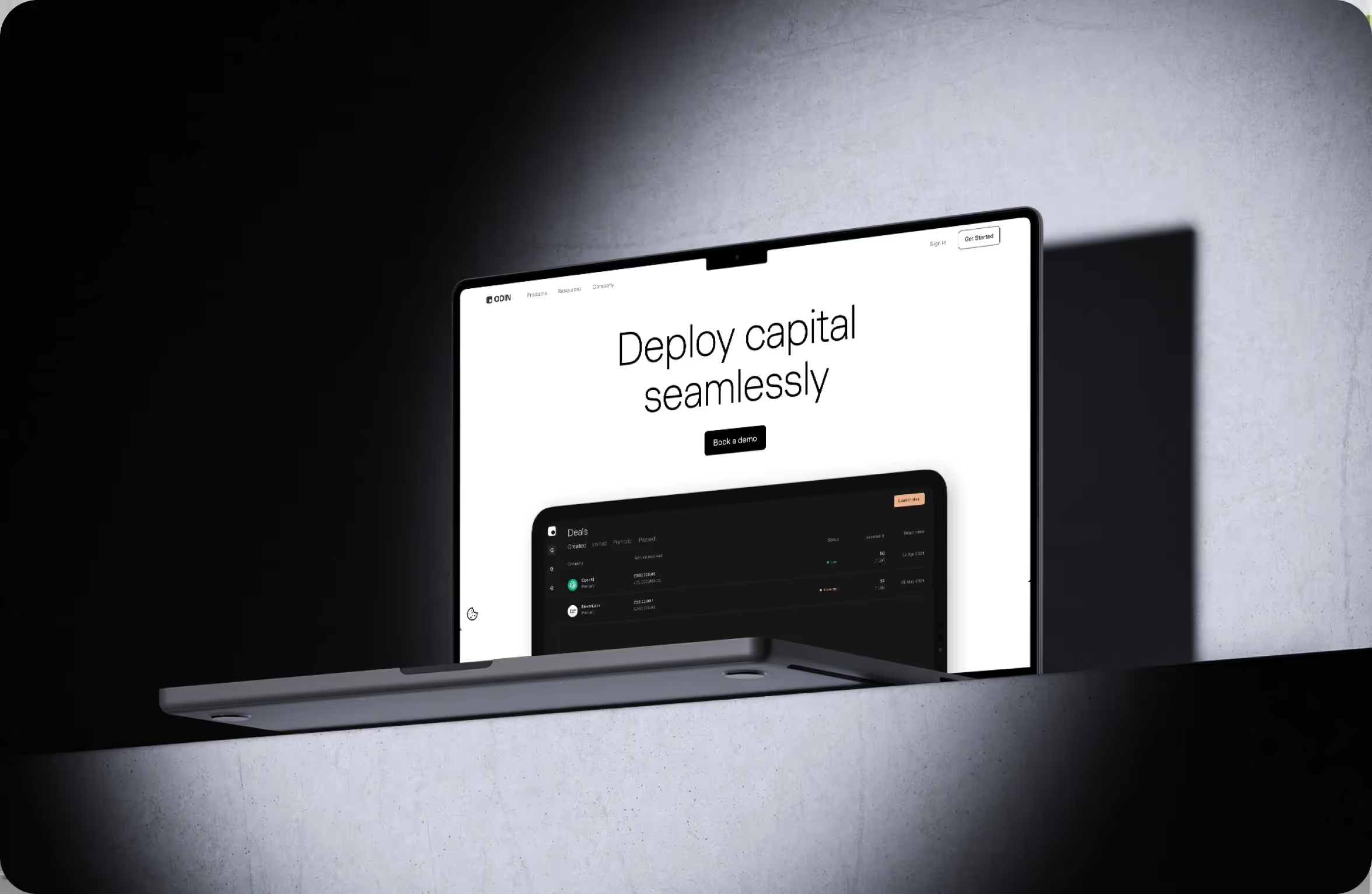
Odin, a London-based fintech company, needed a full responsive website in Webflow on a tight deadline. magier delivered 10+ pages in under two weeks because the design and development teams were already working together inside one subscription. Penji offers frontend development on its Dedicated Team plan at $4,500/month, but that covers general code, not Webflow-specific builds. For a project like Odin's, a Penji subscriber would likely need to bring in a separate Webflow developer, which adds a coordination layer and extends the timeline, especially under deadline pressure.
How magier works
- Choose your plan on the magier website. All pricing is published, every plan cancels monthly, and you can start with design, Webflow, or both.
- Get matched with a dedicated team led by an art director who will oversee your projects and ensure quality and brand consistency from day one.
- Submit your first brief through the magier dashboard using a structured format that takes minutes to fill out. You can set priorities and reorder your queue at any time.
- Receive your first delivery within 48 hours. Every design is reviewed by the art director before it reaches you.
- Request revisions or approve and move on. The team iterates until you're satisfied, then starts the next task in your queue. You get an update every 48 hours.
For teams that need Webflow development alongside design, the combined plan at €4,450/month covers both pipelines. For one-off projects with a fixed deadline, visit magier.com/one-time-project.
Why choose magier
- Art-director review on every delivery: Every design is checked for quality, brief alignment, and brand consistency before you see it, which means fewer revision cycles and a higher average quality floor.
- Transparent, published pricing with monthly cancellation: You see every plan price on the website, cancel with 7-day notice, and there are no long-term contracts.
- One-time projects for scoped work: If you need a rebrand, website launch, or Webflow migration on a fixed timeline, magier offers that in addition to the subscription.
- 150+ brands served with a 4.9/5 Trustpilot rating: magier's clients include 5 unicorn companies, and the company's clients have collectively raised over $7 billion from top investors.
- You need a fixed-scope project, not a subscription. A full rebrand, a website launch from scratch, or a Webflow migration with a set deadline is better suited to magier's one-time project option. Penji is subscription-only with no project-based alternative.
- You need design and Webflow development without managing two vendors. If your team regularly ships landing pages, microsites, or web updates, having one subscription that covers the design and the Webflow build removes a coordination layer that slows most teams down.
So, what should you do next?
Penji and magier both do what they promise, but they promise different things. Penji gives you broad creative coverage across 120+ categories at a price point that's accessible for smaller teams and agencies. magier gives you a premium creative partner that handles design and Webflow together, with art-director oversight built into every delivery.
The right choice depends on what your team actually needs month to month. If it's volume and breadth, Penji's model is hard to beat at $995/month. If it's quality, Webflow, and a team that learns your brand deeply, that's what magier is built for.
Ready to see how magier works? Book a demo. If you need a one-time project instead, start here. For other comparisons, see magier vs Design Pickle, magier vs Superside, and magier vs freelancers.
Pick the section most relevant to your situation and start there.
{{cta}}
FAQ
Unlimited. Every magier subscription includes unlimited revisions on active tasks at no extra cost. The team iterates until you approve the work, and you receive an update every 48 hours.
Penji is significantly more affordable at the entry level. Penji's Essentials plan starts at $995/month, while magier's design subscription starts at €2,750/month (~$2,950 USD). However, if you need Webflow development alongside design, magier's combined plan at €4,450/month is often comparable in cost to Penji plus a separate Webflow developer.
No. Penji offers web and landing page design on its Agency Partner plan ($1,995/month) and full frontend development/code on its Dedicated Team plan ($4,500/month), but does not offer Webflow-specific development. If you need designs built in Webflow, you would need a separate Webflow developer.
The biggest differences are scope, price, and quality model. magier covers both design and Webflow development with art-director review on every delivery, starting at €2,750/month. Penji covers 120+ creative categories starting at $995/month with multiple concurrent workstreams and AI-enhanced workflows. magier produces fewer, higher-quality deliverables; Penji produces a higher volume across more categories.
Yes. Penji includes Canva template creation on all plans, starting with the Essentials plan at $995/month. If your team distributes branded Canva templates to internal teams or franchise partners, this is included at no extra cost.
Yes. magier offers one-time projects for branding (2-4 weeks), web design (2-6 weeks), and Webflow development (2-6 weeks). These come with a fixed deadline and scope, for teams that need a specific deliverable rather than ongoing monthly capacity.
Penji offers a 30-day money-back guarantee on all plans. You can try the full service for a month and receive a refund if it's not the right fit. This is not a limited trial but full access to your chosen plan for the first 30 days.
Yes. magier has built creative engines producing over 80 ad creatives per month for clients like Valuecase. The art-director review ensures consistent quality even at high volume.
.avif)

.webp)