Marketing Design in 2026: Comprehensive Guide with Types, Tips & More
Marketing design is the practice of using visual elements like typography, color, imagery, and layout to communicate a brand's message and drive measurable audience action across channels. It spans everything from social media graphics and email templates to landing pages and ad creatives.
With 94% of first impressions being design-related (according to a 2024 study by WebFX), the visual quality of your marketing directly affects whether people trust, engage with, or ignore your brand. This makes marketing design one of the highest-leverage skills a marketer can build right now.
This guide breaks down the core types of marketing design, the principles behind designs that actually convert, how to build a strategy around your visual identity, and the tools worth using in 2026.
Below, we walk through each element with examples and actionable steps you can apply to your next campaign.
{{freebie}}
What is Marketing Design?
Definition
Marketing design is a specialized field that combines graphic design principles with marketing strategies to create visual assets aimed at promoting products, services, or brands. It plays a crucial role in effectively communicating a brand's message and engaging with the target audience.
It focuses on developing visual content for various marketing channels, including websites, social media, email campaigns, advertisements, and product packaging. The primary goal is to enhance brand visibility, improve customer engagement, and ultimately drive sales. By leveraging design elements, marketing designers aim to evoke emotions and actions from the audience, making the marketing materials more appealing and effective
Importance
You might be wondering why marketing design matters so much. Well, it's the bridge that connects your brand to your audience.
It transforms abstract ideas into tangible experiences that resonate on a personal level. In fact, 94% of first impressions are design-related, and 92% of people say visual elements are the most important factor in their buying decisions. That's huge!
It’s also important for:
- Brand Identity: Effective marketing design helps establish a strong brand identity by ensuring consistency across all visual elements. This consistency fosters recognition and trust among consumers.
- Customer Engagement: Well-designed marketing materials are more likely to capture the audience's attention, encouraging them to interact with the brand. This can include clicking on ads, signing up for newsletters, or making purchases.
- Increased Sales: A visually appealing design can significantly impact conversion rates. Research indicates that unattractive websites can lead to higher bounce rates, while engaging designs can enhance user experience and drive sales.
- Strategic Communication: Marketing design is not just about aesthetics; it involves strategic thinking about how to convey a brand's message effectively. Designers must understand the target audience and the specific goals of each marketing campaign.
Key Elements
To create effective marketing design, you need to focus on several key elements:
- Visual Identity: This includes logos, color palettes, and typography that represent your brand consistently across all platforms.
- Imagery: Carefully chosen photos, illustrations, and graphics that convey your message and evoke specific emotions.
- Layout: The arrangement of visual elements to guide the viewer's eye and emphasize important information.
- Consistency: Maintaining a uniform look and feel across all marketing materials to strengthen brand recognition.
By mastering these elements, you'll create designs that drive results for your marketing.
{{cta}}
Types of Marketing Design
Marketing design includes various forms of visual communication. Let's explore some key types:
Digital Advertising
Creating eye-catching and impactful ads for platforms like Google Ads and social media is key. These ads must communicate your message quickly and effectively, grabbing attention in a crowded digital space. The goal is to create visuals that not only attract clicks but also convert views into meaningful actions.
Email Design
Designing visually appealing and responsive email templates enhances user engagement. Effective email design incorporates brand elements and clear calls to action, ensuring that emails look great on any device. The design should facilitate easy reading and encourage recipients to interact with the content.
Social Media Graphics
Developing content tailored for different social media platforms maximizes reach and interaction. Each platform has its own style and audience, so creating graphics that fit these specific contexts is crucial. The aim is to boost engagement, shares, and overall visibility of your brand.
Print Design
Designing brochures, flyers, and other printed materials that align with the brand's identity is essential for offline marketing. These materials need to be visually appealing, informative, and consistent with the brand's visual language. Print design helps reinforce brand recognition and delivers your message in tangible form.
Web Design
Your website is your digital storefront. It needs to be visually appealing, user-friendly, and aligned with your brand. Current trends include simplicity in design, intuitive navigation, and responsive layouts that work well on all devices. Remember, your website should not only look good but also provide an excellent user experience.
Packaging Design
Packaging design is your product's first impression. It needs to protect the product, inform the consumer, and stand out on the shelf. In 2024, we're seeing trends like interactive packaging, bold color contrasts, and sustainability-focused designs. These can help your product catch the eye and resonate with environmentally conscious consumers.
Principles of Effective Marketing Design
To create impactful marketing designs, you need to master a few key principles. Let's dive into the essentials that'll help your designs stand out and effectively communicate your message.
Balance
Balance is crucial in design. You need to distribute visual weight evenly across your composition. You can achieve this through symmetrical or asymmetrical arrangements. Symmetrical balance creates a sense of stability. Asymmetrical balance, on the other hand, can be more visually interesting and dynamic. Experiment with both to see what works best for your message.
Contrast
Want to grab attention? Contrast is a must. You can simply use opposites to highlight key elements. Think light vs. dark, big vs. small, or warm vs. cool colors. Contrast helps guide the viewer's eye to the most important parts of your design. Just remember, a little goes a long way – too much contrast can overwhelm your audience.
Hierarchy
Hierarchy in design is about organizing elements from most to least important. It helps viewers understand the relationships between different parts of your design. Size, color, and alignment are great ways to establish hierarchy. Larger elements naturally draw more attention, while bright colors stand out against muted tones. Use these techniques to guide your audience through your design in the order you intend.
Unity
Unity ties everything together. You’re creating a sense of cohesion in your design. You can achieve this through consistent use of colors, fonts, and styles. Repetition of certain elements can also help create a unified look. Remember, unity doesn't mean everything has to match perfectly – it's about creating a harmonious overall impression that supports your marketing message.
Difference Between Marketing Design and Graphic Design
Marketing design and graphic design share tools and visual principles, but they serve different purposes and require different mindsets.
Graphic design focuses on visual communication broadly. A graphic designer might create a logo, design a book cover, illustrate a poster, or develop a brand identity system. The primary measure of success is whether the design effectively communicates visually and meets aesthetic standards.
Marketing design is a specialized subset that focuses specifically on creating assets that drive business outcomes. A marketing designer creates ads, landing pages, email templates, and social media graphics with the explicit goal of generating clicks, conversions, and sales. Every design decision connects back to a marketing objective.
The key difference is in how success is measured. A graphic designer asks: "Does this look good and communicate clearly?" A marketing designer asks: "Does this convert? What's the click-through rate? How does this perform in A/B testing?"
Marketing designers need to understand audience psychology, conversion optimization, and how design choices affect user behavior. They work closely with marketing strategists, growth teams, and data analysts. Graphic designers typically work more closely with brand teams, creative directors, and clients focused on visual identity.
In practice, many designers work across both disciplines. But if you're hiring or building a career, understanding this distinction helps you find the right fit.
Creating a Marketing Design Strategy
For a killer marketing design strategy, you need to know who you're talking to. Identifying your target audience is crucial. Think about their demographics, behaviors, and preferences. This insight will guide your entire strategy, helping you create designs that resonate with the right people.
Next up, set clear goals. What do you want to achieve? Maybe it's boosting brand awareness or driving more sales. Whatever it is, make sure your goals are SMART: Specific, Measurable, Actionable, Relevant, and Time-bound. This approach keeps your team focused and helps you track progress.
Now, let's talk channels. Where does your audience hang out? Social media, email, content marketing, paid ads – each has its strengths. Pick the ones that align best with your goals and audience preferences. Remember, it's not about being everywhere; it's about being where it matters most.
Lastly, develop brand guidelines. This is your rulebook for consistency. It covers everything from logo usage to color palettes and typography. Think of it as your brand's DNA. With solid guidelines, you'll ensure your marketing designs always look and feel uniquely you, no matter where they appear.
How to Create a Marketing Design Guide
A marketing design guide (sometimes called a brand style guide) is a document that defines how your brand should appear visually across all marketing materials. It ensures consistency whether you're working with in-house designers, freelancers, or agencies.
Why You Need One
Without a design guide, your marketing materials gradually drift. Different team members make different choices about fonts, colors, and image styles. Over time, your brand starts to look inconsistent, which undermines recognition and trust.
A good design guide solves this by documenting the rules everyone should follow. It makes design decisions faster (no more debating which shade of blue to use) and ensures that anyone creating marketing materials can stay on-brand.
Essential Components of a Marketing Design Guide
- Brand story and mission: Start with the "why." Define your brand's purpose, values, and personality. This context helps designers make choices that align with what the brand stands for, not just what it looks like.
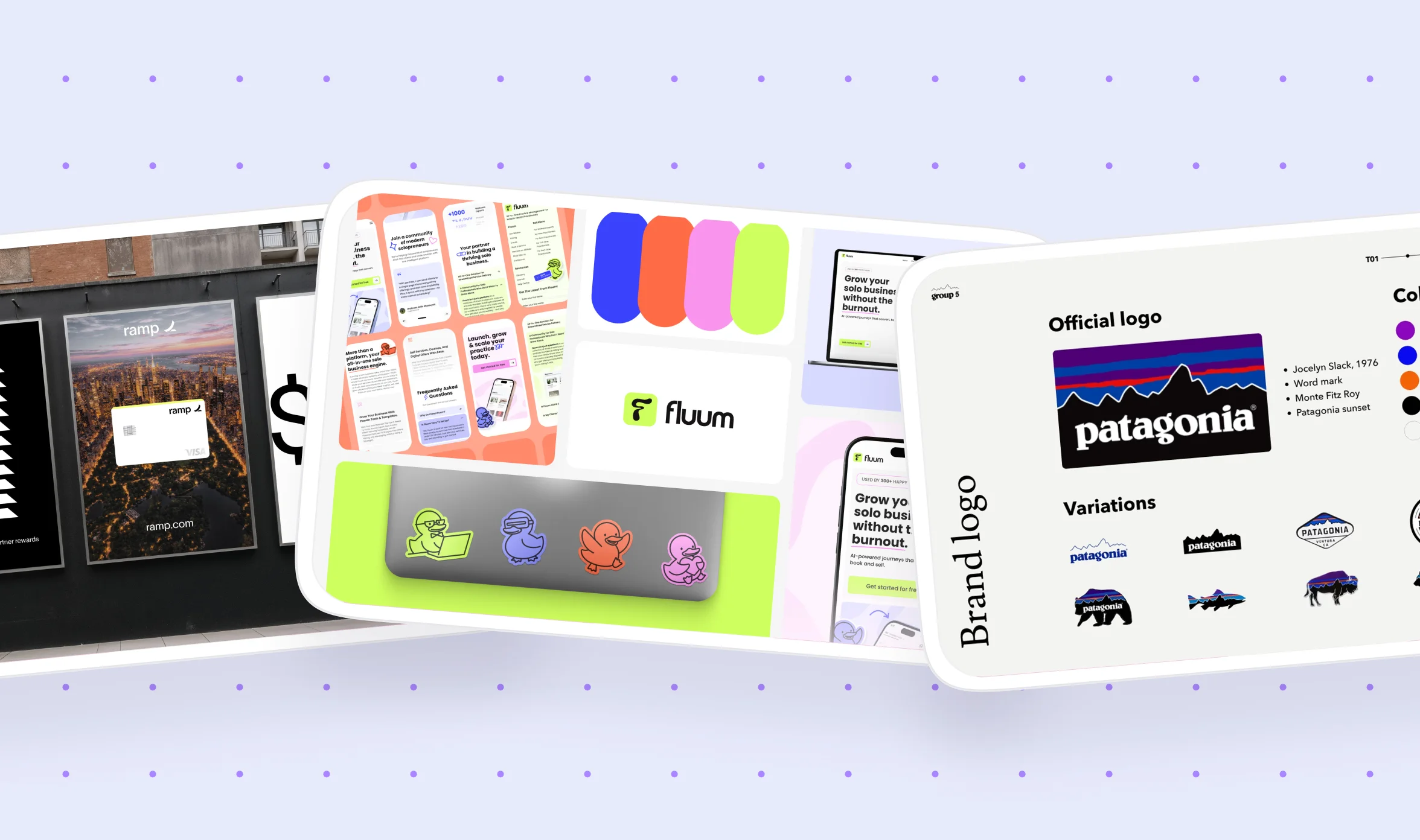
- Logo usage: Document your primary logo, secondary versions, and any variations (horizontal, vertical, icon-only). Specify minimum sizes, clear space requirements, and what not to do (don't stretch, don't change colors, don't place on busy backgrounds).
- Color palette: Define your primary and secondary colors with exact specifications: HEX codes for digital, RGB for screens, CMYK for print, and Pantone for precise color matching. Include guidance on when to use each color.
- Typography: Specify your font families for headings, body copy, and special uses. Include hierarchy rules (H1 is 32px bold, H2 is 24px semibold, etc.) and any fonts to avoid.
- Imagery and iconography: Define the style for photos and illustrations. Should photos be candid or posed? Bright and airy or moody and dramatic? Document whether you use custom icons, which style (outlined, filled, flat), and where to find approved assets.
- Voice and tone: While not strictly visual, voice guidelines help maintain consistency across marketing materials. Define how the brand speaks: formal or casual? Technical or accessible? Include examples of good and bad copy.
- Application examples: Show how all these elements come together in real marketing materials. Include examples of email headers, social media posts, landing pages, and ads that demonstrate the guidelines in action.
Steps to Create Your Guide
- Audit existing materials: Review what you currently have. Identify what's working and where inconsistencies exist.
- Define brand pillars: Clarify your purpose, personality, and audience before making visual decisions.
- Establish visual identity: Make decisions about colors, typography, and imagery that reflect your brand pillars.
- Create documentation: Compile everything into a shareable document. Tools like Figma, Notion, or dedicated platforms like Frontify work well.
- Define do's and don'ts: Include clear examples of incorrect usage to prevent common mistakes.
- Distribute and train: Share the guide with everyone who creates marketing materials and provide training on how to use it.
Collaborating with Graphic Designers
When it comes to working with designers, you've got three main options: in-house, outsourcing, or a mix of both where you have a designer and get a monthly design subscription service to scale your design output without expanding the team. Each has its perks. In-house teams offer direct control and alignment with your brand, while outsourcing brings specialized knowledge and cost-effectiveness. It all boils down to your budget and resources.
Effective communication is crucial. Be clear and concise, avoid jargon. Use visual aids like sketches, examples and moodboards to explain your ideas. Remember, it's a two-way street – encourage feedback and listen actively. Empathy goes a long way in building trust with your team.
Managing design projects requires a streamlined process. Use centralized hubs for communication like Notion or Slack and file storage to keep everyone on the same page - Figma and Google Drive are great for this. Regular check-ins are important, but don't micromanage. Respect your team's boundaries and work styles. With the right approach, you'll create a harmonious collaboration that brings your marketing designs to life.
If you're looking to dive deeper into this topic, check out our free Marketer-Designer Collaboration guide!
Essential Skills for Marketing Designers
Marketing designers combine traditional design skills with marketing knowledge. Here are the core competencies that separate effective marketing designers from general graphic designers.
Design Tools Proficiency
You need strong skills in design software. At minimum, this means proficiency in tools like Canva, Figma, or Adobe Creative Suite (Photoshop, Illustrator, InDesign). Most marketing teams now standardize on Figma for collaborative design work, so familiarity with real-time collaboration features matters.
Strategic Thinking
Marketing design isn't about making things look nice. It's about understanding what drives user behavior and making design choices that support marketing goals. You need to think strategically about how visual elements guide attention, build trust, and encourage action.
This means understanding concepts like visual hierarchy (what should users see first?), the psychology of color (how do colors affect perception?), and conversion optimization (what makes someone click?).
Technical Knowledge
Marketing designers benefit from understanding the technical context their designs live in. This includes:
- SEO basics: How images affect page load speed, the importance of alt text, and how visual content appears in search results
- Mobile optimization: Designing for mobile-first experiences and understanding responsive design
- Email rendering: Knowing how email clients display designs differently
- Platform specifications: Understanding ad specs, social media image dimensions, and file format requirements
Data Literacy
Marketing designers should be comfortable reading analytics and understanding how their designs perform. This means knowing how to interpret A/B test results, understanding what metrics like click-through rate and conversion rate mean, and being able to iterate designs based on data rather than just intuition.
Brand Understanding
While marketing designers focus on performance, they still need to work within brand guidelines. The best marketing designers can balance conversion optimization with brand consistency, creating assets that perform well and strengthen brand recognition.
Marketing Design Best Practices for 2026
The current section header says "Marketing Design Best Practices for 2024" but the article title says 2026. Update the content to reflect current trends.
Mobile-First Is Now Mobile-Only For Many Users
With mobile commerce hitting $2.5 trillion in 2025, designing for mobile isn't optional. Start every design project with the mobile view, then scale up. If your landing page doesn't work on a phone, it doesn't work for a significant portion of your audience.
Focus on thumb-friendly tap targets, readable text without zooming, and fast-loading images. Test everything on actual devices, not just browser simulations.
Minimalism And Simplicity Continue To Win
The trend toward clean, uncluttered design continues. Users are overwhelmed with information, so designs that respect attention by being simple and focused perform better than designs that try to say everything at once.
Use white space generously. Limit your color palette. Make sure there's a clear visual hierarchy so users know where to look first.
"Made By Humans" As A Differentiator
As AI-generated content becomes more common, there's a growing appreciation for design that feels distinctly human. This doesn't mean avoiding AI tools, but it does mean adding human touches: hand-drawn elements, imperfect textures, photography that feels genuine rather than stock.
Brands that lean into authentic, human-feeling design can stand out against competitors using generic AI-generated visuals.
Data-Driven Design Decisions
The best marketing designers in 2026 don't rely on intuition alone. They use analytics to understand what's working, run A/B tests to compare design variations, and iterate based on evidence.
This means getting comfortable with tools like heatmaps, session recordings, and conversion analytics. It also means being willing to let go of designs you love if the data shows they don't perform.
Accessibility As Standard Practice
Accessible design isn't just ethical. It's also good marketing design. Ensuring sufficient color contrast, readable font sizes, and clear visual hierarchy helps everyone, including users with disabilities, users on bright screens, and users who are simply distracted.
Build accessibility into your process from the start rather than treating it as an afterthought.
Tools and Software for Marketing Design
Ready to supercharge your marketing design efforts? Let's dive into some game-changing tools that'll make your life easier and your designs pop!
Graphic Design Tools
Canva is great for quick, eye-catching visuals. If you wanna take it a step further, at Magier we’re huge fans of Figma. As a marketer, switching to Figma completely was one of the best things I ever could do to improve my collaboration with designers and upskill. For even more advanced projects, Adobe's Creative Suite, including Photoshop and Illustrator, offers powerful features for professional designs.
Web Design Platforms
WordPress and Squarespace are of course popular choices for building websites without coding expertise and almost no design work. They offer drag-and-drop interfaces and customizable templates. For those who want more control, Webflow allows you to create responsive designs visually while accessing the underlying code and being able to create beautiful layouts and animations.
Collaboration Software
Figma is a game-changer for team collaboration. It allows real-time editing and feedback, making it ideal for remote teams. For project management, tools like Notion can help keep your design projects organized and on track. Also communication tools like Slack, which can streamline team discussions and file sharing.
Remember, the best tool is the one that fits your team's needs and workflow. Experiment with different options to find your perfect match!
Measuring the Success of Marketing Design
Want to know if your marketing design efforts are paying off? You need to be monitoring these:
Key Performance Indicators
KPIs are your best friends when it comes to tracking design impact. They help you measure progress, optimize your budget, and guide decision-making. Focus on metrics like conversion rates and return on marketing investment (ROMI). These numbers tell you how well your designs are driving desired actions and contributing to the bottom line.
A/B Testing
A/B testing is a must for refining your designs. It's a pretty simple concept: create two versions of a design element, show them to different audience groups, and see which performs better. You might test email subject lines, CTA button colors, or ad variations. The great thing about A/B testing is that it lets you make data-driven decisions that can lead to lower bounce rates, increased conversions, and improved customer experiences. Make sure you have enough visitors / viewers for testing, though so that the results are statistically significant.
User Feedback
Don't underestimate the power of user feedback. It's a goldmine that can shape your marketing strategy. Pay attention to what customers say about your designs through surveys, social media comments, or reviews. Their language and preferences can help you craft more relatable messaging and highlight features that truly resonate with your audience. Remember, happy customers can become your best brand advocates!
Overcome Common Marketing Design Challenges
Budget constraints
Facing tight budgets? You're not alone. Many startups struggle to allocate the recommended 7-8% of gross revenue to marketing. But don't worry, there are smart ways to maximize your limited resources. Focus on cost-effective strategies like social media marketing and content creation. Organic Channels. Also, don’t hire a huge design team - you can save money by subscribing to a design team, which is what you can do with magier. All this yield impressive results without breaking the bank. Remember, it's not about how much you spend, but how wisely your time and other resources.
Staying current with trends
Keeping up with design trends is crucial for maintaining a modern brand image. However, don’t blindly follow every new fad. Instead, aim to strike a balance between trending elements and your established brand identity. Stay informed by reading trend reports and inspiration sites, but be selective. Choose trends that align with your brand's personality and add a contemporary touch.
Marketing Design Careers: Roles, Skills, And Salary
If you're considering a career in marketing design or hiring for these roles, here's what you need to know about the landscape in 2026.
Common Marketing Design Roles
Marketing Designer: The core role. Creates visual assets for marketing campaigns including ads, social graphics, email templates, and landing pages. Works closely with marketing strategists and copywriters.
Senior Marketing Designer: Leads design direction for campaigns, mentors junior designers, and often owns the relationship with brand guidelines. More strategic input on campaign concepts.
Marketing Design Lead / Creative Director: Manages a team of marketing designers, sets visual direction for the marketing function, and ensures brand consistency across all touchpoints.
Brand Designer: Overlaps with marketing design but focuses more on brand identity systems, guidelines documentation, and ensuring consistency across the organization.
Growth Designer: A marketing designer who specializes in conversion optimization. Works closely with growth teams on landing page experiments, ad creative testing, and data-driven design decisions.
What Companies Look For
Based on job postings in 2026, most marketing design roles require:
- Proficiency in Figma (now the industry standard for collaborative design)
- Experience with Adobe Creative Suite
- Portfolio showing marketing-specific work (not just general graphic design)
- Understanding of design systems and brand guidelines
- Ability to work quickly and iterate based on feedback
- Basic understanding of marketing metrics and A/B testing
Salary Expectations
Marketing design salaries vary significantly by location, company size, and experience level. In the US market as of 2026:
- Junior Marketing Designer: $50,000 to $70,000
- Mid-level Marketing Designer: $70,000 to $95,000
- Senior Marketing Designer: $95,000 to $130,000
- Marketing Design Lead: $120,000 to $160,000+
Salaries tend to be higher at tech companies and startups with strong design cultures. Remote roles have somewhat compressed geographic salary differences, though location still matters.
Building A Marketing Design Portfolio
Your portfolio should demonstrate marketing thinking, not just design skills. For each project, show:
- The marketing objective (what were you trying to achieve?)
- Your design approach (why did you make specific choices?)
- Results if available (did it perform well? What did you learn?)
Include a variety of formats: landing pages, email campaigns, social media graphics, and advertising. Show that you can work within brand systems while still solving unique problems.
Conclusion
Marketing design has a significant impact on how brands connect with their audience and drive results. In this guide we’ve explored the various aspects of marketing design, from its core principles to the latest tools and trends shaping the field. By applying these learnings, you can create visually stunning and strategically effective marketing materials that resonate with your target audience and help achieve their goals.
By combining creativity with strategy and consistently measuring results, you can refine your approach and create marketing designs that truly stand out in today's crowded .m
FAQ
In design broadly, the highest paying roles are typically Creative Director and Design Director positions at large companies, which can reach $200,000 or more. Within marketing design specifically, Senior Marketing Designer and Marketing Design Lead roles typically pay $95,000 to $160,000 in the US market. Salaries are generally higher at tech companies and in major metro areas.
To create a marketing design guide, start by auditing your existing materials to identify inconsistencies. Then define your brand pillars (purpose, personality, audience). Next, establish your visual identity including colors (with HEX, RGB, and CMYK codes), typography (font families and hierarchy rules), logo usage guidelines, and imagery style. Document everything in a shareable format, include do's and don'ts with examples, and distribute the guide to everyone who creates marketing materials.
The 3-3-3 rule is a guideline for creating effective marketing messages. It suggests your audience should understand: what you do in 3 seconds, why it matters to them in 30 seconds, and enough to take action in 3 minutes. In marketing design, this translates to: your headline should communicate the core message instantly, your supporting visuals and copy should clarify the value proposition quickly, and the full page should provide enough information for conversion.
Marketing designers need design tool proficiency (Figma, Canva, Adobe Creative Suite), strategic thinking about how design influences user behavior, technical knowledge (SEO basics, mobile optimization, email rendering), data literacy to interpret analytics and A/B test results, and brand understanding to balance conversion optimization with brand consistency.
The main types of marketing design include: digital advertising graphics (banner ads, social ads, display ads), social media graphics (posts, stories, cover images), email design (newsletters, promotional emails, automated sequences), landing page design, website design for marketing pages, print advertising (brochures, flyers, posters), and branded marketing materials (pitch decks, one-pagers, case studies).
The main difference is in objectives and success metrics. Graphic designers focus on visual communication broadly and measure success by aesthetic quality and how well the design communicates. Marketing designers focus specifically on creating assets that drive business results and measure success by metrics like click-through rate, conversion rate, and ROI. Marketing designers need to understand audience psychology, conversion optimization, and marketing strategy in addition to design fundamentals.
Marketing design is a specialized field that combines graphic design principles with marketing strategy to create visual assets that promote products, services, or brands. Unlike general graphic design, marketing design focuses specifically on creating materials that drive measurable business outcomes like clicks, conversions, and sales. Common marketing design outputs include digital ads, social media graphics, email templates, landing pages, and promotional materials.
Ensure brochures, flyers, and other materials align with your brand’s identity, are visually appealing, and effectively communicate your message to reinforce brand recognition.
Tailoring graphics for specific social media platforms maximizes reach and interaction, enhancing visibility and encouraging shares.
Visually appealing, responsive email templates with clear calls to action increase user engagement and ensure your emails perform well on any device.
Effective digital ad design quickly conveys your message, attracts clicks, and drives conversions on platforms like Google Ads and social media.
Marketing design captures attention, communicates messages clearly, and reinforces brand identity, making your marketing efforts more engaging and effective.


.avif)
.avif)