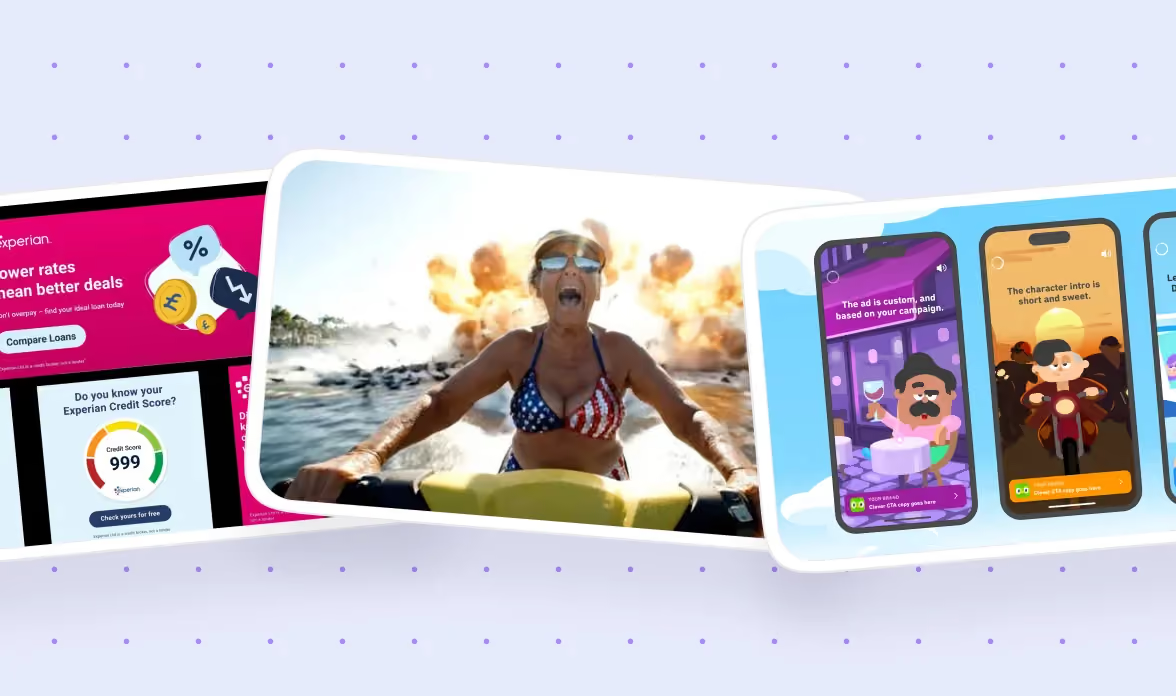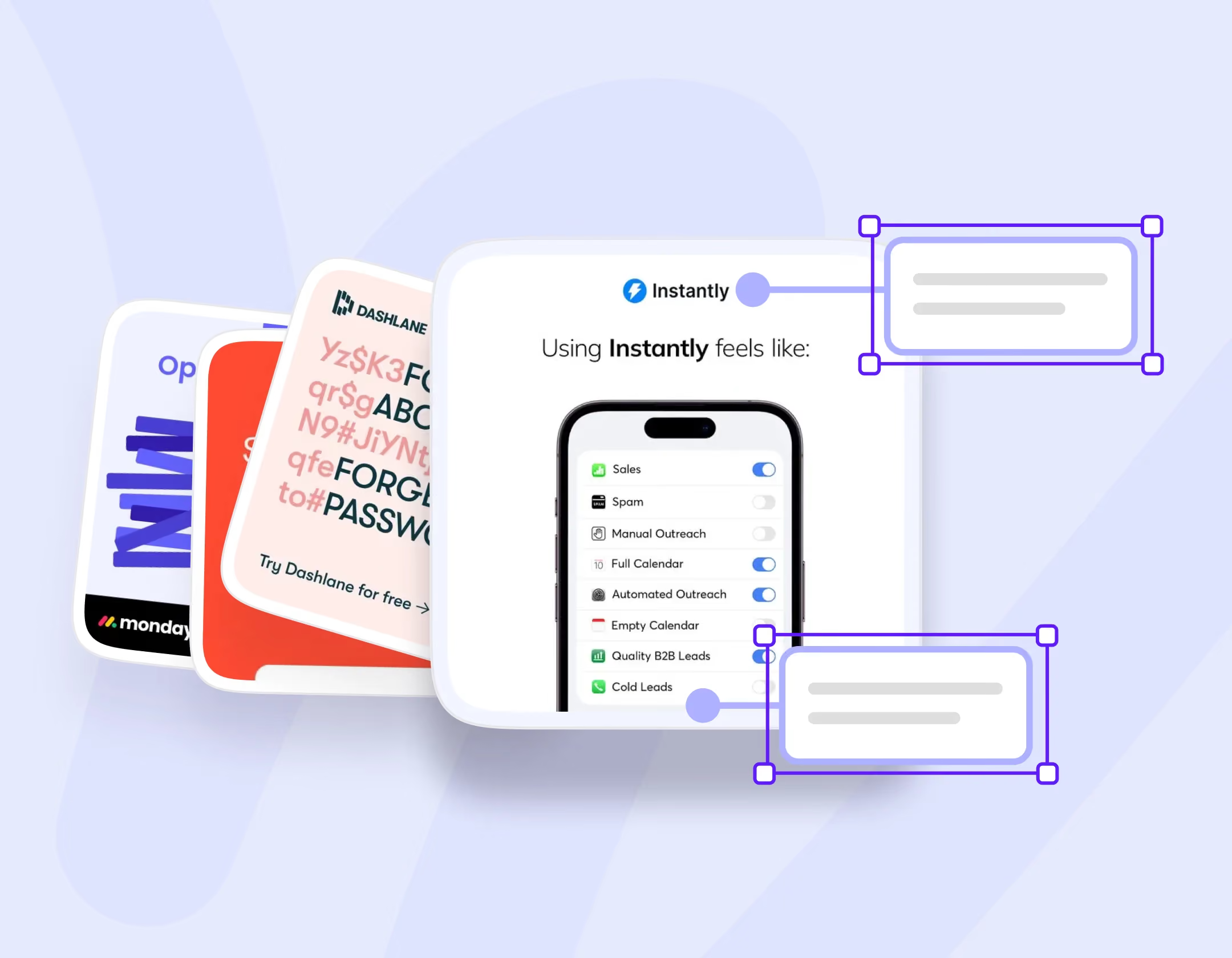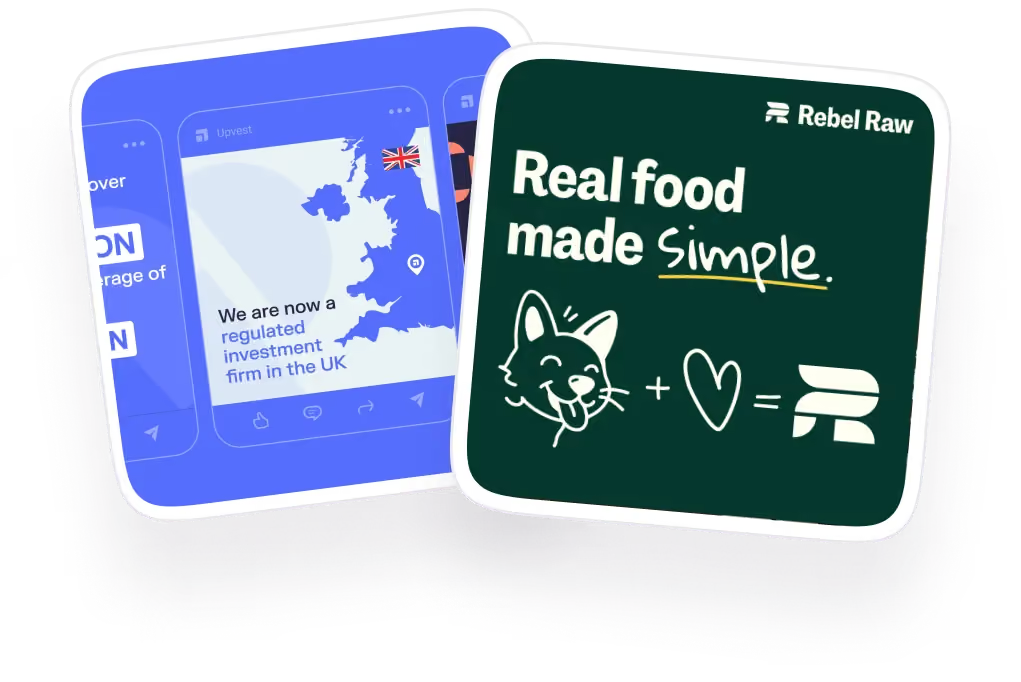
What Is Ad Creative? A Practical Guide for SaaS Marketing Teams
Everyone blames either the platform or the campaign manager when an ad flops.
The accusations include: targeting was off, the algorithm buried it, the budget was too small, the manager slacked! Most of the time, none of that is what happened. The creative itself never had a message worth stopping for, and no amount of diligence can fix that.
Ad creative is the actual visual and written material your audience sees and reacts to, separate from the ad unit that delivers it and the campaign strategy sitting behind it. Get the creative wrong, and a perfectly designed campaign stumbles.
Creative quality drives an estimated 49-50% of a campaign's incremental sales lift, more than targeting, bidding, or reach combined, according to research from NCSolutions and Nielsen. If most of your time goes into setup and strategy, and almost none into the creative itself, you're polishing the smaller half of the equation.
We wrote this guide for SaaS founders and marketers who need to produce ad creative themselves, without a design team on standby. It's based on what we've learned designing SaaS ad creative directly for clients.
Here's what we cover:
- What ad creative actually is
- Why creative should be your biggest priority when running paid campaigns
- The core elements of an effective ad creative
- A step-by-step production workflow for teams with no dedicated designer
- Platform-by-platform guidance for Meta, LinkedIn, TikTok, YouTube, and Search
- How to test your creative on a small budget, and whether AI tools can actually help
- A five-test checklist to run before anything goes live
- Best SaaS ad examples
{{freebie}}
What is an ad creative?
Three terms get used interchangeably, and untangling them makes everything else in this guide easier to apply.
The campaign is the strategic container, covering the goal and the audience. "Generate qualified demo bookings from Series A SaaS founders this quarter" is a campaign.
The ad is the delivery unit, meaning the specific placement, like a LinkedIn sponsored post or a YouTube pre-roll slot.
The creative is what the person actually sees and reacts to, including the image, video, headline, copy, and call to action inside that ad. It's the part your audience experiences directly, and it's what the rest of this guide focuses on.
A simple way to hold this in your head is that strategy shapes the campaign, the campaign gets delivered through an ad, and the ad is only as good as the creative inside it. Worth noting here, since it sets up a section later in this guide: swapping out individual creative elements, one at a time, is also the basis of testing, which is how you learn what's actually working.

Why should you prioritize ad creative
The 49-50% figure cited in the introduction comes from NCSolutions and Nielsen research analyzing nearly 450 campaigns across digital and TV formats. Creative quality contributed roughly half of the incremental sales lift, ahead of reach, targeting, and recency combined.
The exact contribution of creativity in ads varies by study, landing at different numbers depending on methodology and which channels are included, and that range is worth knowing rather than hiding. We're leading with the more conservative, most frequently cross-cited figure because it's the one with the clearest, most consistent sourcing across independent research.
Kantar's research adds a useful second data point. Paid media overall contributes only about 25% of total brand impact, with the remaining 75% coming from earned and owned touchpoints. That means within the paid slice of your marketing, the creative itself is carrying disproportionate weight. If your budget and time are limited, the highest-value place to focus is the creative, not another round of targeting tweaks.
Use this design brief before you start designing ad creatives
Most people start with "let's make a good-looking ad." That's backward, and it's the single most common reason ad creative ends up beautiful but empty.
The sequence that actually works runs in this order, moving from audience, to problem, to insight, to idea, to message, and only then to creative execution. Who are you talking to, specifically? What problem do they have right now, not in general? What do they believe, fear, or misunderstand about solving it?
What's the one interesting idea that addresses that? What should they remember? Only after answering these does it make sense to open a design tool.
An ad creative brief is just a way to force yourself through that sequence in one sitting, on one page, before any visual work begins. Here's a simple template you can fill in directly.
We'll fill this same template out with a real, worked SaaS example later in this guide, so you can see exactly how each field turns into actual ad copy.
{{cta}}
The core elements every ad creative needs
Once your brief is done, a handful of elements show up in nearly every effective ad creative design, regardless of platform or format.
- Brand identity, used with control: Your logo and visual identity should be present and consistent, but not dominating the layout. A giant logo crowding out the message is a common way ads end up looking corporate instead of compelling.
- A clear visual or product focus: The audience should immediately know what they're looking at, whether that's your product, a customer, or a striking piece of typography.
- Copy that does one job: A hook to earn attention, a supporting line to add context, and nothing else competing for the reader's focus. If you want a structure to lean on, classic copywriting frameworks like PAS, meaning problem, agitate, solution, and AIDA, meaning attention, interest, desire, action, both do this same job in a slightly different order.
- A single, unambiguous CTA: One action, stated plainly. "Start free" beats a page trying to also explain pricing, features, and a demo booking all at once.
- Visual hierarchy: The eye should move from hook, to value proposition, to proof, to CTA, in that order, without competing elements pulling attention sideways.
A production workflow for teams without a dedicated designer
This is the part most guides skip when explaining how to create ad creative, because most guides assume you already have a design team or the budget for one. If you don't, here's a workflow that still gets you to something good.
- Research for 30 minutes: Read your last five sales calls' notes or support tickets for the exact language your customers use. Skim two competitor ads. That's enough to start.
- Write the brief using the template above: One sitting, one page, before any visual work begins.
- Write three different hooks before picking one: Not three versions of the same hook, but three different angles: pain-led, curiosity-led, and proof-led.
- Pick a format that matches your actual resources: A clean static image with strong typography beats a mediocre video every time. Don't reach for video just because it performs better in general benchmarks if you can't actually make a good one.
- Use a template tool like Canva or Figma, and keep the design simple: One dominant visual element, one accent color, and generous spacing go a long way.
- Run the checklist: Work through the five tests covered later in this guide before you consider it done.
- Launch small: Set a defined budget and a defined review date, not an open-ended spend you forget to check on.
A SaaS ad example with creative best practices: from brief to execution
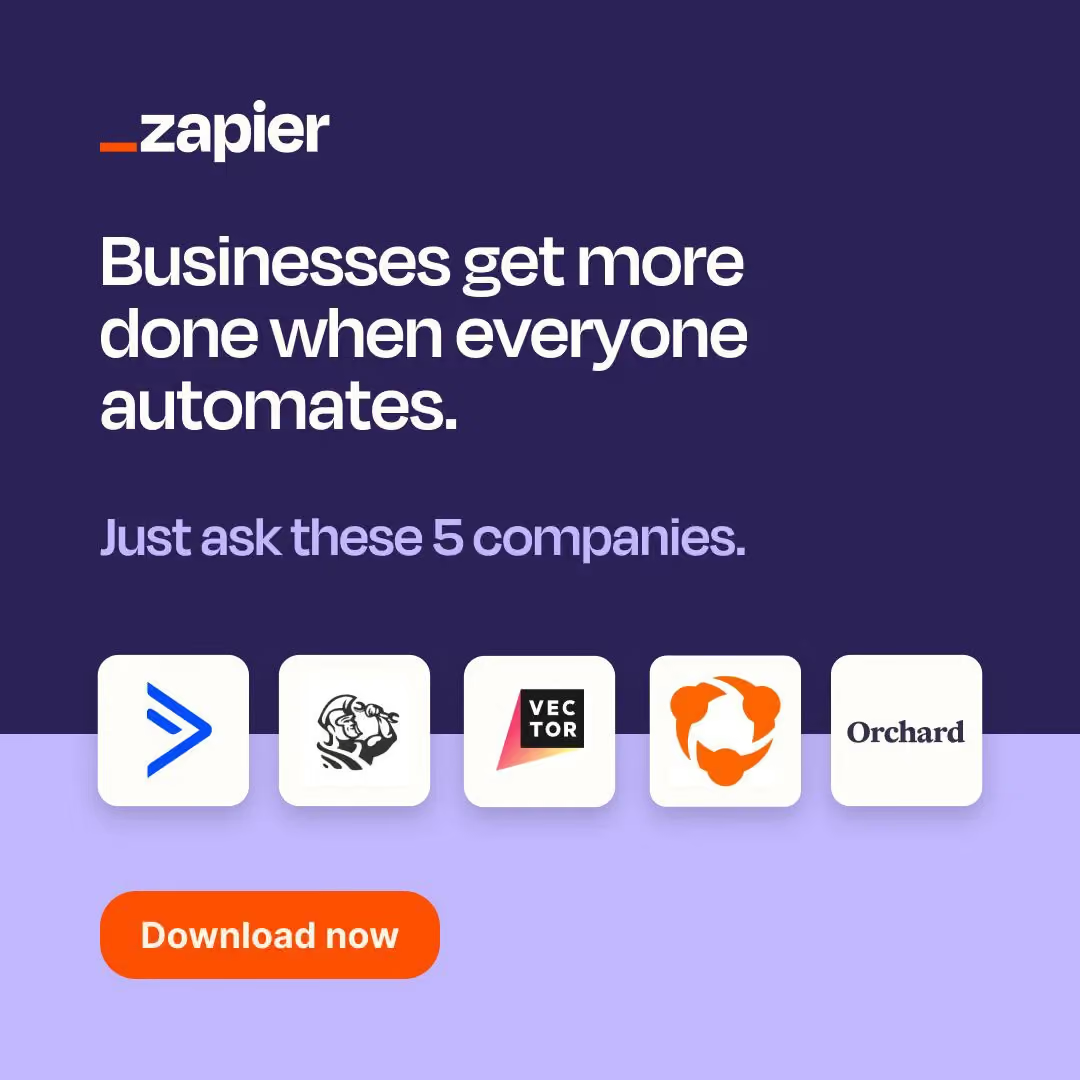
Abstract advice is easier to apply when you can see real ad creative examples filled in completely. Here's the brief template from earlier, worked through for a real ad example from Zapier:
This ad skips a problem statement and leans on proof instead. This makes sense because people already know the problem Zapier is built to solve. The hook makes a broad claim that could sound generic on its own, "businesses get more done when everyone automates," but the second line immediately backs it with five real logos instead of asking the reader to just take the claim on faith. That's the whole strategy: state the promise, then hand over receipts before anyone has time to doubt it.
Notice what's doing the actual persuasive work here. It isn't the color palette or the layout, it's the specificity of "these 5 companies" paired with logos a reader can actually recognize. A vaguer version, something like "trusted by leading businesses," would carry almost none of that weight, since there's nothing concrete to verify.
If you're weighing which approach fits your product, that's exactly the kind of decision our team makes with clients before a single design gets touched, so feel free to reach out if you want a second opinion on yours.

Platform-by-platform: what changes where
The core idea stays constant, but execution needs to adapt to where it's running. Here's how the platforms most relevant to SaaS marketers differ.
If you're specifically looking for ad creative for Facebook or ad creative for Meta, the short answer is native-feeling video and carousels over anything that looks pre-packaged.
Worth calling out for SaaS specifically, LinkedIn's Thought Leader Ads let a founder's own voice run as sponsored content rather than a branded post, and content shared by CEOs on LinkedIn gets roughly 4x the engagement of standard brand content, according to Financial Times reporting. If you have a founder willing to put their name on something, that's often a stronger asset than another polished brand graphic.
How to analyze your ad creative
Before you compare five different tests to a finished ad, it helps to break the ad itself down into its parts first. Look at each of these on their own, not just the ad as a whole.
The hook
- What's the first thing someone sees or reads in the first half-second?
- Does it name a specific emotion (relief, curiosity, urgency, ambition), or is it just a feature statement?
- Would this hook stop someone in your exact audience, or could it belong to any ad in any category?
The visual strategy
- Does the format match the job, meaning a static image for a clear claim, video for a demo, a carousel for a comparison?
- Is there a clear focal point, or are several elements competing for attention at once?
- Does the visual style match how your buyer actually makes decisions? B2B audiences tend to respond to proof and clarity; consumer audiences tend to respond more to emotion.
The copy structure
- Does the headline promise something specific, or something vague enough to apply to any product?
- Is there a proof point somewhere in the copy, not just a claim?
- Does the copy address the most obvious objection, or does it ignore it and hope no one asks?
The CTA
- Is the CTA action-oriented and benefit-framed ("Start free") rather than commitment-heavy ("Sign up")?
- Is there a friction reducer nearby, like "no credit card required" or a specific time commitment?
- Does the CTA stand out visually, or does it blend into the rest of the ad?
Landing page alignment
- Does the headline on the landing page match the promise made in the ad?
- Does the visual style carry through, or does it feel like a different brand took over?
- Would someone who clicked the ad feel like they landed in the right place, or feel slightly misled?
Run through this list on your own ad before you launch it, and run through it again on a competitor's ad you admire. The gap between the two lists is usually where your next test idea comes from.
Can you test your ad creative without a big budget?
Every resource on the internet about ad creative testing assumes volume, recommending 20 to 50 new creatives a week. That's real advice for a team with a production line. It's not useful if you're one person.
The underlying principle holds at all levels. Test one variable at a time, and test the idea itself first, meaning the hook or the angle, rather than a minor visual detail like button color. For a small team, a realistic cadence is 2 to 4 new creative concepts a month, not a week. That's still enough to learn something meaningful, as long as each test isolates one variable cleanly.
It helps to know why refresh timing matters at all. One documented example showed a 28% CTR decline between week one and week three of running the same creative unchanged. It's also worth tracking hook rate, meaning the share of people who stay past the first few seconds, and hold rate, meaning the share who stay past the midpoint, since a drop in either one is often the earliest sign that a creative is wearing out before your overall numbers show it. Planning to refresh on roughly that rhythm, rather than waiting until performance visibly drops, keeps a small budget from quietly losing efficiency.
A simple test structure that works at small scale is to pick one variable, whether hook, visual, or proof point, run two versions of it, let each run long enough to get a real read rather than judging after a day, and write down what you learned before moving to the next test. That written note is what turns a handful of small tests into an actual, growing understanding of your audience.
"Testing two creatives a month sounds small until you realize most teams we meet are testing zero. Slow and consistent beats occasional and ambitious."

Is AI enough to generate ad creative, or do you still need a designer?
We think this question deserves a direct, honest answer rather than a marketing pitch.
AI ad-creative tools are actually useful for a specific set of jobs, including generating variations quickly, resizing the same creative for five different platforms, and refreshing content often enough to fight fatigue. Tools like AdCreative.ai are built around exactly this job, offering fast variation and resizing at volume. If your bottleneck is production volume, these tools solve a real problem.
Where they're much less reliable is anywhere upstream of production. Originating the specific customer insight that makes an ad land, deciding what your brand should and shouldn't say, and judging which of several good ideas is actually right for your audience are still, largely, human judgment calls. An AI tool can execute a brief well. It's not yet reliably good at writing the brief itself.
There's also a real perception gap worth knowing about, based on 2026 consumer research. 71% of younger consumers believe they've seen an AI-generated ad, up from 54% just two years earlier, but only 45% feel positive about that. Meanwhile, 82% of ad executives assume their audience feels fine about AI-generated content. That's a 37-point gap between what marketers believe and what audiences actually feel, and it's a real business risk for any brand leaning entirely on AI output without a human checking whether it actually lands.
The practical split that holds up: use AI for variation generation, resizing, and keeping creative fresh. Keep the brief, the core idea, and the final judgment call with a person.
Ask yourself these questions before deciding:
- Do I already have a clear, specific customer insight, or am I hoping the tool figures that out for me?
- Is this ad going to represent my brand's voice in a way I'd stand behind publicly?
- Am I trying to produce more versions of a proven idea, or trying to find the idea in the first place?
- Would I recognize a subtly off-brand or generic output if the tool gave me one?
- Is the cost of a mediocre ad here low (an internal test) or high (a customer-facing launch)?
- Do I have the time to review and correct AI output carefully, or am I hoping to skip that step entirely?
If most of your answers point to "I need volume, not direction," an AI tool is the right call. If they point to "I'm not sure what the right idea even is yet," that's a sign to bring in a person, whether that's a designer, a strategist, or both.
Five tests to run before you launch anything
Before anything goes live, run it through these five quick checks. Each one takes less than a minute and catches a different kind of problem.
- The 3-second test: Show it to someone for three seconds, hide it, and ask what it was about. If they can't say, the message isn't clear enough yet.
- The grayscale test: Turn it black and white. If you can't still tell what matters most, your visual hierarchy is too flat.
- The squint test: Squint at it. Your eye should land on one dominant element immediately, not several competing for attention.
- The sound-off test: For video, watch it muted. If the message disappears without audio, add captions or restructure the visual story so it carries the idea alone.
- The brand test: Ask whether a competitor could run this exact ad with their logo swapped in. If yes, it isn't distinctive enough yet.
Final thoughts
Good ad creative isn't decoration layered on top of a media plan. It's the mechanism that turns a strategy into something a real person actually notices, understands, and acts on, and that takes real thinking before it takes design skill.
None of this requires a creative department. It requires a clear brief, one honest idea, and the discipline to test what you learn rather than guessing. If you'd rather have that thinking and execution handled for you, you can see how we work with SaaS teams on exactly this.
Start with the brief template, fill it out for one real campaign you're planning, and build from there.
{{cta}}
FAQ
AI tools are helpful for generating variations, resizing for different platforms, and fighting creative fatigue with fresh content. They're much less reliable at originating the core strategic idea or making brand judgment calls, so most teams get the best results pairing AI production with human strategy.
Performance on the same creative typically starts declining meaningfully after three to four weeks, an effect known as creative fatigue. Planning to refresh on roughly that rhythm, rather than waiting for performance to visibly drop, keeps your campaigns from losing momentum.
Not necessarily. A clear strategic brief, one strong idea, and a simple layout in a tool like Canva or Figma will outperform a polished but strategically empty ad most of the time. A designer helps with execution quality, but the thinking has to happen either way.
Ad copy refers specifically to the written text in an ad, such as the headline and body text. Ad creative is the broader term covering the copy plus the visual, video, and interactive elements together.
LinkedIn document carousels, single-image ads with data-led or founder-voiced headlines, and short customer-story videos tend to perform well for SaaS specifically, since B2B buyers respond more to credibility and specificity than to polish alone.
Run it through a few quick tests: show it to someone for three seconds and ask what it was about, check if the hierarchy still works in grayscale, and ask whether a competitor could run the exact same ad. If any of these fail, it needs another pass.
At minimum, your creative brief needs your product in one line, a specific audience rather than "businesses," the specific problem they have right now, the promise of what changes for them, a piece of proof that makes the promise believable, and one clear call to action.
.avif)