10 Best Fintech Web Design Agencies for 2027
If you're searching for a fintech web design agency, chances are you have ten agency tabs open.
Each studio says it understands fintech, so you end up comparing case studies that all look equally good. We have sat on the other side of those calls, so we know the debacle fintech brands face when choosing someone to help with their design. But that also gave us the insights that help these brands unlock the best partnership of their life.
This guide shows you exactly how you can do that for your fintech brand and recommends the best fintech web design agencies. We compared 10 fintech web design agencies and several well-known ones, so you can build a shortlist in one sitting.
Here is what this guide covers for fintech marketing leads and founders without an in-house designer:
- How we chose the 10 agencies
- A quick table of location, platform, and pricing
- 10 boutique agencies and who each one fits
- Well-known agencies and which ones publish prices
- The compliance question to ask before you sign
- Webflow, WordPress, or custom
- What fintech web design costs
- A table to help you pick your shortlist
Quick glance: top 10 fintech web design agencies
{{freebie}}
How we selected these fintech web design agencies
You might wonder why magier appears on a list it wrote, so here is exactly how each studio was judged. We kept an agency only when it met all three criteria:
- Fintech clients named publicly: The agency's own site or a public profile names financial or fintech clients.
- Web-led work: The studio builds marketing websites on Webflow, WordPress, or custom stacks, not only app interfaces.
- Published details: Location, services, and pricing come from the agency's own pages or a public profile, and we write "not published" when we found nothing.
We gathered all the information required for the ranking from public review portals and websites of each agency.
Note: We reviewed the pricing from Webflow Partner profiles and other public review portals. These are always changing so please cross check before making a decision.
10 fintech web design agencies worth shortlisting
1. StanVision
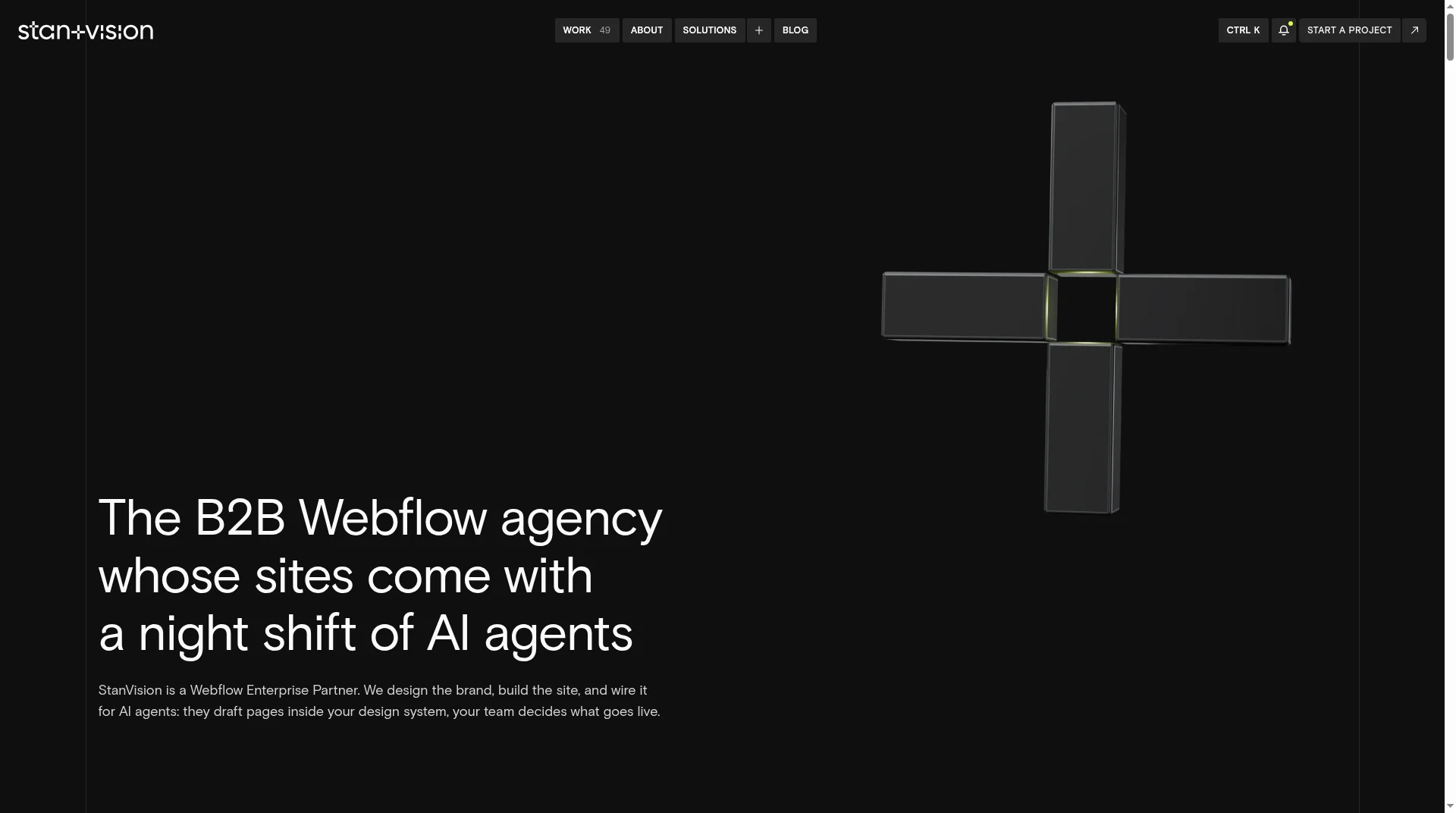
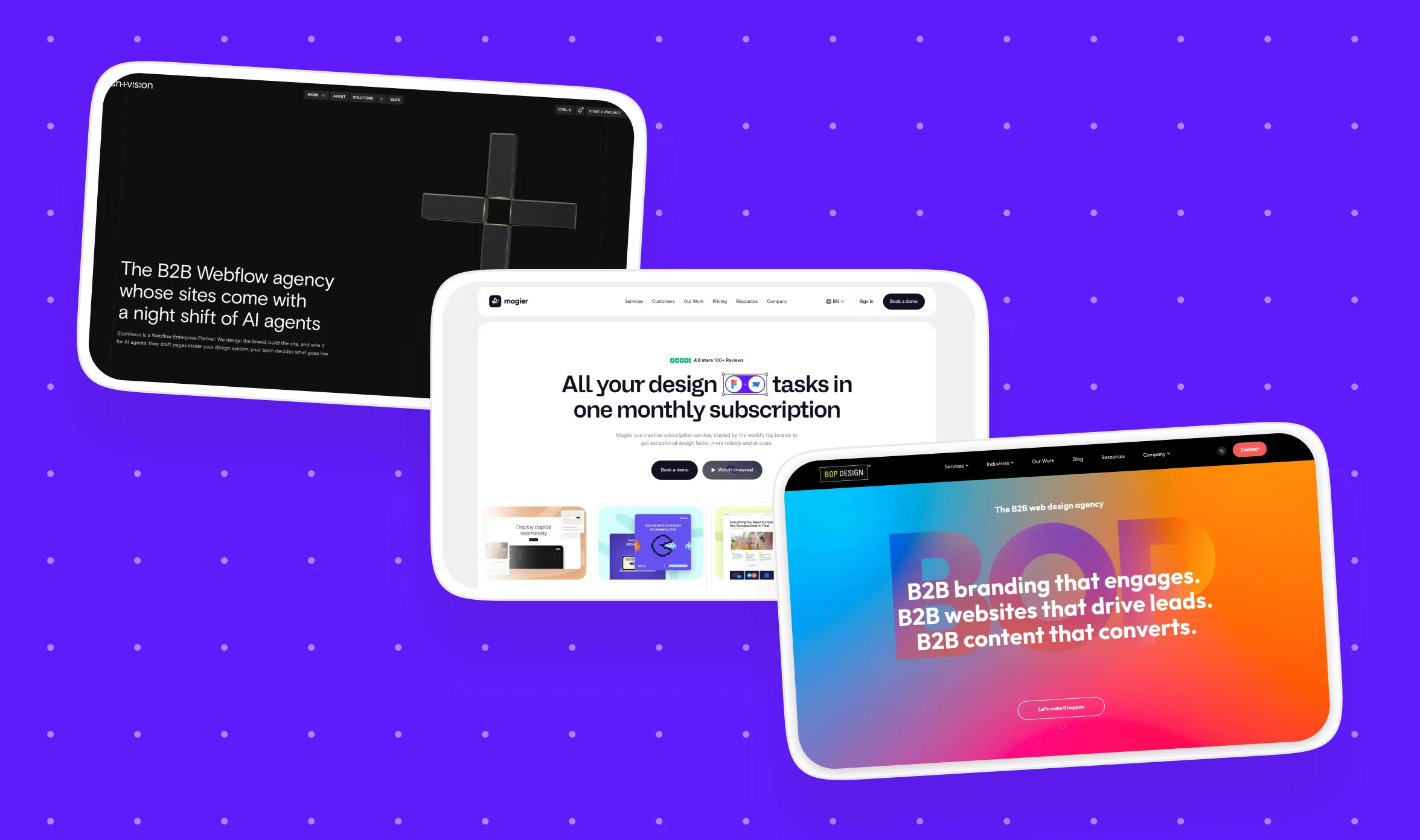
StanVision is a Webflow Premium Partner that designs brand identities, product interfaces, and marketing sites for software, fintech, and AI companies, then builds them so marketing teams can publish without a developer. Its client list includes payments company Primer and finance platform Rillet, and its longest partnership, with payments company emerchantpay, has run seven years. Cieden (2026) reports that Primer's traffic grew 12x after the redesign, and the studio has won 65+ design awards, including Awwwards Site of the Day.
Key services:
- Webflow development
- Brand identity and design systems
- Marketing website UI/UX
- Product UX for fintech apps
Best for: B2B fintech and payments companies that want a Webflow site their marketing team can edit alone.
Location: Sofia, Bulgaria
Pricing: Custom
2. magier
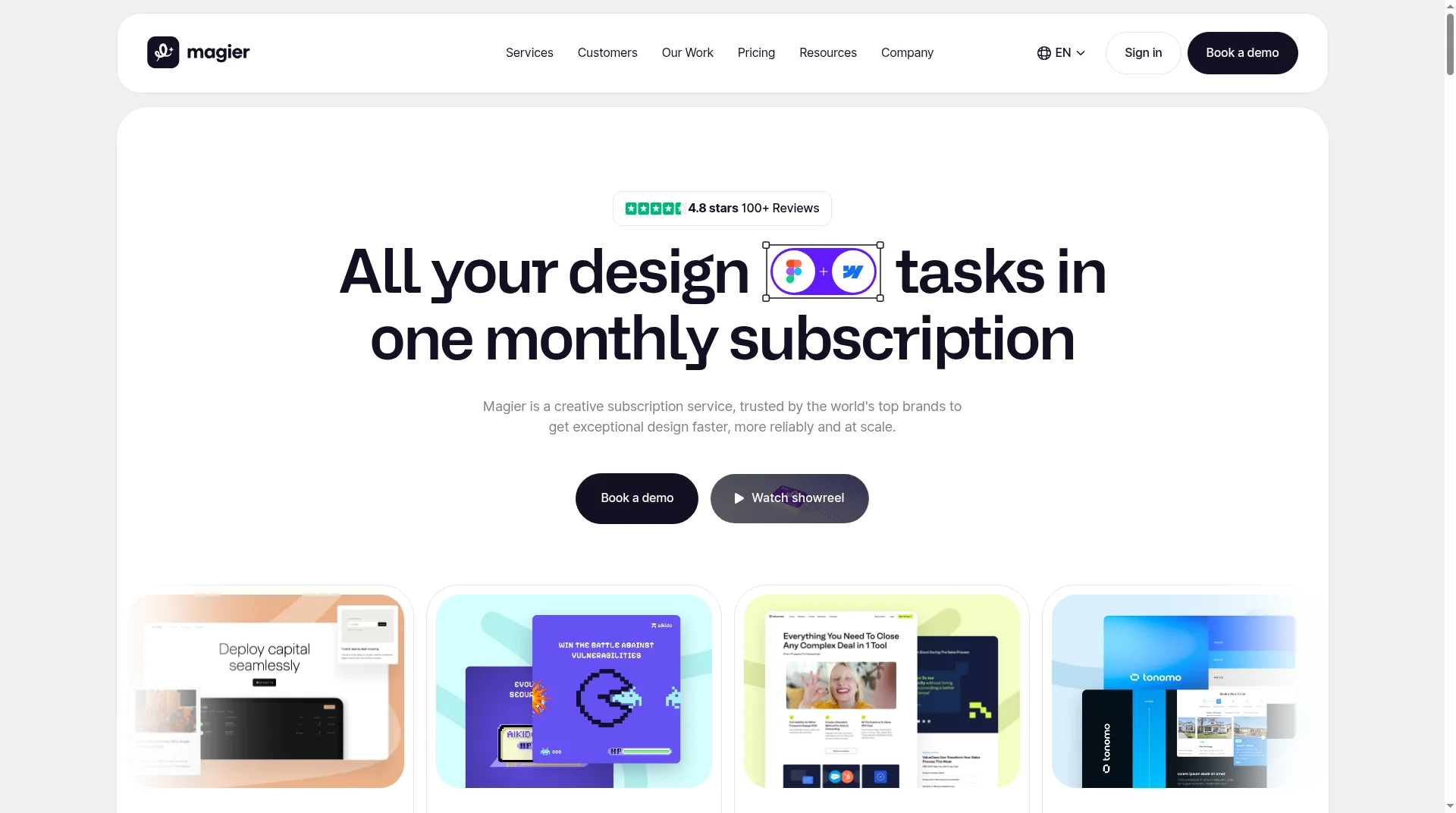
magier is a design and Webflow subscription that gives fintech marketing teams a dedicated designer and developer for a fixed monthly fee. Instead of briefing a new freelancer for every task, you work with one team that learns your brand and your approval process. It has served 150+ brands, delivers work within 48 hours per task, and lets you pause your subscription at any time for the following month.
One good example to present here would be Particula. Particula rates digital assets by combining expertise from blockchain and traditional finance, and its website no longer reflected the company's growth. The team had handled design in-house, and testing freelancers and AI tools created more briefing and alignment work than it saved. Their messaging lacked precision, so first conversations with prospects often started without a shared understanding of the product.
magier led a full rebrand and website rebuild focused on positioning, clarity, and conversion, and built a scalable design system around Particula's existing identity. The new site explains the product from the first visit, more than three core conversion paths improved, and visitors now download reports, sign up, and get in touch. After launch, the work grew into an ongoing partnership covering reports, social media templates, banners, and other materials across more than five touchpoints.

Most fintech marketing leads have no spare hours to guide a designer through every update. That's where a subscription comes in, because the same team keeps your brand context from one request to the next. You can read the full Particula case study or check out magier's combined design and Webflow subscription.
Key services:
- Webflow development with GSAP animation, integrations, and migrations
- Website design with motion and illustration
- Brand identity and design systems
- Landing pages and ad creative for campaigns
- A staging and push-to-live workflow for every build
Best for: Fintech marketing teams and founders who want one team for the website and the assets around it, without managing freelancers.
Location: Berlin, Germany
Pricing: Webflow from €890 per month, design or Webflow at €2,750 per month, and design plus Webflow at €4,450 per month. One-time projects with a fixed scope are also available.
Several studios below build on Webflow and you might wonder “what’s the hype all about?”. The reason becomes clear after launch when your team needs to publish edits quickly. We will explain more about it later.
{{cta}}
3. Amply
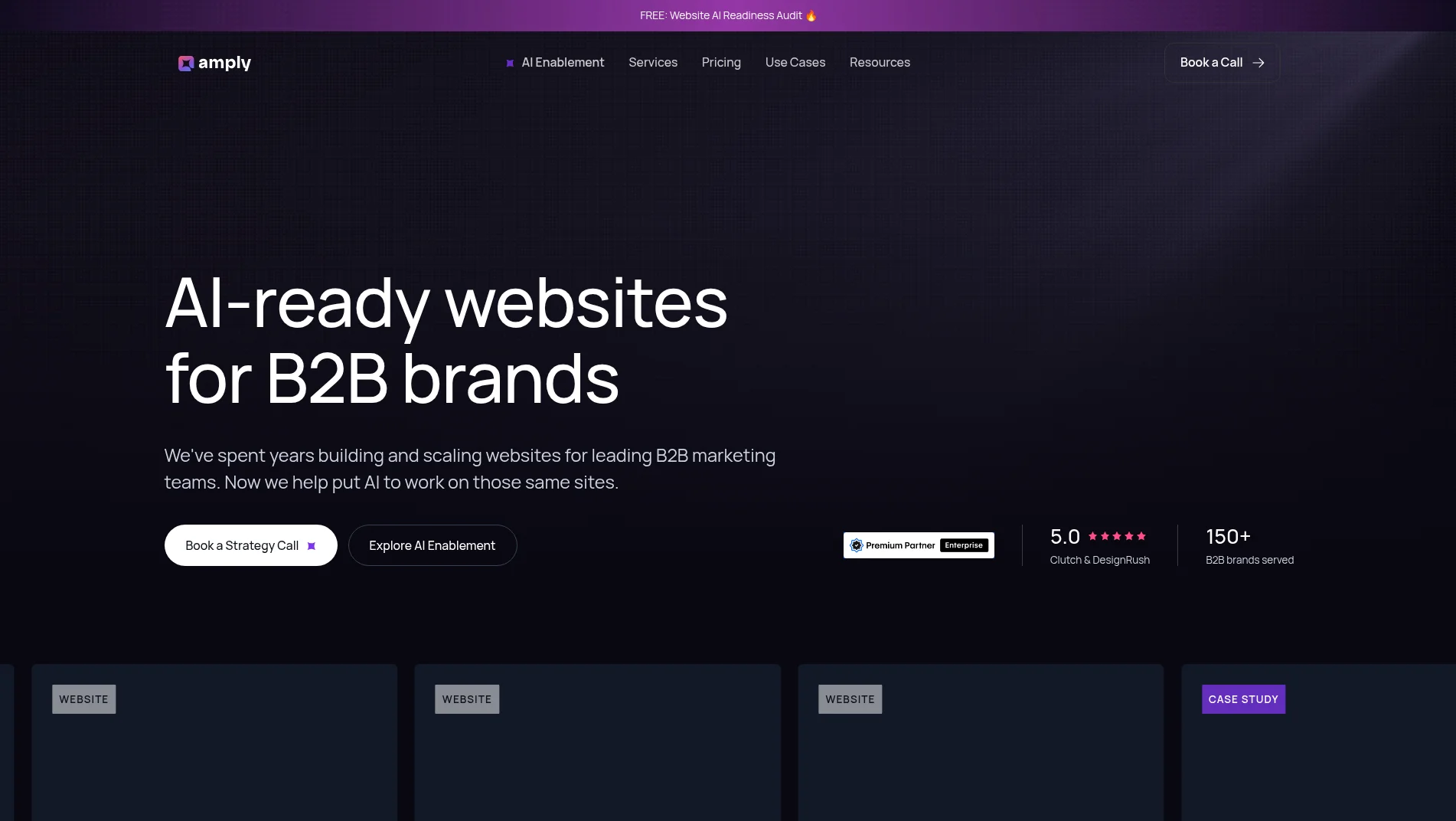
Amply is a Webflow Premium Partner in Lehi, Utah that builds websites for B2B companies and gives marketing teams control over updates after launch. Its clients include finance platform Zeni, and Advisorpedia also lists BanQu and OneVest among its finance and fintech work. Dribbble (2026) notes that Amply emphasizes long-term retainers and ongoing optimization.
Key services:
- Webflow development and WordPress-to-Webflow migrations
- Web design and branding
- SEO audits and conversion optimization
- Webflow maintenance and integrations
Best for: B2B fintech marketing teams moving from WordPress to a Webflow site they can update without developers.
Location: Lehi, Utah, USA
Pricing: Starting at $3,000.
4. Arch Web Design
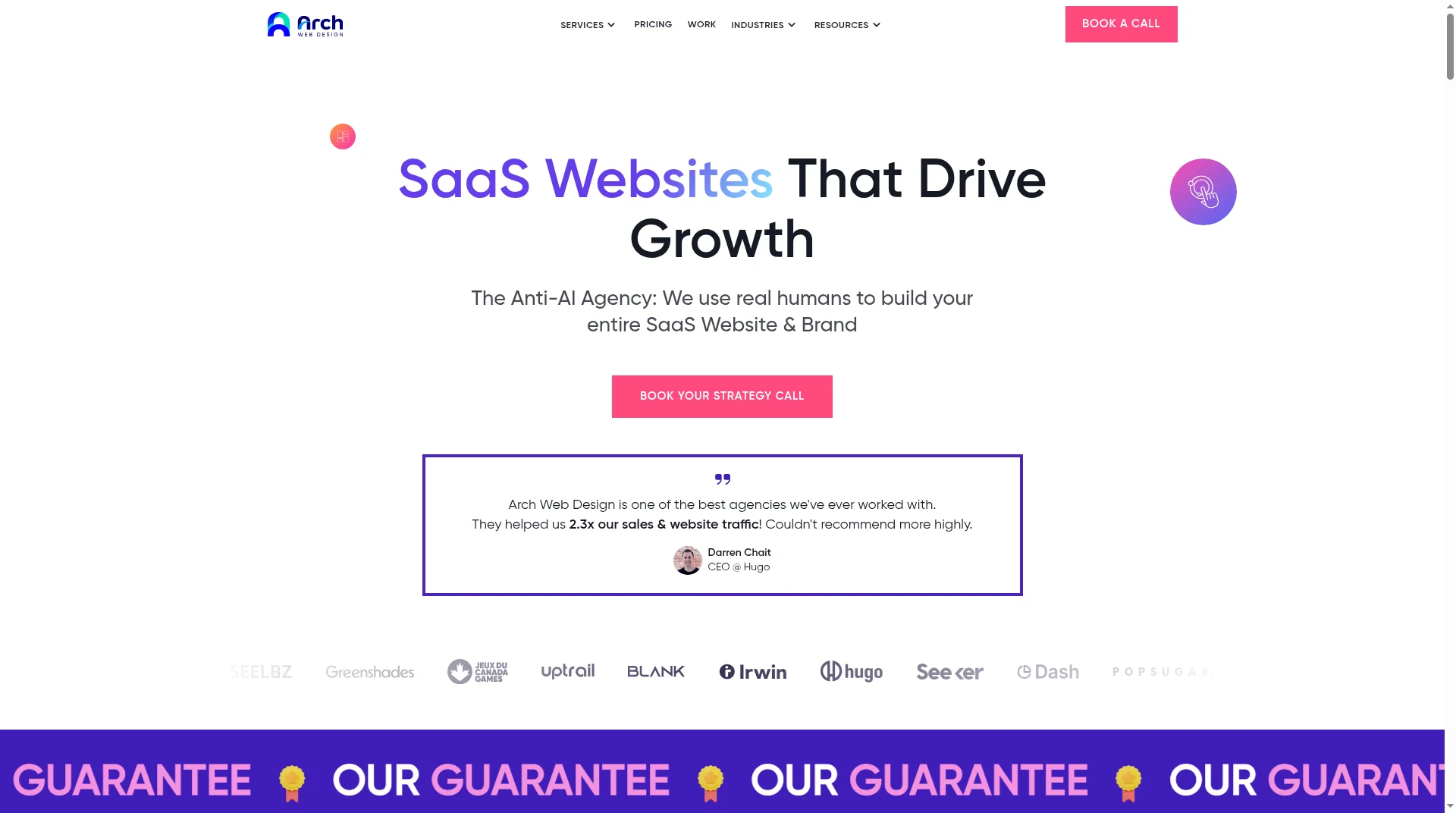
Arch Web Design is a small Harrisburg, Pennsylvania studio that builds conversion-focused Webflow sites for SaaS, technology, and financial services companies. Every project starts in Figma before moving into a responsive Webflow build, and its clients include Edgar Dunn and Company, a financial services and payments consultancy. Its Beacon CRM case study, a SaaS client, reports a 52% increase in sales leads within 30 days of relaunch, according to Dribbble (2026).
Key services:
- Website design and Figma-to-Webflow development
- Webflow migration
- Conversion rate optimization and SEO
- Care plans for ongoing support
Best for: Funded fintech and SaaS teams that treat the website as a lead generation channel.
Location: Harrisburg, Pennsylvania, USA
Pricing: Custom
5. Merge Rocks
Merge Rocks is a distributed team of about 38 in-house designers and developers focused on fintech, Web3, and SaaS products, and it is a Webflow Certified Partner. Cieden (2026) lists Block Earner and CoinLedger among its clients and describes three packages: a two-week design sprint, an on-demand team, and custom requests. That tiered structure makes it easier to start small before committing to a larger build.
Key services:
- UX/UI and website design
- Webflow and Next.js development
- Branding for fintech companies
- Motion design
Best for: Crypto and fintech startups that want to test a short design sprint before a full build.
Location: Distributed team across Ukraine, Poland, Portugal, Sweden, Germany, and the UAE
Pricing: Custom
6. Studio Simpatico
Studio Simpatico is a senior-led New York studio that combines branding with custom WordPress development for financial technology companies. Its clients include blockchain infrastructure provider Fireblocks, digital bank Grasshopper Bank, and insurance company Haven Life. The small team suits companies that want direct access to experienced designers instead of a larger delivery team.
Key services:
- WordPress websites and custom development
- Branding and visual identity
- WordPress maintenance
- UX and product design
Best for: Fintech startups and crypto infrastructure companies that want a boutique team and a WordPress site.
Location: New York, USA
Pricing: Custom
Of the next four studios, only Bop Design publishes its rates, and the pricing section explains how to compare it.
7. Bop Design
Bop Design is a San Diego studio that builds B2B websites and lists fintech among its work categories. Its public profile shows a rare level of pricing detail, with a $25,000 minimum, an hourly rate of $150 to $199, and a 5.0 rating from 129 reviews, as recorded by Top Website Agencies in November 2026. Ask to see specific fintech projects, because the sources we reviewed list fintech as a category rather than naming a case study.
Key services:
- B2B website design and development
- Fintech and SaaS category work
Best for: Buyers who want published rates to compare before a sales call.
Location: 401 W A Street, Suite 200, San Diego, California, USA
Pricing: From $25,000, with hourly rates of $150 to $199.
8. Arounda
Arounda is a distributed design agency of about 41 people covering fintech, Web3, and SaaS, with in-house Webflow development. Cieden (2026) lists clients such as MYSO Finance, Expence, and Piifund, and notes a three-day free trial that lets you test the fit before committing. Its range makes it a fit when the website and the product need the same design language.
Key services:
- Website and landing page design
- Webflow development
- UX/UI and product design
- Branding and design systems
Best for: Fintech startups that need a website and an app designed together.
Location: Distributed team across Ukraine, Poland, Germany, Spain, Romania, and Switzerland
Pricing: Custom
9. ThunderClap
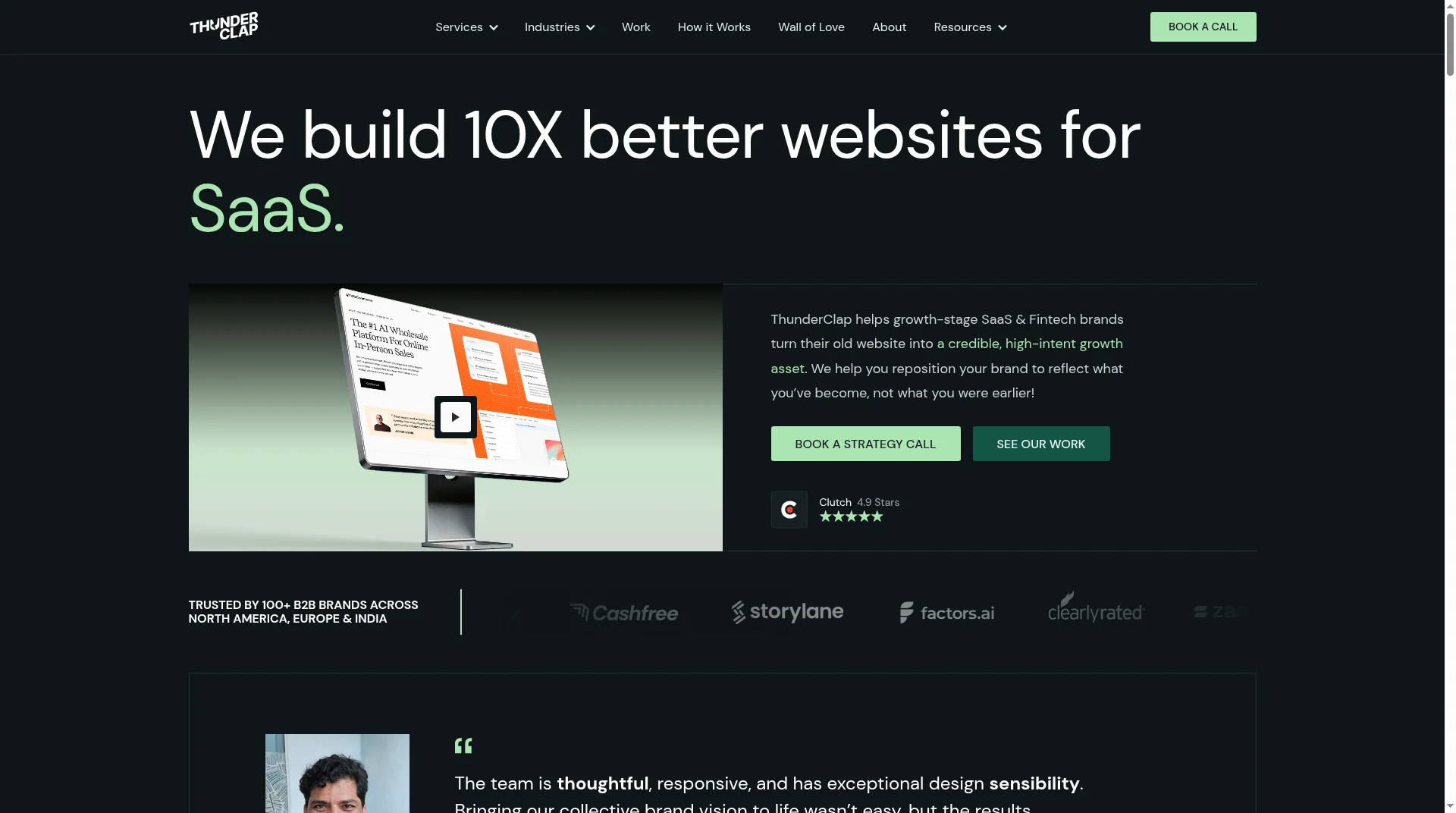
ThunderClap is a Bengaluru-based Webflow studio that builds websites for SaaS and fintech startups. Its DesignRush profile lists fintech, finance, and insurance among its industries, and its team of more than 40 includes product marketers, UI/UX designers, and Webflow experts. It suits teams that want Webflow as the main platform and a larger bench than most boutique studios offer.
Key services:
- Webflow website development
- Website redesign
- UI/UX design
- Performance optimization
Best for: Fintech and SaaS startups that want a Webflow-focused team with a wide project range.
Location: Bengaluru, India
Pricing: Custom
10. Sayenko Design
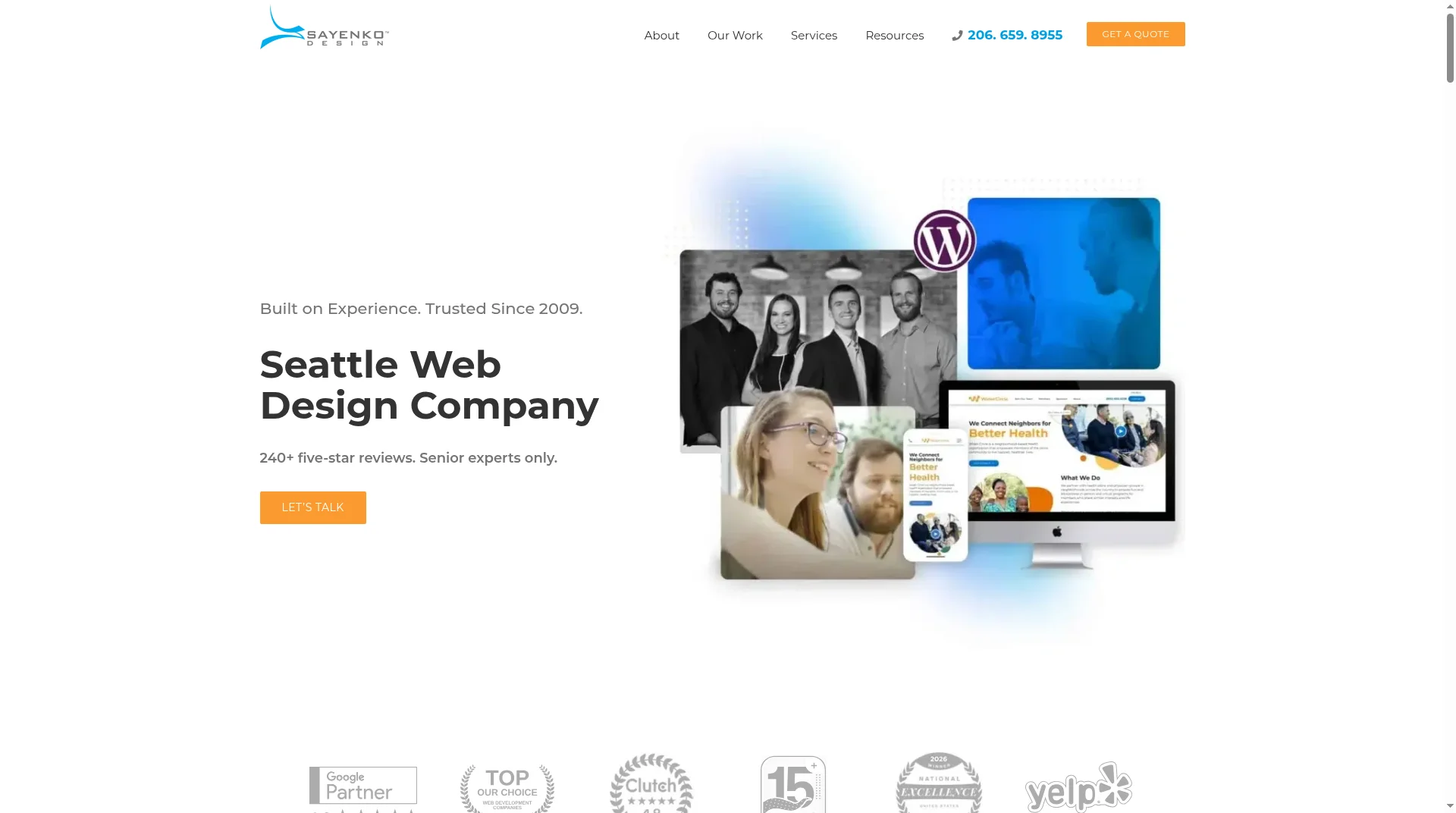
Sayenko Design is a small Seattle studio that starts projects with buyer research, content strategy, and information architecture before visual design. Its fintech work includes StockDweebs, where it built an ecommerce platform with an API that displays live stock prices and data. It also sets up HubSpot, so the website connects directly to your marketing and sales system.
Key services:
- WordPress and custom development
- HubSpot setup and integration
- SEO and digital strategy
- Brand identity
Best for: Fintech teams that want a research-led WordPress site connected to HubSpot.
Location: Seattle, Washington, USA
Pricing: Custom
Other fintech web design agencies worth knowing
These studios appear often in fintech roundups, and they are strong options if you want a larger team or a broader product scope. Let's face it, most of them still do not publish pricing, so the table says "not published" wherever we found no public figure. Metalab, Ramotion, UXDA, and Tenet UI UX lean toward product design, which is why the table includes a focus column.
Note: Details come from each agency's public pages and directory profiles, as of November 2026.

What is a fintech web design agency?
A fintech web design agency, sometimes called a fintech website design agency or a financial services web design agency, designs and builds websites for payments, lending, digital banking, wealth, insurance technology, and crypto companies. Its work covers messaging, page structure, visual design, development, and trust signals such as clear fee disclosures and security information. It also works with legal and compliance reviewers, which is the biggest difference from a general web agency. Some studios focus on marketing websites while others, often called fintech design agencies, also design the product itself, so check which one you are hiring.
Why choose a web design agency that specializes in your niche?
A payments API company, a consumer lender, and a crypto exchange need different websites, even though all three count as fintech. Developers judge an API company by its documentation and integrations, a lender loses visitors if its APR sits in a grey footer, and a crypto brand has to explain risk without sounding evasive. An agency that has built for your niche already knows which pages buyers read first, which claims legal will question, and which trust signals fit your audience. That experience shortens your revision rounds and lowers the risk of rebuilding pages after compliance review.
How to choose a fintech web design agency
These five checks separate a fintech-ready studio from a generalist. Use this to avoid a general result:
Decide between a marketing site and product UX first
Fintech agencies fall into two groups, and mixing them up is a common hiring mistake. Marketing-site studios, like most of the Webflow and WordPress specialists above, design and build the public website where prospects learn about you. Product UX studios design the logged-in app, dashboards, and onboarding.
Hiring a banking-app team for a five-page marketing site is like hiring a structural engineer to hang a shelf. So which one do you need? If your goal is demos, sign-ups, or inbound leads, start with a marketing-site studio and bring in product UX later. Your sub-niche also changes what to look for:
- Payments and infrastructure: Developer-facing pages, integration documentation, and enterprise proof.
- Lending: Clear pages for rates, fees, and eligibility.
- Wealth and investing: Risk communication and readable data visuals.
- Crypto and Web3: Security messaging and honest risk warnings.
"Most fintech teams hire for the product they want next year instead of the website they need this quarter. Start with the site that brings in demos, and add product design when the pipeline justifies it.""

Don't judge a fintech agency by its hero section
A polished hero section proves visual skill, but it does not prove the studio understands financial buyers. Look for named financial clients, live pages that explain fees or eligibility openly, and a clear trust architecture, meaning security, licensing, and how-it-works pages that a skeptical buyer can verify. One financial project is not the same as repeated work in the sector, so ask how many fintech sites the team has shipped.
A padlock icon on a landing page is like a "trust me" sticker on a used car, because it tells visitors what you want them to believe without giving them a reason.
Ask where compliance review sits in the project timeline
Remember the one question that predicts a smooth build? Here it is: where in the schedule do legal and compliance review the copy, and how many rounds are included? Let's be honest, legal will edit your homepage, so the only choice is whether those edits land in week two or in the final week.
Pasting approved legal copy into a finished layout is like adding the plumbing after the tiles are laid. Late edits change line lengths and page structure, and every change forces the designer and developer to rework sections that were already approved. Four standards come up most often in fintech projects, and which ones apply depends on your product and region:
- PCI DSS: The security standard for card data, which applies to any entity that stores, processes, or transmits cardholder data, so a marketing site falls in scope only when it handles card details.
- GDPR: The EU data protection law that shapes cookie consent, forms, and privacy pages for European visitors.
- PSD2: The EU payments directive, which mostly affects product payment journeys rather than marketing pages.
- WCAG 2.2: The accessibility guidelines that apply to any public page, and UX Planet (2026) notes that banks and lenders increasingly treat them as a legal requirement.
- KYC, AML, and SOC 2: Identity-check rules, anti-money-laundering rules, and a security audit report. They mostly apply to your product and vendor reviews rather than marketing pages, though UX Planet (2026) lists them among the compliance topics a fintech agency should understand.
Confirm the scope with your own counsel, because this list is a starting point rather than legal advice. Use the table below to test each agency. The questions are adapted from the list published by Top Website Agencies (2026).
Compare Webflow, WordPress, and custom builds
Several studios above build on Webflow, and the reason shows up after launch, when your team needs to publish edits quickly. Dribbble (2026) notes that Webflow gives marketing teams a visual editor, which makes it faster to publish new pages without developer support. WordPress offers a wider plugin range and more flexibility for complex integrations, and teams already on HubSpot or with WordPress expertise may do better staying there.
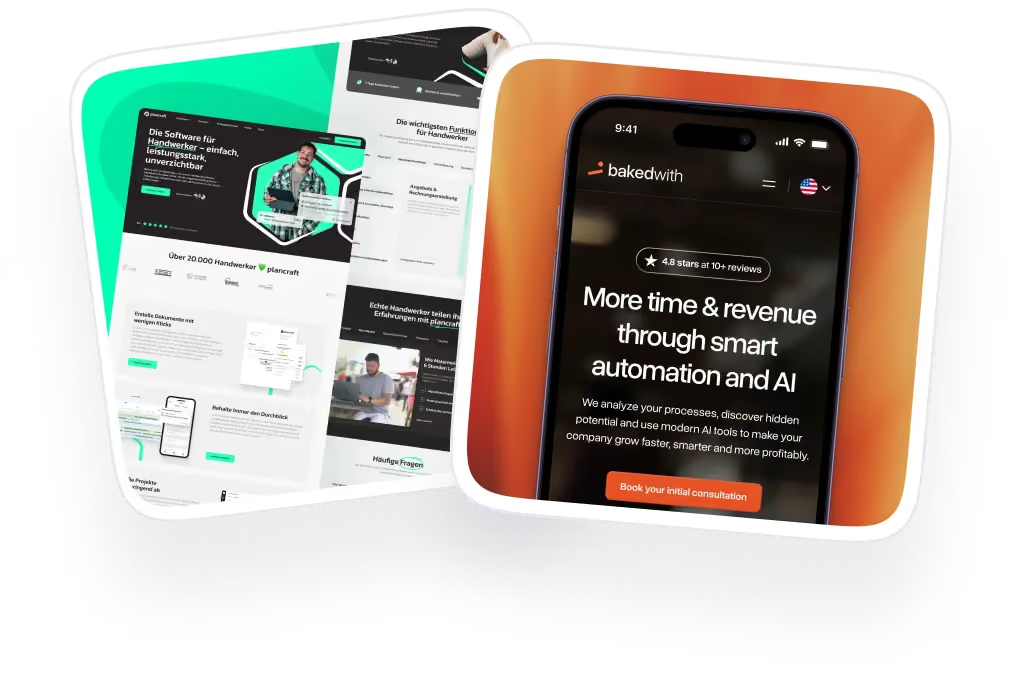
That's where a Webflow development subscription helps, because small edits and compliance changes go live without waiting in a developer queue. For SaaS company plancraft, magier developed 30+ pages and migrated 200+ URLs, and the combined design and Webflow work lifted conversion by 20%. You can see how magier handles Webflow development if that fits your team, while custom builds make sense when you need logged-in features or heavy integrations.
Confirm ownership, handoff, and support after launch
Confirm that your company owns the final site and can move it to another developer or host if the relationship ends, as Dribbble (2026) advises. A site that only the agency can edit turns every headline change into a ticket, so ask these questions before you sign:
- Who owns the site and its assets after launch, and can you move it?
- How do staging and push-to-live work?
- What training does your team get?
- What support is available after launch, and how fast do small edits ship?
- What costs extra, such as copywriting, photography, migration, or QA?
How much do fintech web design agencies charge?
So how much should you budget? Prices vary widely with scope, compliance requirements, and integrations, so start with your project type.
You might think a subscription sounds expensive next to a one-off project, so compare what each model covers over a full year. That's where published pricing helps, because you can price three months of edits instead of guessing. Let's be clear about one gap: most agencies in this guide publish no price at all, which makes the ones that do easier to compare.
Which fintech web design agency fits your stage, goal, and budget?
Three questions narrow any shortlist: your product type and stage, your main goal, and your budget and timeline. Match your situation to a row below and check the studios listed.
magier for fintech web design
We listed magier above, so this section explains what we have done for fintech teams and where our experience stops, in case you want the detail before you decide. Two fintech clients are public, Particula and Dexxter, and they needed different things. Particula was a rebrand and Webflow rebuild covered in our entry above, so let's talk about what we did for Dexxter here.
Dexxter is a Belgium-based fintech company building a bookkeeping platform for sole entrepreneurs. Its marketing team had three full-time members plus freelancers, and it created most assets in Canva. When the team raised ad spend, ad quality and volume became the limit, and it needed more output without hiring or managing several vendors.
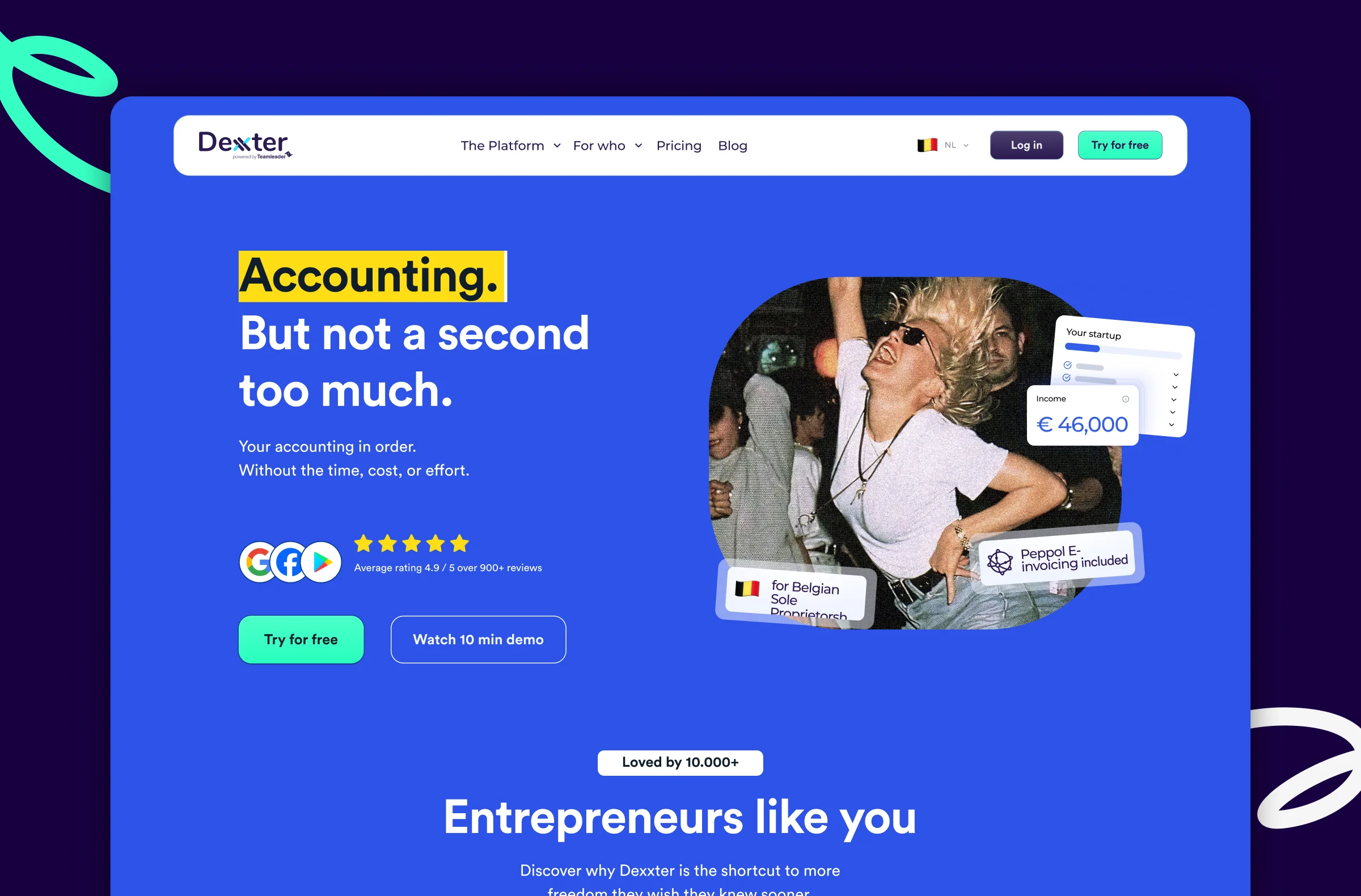
We started with static ads, reaching more than 50 per month, and built reusable templates for social and marketing assets so the team could stop starting from scratch. We later designed a full website redesign in Figma and a product video, which covered four or more touchpoints in total. According to the case study, creative output tripled and static ads became Dexxter's strongest-performing channel.
Two limits are worth stating. The case study does not publish conversion figures for the ads or the new site, so we don't claim any, and the website work was a redesign in Figma, not a Webflow build by our team. We are also not a compliance advisor, so legal and regulatory review stays with your counsel.
If this fits your situation, run the six questions from the compliance table above on us as well, and ask to see live pages.
{{cta}}
Final thoughts
A good fintech website explains your product clearly, shows visitors why they can trust you, and clears legal review without a last-week rewrite. The timeline question from earlier, asking where compliance review fits, is the quickest way to tell a fintech-ready studio from a generalist.
Vetting agencies takes real effort, especially when marketing, product, and legal all have opinions. You might worry that handing the site to an outside team costs you control or budget, yet a clear scope, a stated review process, and a published price keep both in your hands.
If you want to see how this works in practice, book a free demo with magier and we will walk you through the Webflow and design subscription. Pick the row in the matcher table that fits your situation, shortlist two studios, and send each of them the six compliance questions this week.
FAQ
The best fit depends on your sub-niche, platform, and budget, so shortlist two or three studios with named fintech clients and compare them on those three points. This guide covers 10 boutique studios, from StanVision and Amply for B2B Webflow builds to Studio Simpatico for WordPress. Ask each one to show a live fintech page and explain where compliance review fits in the timeline.
According to Dribbble (2026), fintech web design typically costs between $10,000 and $100,000+. Smaller marketing sites often fall between $10,000 and $30,000, while custom platforms with secure portals or integrations can exceed $50,000. Subscription pricing, such as magier's €890 to €4,450 per month, spreads the cost across ongoing work.
Both work for fintech marketing sites. Webflow gives marketing teams a visual editor, so new pages go live without developer support, while WordPress offers a wider plugin range for complex integrations. Teams without developers who need to publish quickly often prefer Webflow, and teams already on HubSpot or WordPress may do better staying there.
Most fintech marketing site projects take 6 to 16 weeks from discovery to launch, according to Dribbble (2026), depending on page count, content readiness, review cycles, and technical complexity. Compliance review rounds add time, so ask for them in the schedule. magier's one-time web design projects typically run two to six weeks.
A fintech agency knows how financial buyers judge trust, how to explain complex products clearly, and how to write within regulatory limits. It also plans legal and compliance review into the project timeline, so late rewrites are less likely. Because visitors are deciding whether to trust you with money, the standard for clarity and credibility is higher than in most other categories.
Ask where compliance review fits in the timeline, how many revision rounds are included, and who owns the site after launch. Also ask to see live fintech pages and how the agency handles content that needs approval before publication. The question table in the choosing section lists six questions with good answers and red flags.
A fintech web design agency focuses on the public marketing website, where prospects learn about your product and book demos. A fintech UX agency designs the logged-in product, such as onboarding, dashboards, and payment screens. Some studios, like Arounda and Goodface, cover both.
For boutique Webflow studios, start with StanVision, Amply, and magier. For WordPress, consider Studio Simpatico and Sayenko Design, and for published rates, look at Bop Design. Larger teams such as Goodface, Clay, and Phenomenon Studio appear in the second table.