.webp)
10 Best Logo Design Services in 2026 (Compared by Price, Process, and Fit)
Everyone wants a good logo designed for their brand. A logo that is almost on MailChimp or Coca-Cola-level.
The problem is: it isn’t easy to design a logo that is recognizable.
That is where logo design services and agencies come to help. A Vistaprint survey found that 74% of people think a brand's look and feel can make or break it, and three in five said they would not use a company whose brand image looked bad even if they had heard good things about the product itself. This is why it is very important to choose the right logo design service for your brand. But how would you know that?
That’s what this guide covers. From the top agencies specialized in designing logos to the framework y
Here is what this guide covers:
- Methodology we used to shortlist the 10 services below
- Full profiles of each service, including real pricing and when each one is not the right choice
- When to use a free or AI-powered logo generator
- How to choose the right logo design service for your brand
- Red flags to avoid when choosing an agency
We ranked these 10 by considering factors that brands actually consider when making a purchase decision. Each logo design agency was checked against five criteria that reflect what buyers in this category tend to care about most.
The best logo design services in 2026, at a glance
{{freebie}}
How we shortlisted these services
The 10 best logo design services in 2026
The 10 services below split across three different ways of buying a logo. A handful, including Awesomic, magier, and Designity, run on a monthly subscription with a dedicated designer and no per-project quote, sitting between a single freelancer and a full agency retainer. DesignCrowd works on a contest model instead, and the rest are traditional agencies charging by the project. Design Shifu and Superside follow a similar subscription setup to the three included here, so they're worth to consider if none of these three fit.
Awesomic
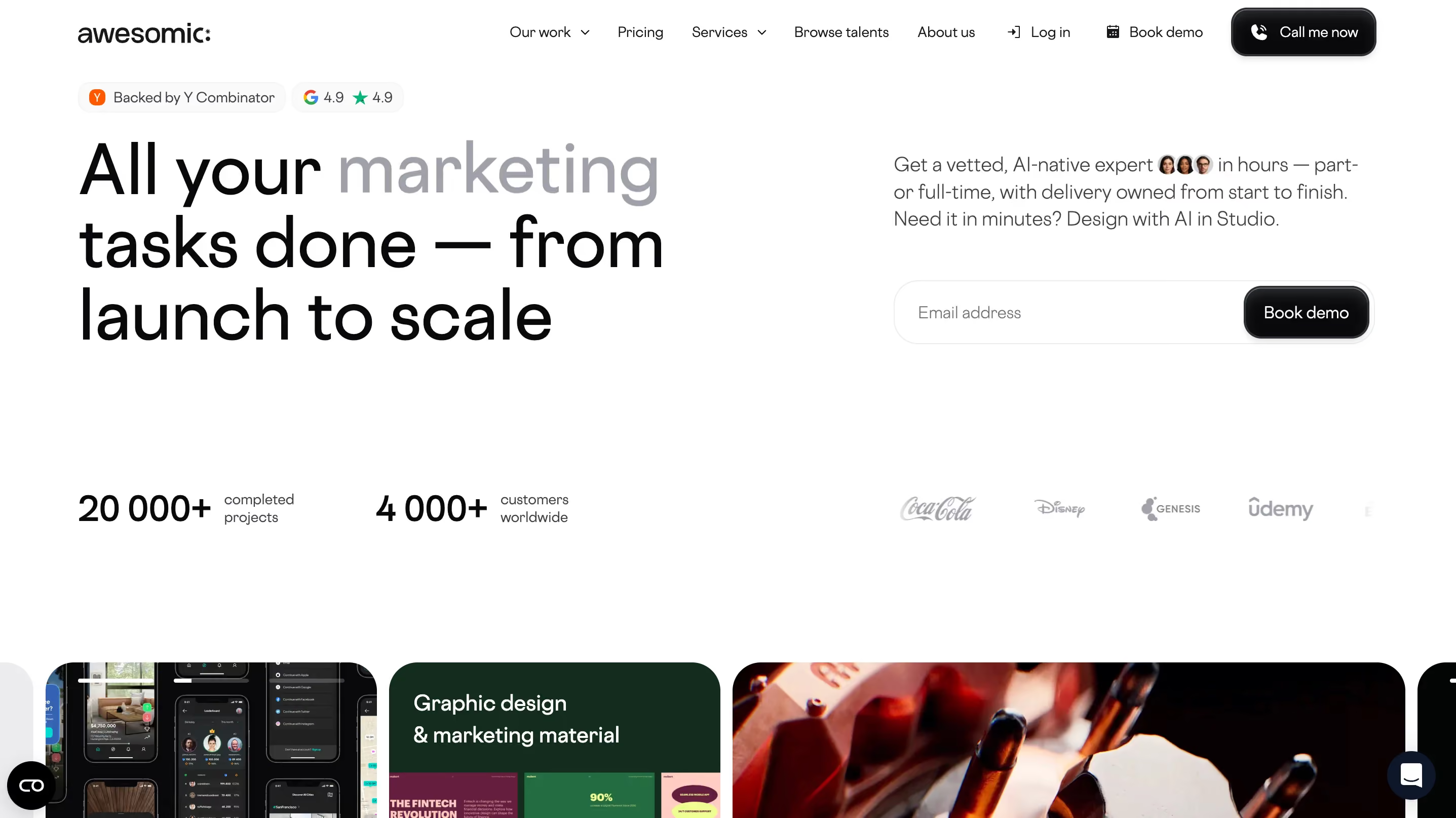
Awesomic runs on a subscription model, matching each client with a dedicated designer instead of a single freelancer working alone on one project. The company accepts under 1% of the designers who apply, and vetted design pros then work through Slack or Awesomic's own app rather than scattered email threads. Clients pay one flat monthly fee and can request unlimited logo concepts and revisions, rather than negotiating a new scope every time something needs to change.
Key services:
- Custom logo design and brand refreshes
- Unlimited design requests and revisions
- Fast turnaround, often within a few business days
- Broader design subscription plans covering video and other creative work
Location: San Francisco, California, US
Price: From $990/month
Best for:
- Startups that want a logo fast without negotiating a one-off project scope
- Teams that expect ongoing design requests beyond just the logo
- Founders comfortable working through Slack rather than in-person meetings
Don't consider if:
- You want a single fixed-price project instead of a recurring subscription
- You need a full team of specialists rather than one dedicated designer
- You also need an agency to build your website
magier
![magier's logo design landing page with the headline "Your [logo mark] partner for Logo Design," a 4.8-star Trustpilot rating, a "Book a demo" button, and a row of colorful client logo cards including Spring Back, night knight, and table.](https://cdn.prod.website-files.com/6756af8bdb09e2801688efa7/6aba409ba6e3b562574714dd_magierr.webp)
magier pairs logo and brand identity design with Webflow development inside one monthly subscription, so the same team designs the mark and builds the site it lives on. Instead of handing a finished logo file to a separate developer and hoping the handoff goes smoothly, the design and Webflow work happen together from the first week, with requests submitted through a simple ticket system and completed work returned within 48 hours.
Clients get a dedicated project manager and art director, unlimited revisions, and a fixed monthly fee rather than a per-project quote, with a one-time project option available for anyone who doesn't want an ongoing subscription.
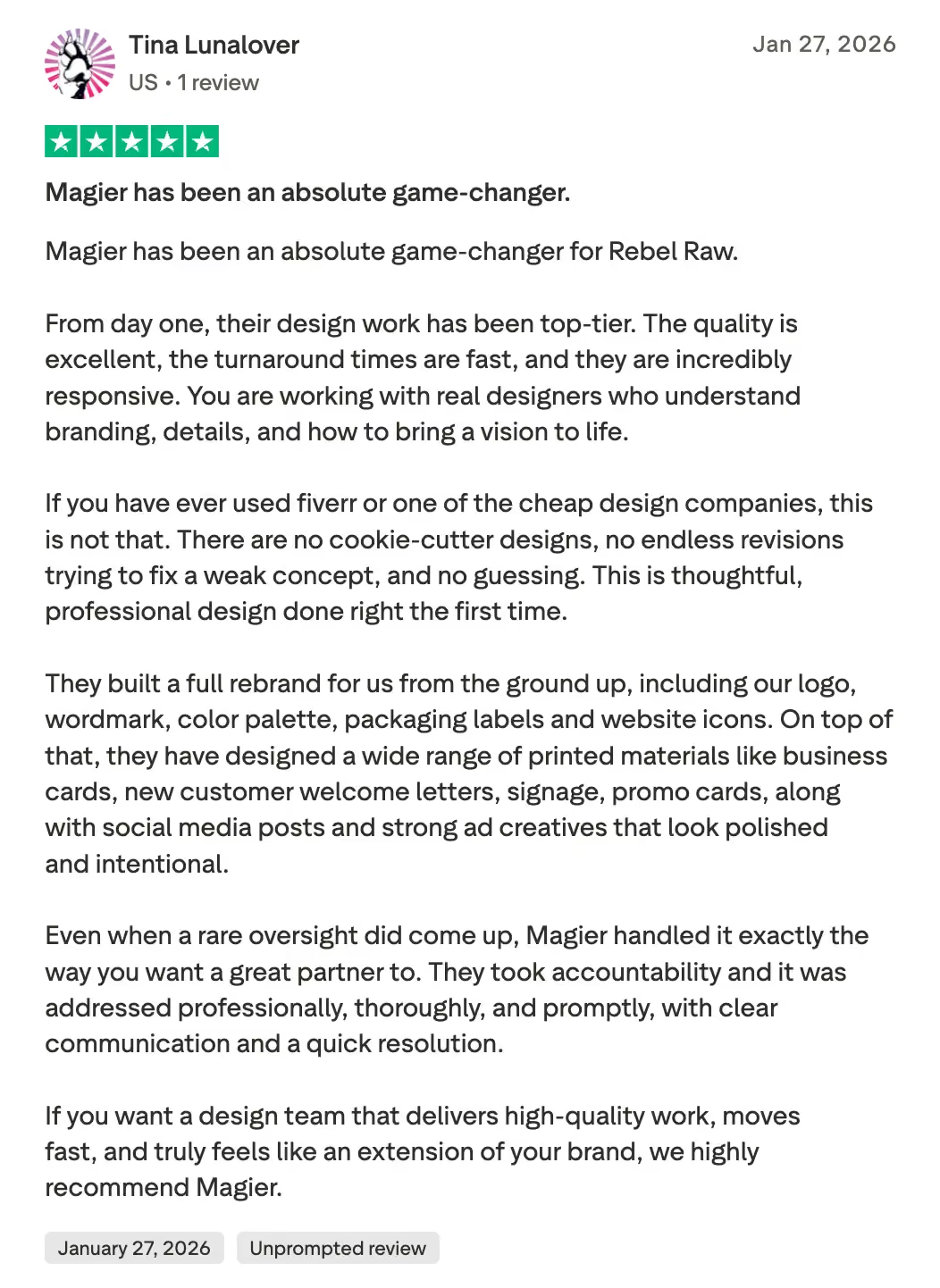
magier's portfolio consists of 150+ brands and a 4.9/5 average rating on Trustpilot, including one reviewer who described the team as having "been able to do everything I threw at them" across design and Webflow work.
Key services:
- Logo and brand identity design
- Webflow design and development
- Landing pages, social content, presentations, and brand collateral
- Motion design
- Unlimited revisions with a dedicated project manager and art director, or a one-time project for standalone work
Location: Berlin, Germany, serving clients globally and fully remote
Price: Design from €2,750 a month, Webflow from €890 a month, one-time projects quoted separately
Best for:
- Founders who need a logo and a working website built by the same team
- Companies that want unlimited revisions and a fixed monthly fee instead of per-project quotes
- Teams already planning a Webflow site who don't want two separate vendors
Don't consider if:
- You want an in-house, on-site team, or a constant partner like a freelancer rather than a remote team.
- There are budget constraints.
{{cta}}
DesignCrowd
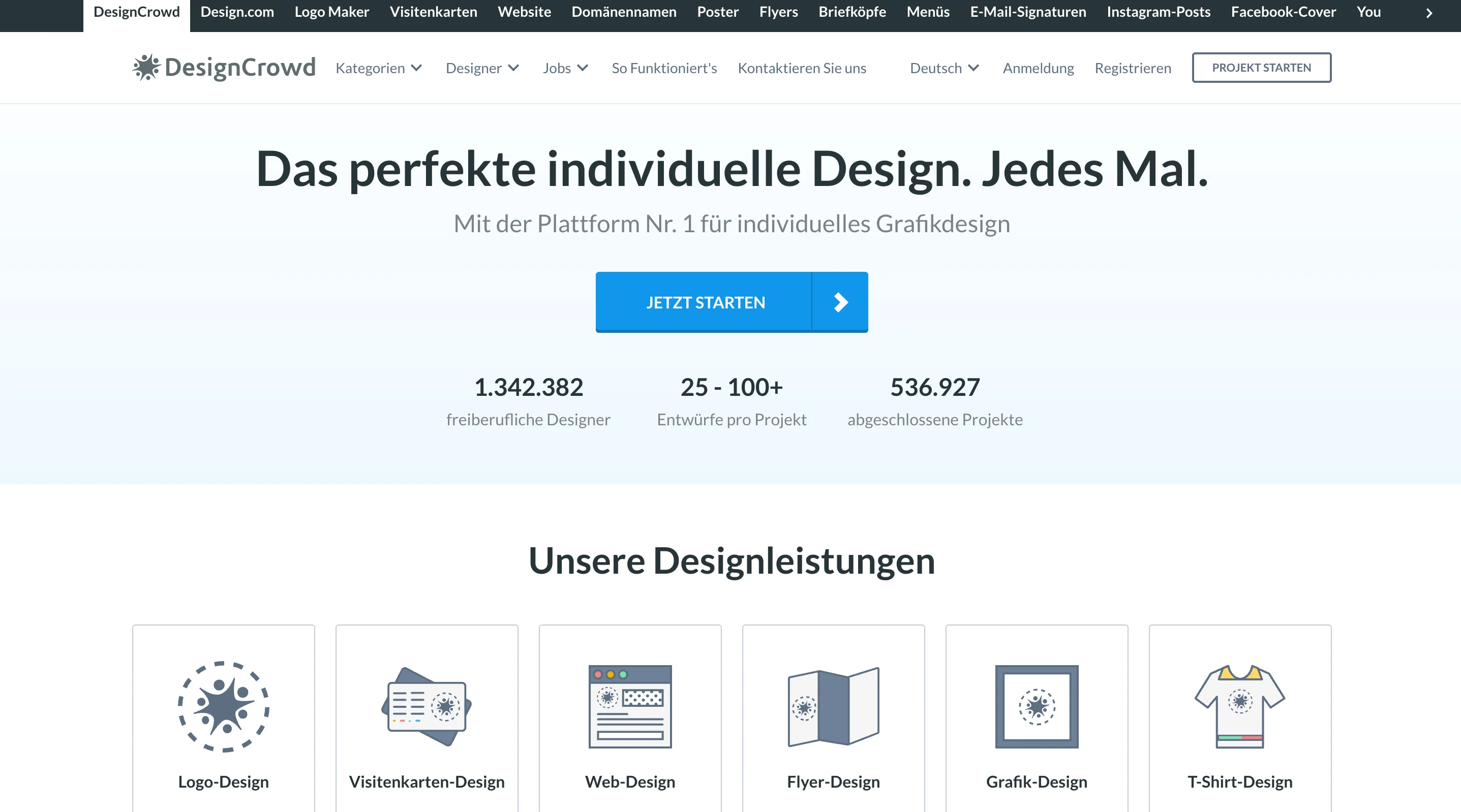
DesignCrowd runs on a contest model rather than pairing you with one designer from the start. You post a brief and a budget, and designers from around the world submit competing logo concepts for you to review over the course of the contest. You can leave feedback mid-contest, and once you choose a winner, you receive full ownership of the file along with the option to keep exploring other entries you liked. 99designs runs on a similar contest model and is worth comparing directly against DesignCrowd before choosing between the two.
Key services:
- Logo design contests
- Website and business card design
- Broader graphic design categories through the same contest model
Location: Sydney, Australia, with a global designer community
Price: Custom
Best for:
- Buyers who want to compare many creative directions before deciding
- Companies without a clear visual direction yet who want options rather than one designer's single take
- Anyone comfortable reviewing and rating multiple submissions
Don't consider if:
- You want one point of contact managing the whole project
- You need a fast, predictable timeline rather than an open contest window
- You want a full brand identity system, not just a logo
Pentagram
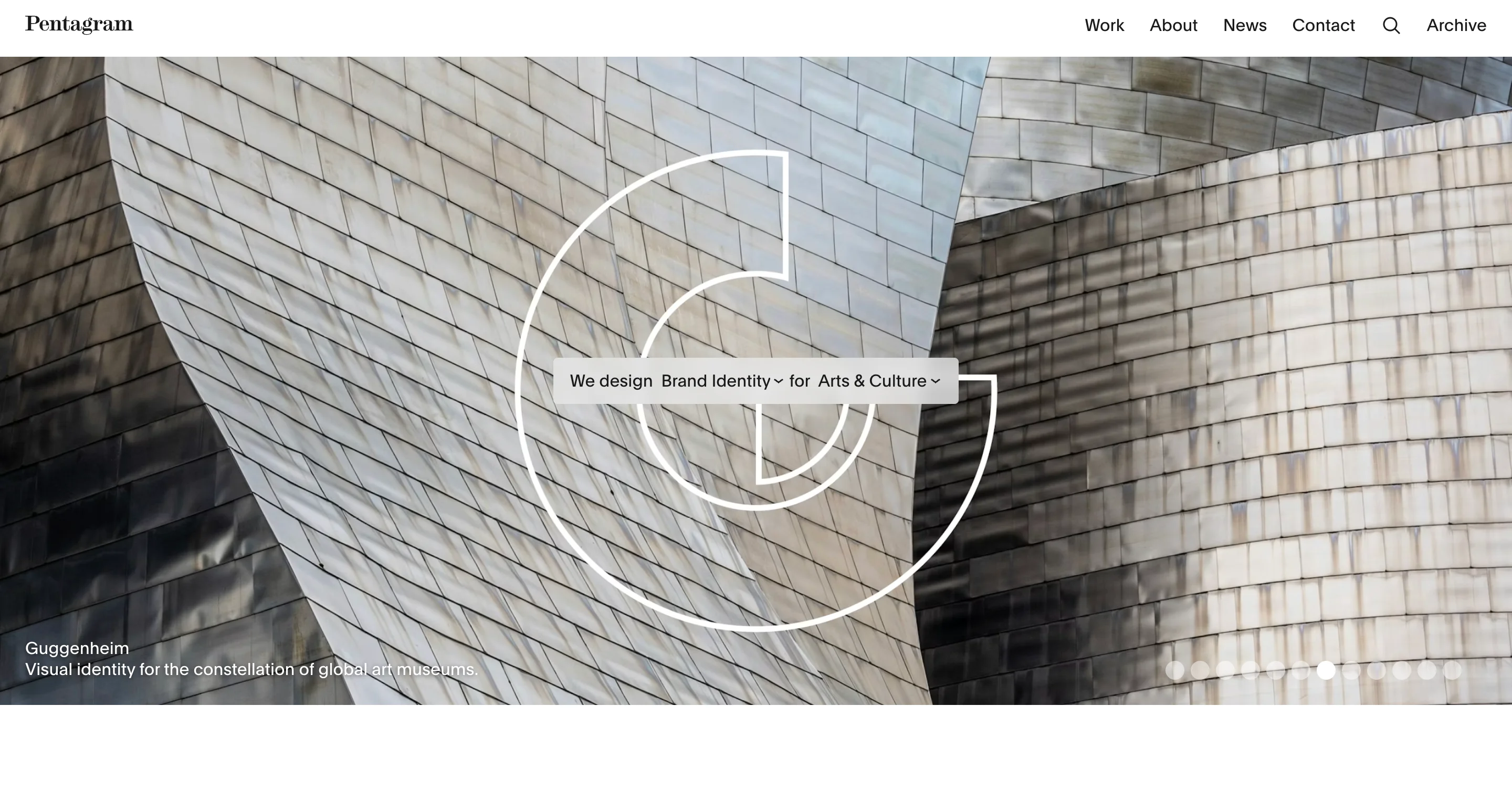
Pentagram calls itself the largest independent design consultancy in the world, and its partner-led model means senior designers run every project rather than handing work down to junior staff. The firm has built identity systems for some of the most recognized cultural and financial institutions anywhere, including its well-documented 2019 work simplifying Mastercard's logo down to its two interlocking circles. Projects here move at the pace of a serious, multi-month strategic process rather than a quick turnaround.
Key services:
- Logo and brand identity design
- Brand strategy
- Packaging, environmental, and digital experience design
Location: Studios in New York, London, Austin, and Berlin
Price: Custom
Best for:
- Established or category-defining companies planning a decades-lasting identity
- Organizations with a large budget and a multi-month timeline to spare
- Brands wanting a partner-led process rather than a junior design team
Don't consider if:
- You're an early-stage startup with a limited budget
- You need a logo within weeks rather than months
- You want a subscription model with ongoing, flexible design requests
Focus Lab
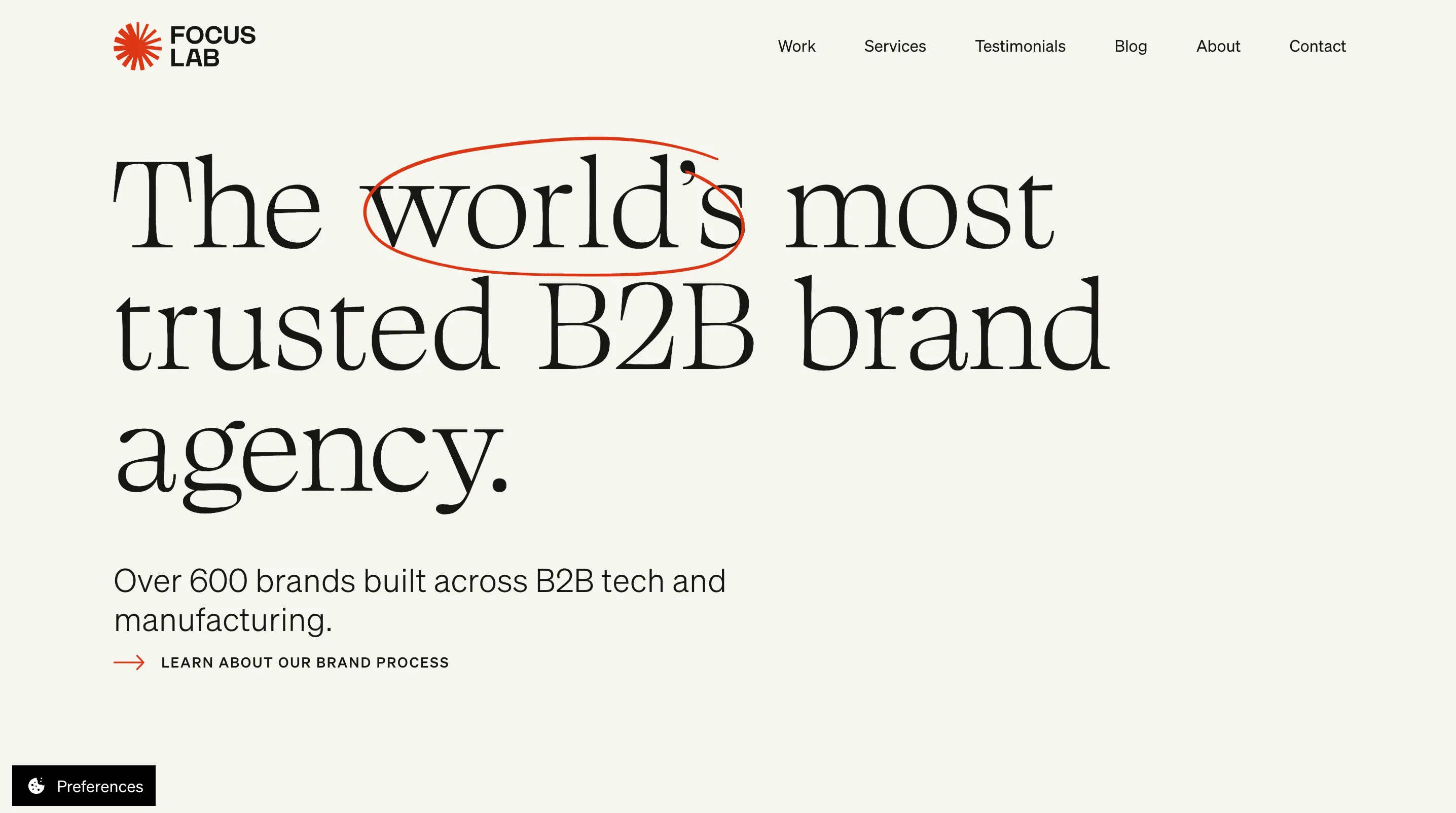
Focus Lab is a B2B brand agency working almost exclusively with technology and SaaS companies, from early-stage startups through companies preparing for an IPO. The agency has built its reputation around a structured, documented process, and its own book on rebranding lays out the same steps it uses with real clients. Its client list includes recognizable B2B names like Outreach, Braze, and Marketo, and the agency says it has worked with more than 70 B2B SaaS and technology companies, giving it a track record specific to that space rather than consumer brands.
Key services:
- Logo and visual identity design
- Brand strategy and positioning
- Verbal identity and messaging
- Website design and ongoing brand retainers
Location: Savannah, Georgia, US, with a remote-first team
Price: Custom
Best for:
- B2B SaaS companies wanting a proven, senior-led process
- Companies at any stage from early funding through IPO preparation
- Teams that want an ongoing retainer after the initial rebrand ships
Don't consider if:
- Your brand is consumer-facing rather than B2B
- Your budget is under $30,000
- You want a turnaround measured in days rather than weeks
Red Antler
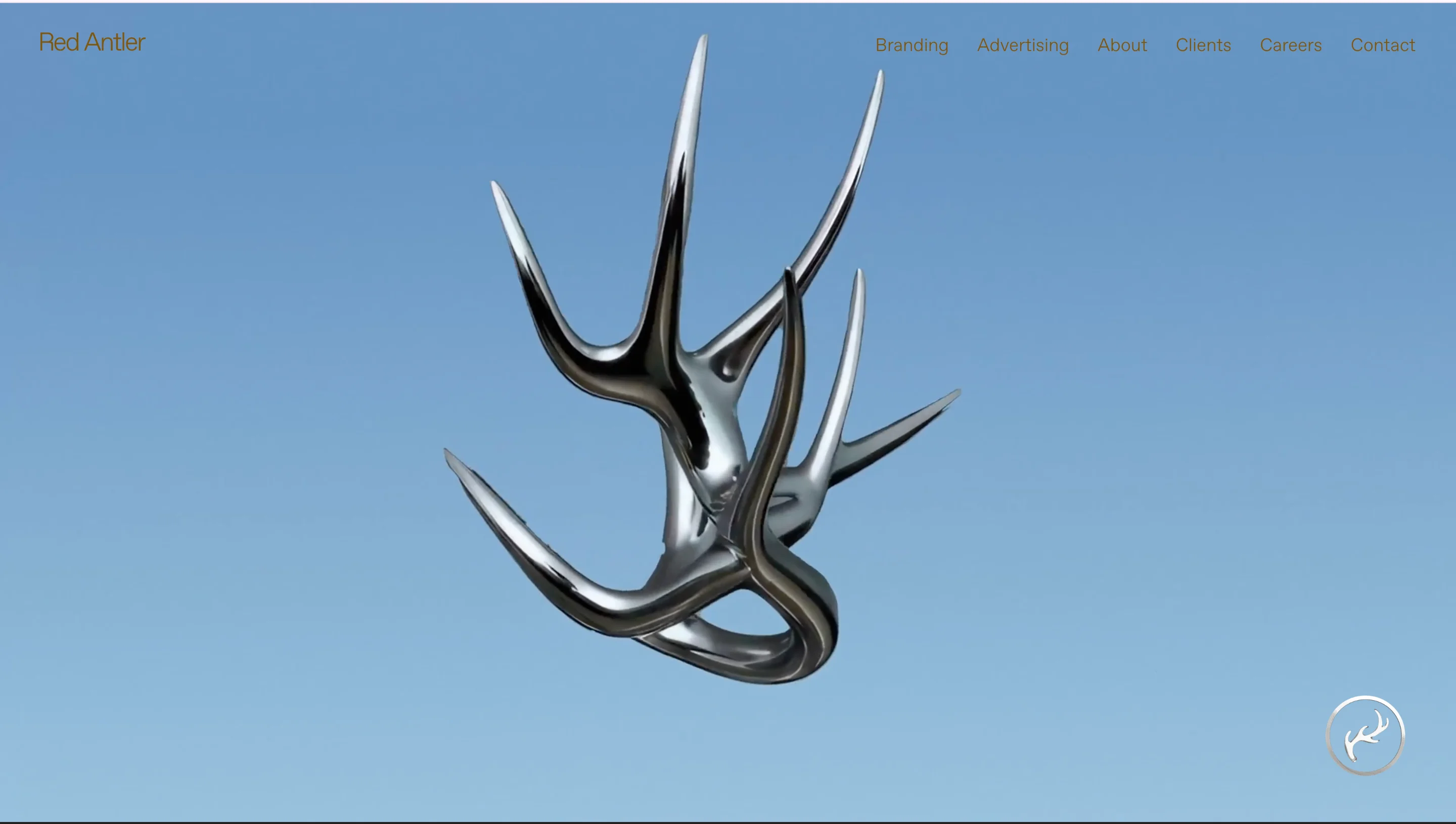
Red Antler builds brands for venture-backed consumer startups, often starting before a company has even launched publicly. The agency's case studies include Hinge, AllTrails, and Casper, all companies that needed a brand ready to convert customers from the very first day rather than growing into one gradually. Its work typically covers naming, identity, and the actual launch campaign together, not just the visual system on its own.
Key services:
- Logo and brand identity design
- Naming and packaging
- Launch execution and campaigns
Location: New York, US
Price: Custom
Best for:
- Funded consumer startups preparing for a public launch
- Companies that need naming and identity handled together
- Founders who want the agency involved through the actual launch, not just the design phase
Don't consider if:
- You're building a B2B or enterprise software brand
- Your budget sits well under $50,000
- You already have a name and just need a visual identity
The Branx
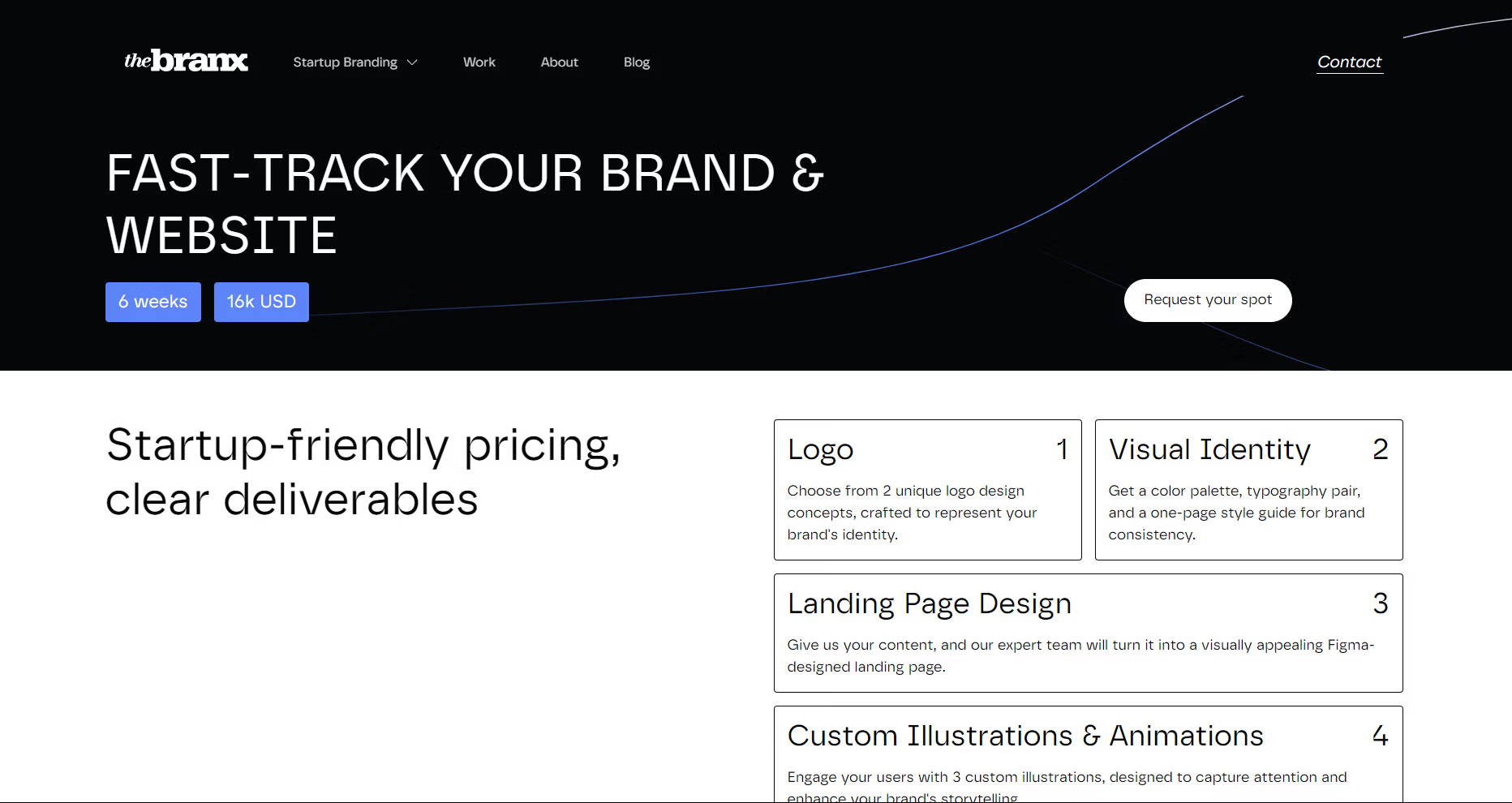
The Branx is a branding studio based in Spain, working mostly with AI, SaaS, and fintech startups that need both an identity and a website built in Webflow. Reviews on independent platforms like Clutch consistently mention the team's responsiveness and willingness to work within a defined budget rather than expanding scope as the project goes. The studio's own case studies show logo, brand identity, and Webflow site work delivered as one connected project instead of two separate engagements.
Key services:
- Logo and brand identity design
- Webflow web design and development
- Positioning and messaging
Location: Cádiz, Spain
Price: Custom
Best for:
- Seed to Series B tech startups wanting identity and a Webflow site from one team
- Companies wanting a lower entry price than most combined design-and-web agencies
- Teams that value verified reviews over a large portfolio alone
Don't consider if:
- You need a large in-house team managing multiple sub-brands at once
- You want an enterprise-scale, multi-year retainer relationship
- Your site is not being built in Webflow
Creative Mules
Creative Mules is a smaller, design-led studio that pairs brand identity work with Webflow development, positioning itself as a boutique alternative to larger combined-service agencies. Public information on team size, exact location, and published pricing is more limited than for some other services on this list, so most of what is known comes from the studio's own portfolio and site rather than third-party review platforms. That makes a direct conversation worth having early, since fewer independent data points exist to check claims against.
Key services:
- Logo and brand identity design
- Webflow design and development
Location: Netherlands
Price: Custom
Best for:
- Brands wanting a boutique, design-led studio that also builds the website
- Companies comfortable requesting a custom quote rather than seeing published rates upfront
Don't consider if:
- You want to compare pricing before ever getting on a call
- You prefer agencies with a longer public track record of independent reviews
Designity
Designity pairs each client with a small managed team rather than one freelancer, typically including a Creative Director and a Project Manager alongside a dedicated designer. The model is built for companies expecting ongoing creative requests beyond a single logo, since the team stays assigned to the account rather than rotating between projects. Designity advertises a fast turnaround window and unlimited revisions within its monthly plan, similar in setup to Awesomic but at a higher monthly price point.
Key services:
- Logo and brand identity design
- Web design
- Video and content writing
Location: Scottsdale, Arizona, US
Price: from $5,495/month
Best for:
- Companies wanting a full managed creative team, not just a single designer
- Teams with ongoing design needs across multiple formats, not only a logo
- Businesses that can support a higher monthly budget than a solo-designer subscription
Don't consider if:
- You only need a one-time logo with no other design work planned.
- There are budget constraints.
WANT Branding
WANT has spent more than 25 years working with companies going through a major transition, whether that's a rename, a repositioning, or a full identity overhaul. Its client list includes large, established names like Cisco, Uber, and Royal Caribbean, which points to a process built for bigger organizations rather than early-stage startups. Naming is a particular strength here, and the agency is recognized on independent platforms as a leading naming specialist, not only a visual design shop.
Key services:
- Logo and brand identity design
- Naming and trademark-aware name development
- Brand strategy and architecture
- Brand research and performance tracking
Location: Offices in New York, Miami, Chicago, and Atlanta, US
Price: Custom
Best for:
- Established brands going through a rename or major repositioning
- Companies that specifically need naming expertise alongside visual identity
- Organizations with an enterprise budget and timeline
Don't consider if:
- You need a fast, low-cost logo rather than a full transition process
- You're a very early-stage company without an established brand to reposition yet

Why logo design carries extra weight for SaaS, startups, and B2B brands
A logo does more work for a SaaS or B2B company than it does for most other businesses, mainly because the logo is often standing in for things a buyer can't otherwise see or touch.
B2B buyers rarely meet you in person
A restaurant or retail brand gets judged by a physical space, a product on a shelf, a real interaction with staff. A B2B buyer usually only sees a website, a demo call, a proposal PDF, and a listing on a review site like G2 or Capterra. The logo and the identity around it end up carrying more of the trust-building work, since there's so little else physical to judge the company by.
Procurement involves more people than a single decision-maker
A B2B purchase often gets reviewed by a buyer, their manager, IT, procurement, and sometimes legal, and most of those people will look the company up before signing off. An identity that looks inconsistent across the website, the deck, and the product interface gives a skeptical stakeholder one more reason to slow the deal down, while a coherent one removes that friction entirely.
Most SaaS dashboards already look alike
A large share of B2B software defaults to the same rounded sans-serif logo and the same shade of blue, largely because that's what feels safe. That sameness is exactly why a distinct mark stands to gain the most in this category specifically, since it's one of the few places a SaaS company can look different from ten competitors doing the exact same demo.
A scrappy identity raises doubts disproportionate to its actual cost
For an early-stage startup, a logo that looks unfinished can make an investor or an early customer question the team's execution ability well beyond what the logo itself should reasonably signal. It's a small, fixable detail that ends up standing in for a much bigger judgment about whether the founders can ship polished work.

When to use a self-serve logo generator vs. hiring a logo design service
The right choice here comes down to what the logo actually has to survive once it's out in the world, not just what it looks like on day one.
When to choose a free or paid logo generator
A generator is the right call when speed and cost matter more than polish, at least for now.
- You need something usable within the hour: An early test or an MVP that might change entirely once real customers show up doesn't need a fully custom process behind it.
- Your budget is close to zero: A paid service isn't always realistic yet, and a generator gets you a usable mark without that upfront cost.
- You're comfortable iterating on your own: If you don't need a trained designer's second opinion before committing to a direction, a generator lets you move at your own pace.
None of this is a permanent decision. Plenty of companies start here and move to a paid service later, once the business itself has proven it's worth the investment.
When to choose a logo design agency
A paid service earns its cost once the logo has to hold up outside your own judgment, in front of people who won't give it the benefit of the doubt.
- Your logo needs to hold up next to real scrutiny: Investors, retail partners, or an app store review process all expect a mark that looks deliberate, not templated.
- You want to trademark it with confidence: A mark assembled from a stock icon library that thousands of other businesses can also access is a weak foundation to register and defend later.
- AI-generated marks carry a similar risk in a newer form: A tool trained on millions of existing logos can hand you something that resembles another company's mark closely enough to cause a real problem, and there's no way to know until it gets flagged.
- The logo needs to extend into a full brand system: Once it has to work across a website and product, not just sit alone as a PNG file, an agency that builds that whole system pays for itself.
Run the same brief through five different AI logo generators and you'll likely get five versions of the same two overlapping shapes in a slightly different shade of blue. That's not really a flaw in any single tool, it's just what happens when thousands of businesses type similar keywords into the same trained model.
Logo generating tools worth trying
If a generator is the right fit for where you are right now, these are worth starting with.
- Design.com: the largest logo template library of the group, with AI-assisted editing on top of the templates
- BrandCrowd: a similar template-and-AI approach, with a broader branding kit built around each logo
- Canva: a good fit if you already use it for other design work and want your logo to live in the same tool
- Looka: guided AI generation based on a few questions about your style and industry
- Tailor Brands: combines AI logo generation with business-formation tools like LLC setup
- Designs.ai: an AI generator that builds a logo alongside a small starter brand kit in one pass
- Wix Logo Maker: works best if your website is already built on Wix
- Adobe Express: a free, fast option if you want something usable today with no learning curve
"Self-serve tools are great right up until someone asks for the vector file with the fonts embedded, and you find out the free plan never actually gave you one."

How to choose the right logo design service for your budget and stage
The five checks below aren't a strict sequence, but working through them in this order tends to rule out the wrong service before you've spent time on it.
Set your budget ceiling first
The actual range on this list runs from a few hundred dollars to well over $350,000, and knowing your number before you start comparing rules out most mismatches early. A budget set after browsing options tends to creep upward, since every agency's case studies read a little more convincing once you've already spent an afternoon on their site.
Deciding on a number first, then matching that number to the tier it actually buys, keeps the comparison grounded instead of aspirational.
Decide whether you need a logo alone or a full identity system
A logo-only budget spent at a full-identity agency will cover only a fraction of what the same money buys elsewhere on this list. Agencies built around full identity work price in the strategy, naming, and documentation that come before the logo itself, so paying full-identity rates for a single mark means paying for a process you won't actually use.
A subscription service has the opposite tradeoff: it can build toward a full identity over time, but it won't hand you one finished system in a single upfront engagement the way a traditional agency will.
Check whether the service also builds the website your logo needs to live on
A logo and a site built by two separate teams usually means a second handoff, a second briefing, and a real chance for the two to drift apart over time. This is exactly why magier's process keeps design and Webflow development under one team from the start.
Even when both teams involved are competent on their own, nobody owns the moment the logo actually gets implemented in code, which is exactly where color values, spacing, and font weights tend to shift slightly from what was originally intended.
Verify claims through independent reviews
Verify claims through independent reviews on platforms like Clutch or Trustpilot rather than a portfolio alone. Anyone can curate a portfolio, but they cannot fully control what past clients say about them elsewhere.
A portfolio also only shows the finished result, never the process behind it, while reviews tend to mention exactly what a portfolio can't: how revisions were handled, whether deadlines held, and whether the relationship stayed easy once the invoice was paid.
Confirm the turnaround time actually matches your timeline
An agency built around a 12-week discovery process will frustrate a team that needs to ship in two weeks, and the reverse is just as true. A founder who needs to launch quickly will find a slow, deliberate process working against them, while a company planning a multi-year rebrand may find a fast subscription model rushes decisions that deserve more time.
Matching the pace to your actual constraint, not just your preference, avoids a mismatch that shows up midway through the project instead of before it starts.
A quick note on how logo pricing has changed
It's worth knowing that logo pricing has moved a long way from its historical baseline. Alan Siegel, founder of Siegel+Gale, designed the NBA's logo in 1969 for a fee of $14,000. Even adjusted for inflation, that's a small fraction of what a comparable enterprise identity project costs today, which says less about inflation alone and more about how much more a logo is now expected to do across the digital platforms that didn't exist in 1969.
A logo in 1969 needed to work on a jersey, a program cover, and a handful of print placements. A logo today needs to work as a favicon, an app icon, a social avatar, and a component inside a live website, which is a much larger design problem than it was fifty years ago.
How to choose per your budget
Once you know your number, this is roughly what it maps to across the services covered in this guide.
Red flags to watch for in a logo design service
A few problems come up again and again in this category, and knowing them before you pay saves real money later.
- Recycled concepts sold as custom: some marketplace and low-cost logo sellers reuse near-identical marks across multiple clients, so a reverse image search of any concept you're offered is worth the two minutes it takes.
- No stated revision limit: if a quote does not say how many rounds of feedback are included, ask before you pay. "Unlimited revisions" quietly turning into "two revisions, then a new invoice" is common enough in this category to raise upfront.
- AI output sold as fully custom design: there is nothing wrong with AI-assisted tools on their own, but a service should tell you plainly when a human designer reviewed and adjusted the output, versus when you are paying full custom rates for an untouched AI generation.
- Unclear ownership or licensing terms: confirm in writing that you own the final file outright, since some cheaper marketplaces license rather than sell certain templates, which can matter later if you want to trademark the mark.
- No way to verify past client claims: a portfolio of logos with no named clients, no reviews on an independent platform, and no way to confirm any of it actually happened is a real reason to ask more questions before paying anything.
Let's be honest, most of these problems only surface after you have already paid, which is exactly why asking about them upfront costs you nothing.
Final thoughts
A logo is one of the smaller line items in a company's budget, but the wrong choice here quietly shows up everywhere else, from your website to your pitch deck to the app icon someone screenshots and shares. Picking the right service for your actual stage and budget takes real comparison work, and there is no shortcut that skips reading a few reviews and asking a few direct questions before you pay.
If you want a logo and a working Webflow site handled by one team from the start, see how magier covers both design and Webflow, or book a free demo with magier to walk through what that would look like for your company specifically.
If you're comparing services on your own for now, start with the budget table above to narrow your options, then read the full profile for whichever two or three services actually fit your stage before reaching out to any of them.
{{cta}}
FAQ
There is not one answer, since the right company depends entirely on your budget and stage. A funded consumer startup, a bootstrapped SaaS founder, and an enterprise going through a rebrand each need a different service from this list, which is exactly why the comparison table and the "how to choose" section above exist. However, if you are a new startup and need someone to constantly look after your design needs, magier is the right fit.
Costs on this list range from around $990 a month for a subscription service up to $350,000 or more for a flagship agency engagement. Most companies land somewhere between $10,000 and $50,000 for a service that covers a full identity system alongside the logo itself.
If you are testing an idea before committing to it, a self-serve generator is usually enough for now, and switching to a paid service once the business has real traction is a reasonable way to spend money as it becomes available. Once you are raising funding, signing real customers, or building a website you plan to keep, a professional service becomes worth the cost, since the logo now needs to work under real, outside scrutiny.
A logo design service usually focuses on the mark itself, sometimes with a small set of color and typography rules attached. A full brand identity agency builds the logo as one piece of a larger system that includes strategy, tone of voice, and a complete style guide, which usually costs more but leaves you with a more defensible, joined-up brand overall.
Start with your positioning and audience before touching color or type, since a logo built on a clear starting point tends to age better than one chosen for looking good in isolation. From there, most services move through concept sketches, a color and typography system, and a set of usage rules that keep the mark consistent across every format it needs to appear in.
Design.com and BrandCrowd are generally the strongest all-in-one options, since both combine large template libraries with AI-assisted editing and vector file exports. Looka and Tailor Brands are worth considering if you want more guided, industry-specific suggestions rather than browsing templates yourself.
2026's logo trends lean toward simpler, more adaptable marks that hold their shape across app icons, video, and social platforms, alongside a return of bolder, more expressive typography after several years of minimalism. Motion-ready and adaptive logos, ones that can shift slightly by platform without losing recognition, are also becoming more common among software and app-based brands.
.avif)

.avif)

.avif)