magier vs 99designs
This magier vs 99designs comparison breaks down pricing, services, turnaround speed, team structure, quality assurance, and collaboration workflow so you can decide which model fits how your team actually works.
magier vs 99designs at a glance
magier is a design and Webflow development subscription that provides design support through a dedicated team for a flat monthly fee. It also offers one-time project-based services when requested. On the other hand, 99designs is a global design marketplace where you either run a contest to crowdsource ideas from multiple designers or hire a single freelancer for a one-to-one project.
It is evident that 99designs has a clear advantage when you want creative variety on a single project, particularly for logos, book covers, or packaging where seeing 30-90 different concepts helps you land on the right direction. However, magier is the stronger choice when you need a reliable creative partner who delivers work continuously, reviews every task for quality before it reaches you, and can handle both design and Webflow development under one subscription.
What is magier?

magier is a creative subscription service that provides graphic design and Webflow development to businesses on a monthly basis. Founded by Sina Sadegh and Maximilian Fleitmann, both with 10+ years of experience building startups and scaling companies, magier positions itself as an extended design and development team. The company has served 150+ brands, holds a 5/5 rating across 109 Trustpilot reviews, and is a Webflow Premium Partner.
Key services:
- Graphic design (ads, branding, web design, UI/UX, illustrations, social media, packaging, presentations, and more)
- Webflow development (new pages, complex sections, custom development, integrations)
- Combined design + Webflow subscription
Target audience: SaaS companies, startups, fintech, ecommerce brands, agencies, and marketing teams that need ongoing creative capacity without hiring in-house.
{{cta}}
What is 99designs?
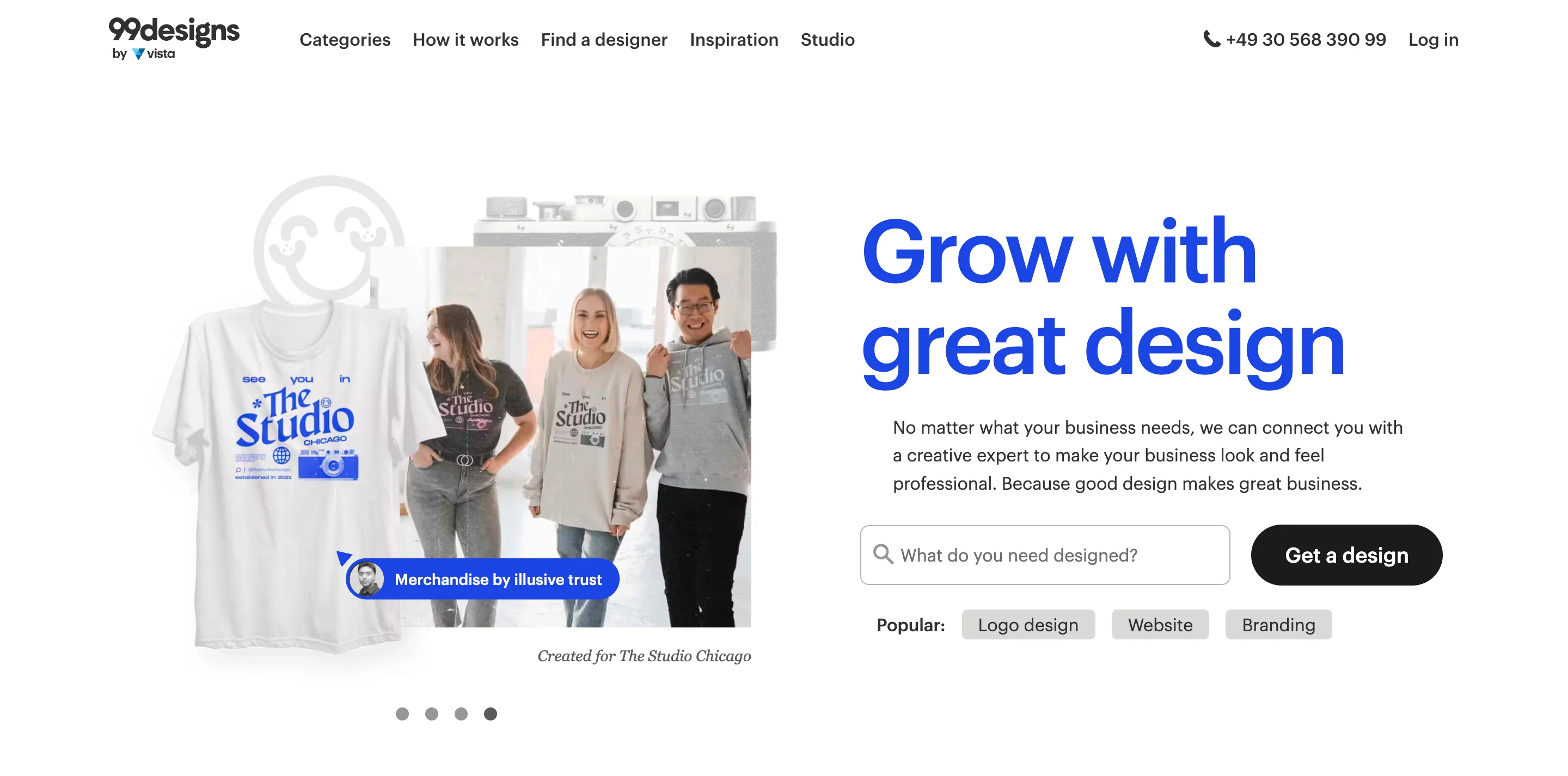
99designs (by Vista) is a global design marketplace that connects businesses with freelance designers across 192 countries. Founded in 2008 in Australia and acquired by Cimpress/Vista in 2020, the platform offers two primary ways to get design work done: design contests, where multiple designers submit concepts and you pick a winner, and one-to-one projects, where you hire a specific designer directly.
Key services:
- Design contests across 90+ categories (logos, packaging, web design mockups, business cards, illustrations, and more)
- One-to-one freelancer projects with custom pricing
- Circlemakers Studio: a full-service branding agency offering brand strategy packages starting at US$4,499
Target audience: Entrepreneurs, small businesses, and content creators who need individual design projects completed, particularly those in the early stages of building a brand identity.
Services and scope compared
magier covers a broader scope because it includes Webflow development and motion design alongside the full graphic design range, which means you can go from a brand identity concept to a live, coded Webflow website without switching vendors. 99designs has a wider variety of niche design categories (tattoo design, t-shirt contests, WordPress theme design) but does not extend into development or motion work.
If your needs stop at static design deliverables, 99designs covers the category range. If you also need those designs built and shipped as real web pages, magier handles both under one subscription.
Pricing and total cost of ownership
The comparison here is not apples to apples, because these are two fundamentally different pricing models. 99designs charges per project, and magier charges per month.
At first glance, 99designs looks significantly cheaper. A logo contest starts at €289, while magier's design subscription starts at €2,750/month. But the math changes depending on how many design tasks you actually need.
If you need one logo and nothing else for the next six months, 99designs is the more cost-effective option by a wide margin. There is no reason to pay a monthly subscription for a single deliverable.
But if you need a logo, a brand guide, a landing page design, social media templates, ad creatives, and presentation decks, each of those would be a separate 99designs project with its own price tag. A logo (€289-€1,299) plus a brand guide (from €259) plus a web page design contest (from €389) plus a social media pack (from €379) already adds up to €1,316-€2,326 before you factor in the time you spend briefing, reviewing submissions, and managing each contest independently. Add a few more projects and you are approaching or exceeding magier's monthly fee, but without the art director review, the dedicated team, or the unlimited revisions.
So the real question is volume. If you run fewer than 3-4 design projects per month, 99designs' per-project pricing is likely cheaper. If you run more than that, magier's flat fee becomes more predictable and often less expensive per deliverable, because there is no ceiling on how many tasks you can submit in a month.
Turnaround and delivery speed
magier is faster on a per-task basis because of how the model works. You have a dedicated team that already knows your brand, so there is no ramp-up time between tasks. Once one deliverable is approved, the team moves to the next one within 48 hours. Over the course of a month, that cadence compounds into significantly more output than running individual contests or projects.
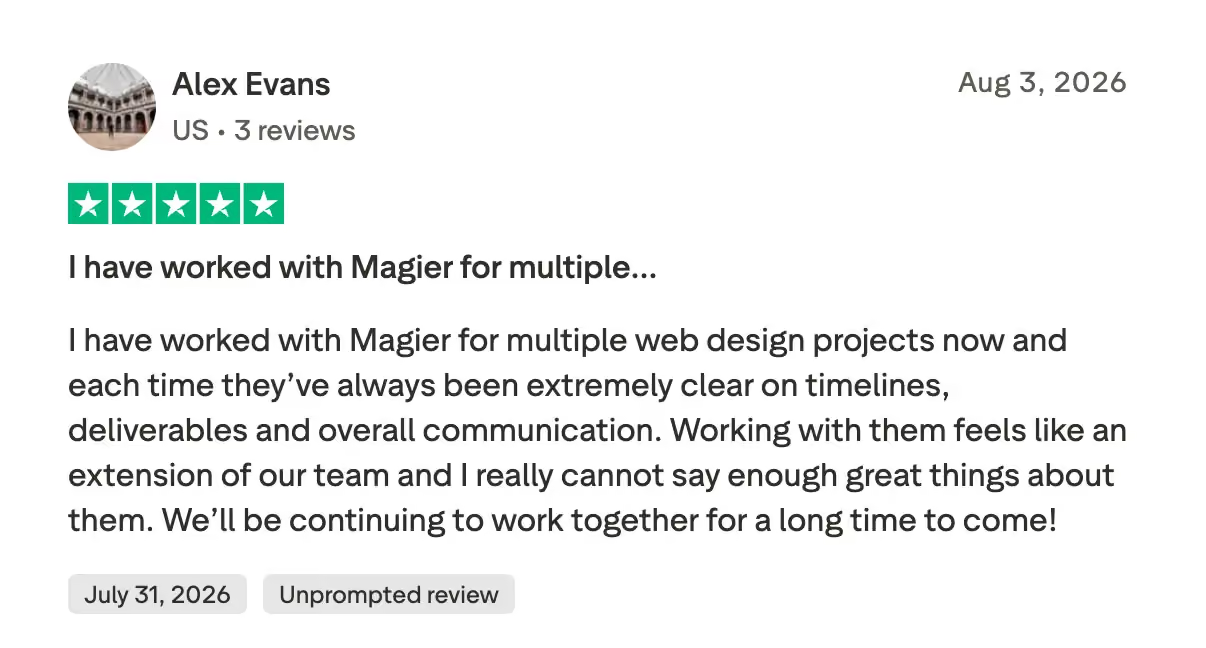
99designs contests have a built-in timeline of roughly a week, because you need time for designers to submit concepts, for you to give feedback, and for the finalists to refine. That is not slow for a single project, but it is not designed for ongoing velocity. If you need five deliverables this week, you would have to run five separate contests or hire five freelancers and manage them all individually.
Design quality and vetting
This is where the two models are the most different. 99designs gives you creative variety, while magier gives you creative consistency.
On 99designs, a Gold or Platinum contest connects you with higher-tier designers and generates up to 90 concepts from different creative perspectives. That is a genuine advantage when you are exploring visual directions for a new brand or when you want to see how many different ways a logo could work. The variety itself is the product.
The trade-off is that quality varies across submissions. Not every concept will be strong, and you will spend time sorting through them. There is also no art director reviewing the final files before they reach you, which means catching errors in spacing, alignment, or file format falls on you.
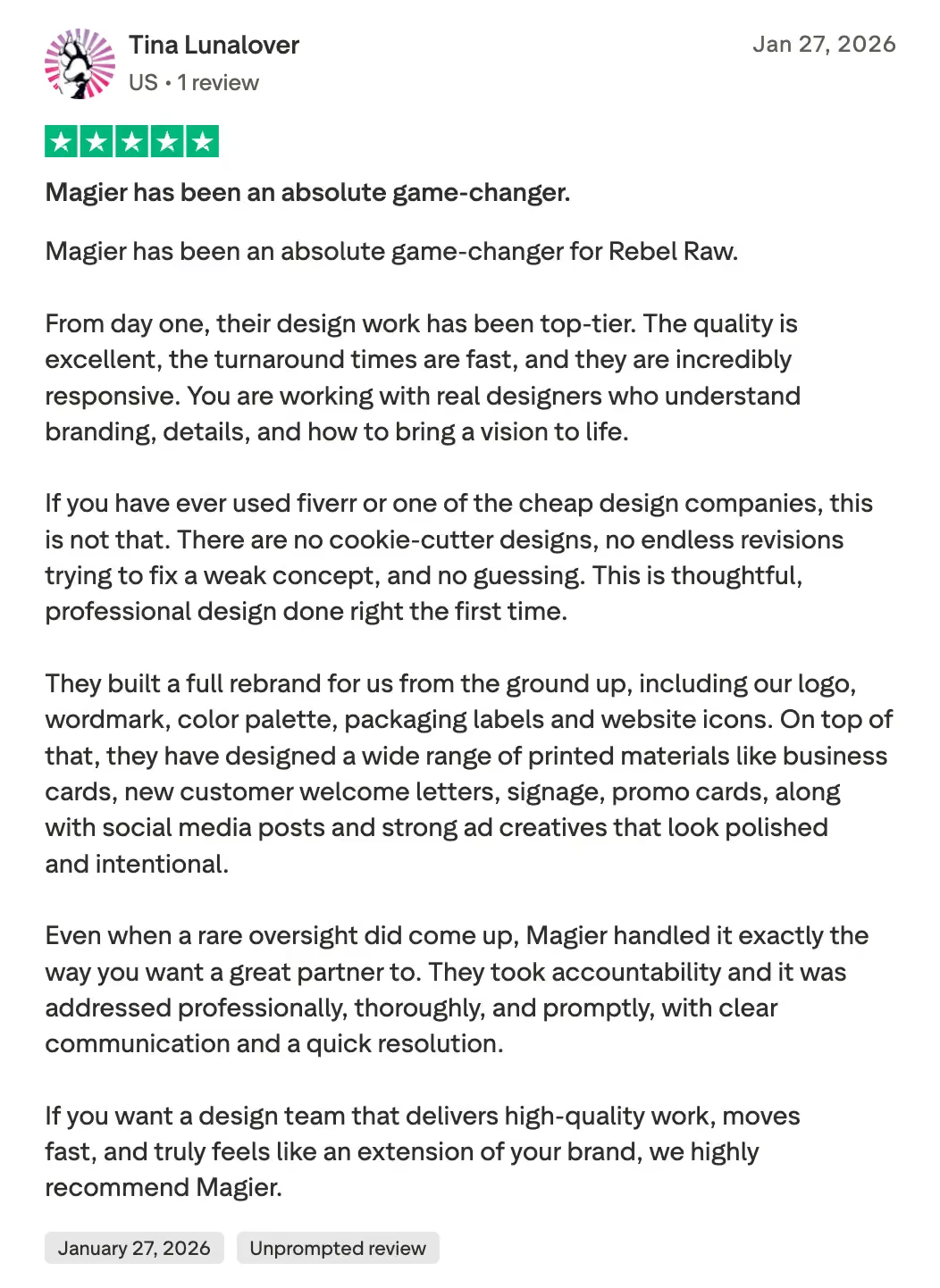
magier takes a different approach. Instead of variety across many designers, you get depth from one dedicated team that learns your brand over time. Every design goes through an art director review before delivery, which catches the kind of small errors (wrong font weight, inconsistent spacing, misaligned elements) that are easy to miss when you are the one who briefed the project. That review step is the reason magier's model tends to produce more consistent results over time, but it means you see fewer creative directions per task.
Creative direction and strategic support
On a standard 99designs contest, you are the creative director. You write the brief, you evaluate submissions, you give feedback to competing designers, and you decide what works. That is great if you have a strong sense of what you want and enjoy evaluating creative options. It is less great if you are a founder or marketing lead who needs design support precisely because you do not have time or training to direct the creative process yourself.
magier's art director fills that gap. They review every brief for clarity, check every design against your brand guidelines, and provide creative feedback before the work reaches you. The client still provides business context and priorities, but the art director contributes creative judgment on top of that. It is not full campaign strategy (that would be closer to what Circlemakers Studio offers on the 99designs side at US$4,499+), but it is a meaningful layer of quality control and brand stewardship that you do not get on a standard 99designs project.
Collaboration, platform, and workflow
The day-to-day experience is quite different. On 99designs, your interaction is project-scoped: you launch a contest, engage with submissions during the contest window, pick a winner, and receive your files. Between projects, there is no ongoing relationship unless you choose to rehire the same designer.
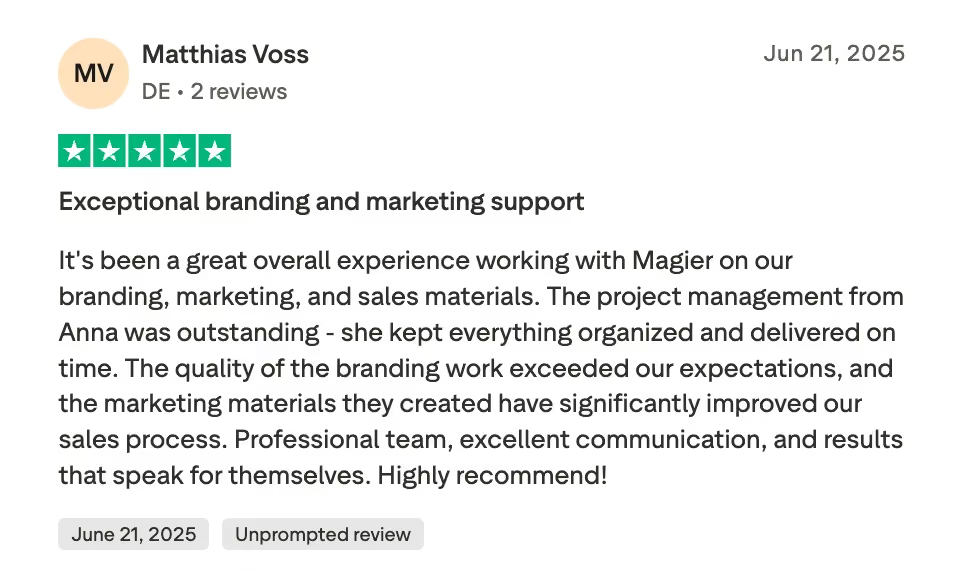
On magier, the relationship is continuous. Your art director knows your brand, your files live in a shared Figma workspace, and you can submit the next task as soon as the current one is approved. The platform is built for ongoing work rather than discrete transactions, which means less time spent re-explaining your brand every time you need something new.
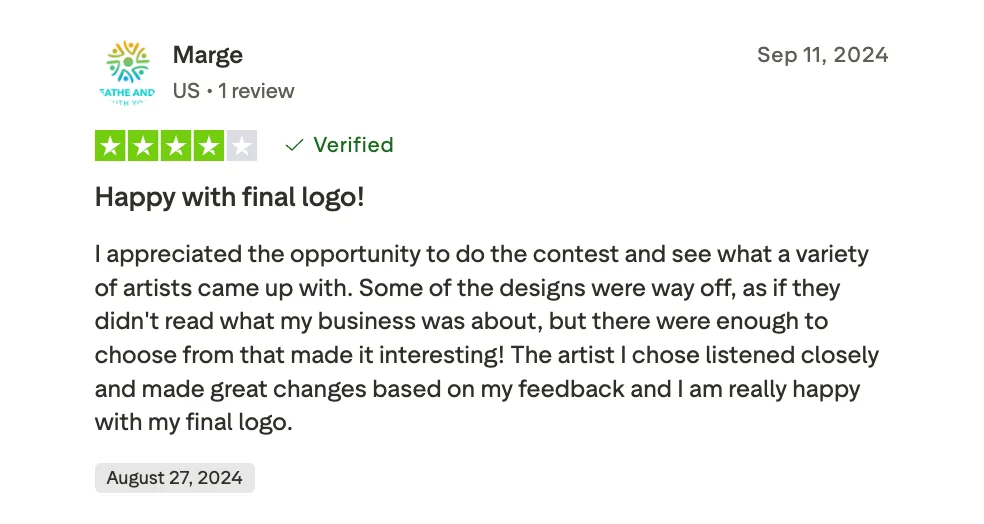
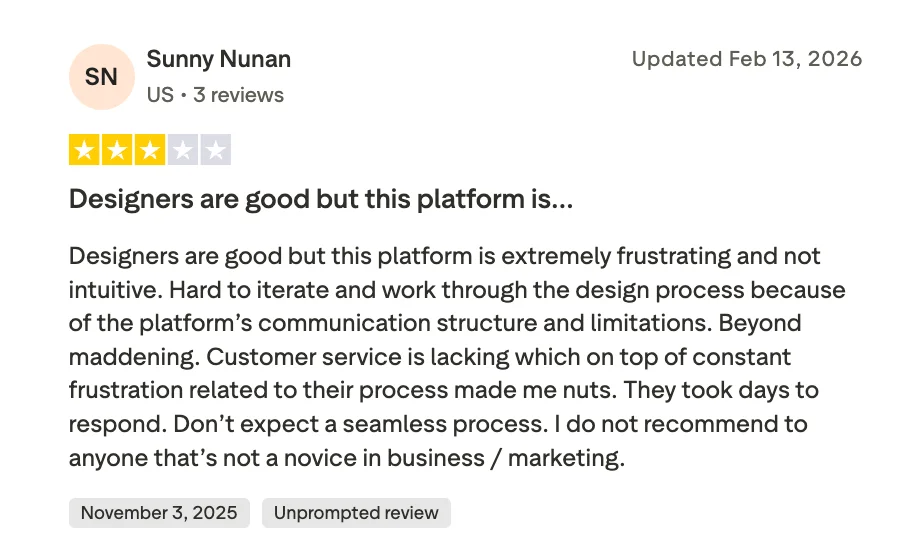
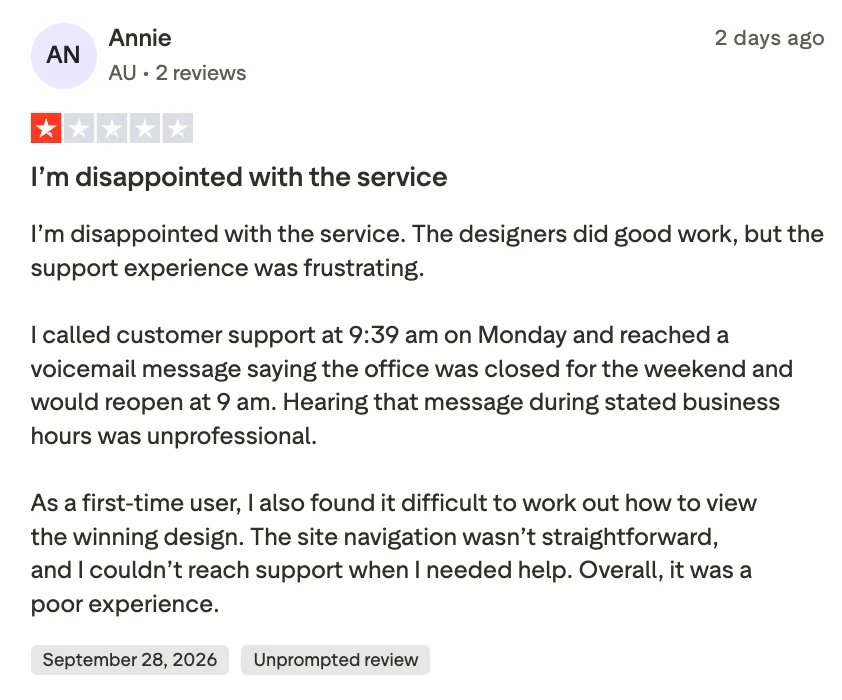
99designs has one advantage in collaboration that is worth noting: their brief builder is well-designed for one-off projects, with helpful prompts about style preferences and design direction. If you have never briefed a designer before, 99designs' guided process makes the first experience approachable. You pick a category, answer a few questions, and submit. That said, having a guided brief builder does not compensate for not having someone on the other side who already knows your brand. Also, there are a few reviews on Trustpilot that says otherwise.
Reliability and scalability
magier's subscription model has a structural advantage here. If your dedicated designer is unavailable, the art director reassigns the work to another qualified team member without starting the search over. Your brand context stays with the team because it lives in shared Figma files and the dashboard history, not in one freelancer's memory.
On 99designs, reliability depends on the individual designer. A contest model does not have a single point of failure (you are working with many designers at once), but a one-to-one project does. If your freelancer goes silent or becomes unavailable, you are back to browsing portfolios and onboarding someone new.
Scaling up is also different. On magier, you increase your output by adding a second active pipeline (for example, adding a Webflow subscription alongside your design subscription) or by using one-time project sprints for deadline-driven work. On 99designs, you scale by running more contests or hiring more freelancers, each of which requires its own brief, management, and review process. Neither approach is wrong, but the management overhead scales linearly with the number of projects on 99designs, while it stays roughly flat on magier because the art director absorbs the coordination.
Risk, compliance, and brand security
Both services transfer full intellectual property to the client, so there is no difference on the ownership front.
The practical difference is in brand security over time. When you run ten separate contests on 99designs over the course of a year, your brand assets are scattered across ten different projects with ten different designers. Keeping everything consistent (same hex codes, same font weights, same logo spacing) depends entirely on the quality of your brief and your own vigilance.
On magier, your art director enforces that consistency because they review every deliverable against your brand guidelines before it reaches you. It is a small thing on any single project, but over dozens of deliverables it prevents the kind of drift that makes brands look inconsistent across channels.
Who should choose magier
- You need 5+ design deliverables per month: The subscription pays for itself in volume, and the dedicated team means you do not spend time onboarding a new designer for each task.
- You need Webflow development alongside design: 99designs does not offer Webflow. magier is a Webflow Premium Partner with dedicated development subscriptions starting at €890/month.
- You want creative oversight without hiring an in-house art director: magier's art director reviews every design before delivery, which catches errors and maintains brand consistency across deliverables.
- You need fast, predictable turnarounds: Under-48-hour delivery on an ongoing basis is built into the subscription model, while individual contest timelines are longer and harder to predict.
- You are not ready for a subscription but want a scoped project: magier also offers one-time projects for branding (2-4 weeks), web design (2-6 weeks), and Webflow development (2-6 weeks).
Who should choose 99designs
- You need a single design project and want to explore many creative directions: The contest model is genuinely useful when you want to see 30-90 different takes on a logo, package design, or book cover before committing to one.
- Your budget is under €500 for a one-off task: A Bronze or Silver logo contest (€289-€479) costs a fraction of a monthly subscription, and that makes complete sense for a single deliverable.
- You want to handpick a specific designer: The one-to-one project model lets you browse portfolios, review past work, and choose the exact creative you want to collaborate with.
- You are in the early stages of building a brand: If you do not yet know what visual direction feels right, seeing dozens of competing concepts can help you figure that out faster than working with one team.
- You need niche design work in a specific category: 99designs has 90+ categories, including some (tattoo design, WordPress themes, t-shirt contests) that fall outside the scope of a typical design subscription.
Real-world scenarios
These scenarios are drawn from magier's actual client work. They illustrate how the subscription model handles the kinds of challenges that are difficult to solve through individual contests or one-off projects.
Weglot: building a scalable sub-brand as a one-person creative team
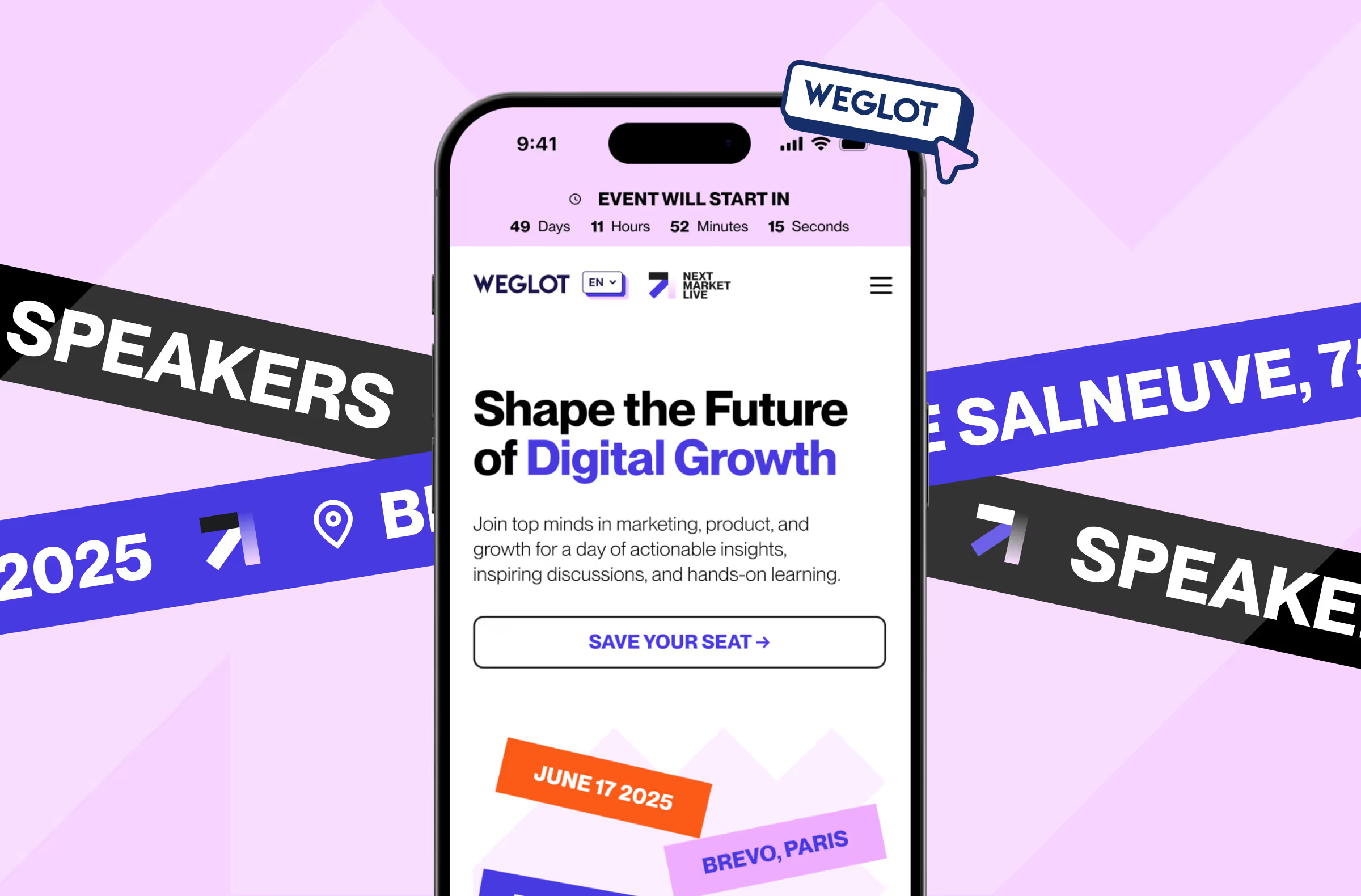
Weglot powers 100,000+ websites with a lean team, and just one person managing all design work. When Weglot planned their first flagship event, Next Market Live, their creative content manager needed more than a freelancer for a one-off logo. She needed a custom event identity, landing pages, speaker cards, presentation templates, social media graphics, and printed materials, all brand-consistent and delivered on a tight timeline. Previous freelancer and agency experiences had been inconsistent: quality would drop off after a few weeks, and project management landed back on Weglot's plate.
magier delivered 10+ custom assets across 5+ design touchpoints and helped launch 3 major campaigns in a single quarter. The sub-brand identity was designed to be scalable, so Weglot could reuse the system for future event editions across different countries. That kind of cohesive, multi-format output from a single team would have required multiple separate 99designs contests and careful self-coordination to keep the visual identity consistent across all of them.
Growdash: doubling leads with a comprehensive brand overhaul
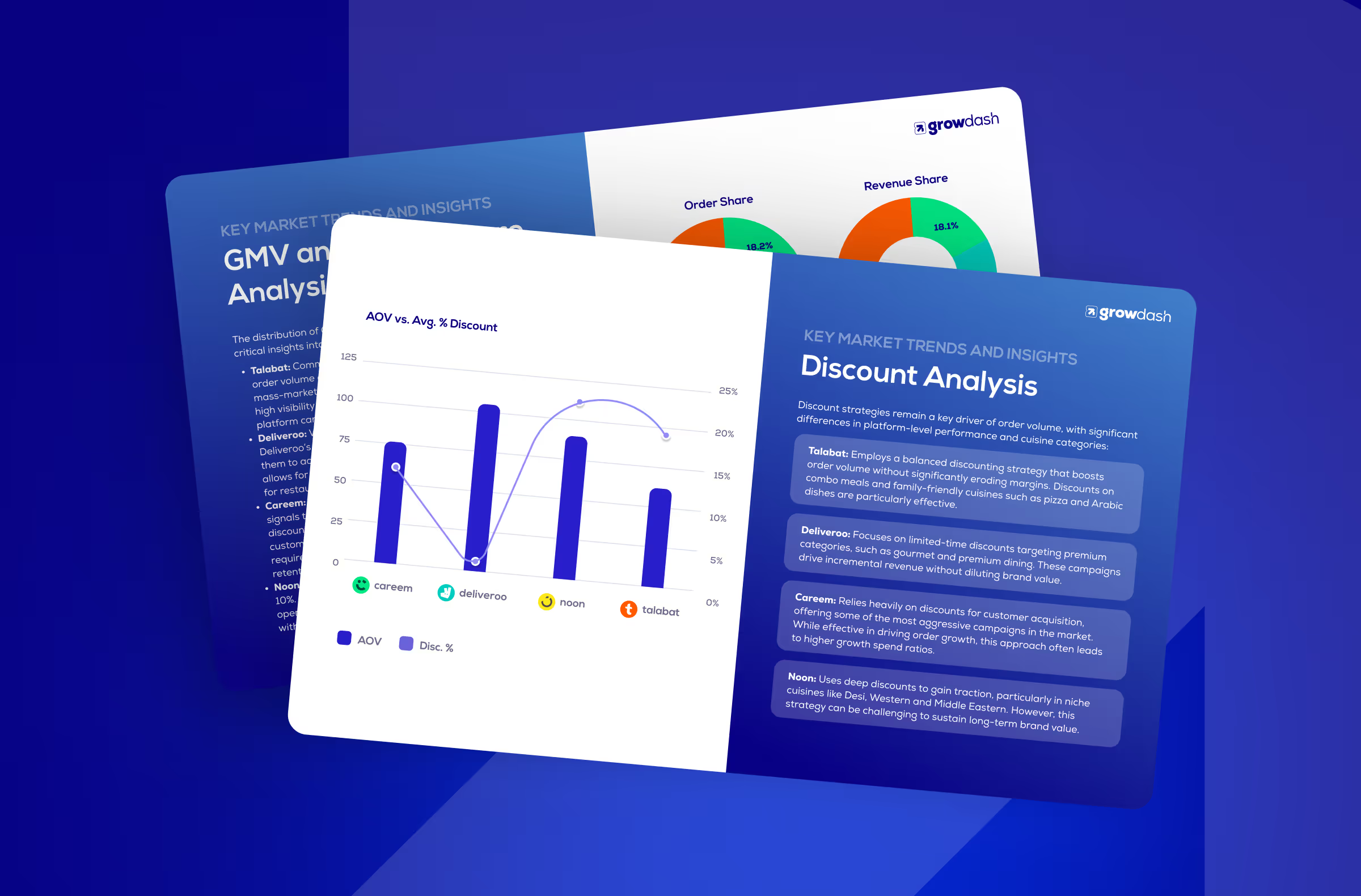
Growdash needed a full brand identity that worked across branding, illustration, motion design, presentations, and social media. The scope covered everything from the logo and visual system to animated assets and investor decks. magier handled the entire project as one continuous engagement with a single dedicated team.
The result: Growdash doubled their leads and built a recognizable brand across all of their channels. Doing this through 99designs would have meant running separate contests or projects for each deliverable type, each with its own designer, brief, and review process. The risk of visual inconsistency across that many independent projects is real, because no single designer or art director would be watching the full picture.
Jupus: scaling design output alongside rapid business growth
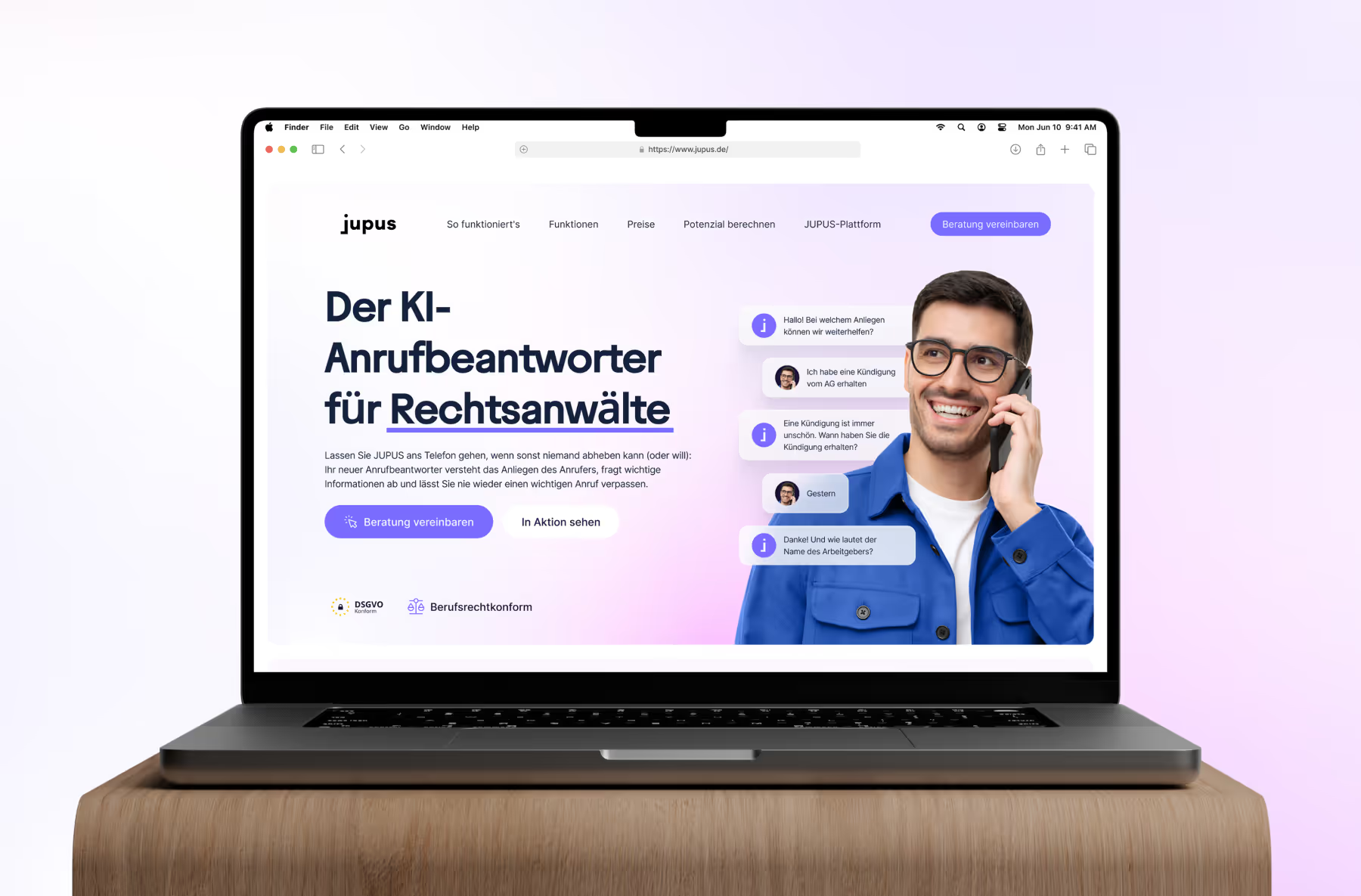
Jupus, a legal tech SaaS company, scaled to 500+ law firms and needed ongoing design capacity to keep up. The work spanned branding, presentations, print materials, social media, and web design. This is exactly the kind of sustained, high-volume design workload where a subscription model has a structural advantage over per-project purchasing, because the team is always available, always up to speed on the brand, and the cost stays fixed regardless of how many tasks ship in a given month.
How magier works
- Subscribe and get matched with a handpicked team of designers and/or Webflow developers, led by a dedicated art director.
- Submit your first brief through the magier dashboard using a structured format that takes minutes to complete.
- Prioritize your queue by choosing which submitted tasks should be worked on first.
- Communicate directly with your art director anytime via the dashboard or Slack for urgent items.
- Review, revise, and approve each deliverable. The team iterates until you are satisfied, then moves to the next task within 48 hours.
All finished files are stored in a dedicated Figma file and on the dashboard, and you receive all raw data files. If you are not ready for a subscription, magier also offers one-time projects for scoped work like a full rebrand, a website redesign, or a Webflow migration with a fixed deadline.
Why choose magier
- Unlimited tasks and revisions for a fixed monthly fee: No per-project pricing surprises, because you know your exact design cost each month regardless of how many tasks you submit.
- Under-48-hour turnaround on every task: The dedicated team model means no waiting for a contest to close or a freelancer to become available, because your team is always working on your next deliverable.
- Art director review on every deliverable: Every design is checked for brand consistency, brief alignment, and production quality before it reaches you, which eliminates the error-catching that falls on you when working with individual freelancers.
- Design and Webflow development under one subscription: You can go from concept to coded, live Webflow page without switching vendors or managing a separate development relationship.
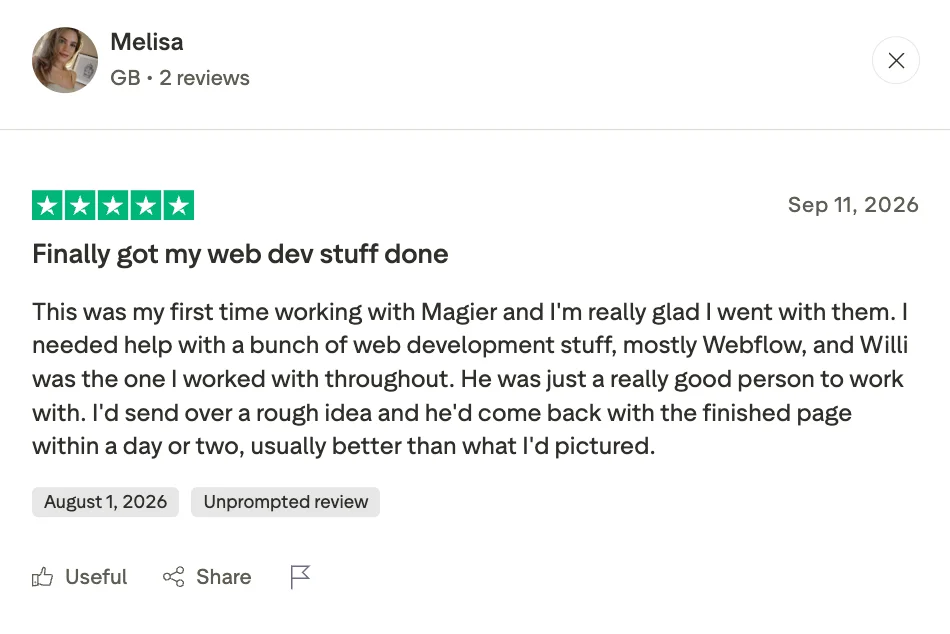
- 150+ brands served with a 4.9/5 Trustpilot rating across 109 reviews: magier's client base includes SaaS companies, fintech startups, ecommerce brands, and agencies ranging from early-stage teams to unicorns.
The bottom line
99designs and magier solve different versions of the same problem. 99designs is built for individual design projects where creative exploration across multiple designers is the priority. magier is built for teams that need ongoing, high-quality creative work delivered consistently and quickly, with the added option of Webflow development under the same roof.
If you need a single logo, a package design, or a book cover and you want to see dozens of concepts before choosing, 99designs' contest model is well-suited to that. If you need a creative partner who delivers work continuously, reviews everything before it reaches you, and scales with your team as your needs grow, magier's design subscription or one-time project option is the more practical path.
Pick the model that matches your volume and your workflow. If you are not sure which one fits, book a demo with magier to see how the subscription works in practice, or start with a one-time project to test the partnership before committing monthly.
{{cta}}
FAQ
Every design is reviewed by an art director before delivery. Your dedicated team works from a shared Figma file and accumulates brand knowledge over time, so each new deliverable builds on the last rather than starting from scratch. On 99designs, brand consistency depends on the quality of your brief and your own review, because different designers work on different projects.
99designs offers a 100% money-back guarantee on contests (not on one-to-one or Studio projects). magier does not offer a free trial, but subscriptions can be canceled monthly with 7 days' notice before the next billing cycle, and one-time projects are available for teams that want to test the partnership before committing to a subscription.
A subscription gives you a dedicated team that learns your brand, an art director who reviews every deliverable, unlimited revisions, and predictable monthly costs. A marketplace gives you access to a wider pool of individual designers for one-off projects, often at a lower per-project price. The right choice depends on whether your design needs are ongoing or occasional.
When you subscribe, magier assigns a handpicked team based on your industry, design needs, and project scope. The team is led by an art director who coordinates the work, provides creative oversight, and serves as your main point of contact. You do not need to browse portfolios or run contests to find the right fit.
magier is a subscription service that assigns a dedicated team for ongoing work at a flat monthly rate. 99designs is a marketplace where you purchase individual design projects, either through contests or direct freelancer hire. magier includes art director review on every task, unlimited revisions, and Webflow development. 99designs does not include any of these in its standard offering.
It depends on volume. For a single project, 99designs is significantly cheaper (logo contests start at €289 vs. magier's €2,750/month subscription). For teams running 5+ design tasks per month, magier's flat fee is often more cost-effective because it includes unlimited tasks and revisions without per-project billing.
No. 99designs uses per-project pricing for contests and one-to-one projects. For businesses that need ongoing creative capacity, this means each new task is a new purchase. magier's subscription model is designed for teams that need continuous design output.
Yes. magier offers one-time projects for branding (2-4 weeks), web design (2-6 weeks), and Webflow development (2-6 weeks). These are suited for larger scoped work with a set deadline, and they do not require a monthly subscription commitment. You can learn more at magier.com/one-time-project.
Yes. magier is a Webflow Premium Partner and offers dedicated Webflow development subscriptions for new builds, custom development, integrations, CMS work, and migrations. Superside does not list Webflow development as a core service, so teams using Webflow would need a separate vendor alongside Superside.
.avif)

.avif)