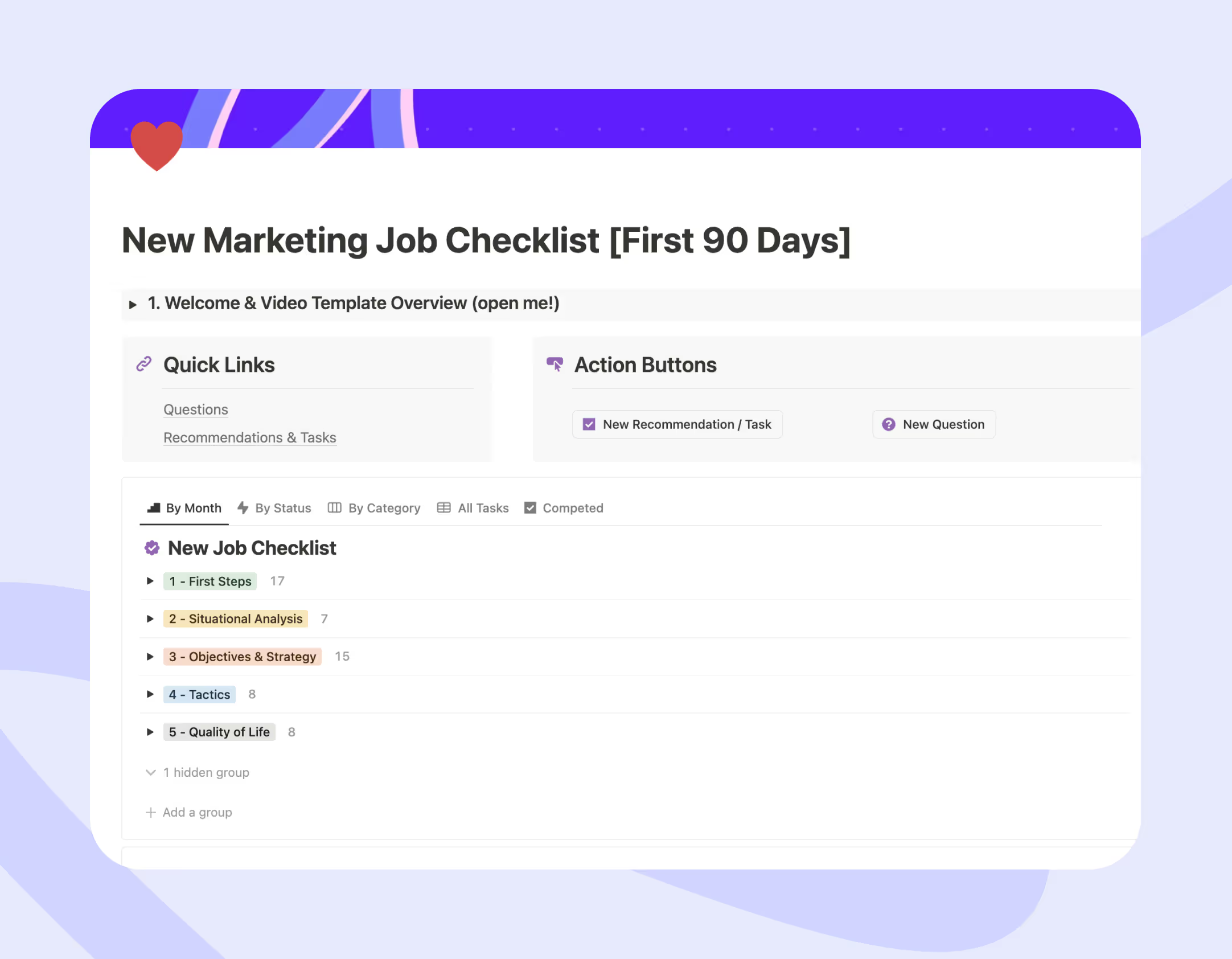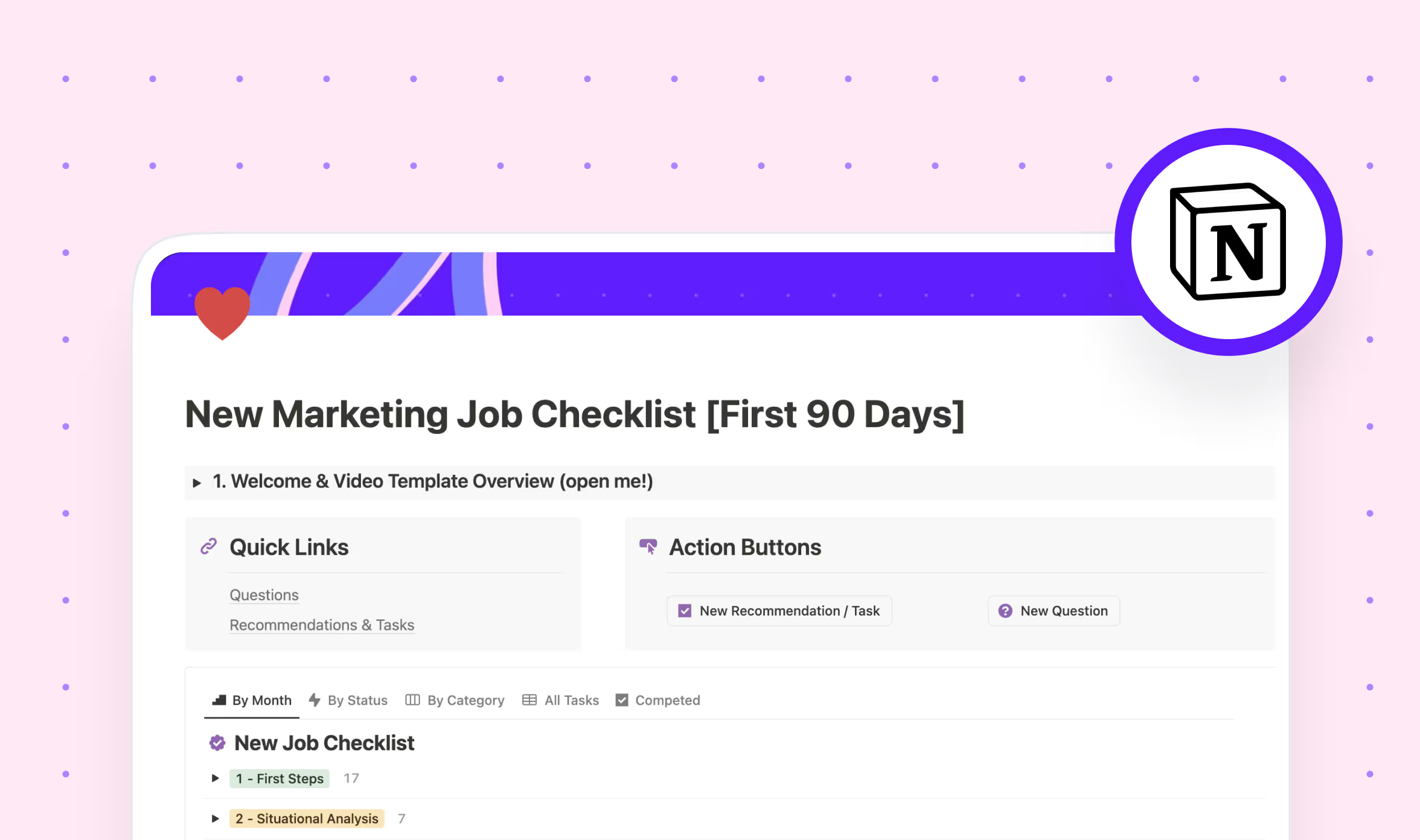
New Marketing Job Checklist First 90 Days (+ Notion Template)
Starting a new marketing role is overwhelming in a way that's hard to prepare for. There are tools you've never seen, campaigns already running, stakeholders with competing priorities, and an unspoken expectation that you'll start contributing before you fully understand the business. Without a clear plan, the first few months can easily turn into a cycle of reacting to whatever lands on your desk.
That's worth taking seriously, especially considering that 88% of companies have poor onboarding and CMO tenure has dropped to just 4.1 years. The pressure to demonstrate impact early is real, and a structured approach is the difference between building momentum and spending months trying to find your footing.
This guide breaks down exactly what to focus on in each phase of your first 90 days: what to learn, what to audit, what to build, and when to execute. Key priorities include meeting stakeholders across departments, auditing every existing marketing channel, aligning with sales on lead quality, establishing baseline metrics, and identifying quick-win opportunities for optimization.
Below, we'll start with what to expect from the checklist, then walk through each month in detail.
If you want to follow along with a ready-made version of this plan, we’ve created a free 90-Day Marketer Onboarding Checklist in Notion with all the steps, tools, and templates you’ll need to succeed.

Free Notion Template
New Marketing Job Checklist
Get your step-by-step breakdown of the first three months in your new marketing role and get ready to use templates like the SWOT analysis, LinkedIn Content Calendar, Positioning doc & more.
TL;DR: Your First 90 Days in a New Marketing Role
{freebie}}
New Marketing Job Checklist - What Can You Expect?
This comprehensive checklist breaks down your first three months in a new marketing role into clear, actionable phases.
I'll guide you through essential activities month by month, helping you transition from understanding and auditing to strategic planning and execution. Let's dive into what each month could look like and why. And if you'd like the full step by step checklist with build-in templates, do check out the free Notion template.
Month 1 (Days 1–30): Listen, Learn, and Audit
The first month is all about gathering knowledge, context, and relationships. It sets the tone for everything you do later. Go deep before you go fast.
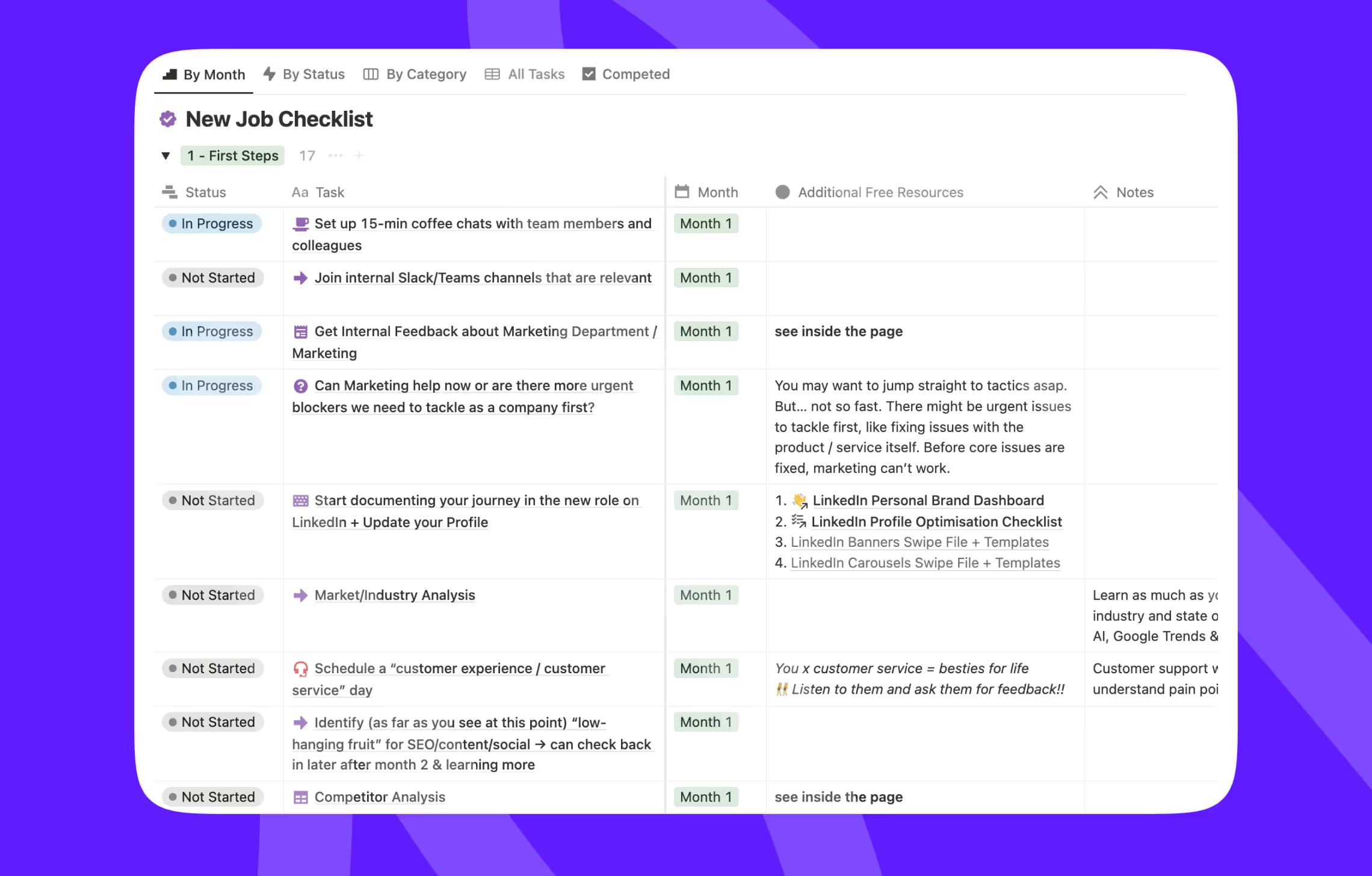
Get to Know the Team
Relationships are the foundation of influence. Spend time getting to know your teammates across departments: marketing, sales, product, support, and leadership. Your goal isn’t just small talk — it’s to understand how each function sees marketing, where they think opportunities or blockers lie, and what their expectations are. This input will directly inform your prioritization later.
Make it easy for people to talk: set up short 15–20 minute chats with a few open-ended prompts like:
“What’s one thing you think marketing could be doing better?” or “What’s one thing you wish we’d never stop doing?”
Internal Comms & Brand Presence
You can’t market externally if you’re disconnected internally. Join all relevant Slack channels, ask for access to Notion pages, and review documentation. Look for how information flows, how decisions are made, and where gaps in communication might exist.
Meanwhile, clean up your LinkedIn profile and consider sharing a short post introducing your new role. This helps position you as a proactive, reflective marketer — and invites others to connect, inside and outside the company.
{{cta}}
Run a Full Digital Audit
This is where you assess the marketing engine you’ve inherited. Break it down by channels:
- Website: Is it clear, fast, mobile-optimized, and aligned with your positioning?
- Blog: What content performs? What feels outdated? What’s missing?
- Paid Ads: Are they running? Are they effective? What’s the CPC, CTR, CAC?
- Newsletters: What's the open rate, CTR, unsub rate? Who’s the list made of?
- Organic: Are social channels active and relevant? Does the content match your voice?
- Brand Assets: Consistent visuals? Clear tone of voice? Gaps in brand library?
Be honest in your documentation. Flag issues, capture screenshots, and assign rough severity levels. This will evolve into your action plan. If you need to do a redesign you can check out how to do it using Claude Design.
One more thing during the audit that's easy to overlook: verify that your tracking infrastructure actually works. Check that Google Analytics 4 is set up correctly with the right events and conversions configured. Confirm that your CRM (HubSpot, Salesforce, or whatever the company uses) is connected to your website forms and captures lead source data. Test UTM parameters on a few live campaign links to make sure attribution is flowing through.
Nearly 60% of marketing campaigns fail to meet stated objectives, and poor data infrastructure is one of the most common reasons. If you can't measure what's working, you can't optimize it. Finding and fixing tracking gaps in Month 1 saves you from making strategic decisions on faulty data in Month 2.
Establish Baseline Metrics and Your North Star
Your digital audit will surface a lot of data. Now you need to make sense of it. Before you can measure improvement, you need to know where things stand today.
Document the current baseline for every major channel: website traffic and conversion rate, email list size and engagement metrics, social followers and engagement rate, paid ad spend and cost per acquisition, and content performance by piece. You don't need a 50-page report. A single dashboard or spreadsheet with the key numbers is enough.
Then pick your North Star Metric. This is the single number that best represents the value marketing delivers to the business. For a B2B SaaS company, it might be marketing-qualified leads (MQLs). For an ecommerce brand, it might be revenue from organic traffic. For a media company, it might be email subscribers.
Your North Star isn't the only metric you'll track, but it's the one you'll orient your strategy around. Having it defined by the end of Month 1 gives you a clear reference point for everything that follows.
According to Michael Watkins, author of The First 90 Days, the goal in every transition is to reach the break-even point as fast as possible. Baseline metrics tell you where that point is.
Align with the Founders
Understanding leadership’s view of marketing is crucial. Ask about their past experiences with marketing — what’s worked, what hasn’t, and what they want to see next. Get clarity on:
- Company mission & vision
- Key company goals for the next 6–12 months
- How they define success for your role
Even a 30-minute call can save you months of misalignment.
Align with the Sales Team
This one is non-negotiable, especially in B2B. Marketing and sales misalignment is one of the fastest ways to waste budget and lose internal credibility.
Schedule time with the sales lead and a few individual reps. Ask them:
What does a "good" lead look like to you? What objections come up most often in sales conversations? Where do deals typically stall or fall apart? What marketing materials do you actually use (and which ones collect dust)? What would make your job easier?
Their answers will directly shape your Month 2 strategy. If sales says the biggest gap is mid-funnel content that addresses specific objections, that's a higher priority than a new blog series. If they say leads from paid campaigns never convert, that's a signal to audit your targeting.
Make this a recurring relationship, not a one-time meeting. A quick weekly or biweekly sync keeps both teams moving in the same direction and prevents the kind of drift that wastes months of work.
Shadow Customer Support
Customer insights are priceless — and too often overlooked. Shadowing a support rep or spending a day reading through support tickets helps you:
- Hear the real language customers use
- Understand top recurring issues
- Spot moments where marketing could step in to educate, prevent, or delight
Document your takeaways and share them with your team. This positions you as someone who listens first, creates second. We also recommend you subscribe to these marketing newsletter to stay updated.
If you want to try using Notion for tracking your first 90 days and documenting everything, but have never used it before, here are some guides and tutorials you can check out.
And if you haven't duplicated the 90-Day-Marketer checklist yet, here's the full guide with a video tutorial for you.
Free Notion Template
New Marketing Job Checklist
Get your step-by-step breakdown of the first three months in your new marketing role.
As Kevan Lee, former VP of Marketing at Buffer, has noted: speed matters, but clarity matters more. Your Month 1 should prioritize understanding over action.
Month 2 (Days 31-60): Analyze and Strategize
You’ve gathered the data. Now it’s time to interpret it — and design a direction.
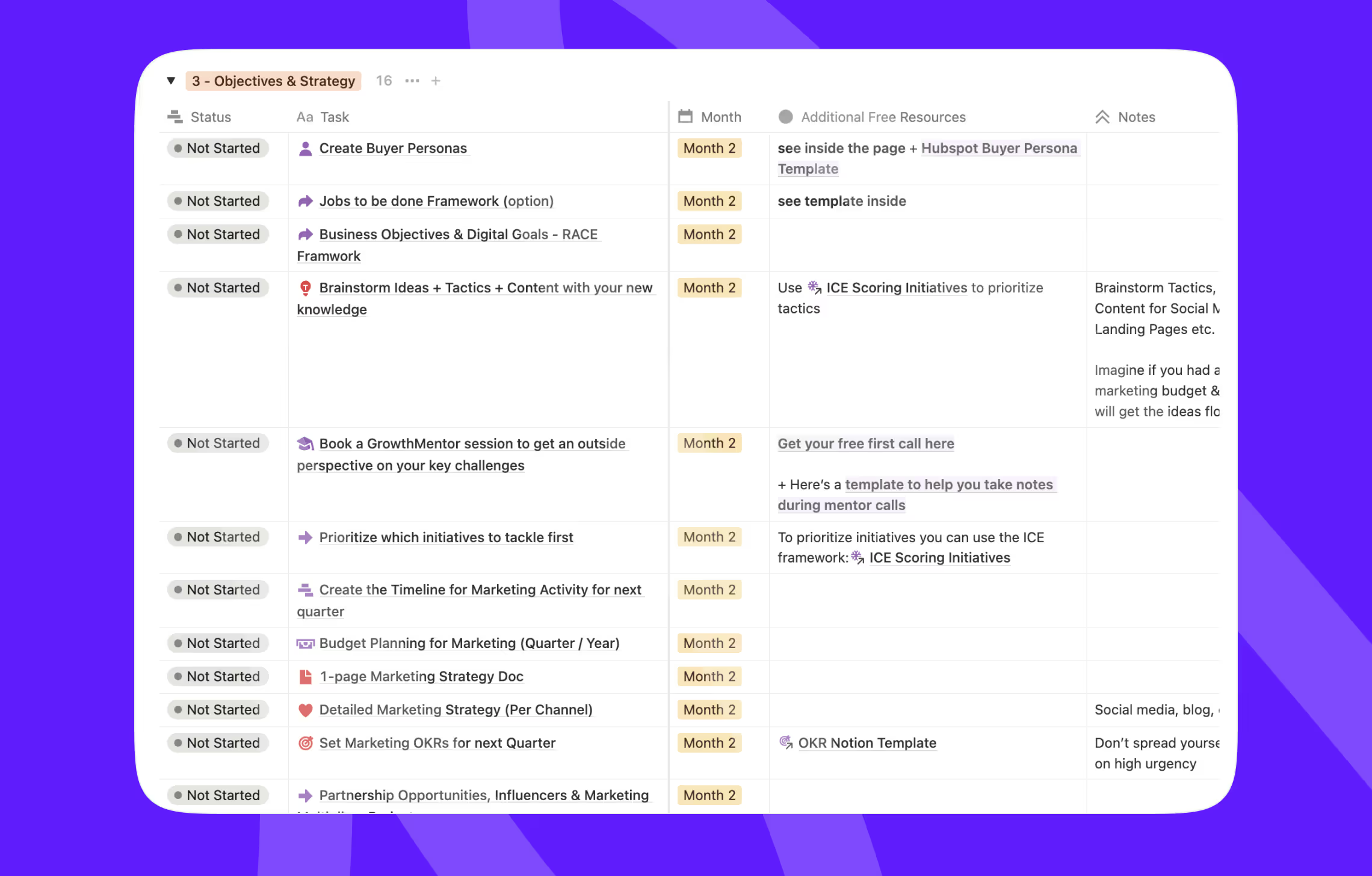
Situational Analysis
Look at metrics, but don’t stop there. Dive into qualitative insights. Run a SWOT and TOWS analysis. Interview 10–20 ideal customers if possible. Ask them about their buying journey, what tools they considered, what questions they had, and what finally led them to your company.
Map the full customer journey from awareness to retention. Where are you losing people? Where could marketing reduce friction or boost value?
These insights will help you prioritize work based not on assumptions — but on evidence.
Define Your Ideal Customer Profile
Before you build a strategy, you need absolute clarity on who you're building it for. An ideal customer profile (ICP) is a detailed description of the company or person that gets the most value from your product, and is most likely to buy and stay.
If the company already has an ICP documented, review it critically. Does it still hold? Has the product evolved? Has the market shifted? Talk to sales and customer success to pressure-test it against reality.
If there's no documented ICP, build one. Interview 10–20 of the best existing customers. Ask what triggered their search, what alternatives they considered, what almost stopped them from buying, and what made them stay. Patterns will emerge.
Your ICP should include company size, industry, key pain points, buying triggers, decision-making structure, and the channels where they spend time. Everything you do in Month 3, from content to campaigns to positioning, should ladder back to this document.
As the old principle goes: you cannot target everyone. The sharper your ICP, the more effective every downstream marketing decision becomes.
Craft the Strategy
This doesn’t need to be a polished presentation. It needs to be a document that gives you (and others) clarity. At a minimum, include:
- Target audiences and their main jobs-to-be-done
- Key messages and positioning pillars
- Priority channels for acquisition, conversion, retention
- Metrics you’ll track and what success looks like
Use an ICE (Impact, Confidence, Ease) framework to score potential tactics and initiatives. Share a short version of this doc with leadership for input and alignment.
Also, sketch out your next 90 days: what initiatives will you launch? How will you allocate your budget and time?
Seek External Input
Book a GrowthMentor call or talk to a mentor in any other way. Outside perspectives often surface blind spots and challenge assumptions in ways your internal team can’t. What's great about GrowthMentor is that with a simple subscription you can book mentorship calls with experts in many different areas of marketing, depending on the current challenge you're facing.
Month 3 (Days 61-90):: Execute Smartly, Track Relentlessly
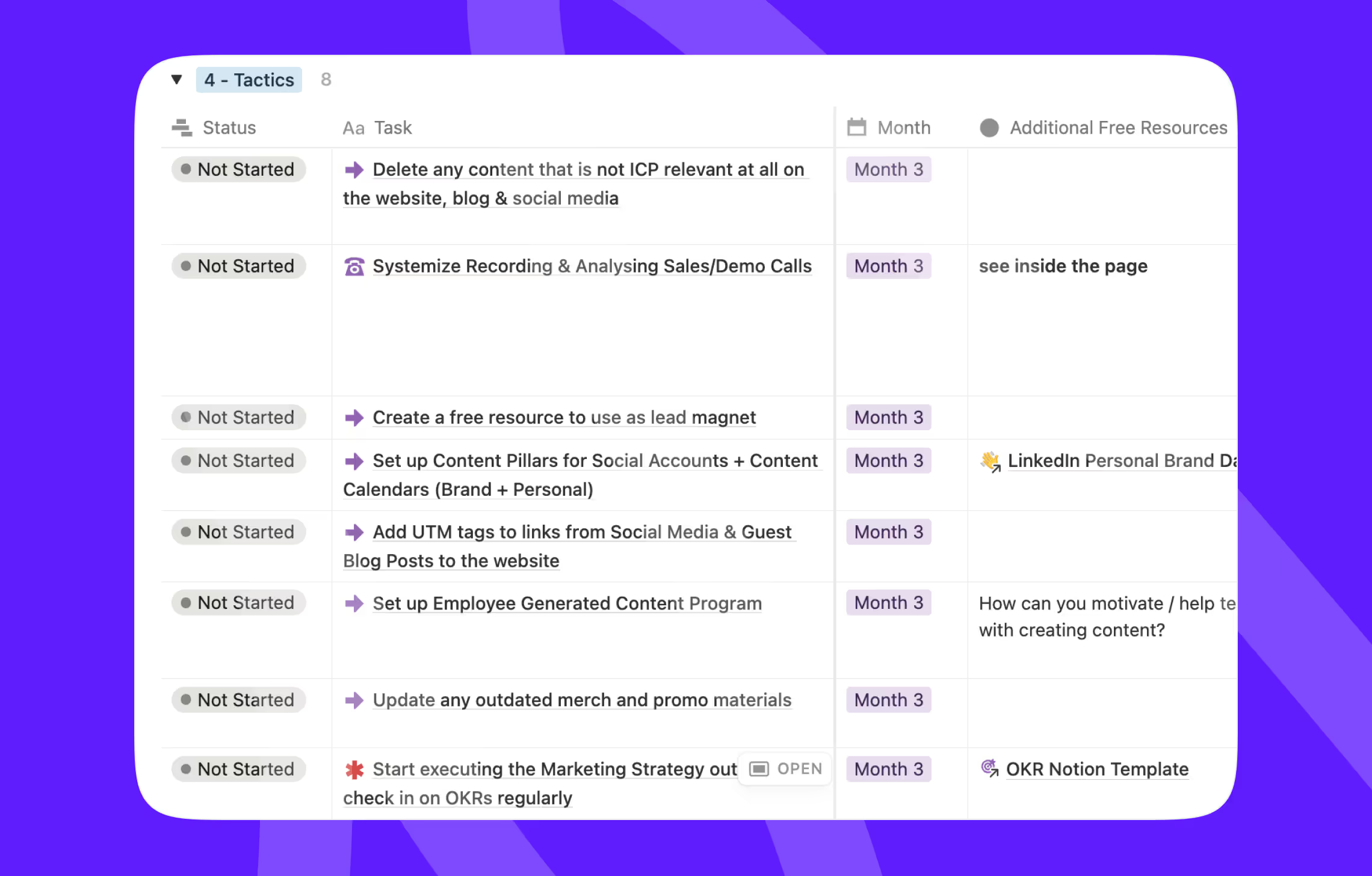
Now’s the time to move — but carefully. Execution in Month 3 should validate your strategy, not exhaust your capacity.
Launch Strategic Initiatives
Pick one or two high-leverage plays:
- A landing page revamp to improve conversion rates
- A simple, well-positioned lead magnet to build your email list
- A test campaign on LinkedIn Ads to attract ICP leads
Build, launch, measure. Share learnings — even if something doesn't go to plan. No one expects you to have it all figured out when you've only just started. All you have is theories, and some research. You need to execute to actually find the winning formula. Transparency builds trust.
Tighten Your Ops
- Set up a UTM tracking system across all links
- Build dashboards or reports to visualize results
- Create internal templates for recurring tasks (e.g. briefs, content calendars)
- Document internal processes and update onboarding docs if needed
Don’t wait until “someday” to do this — Month 3 is the ideal time to formalize your marketing stack.
Set and Share OKRs
OKRs (Objectives and Key Results) are your lighthouse. Define them clearly and align them to the broader business goals. Check in weekly, share monthly. Adjust if needed. OKRs are not a promise — they’re a tool for learning.
Month 3+: Build for Scale
Now you’re out of survival mode. It’s time to look ahead and future-proof your workflows.
Quality of Life Improvements
- Build a brand style guide and content playbook
- Create a knowledge base or Notion wiki for future marketers
- Identify which parts of content creation can be automated or outsourced
- Plan a team photoshoot to refresh headshots and media kits
- Clean up outdated sales decks, case studies, or pitch collateral
These are not just “nice to have.” They make it easier to scale consistently, onboard new team members, and produce higher-quality work, faster.
A great way to have a strong brand is through building a strong LinkedIn presence. If you're revamping your profile, take a look at these LinkedIn banner and get some inspiration.
Final Thoughts
Your first 90 days set the tone — not just for your own success, but for how marketing is perceived inside the company. If you take the time to understand before you execute, you’ll build trust and compound results.
Think like a product manager: diagnose, prioritize, execute, reflect.
Need help turning strategy into branded, on-point execution?
Magier’s design subscription gives you access to a full-stack design team —perfect if you're a marketer who needs to move fast, and create on-brand assets for multiple channels without compromising on quality.
Frequently Asked Questions
What if I’m not the first marketer at the company?
This guide still applies. You may want to skip steps that have already been covered by the existing team or adapt them to your specific focus area (e.g. growth, brand, content). Even in established teams, it’s helpful to revisit audits and align on strategy so you have a better understanding of the company.
Can I use this checklist if I’ve already started the job?
Absolutely. The checklist works retroactively as well. You can use it to fill in gaps from the first few weeks, document what you’ve already done, and clarify your next steps.
How long should I spend on the full digital audit?
You can't expect to do it all in a few days. It depends on how intensely you'll go at it, but probably it would take you a month or 2 to do it thoroughly in addition to all the other tasks you'll have as a marketer in your new role. If you're on a team, you may divide the channels and complete it faster. Don't rush – it’s the backbone of your strategy. But of course, you can also combine it with execution after you get some clarity and gather some research already. It can be tricky to find time for 1-2 months of research if you work at a dynamic startup especially.
How do I adapt this to a B2B or SaaS company?
The steps in this guide are role- and model-agnostic, but you can emphasize tactics and channels relevant to your ICP. For example, prioritize customer interviews, lifecycle marketing, and LinkedIn over brand awareness or influencer partnerships.
Should I share my 90-day strategy with leadership?
I suggest to do so, yes. If they gave you a list of expectations, too, you can tweak it after doing your audit and share it with them again to align. Even a 1-page summary helps align expectations and opens the door for feedback. It’s not just about approval — it’s about clarity.
Can I assign parts of the checklist to others?
If you're on a larger team, yes. The Notion version includes fields to assign responsibilities and set deadlines for collaborative onboarding.
FAQ
If you're transitioning into marketing from another field, start by building foundational knowledge in the core areas: content marketing, paid acquisition, analytics, and email marketing. Take free courses from HubSpot Academy or Google's Skillshop to get certified in the basics. Then look for entry-level or hybrid roles where you can apply what you've learned. Once you land the role, use a structured onboarding framework like this 90-day checklist to ramp up quickly and avoid the common trap of reacting to tasks instead of building a strategy.
The 3-3-3 rule is a guideline for creating effective marketing messages. It suggests your audience should understand: what you do in 3 seconds, why it matters to them in 30 seconds, and enough to take action in 3 minutes. In marketing design, this translates to: your headline should communicate the core message instantly, your supporting visuals and copy should clarify the value proposition quickly, and the full page should provide enough information for conversion.
A marketing checklist is a structured list of tasks, audits, and milestones that a marketer works through to ensure nothing critical gets missed. It can be used for onboarding into a new role (like this 90-day checklist), launching a campaign, executing a rebrand, or managing an ongoing marketing operation. The value of a checklist is accountability and completeness. It turns abstract goals like "understand the marketing setup" into concrete tasks like "audit the Google Analytics configuration" and "interview the sales team about lead quality."


%202%20(1).webp)


.avif)