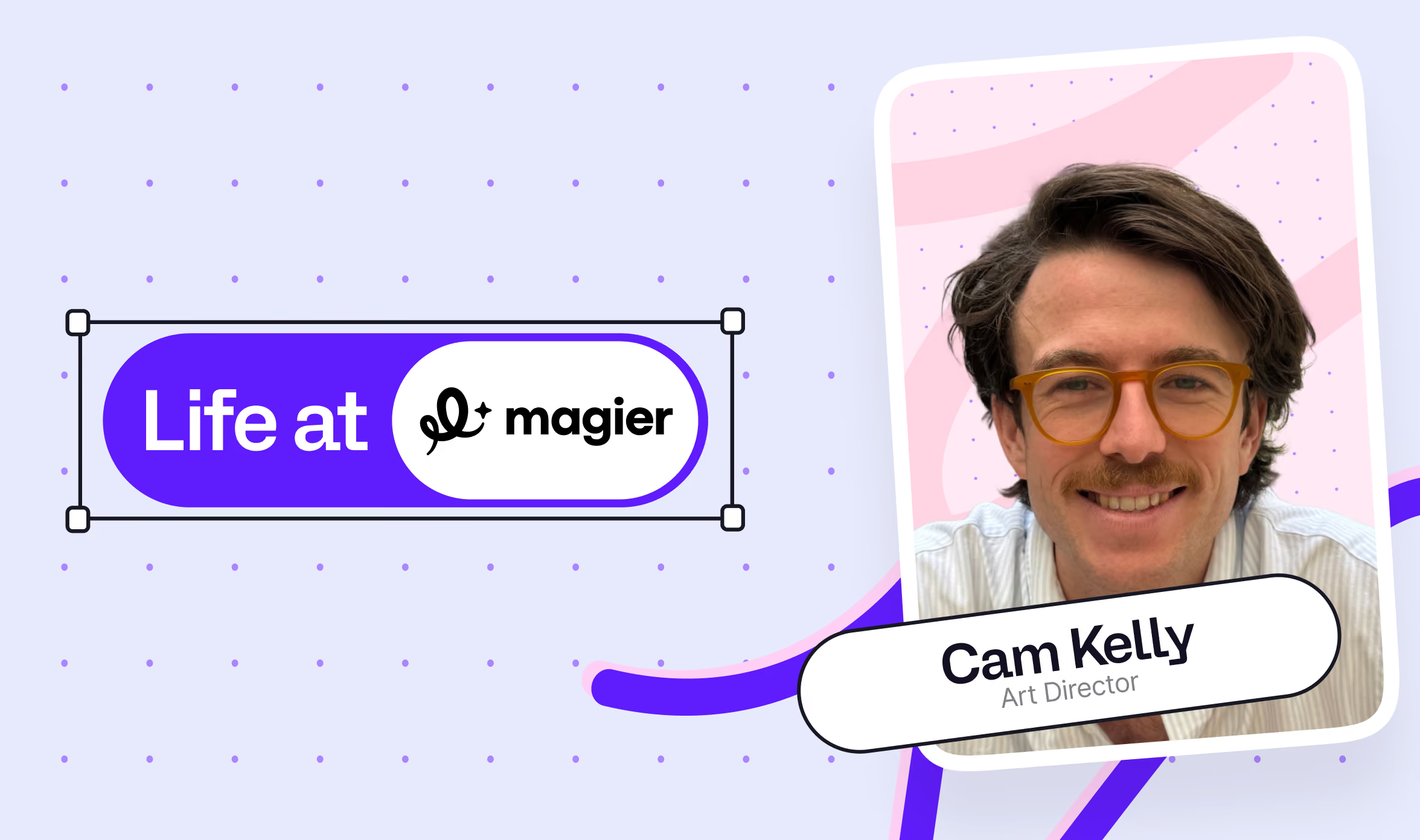
Meet Cam: Brand Strategy, Taste, and magier
Cam recently joined magier as an Art Director, bringing a mix of brand strategy, product design thinking, and a very healthy obsession with simplicity. Originally from Scotland, raised in England, and now living in Barcelona, his creative path has taken him from physical product design to brand management and agency-side work.
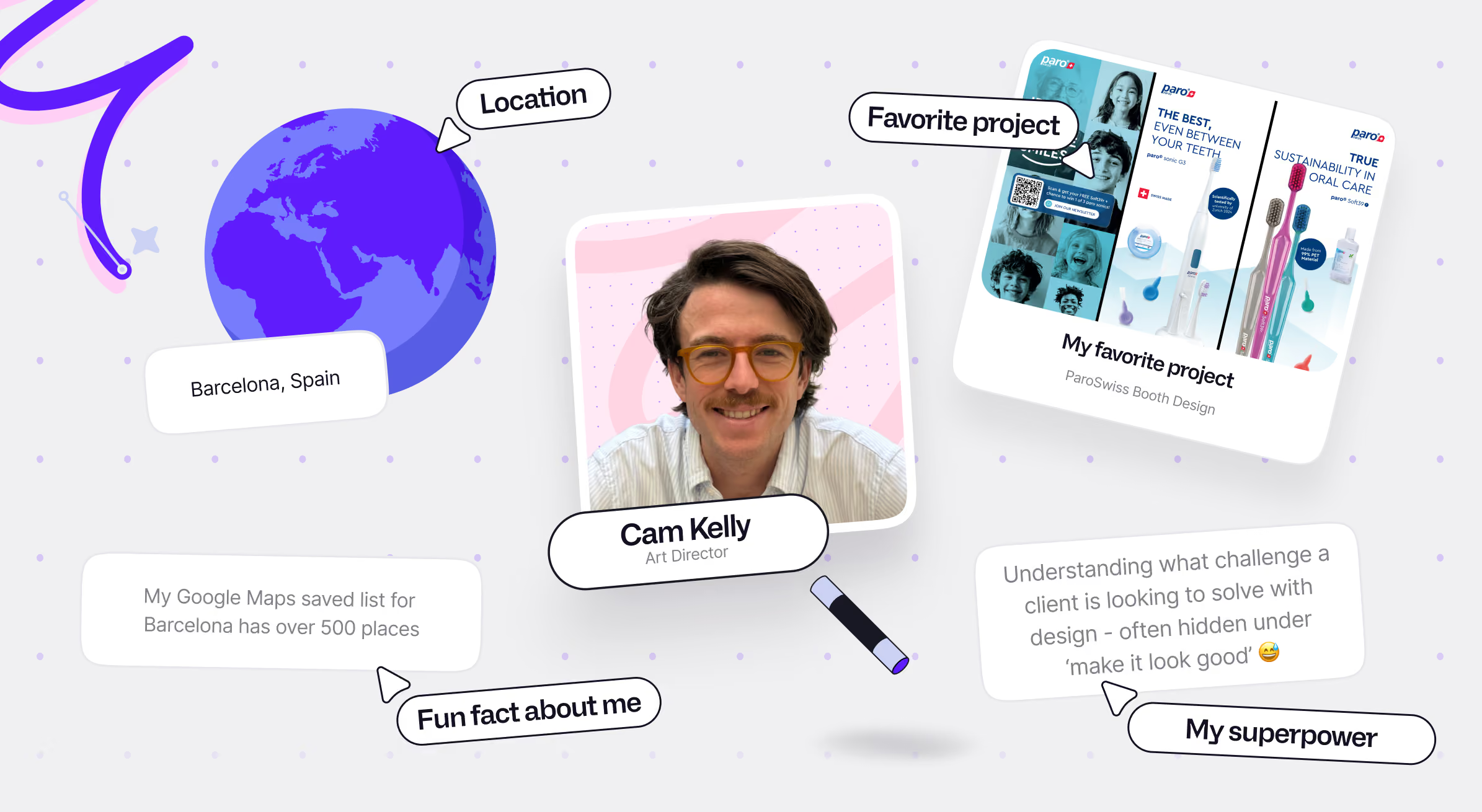
Can You Introduce Yourself And How Your Design And Creative Journey Started?
I’m Cam, and I’ve been at magier for about a month now. It feels like a year already, but in a good way.
I’ve always been creative, even when I was much younger. Creativity was always around me at home. My mum is a bit of an artist and a chef, and my dad is an architect, so I think I always knew I was going to go down some kind of creative path.
I studied product design at university, mostly focused on designing physical products, but my own focus was more on interaction and communication. I went to uni during the COVID era, so a lot of my work explored how people can still feel part of a group, even when they’re working remotely or not physically together.
During that time, I did a module in graphic design and found a bit of a calling there. After that, I got an internship at an electric charging company in the UK as a graphic designer. It was a very brand-led company, and I learned a lot about taking an existing brand and adapting it to a market that was changing quickly.
I stayed there for four years and grew from graphic designer into brand manager. The role became much more than just the visual side of design. It was also about strategy, implementation, and understanding how a brand shows up in the market.
I had actually followed magier on social media for a long time before joining. When I saw the Art Director role come up, I thought it would be a nice opportunity to explore the agency side of things. I’m really chuffed to have gotten the role.
You’re From Scotland, Right? How Did You Find Inspiration Growing Up There?
I was born in Scotland, in Aberdeen, but I moved to England when I was about 18 months old.
For me, inspiration really came from my parents. They were both creative in different ways, and that shaped how I thought about design quite early on. I’ve always been interested in problem-solving and in understanding a problem properly before trying to fix it.
That’s a big part of design for me. It’s not just about making something look good. It’s about critical thinking, communication, and asking: what’s the real problem here, and how can design help solve it?
Do You Enjoy Doing Brand Design Or Social Media Assets?
For me, it has always been more about brands and brand strategy.
I really like the structure of end-to-end branding projects. You get to connect with a client, understand their goals, and unpack what they’re actually trying to achieve. Then design becomes the tool to help them get there.
That’s the bit I enjoy most. It’s not just creating something visually nice, but understanding the purpose behind it and making sure the design supports that.
When it comes to social media, I’ll be honest: my own Instagram is years out of date. So I wouldn’t say that’s where I naturally spend most of my creative energy.
Walk Me Through Your Day-To-Day.
I work in the OTP team, which focuses more on longer-term projects with multiple stakeholders.
A lot of the role is about bringing different voices together and turning them into one clear direction that a designer can act on. The projects can be quite varied. It might be a website, a branding project, a slide deck, or something else entirely.
My day-to-day involves reviewing work, giving direction, presenting work to clients, and explaining the creative process behind what we’ve done. It’s not just about showing the final design. It’s also about helping the client understand the strategy, the thinking, and the decisions that led us there.
How Do You Take Feedback From Clients When You’re Not Aligned?
For me, it’s about understanding why the client has that feedback.
There’s always a reason behind it, even if it’s not immediately obvious or even if you don’t fully agree at first. The important thing is to listen properly and make sure the client feels heard.
Then it becomes about addressing the feedback in a way that still protects the direction of the work. You want to understand what they’re reacting to, what concern sits underneath the comment, and how you can respond to that without losing the strength of the design.
What’s One Skill All Art Directors Should Have?
Taste is really important, especially now with AI.
There are so many tools that can generate things quickly, but you still need to know what’s good, what’s right for the context, and why you’re making certain decisions. Taste helps you make informed choices instead of just creating more stuff.
Communication is also crucial. A big part of being an Art Director is helping clients understand the branding process and why certain decisions have been made. It’s not enough to have a strong idea. You also need to be able to explain it clearly.
How Do You Learn To Have Good Taste?
Taste is partly about understanding the direction a client wants to go in, then finding something that fits that world while also bringing in your own criteria.
For me, simplicity is a big part of good taste. I’m drawn to design that communicates clearly and doesn’t overcomplicate things. When something is simple, it has to work harder. Every decision matters.
So I think developing taste is about looking at a lot of work, understanding why something works, and being able to judge whether it communicates what it needs to communicate.
Is There A Design Movement Or Era You Like?
I’m not a huge fan of the current homogenized trend, where a lot of design starts to look and feel the same.
One thing I collect is sugar packets, which sounds a bit random, but I find them really interesting. They have such a small surface area, but they can be wildly different in design. There’s something nice about seeing how much personality and variation can exist in such a tiny format.
How Has Living In Barcelona Impacted You As A Creative?
Barcelona is amazing for design.
There’s a real focus on design here, even from the government. You see local studios being used, and that gives the work a lot of cultural nuance. It feels like design is part of the city, not just something added on afterwards.
Living here has definitely made me more aware of how design can reflect a place and its culture. You notice those details more when you’re surrounded by them every day.
What Advice Would You Give To Someone Joining magier As An Art Director?
Culture and personality are really important.
Of course, skills matter, but skills can be learned. What’s harder to teach is the right energy, motivation, and attitude. You need to be curious, open, and willing to work with different people and different kinds of clients.
Especially in a place like magier, where things move quickly and every client has different needs, having the right mindset makes a big difference.
Where Do You Look For Inspiration When You’re Stuck?
I have a logo book that covers work from 1960 to today.
It’s amazing to look through it and see how much past design influences what we create now. Sometimes when you’re stuck, looking backwards can help you move forwards. You see ideas, shapes, and systems that still feel relevant, even decades later.
If You Could Define magier In One Word, What Would It Be?
Dynamic.
We adapt to different client requests and different kinds of challenges, and we always find a way to deliver a solution. That’s what stands out to me so far.
And now… last question! if your morning coffee gave you a superpower for the day, what would it be?
The ability to teleport for lunch… Monday in Japan for izakaya, Tuesday in Mexico city for tacos… you get the picture.

.avif)