15 Social Media Ad Examples That Actually Convert (2026)
Social media ads reach people who are not actively searching for your product. Unlike Google Ads, which target existing intent, social media advertising lets you introduce your brand to new audiences and create demand where none existed before.
This matters because social platforms now reach 5.17 billion users globally. Facebook offers the widest reach across demographics. Instagram excels at visual storytelling. LinkedIn dominates B2B lead generation. TikTok captures attention with short-form video. And YouTube delivers the highest ad recall rates in the industry.
Guy Kawasaki, the Chief Evangelist of Canva said: "A large social media presence is important because it's one of the last ways to conduct cost-effective marketing. Everything else involves buying eyeballs and ears. Social media enables a small business to earn eyeballs and ears."
The challenge is that most social media ads blend into the feed and disappear. Users scroll past thousands of posts daily. The ads that work share common traits: they stop thumbs mid-scroll, communicate value in seconds, feel native to the platform, and drive measurable action.
This guide breaks down 15 social media ad examples across platforms and industries, explains what makes each one effective, and covers the formats, costs, and strategies you need to create ads that actually convert.
{{freebie}}
15 social media ad examples
Now let's dive into the best social media ad examples we spotted in 2025 and 2026. Each example includes platform, ad type, industry, and analysis of what makes it effective.
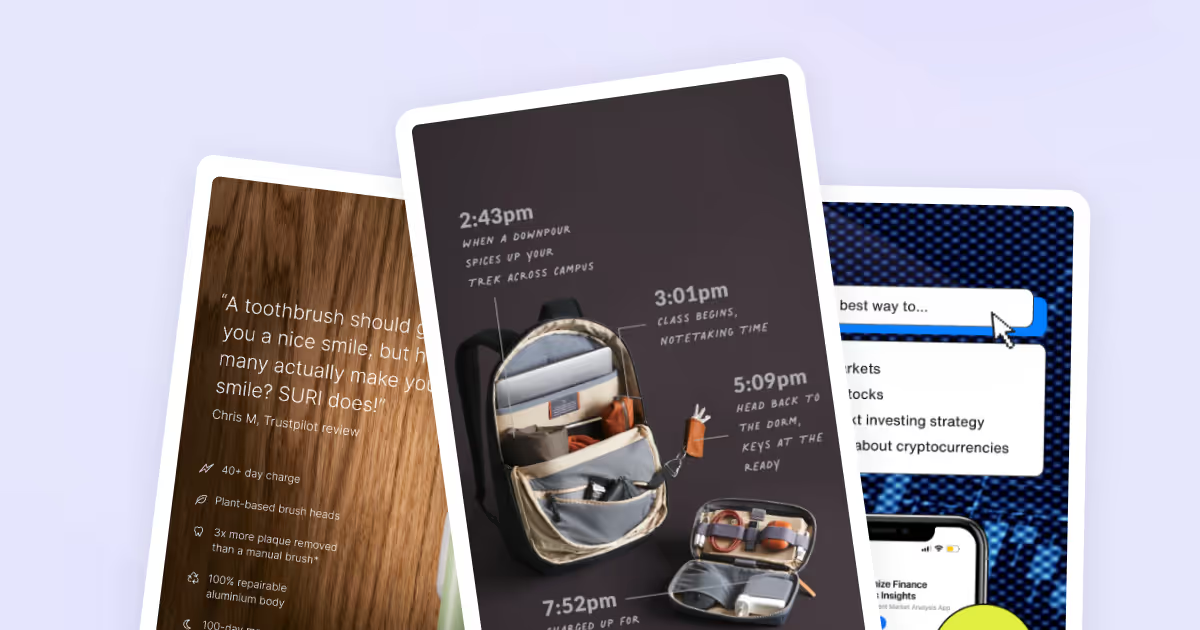
1. Suri - Toothbrush

- Platform: Instagram
- Ad Type: Social Proof + Feature Callout Ad
- Industry: E-commerce
- Visual: An elegant display featuring the toothbrush against a wooden background, along with a feature list and social proof.
- What’s good about this ad: Even though it combines testimonials, feature callouts, and other social proof in one frame, the ad still maintains a clean, fresh look without being overwhelming.
2. Capchase - Payment solution

- Platform: LinkedIn
- Ad Type: Problem-Solution Ad
- Industry: SaaS
- Visual: A cute, playful image of a cat accompanied by the headline.
- What’s good about this ad: B2B ads don’t always have to be serious. This ad uses humor and a relatable image to make it memorable and approachable.
3. Smyle - Dental product

- Platform: Facebook
- Ad Type: Social Proof Ad
- Industry: Beauty & Oral Care
- Visual: Two five-star rating testimonials are displayed against a clean, light background with images of the product, creating a fresh look.
- What’s good about this ad: Authentic customer reviews build credibility and can enhance consumer trust, especially in personal care products. Both quotes emphasize a specific benefit: teeth whitening in a short amount of time.
{{cta}}
4. Jasper - Marketing AI tool

- Platform: Facebook
- Ad Type: Product Benefit Ad
- Industry: SaaS
- Visual: Colored tabs visualize how tasks are simplified by Jasper and highlight the creative value it brings. The clean and bold layout focuses on the core message.
- What’s good about this ad: The header first hooks the viewers with a bold statement. Then the subheader creates a sense of exclusivity and positions itself as the better choice.
5. TestGorilla - Talent assessments

- Platform: LinkedIn
- Ad Type: Problem-Solution Ad
- Industry: SaaS
- Visual: Bright pink colors, metaphorical images of mismatched chairs, a bold header, and a minimalist layout that grabs attention immediately.
- CTA: “Find out why”
- What’s good about this ad: For SaaS ads, it's not always easy to introduce your product directly. This ad addresses a specific pain point with a simple visual metaphor, which makes it interesting yet easy to understand.
6. Bellroy - Everyday accessories

- Platform: Instagram
- Ad Type: Product Display Ad
- Industry: E-commerce & Fashion
- Visual: A detailed, time-stamped journey through a student's day, with a well-organized backpack and pouch at the center.
- What’s good about this ad: When advertising a physical item with familiar features, a clear product photo against a monochrome background can be effective. This ad also links each component of the bag to a specific moment of the day, guiding viewers to imagine practical use cases and showcasing the product’s versatility.
7. ahead - Emotion coaching app

- Platform: Facebook
- Ad Type: Before/After Ad
- Industry: Self-Help & Healthcare
- Visual: The Microsoft Paint interface and vibrant colors grab attention first and evoke a nostalgic, joyful memory. The hand-drawn style of illustration and text creates a lighthearted, positive feeling.
- CTA: “Download on the App Store”
- What’s good about this ad: Choosing the right design theme that catches people’s eye is a win at the start. Conceptualizing the app’s benefits with metaphoric illustrations sparks curiosity and adds a playful touch to the standard before/after ad format.
8. Intuit Mailchimp - Email marketing platform

- Platform: LinkedIn
- Ad Type: Benefit First Ad
- Industry: SaaS
- Visual: Bright, warm colors associate with the product’s positive benefit. The repeated text “7x more revenue” is used as the background to display a laptop with an interface of the software.
- CTA: “Learn more”
- What’s good about this ad: The message is clear—the header highlights the benefit of “get up to 7x more orders” brought by the automation feature. The creative layout, bright colors, and interface mockup visually support the message.
9. BBC Maestro - Online courses

- Platform: Facebook
- Ad Type: Problem-Solution Ad
- Industry: E-Learning & Self Development
- Visual: The clean layout of the daily planner, contrasting colors, and prominent time slot (emphasized with a quote and an image) for "moments that matter" communicate the core message.
- What’s good about this ad: The creative use of a daily planner presents a relatable scenario for readers to consider how they can manage their time while subtly positioning BBC Maestro as a valuable online resource.
10. Dovetail - Customer insights hub

- Platform: LinkedIn
- Ad Type: Problem-Solution Ad
- Industry: SaaS
- Visual: An unusual item (a pot with a handle inside) catches the eye, paired with a large, bold header. This encourages viewers to pause and engage with the metaphorical ad.
- What’s good about this ad: The metaphorical elements ignite curiosity, prompting viewers to read through the ad and uncover its message. Although the visual doesn’t provide clues about the software itself, the subheaders highlight the product's benefits, making viewers likely to want to learn more about it.
11. Huckberry - PROOF T-Shirt

- Platform: Instagram
- Ad Type: Comparison + Feature Callout Ad
- Industry: E-commercec
- Visual: A simple, clear product image (T-shirt) is displayed against a textual background of the clothing material (merino wool), which is the main focus of this ad.
- What’s good about this ad: A smart way to combine two types of ad formats. Instead of using two blocks to compare “Us vs. Others,” the header delivers the message directly and is followed by a list of key features.
12. Finimize - Investment app

- Platform: Instagram
- Ad Type: Feature Callout + Social Proof Ad
- Industry: Finance
- Visual: The creative header and design simulate a Google search bar, with a list of common queries users might have. The phone mockup provides strong visual confirmation.
- CTA: “Try for just $0.22 per day”
- What’s good about this ad: It grabs attention by using a familiar design element: the Google search bar. Displaying a screenshot of the App Store overview is a straightforward and efficient way to inform viewers about the app.
13. Navan - Business travel & expense management

- Platform: LinkedIn
- Ad Type: Problem-Solution Ad
- Industry: SaaS
- Visual: A clear question and solution, presented alongside a familiar flight booking interface.
- What’s good about this ad: The simple problem-solution format is effective when you focus on one specific pain point of your target audience. This ad not only addresses a relatable issue and provides a solution, but also uses visuals to support the message.
14. Demantive - Marketing agency

- Platform: LinkedIn
- Ad Type: Feature Callout Ad
- Industry: Marketing Service
- Visual: A fun, game-like selection screen where users pick qualities they want in a growth agency.
- CTA: “Unlock with Demantive”
- What’s good about this ad: This ad’s gamified approach draws viewers in, making them feel like they’re “playing” to unlock the ideal solution. This could increase engagement and the click-through rate of this ad.
15. Afterpay - Financial services

- Platform: Facebook
- Ad Type: Explainer Ad
- Industry: Finance
- Visual: A smartphone screen displaying a relatable text conversation about booking flights.
- CTA: “Check the app”
- What’s good about this ad: This ad uses a conversational format to spark curiosity, as people often associate a screenshot of a chat with secret, private information. It also makes the service feel approachable, personalized, and relevant to everyday life.
What is social media advertising?
Social media advertising is the practice of placing paid content on social platforms to reach specific audiences based on demographics, interests, behaviors, and other targeting criteria. Unlike organic social media posts that rely on algorithmic distribution, paid ads guarantee placement in front of your chosen audience.
The key difference from search advertising is intent. When someone searches "best project management software" on Google, they have active purchase intent. Social media ads reach people during passive browsing, which means your creative must work harder to capture attention and generate interest.
How social media ads work
Every major platform operates an auction system. Advertisers bid to show ads to specific audiences, and the platform determines winners based on bid amount, estimated action rates, and ad quality. This means better creatives can actually lower your costs by improving relevance scores.
Most platforms offer multiple campaign objectives:
Why social media advertising matters in 2026
Global social media ad spend is projected to reach $276.7 billion in 2026, representing a 12.4% year-over-year increase. This growth is driven primarily by short-form video formats and social commerce integrations.
The landscape has shifted toward creative quality as the primary performance lever. Platforms like Meta now report that Advantage+ campaigns with broad targeting consistently outperform manually targeted campaigns by 15 to 25% in ROAS. This means the creative you produce matters more than ever before.
Types of social media ads
Different ad formats serve different purposes. Understanding when to use each format helps you match creative to campaign objectives.
Image ads
Static images remain the foundation of social media advertising. According to industry data, static images still drive 60 to 70% of conversions on Meta, making them essential to any ad strategy.
Image ads work best for direct offers, promotions, and simple value propositions. They load quickly, display consistently across devices, and are the easiest format to produce at scale.
Best for: Direct response, promotions, retargeting
Best platforms: Facebook, Instagram feed, LinkedIn
Video ads
Video captures attention through motion and sound. The format excels at product demonstrations, storytelling, and building emotional connections.
Short-form video under 60 seconds drives the highest engagement rates. The critical window is the first 2 to 3 seconds, where you must hook viewers before they scroll past.
Best for: Brand awareness, product demos, storytelling
Best platforms: TikTok, Instagram Reels, YouTube, Facebook
Carousel ads
Carousels let you showcase 2 to 10 images or videos in a single ad unit. Users swipe through cards, creating an interactive experience that increases time spent with your content.
This format is currently considered a hot format in 2026, performing particularly well for e-commerce product showcases and step-by-step storytelling.
Best for: Multi-product showcases, feature highlights, sequential storytelling
Best platforms: Instagram, Facebook, LinkedIn
Story ads
Full-screen vertical ads appear between organic Stories content. The immersive format commands attention but requires creative designed specifically for the 9:16 aspect ratio.
Story ads typically see lower CPMs than feed placements but require thumb-stopping creative in the first frame since users can tap to skip.
Best for: Time-sensitive offers, brand moments, quick CTAs
Best platforms: Instagram Stories, Facebook Stories, Snapchat
Collection ads
Collection ads combine a cover image or video with product catalog items below. When users tap, they enter a full-screen Instant Experience showcasing your products.
This format bridges content and commerce, allowing users to browse and purchase without leaving the platform.
Best for: E-commerce, product catalogs, shopping campaigns
Best platforms: Facebook, Instagram
Lead ads
Lead ads include built-in forms that users can complete without leaving the platform. Forms pre-populate with user information, reducing friction and improving completion rates.
LinkedIn Lead Gen Forms achieve completion rates around 13% compared to 2.5% for traditional landing pages, demonstrating the power of reduced friction.
Best for: B2B lead generation, newsletter signups, gated content
Best platforms: LinkedIn, Facebook, TikTok
Ad format comparison
Social media advertising platforms compared
Each platform offers distinct advantages depending on your audience, objectives, and budget.
With over 3 billion monthly active users, Facebook offers the widest reach across demographics. The platform excels at full-funnel advertising, from awareness through conversion.
Facebook's targeting capabilities remain robust despite privacy changes. Lookalike audiences, custom audiences from website visitors, and detailed interest targeting allow precise audience definition.
Best for: Broad reach, full-funnel campaigns, retargeting
Average CPM: $8 to $14
Average CPC: $1.06 to $1.72
Instagram's visual-first format makes it ideal for lifestyle brands, e-commerce, and products that photograph well. The platform skews younger than Facebook with highly engaged users.
Reels placement has become increasingly important as the platform prioritizes short-form video. Brands seeing the best results create native-feeling content rather than repurposing traditional ads.
Best for: Visual products, lifestyle brands, younger demographics
Average CPM: $6.25 to $7.68
Average CPC: $1.83 (Stories) to $3.35 (Feed)
LinkedIn is the top choice for B2B marketing, reaching professionals based on job titles, industries, companies, and skills. The platform commands premium pricing but delivers higher-quality leads for B2B advertisers.
Lead Gen Forms are particularly effective, pre-populating with professional information and achieving completion rates significantly higher than external landing pages.
Best for: B2B lead generation, professional services, recruiting
Average CPM: $20 to $45
Average CPC: $2 to $5
If you're looking for LinkedIn ad examples and templates, check out our breakdown of the best LinkedIn ad examples.
TikTok
TikTok's algorithm excels at content discovery, meaning strong creative can achieve significant reach even with modest budgets. The platform reaches over 1.5 billion monthly users, primarily Gen Z and Millennials.
Cost efficiency remains TikTok's compelling advantage. UGC-style creative outperforms polished brand content by 2 to 3x in conversion rates. Spark Ads, which boost existing organic content, deliver 30 to 50% lower CPAs than standard in-feed ads.
Best for: Gen Z and Millennial audiences, awareness, viral potential
Average CPM: $4 to $8
Average CPC: $0.20 to $2.00
YouTube
YouTube offers the highest ad recall rates in the industry at 84%. The platform reaches 2.5 billion monthly users across all demographics and supports both short-form (Shorts) and long-form content.
Skippable in-stream ads let users skip after 5 seconds, meaning you only pay when viewers watch 30 seconds or more. This model rewards engaging creatives that hold attention.
Best for: Brand awareness, product education, longer storytelling
Average CPM: $10 to $18
X (Twitter)
X offers lower costs than most competitors with real-time engagement opportunities. The platform works well for newsjacking, event marketing, and reaching audiences engaged with current events.
Best for: Real-time marketing, news, events, thought leadership
Average CPM: $5 to $10
Average CPC: Below $1.00
Pinterest users actively plan purchases, making the platform effective for e-commerce despite smaller audience size. Users searching for inspiration often have purchase intent, leading to efficient conversion costs.
Best for: E-commerce, home decor, fashion, food, DIY
Average CPC: $0.10 to $1.50
Platform cost comparison
The 5-5-5 rule and other social media rules explained
Several frameworks help marketers balance content and maintain engagement. Understanding these rules provides context for how paid ads fit into broader social strategy.
The 5-5-5 rule
The 5-5-5 rule is an engagement strategy suggesting you spend 5 minutes daily to like 5 posts, comment on 5 posts, and engage with 5 people. This framework helps build organic engagement and relationships alongside paid advertising efforts.
The rule emphasizes that social media success requires active participation, not just broadcasting content. While this applies primarily to organic strategy, the principle extends to paid ads that invite engagement and feel conversational outperform purely promotional content.
The 5-3-2 rule
The 5-3-2 rule is a content ratio framework suggesting that out of every 10 posts, 5 should be curated content from others, 3 should be original content from your brand, and 2 should be personal or humanizing posts.
This balance prevents feeds from feeling overly promotional. For advertisers, the lesson is that even paid content should provide value beyond selling. The best-performing ads educate, entertain, or solve problems rather than simply promoting products.
The 50-30-20 rule
Similar to 5-3-2 but with different proportions: 50% of content should be value-driven, 30% branded, and 20% promotional. This framework reminds marketers that audiences disengage when every post pushes products.
The 80-20 rule
The Pareto principle applied to social media suggests that 80% of results come from 20% of efforts. For advertisers, this means identifying which creative, audiences, and placements drive the majority of conversions and doubling down on what works.
What makes a social media ad effective
The best social media ads share common characteristics regardless of platform or format. Understanding these principles helps you create content that converts.
Lead with pain points, not features
Effective ads speak to what keeps your audience up at night rather than listing product specifications. If people feel seen and understood, they stay long enough to click.
Consider the difference between "Our software has 50+ integrations" versus "Tired of copying data between apps?" The second version connects emotionally before introducing the solution.
The Hook-Proof-Offer-CTA framework
High-performing ads in 2026 follow a consistent structure:
Hook (0 to 3 seconds): Stop the scroll with a compelling visual, surprising statement, or relatable pain point. This is the most critical element since users decide instantly whether to engage.
Proof (3 to 10 seconds): Demonstrate credibility through social proof, testimonials, results, or demonstrations. Show that your solution actually works.
Offer (10 to 15 seconds): Present your value proposition clearly. What does the user get, and why should they care?
CTA (final moments): Tell users exactly what to do next. Strong calls to action are specific: "Start free trial" beats "Learn more."
Embrace authenticity over polish
UGC-style content outperforms polished brand creative by 2 to 3x in conversion rates according to TikTok's Creative Center data. Users have developed banner blindness to obvious advertisements.
This does not mean low effort. It means high authenticity. Content that looks native to the platform, feels like it could have been posted by a friend, and avoids obvious marketing speak resonates better than overproduced commercials.
Design for sound-off viewing
85% of Facebook videos are watched without sound. Effective video ads communicate their message through visuals, text overlays, and captions. If your ad requires audio to make sense, it will underperform.
Match creatives to the platform
Each platform has distinct creative norms. LinkedIn audiences expect professional, educational content. TikTok users respond to trends, humor, and raw authenticity. Instagram rewards beautiful visuals and lifestyle positioning.
Repurposing the same creative across platforms without adaptation wastes budget. Native-feeling content that matches platform expectations consistently outperforms generic creative.
Do's and don'ts for social media ad design
Creating effective social media ads requires balancing attention-grabbing elements with clear communication. These guidelines apply across platforms and formats.
Do's
- Keep it simple by using clear visuals with straightforward messages focused on one main idea, pain point, or benefit because complexity kills conversion rates.
- Use eye-catching colors that grab attention and stop the scroll while still aligning with brand guidelines to stand out in crowded feeds.
- Prioritize high-quality visuals since blurry or pixelated images harm credibility instantly and must render well across devices, especially mobile, where most viewing occurs.
- Design mobile-first using vertical or square formats with readable text at small sizes and key elements placed where thumbs won't obscure them.
- Stay attuned to trends because creatives that reference current moments, formats, or sounds capture attention more effectively than evergreen approaches.
- Include social proof like reviews, ratings, testimonials, and user counts to build trust quickly and reduce purchase anxiety.
- Test multiple variations of headlines, images, and CTAs to reveal what resonates with your specific audience and let data guide creative decisions.
Don'ts
- Don't ignore brand consistency by using brand colors, fonts, and logo placement so viewers recognize you across touchpoints.
- Don't rely on one ad type and instead test different formats like carousel, static images, and video because your audience's preferences may surprise you.
- Don't overload with text since too much copy turns people away, especially on platforms like Facebook that historically penalize text-heavy images.
- Don't use misleading creative because clickbait tactics may generate clicks, but destroy trust and waste budget on unqualified traffic.
- Don't forget the CTA since every ad needs a clear next step so users know what action to take.
- Don't set and forget because ad fatigue sets in quickly, so refresh creative every two to four weeks, depending on frequency and performance metrics.
How much do social media ads cost in 2026
Social media advertising costs vary significantly by platform, industry, targeting, and seasonality. Understanding typical benchmarks helps set realistic budgets and evaluate performance.
Cost metrics explained
CPM (cost per mille): What you pay for 1,000 impressions. Useful for awareness campaigns measuring reach.
CPC (cost per click): What you pay when someone clicks your ad. Useful for traffic and consideration campaigns.
CPA (cost per acquisition): What you pay for a completed conversion, like a purchase or sign-up. The ultimate efficiency metric.
ROAS (return on ad spend): Revenue generated divided by ad spend. A 3x ROAS means $3 revenue for every $1 spent.
Platform cost benchmarks 2026
Industry variations
Costs vary significantly by industry due to competition and customer lifetime value.
Highest CPC industries: Finance and insurance ($3.77), legal services, B2B software
Lowest CPC industries: Apparel ($0.45), retail, food and beverage
Highest CPM industries: Health and wellness ($12.46+), beauty, competitive e-commerce
Seasonal considerations
Advertising costs fluctuate throughout the year based on advertiser demand.
Q4 (October through December): Highest costs of the year. CPMs can spike 60% or more during the holiday shopping season, with Black Friday and Cyber Monday seeing rates up to 138% higher than annual averages.
Q1 (January through March): Lowest costs as competition drops after holidays. Great time to acquire customers efficiently while competitors scale back.
Election years: Political advertising can increase costs significantly, especially in swing states during the final 30 days before elections.
Budget recommendations by stage
Final thoughts
The best social media ads stop thumbs, communicate value instantly, and feel native to the platform where they appear. They lead with audience pain points rather than product features. They embrace authenticity over excessive polish. And they always include a clear next step.
Use these 15 examples as inspiration, not templates. Study what makes each one effective, then adapt those principles for your brand, audience, and objectives. Test different formats to discover what resonates. Refresh creative regularly to combat ad fatigue. And measure performance against the benchmarks that matter for your business goals.
Social media advertising continues evolving rapidly. Platforms add new formats, algorithms shift priorities, and audience expectations change. The brands that succeed are those that stay curious, test continuously, and prioritize creating genuine value for the people they are trying to reach.
As Matt Goulart, the founder of Ignite Digital, said: "Social media is about the people. Not about your business. Provide for the people and the people will provide you.”
In short, when creating social media ads, go visual-first, keep it clear, and make it pop. Test different formats and platforms to see what clicks.
And if you're looking for some expert assistance with ad creative creation, our ad creative design service can help. We work as an extension of your existing team, deliver within 48 hours, and help you run winning campaigns.
{{cta}}
FAQ
A social advertisement is any paid content on a social platform designed to promote a product, service, or brand. For example, a clothing brand might run an Instagram carousel showing multiple outfit options with a "Shop Now" button. A SaaS company might run LinkedIn lead ads offering a free ebook in exchange for contact information. The format and approach vary based on platform, audience, and campaign objective.
Costs vary by platform and objective. TikTok offers the lowest CPMs at $4 to $8 per thousand impressions. Facebook and Instagram average $8 to $14 CPM. LinkedIn commands premium rates at $20 to $45 CPM due to its professional audience. Cost per click ranges from under $1 on X to $2 to $5 on LinkedIn. Most platforms allow flexible daily budgets starting as low as $10.
Effectiveness depends on your goals and audience. For conversions, static image ads still drive 60 to 70% of results on Meta. For awareness and engagement, short-form video under 60 seconds performs best on TikTok and Instagram Reels. For B2B lead generation, LinkedIn lead ads with pre-populated forms achieve the highest completion rates. Testing multiple formats reveals what works for your specific audience.
Most platforms see highest engagement with videos under 60 seconds. The critical window is the first 2 to 3 seconds where you must hook viewers before they scroll. TikTok and Reels favor 15 to 30 second content. YouTube allows longer formats but requires compelling hooks to prevent skipping. Design all video ads to communicate key messages even without sound since most mobile viewing happens silently.
Successful ads share common traits: they lead with audience pain points rather than product features, use platform-native creative that blends with organic content, include clear calls to action, and are designed for mobile and sound-off viewing. The Hook-Proof-Offer-CTA framework provides a reliable structure: capture attention in the first 3 seconds, demonstrate credibility, present your value proposition, and tell users exactly what to do next.
The Meta Ad Library provides a collection of ads running across Facebook and Instagram, allowing you to search by industry or company. LinkedIn Ad Library is another great tool, particularly for B2B companies, as it showcases ads targeting professional audiences. Lastly, MagicLibrary is a curated collection of high-performing ad examples from various platforms, helping you find creative and effective ad ideas. These platforms offer a broad range of inspiration to help you craft compelling ads.
It varies across platforms and industries. For example, e-commerce generally sees higher CTRs, ranging from 1.0% to 2.5%. SaaS typically ranges from 0.5% to 1.5%, with LinkedIn often on the lower end.
Absolutely. Social media platforms offer precise targeting tools that allow you to reach highly specific audiences. You can target by age, location, interests, behaviors, and even professional details like job title or industry.
Typically you can start with a budget of $10–$20 per day to test the water. For a more structured approach, a monthly budget of $300–$500 allows you to test, gather data, and adjust your creatives as you learn what works.
Instagram ads are highly visual and perfect for engaging younger audiences like millennials and Gen Z. Facebook offers versatile ad formats that reach a broad demographic with text and CTA options. LinkedIn targets professionals, ideal for B2B marketing and industries like tech and finance.


.avif)