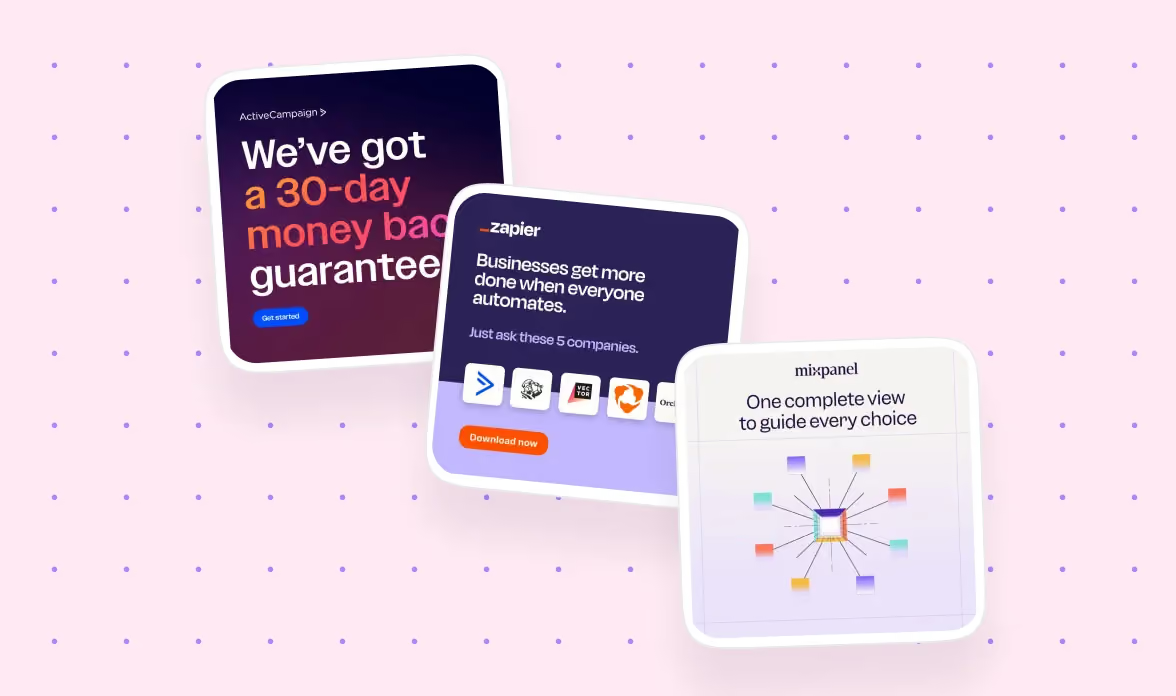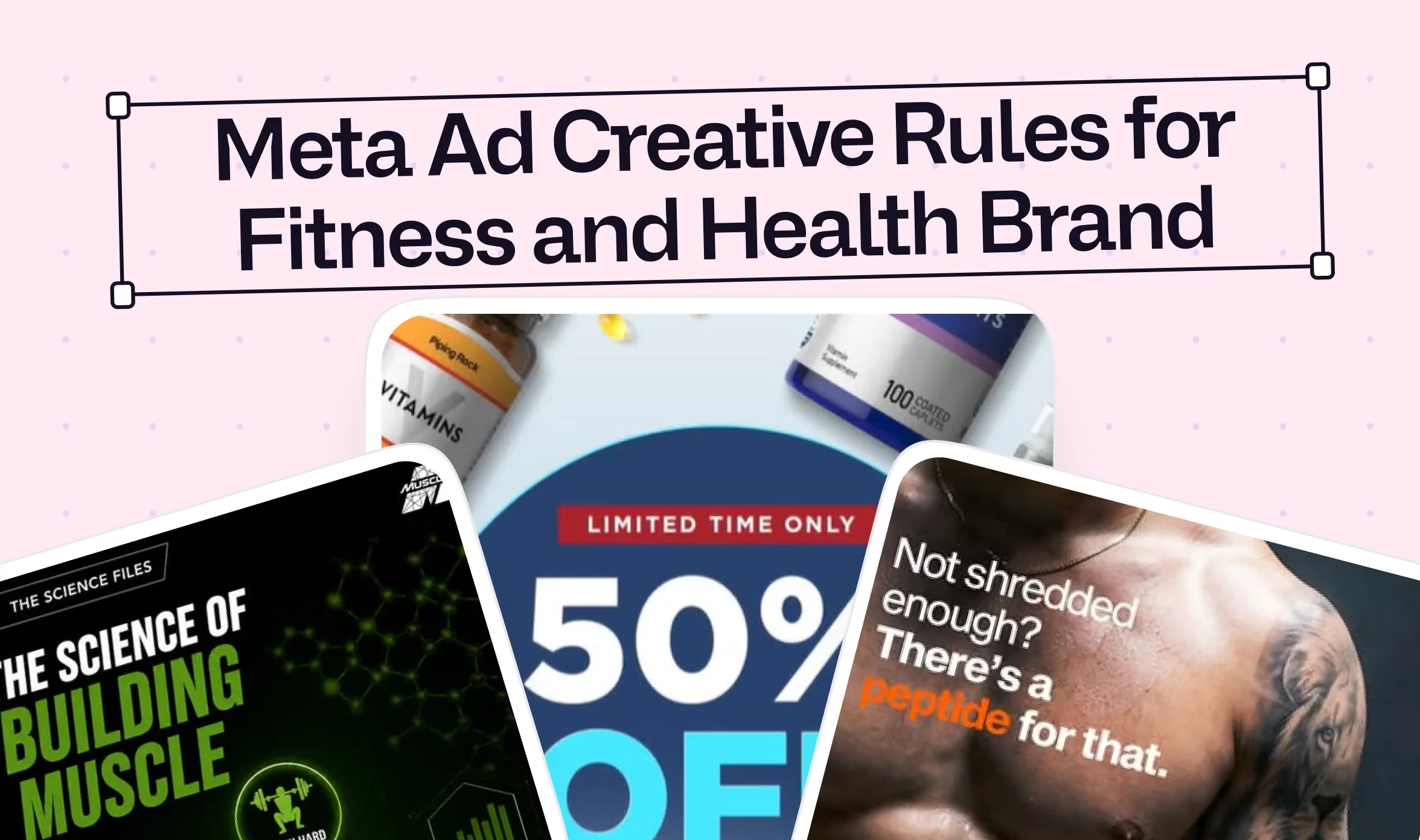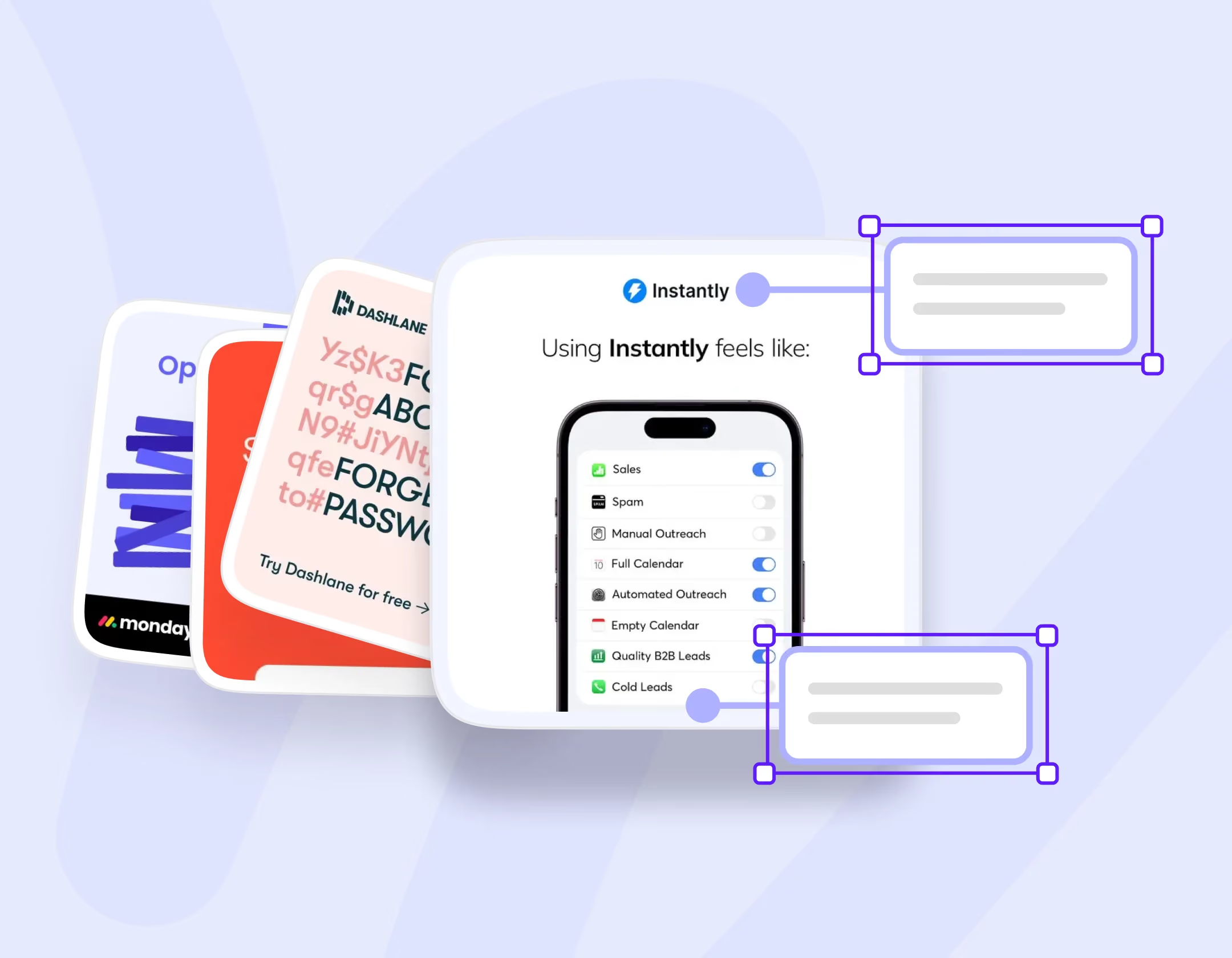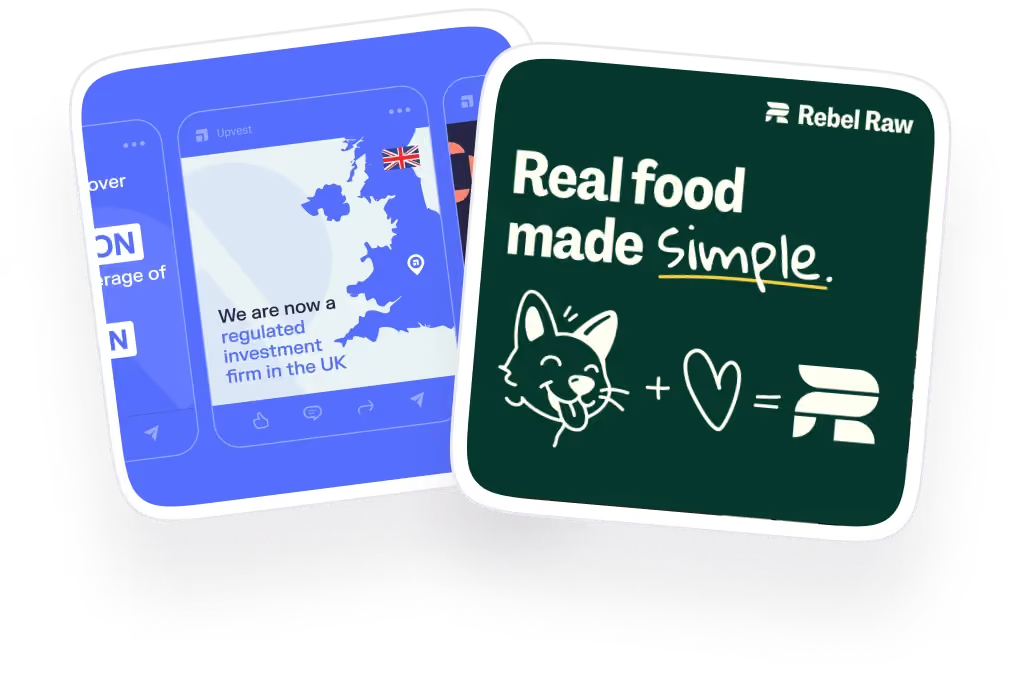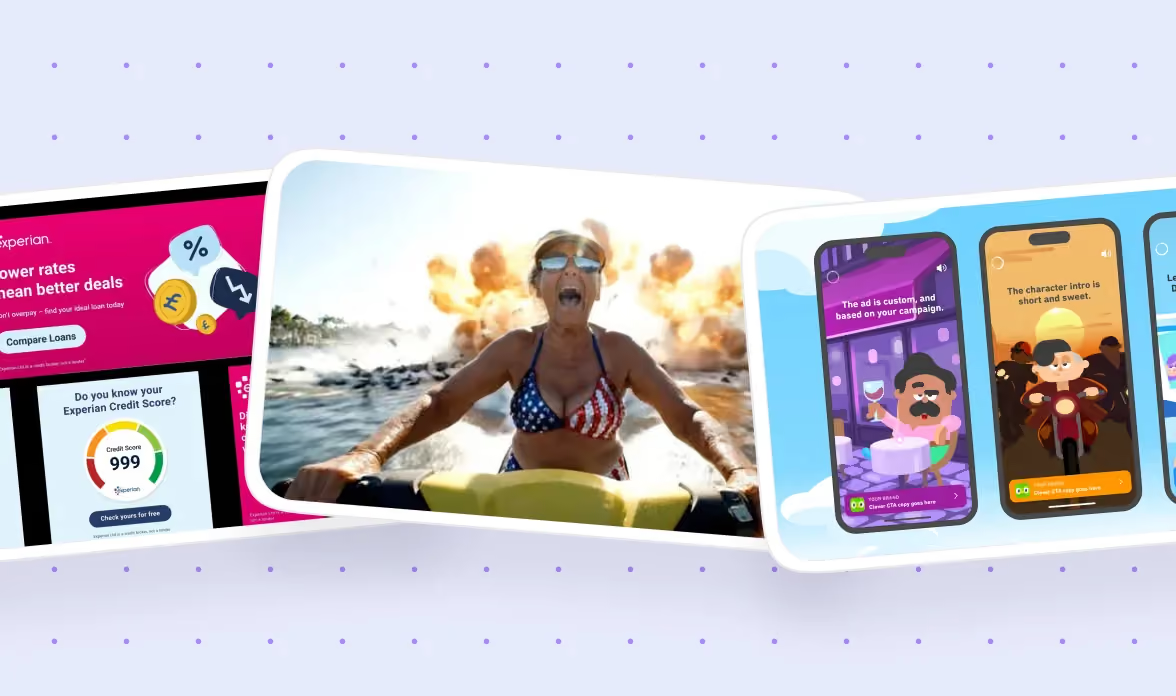
AI Ad Creative in 2026: Tools, Examples, and Best Practices
People resort to AI ad creatives (in simpler terms, AI-generated ad creatives) usually for a handful of reasons.
Either your team is having to work on ad campaigns that exceed your capacity, a client wants twenty new ad variations within 3 working days, OR someone in leadership just asked why you aren't using AI to generate ad creatives yet.
If that sounds familiar, you're not alone. According to a 2025 IAB report, 83% of advertising executives now use AI somewhere in their creative process, up from 60% just a year earlier.
AI ad creative or AI-generated ad creative, is the practice of using artificial intelligence to help design, write, or produce the images, videos, and copy inside an ad, rather than just the targeting or bidding around it. A single AI generated ad, whether that's one image, one script, or one video cut, is just one output of that larger process. Understanding the nuance is important, because the tools, the risks, and the best practices around each one aren't always the same.
But it's just as important to know when AI needs human expertise. After designing hundreds of ad creatives and integrating AI into our workflow, we felt it was worth sharing what we've learned. That's why we created this guide for marketers, Creative Leads, and designers looking to use AI ad creatives more effectively.
Here's what you'll learn
- What AI ad creative is (and how it's different from an AI-generated ad)
- The 8 most popular AI ad formats, with real use cases
- Whether AI-generated ads actually perform better
- Real brand examples, including one campaign that failed
- How to keep your ads consistent with your brand
- A simple workflow for creating and testing AI ads
- The key AI advertising rules to know in 2026
- The best AI ad creative tools for different needs
What is AI ad creative?
Most people think AI ad creative is simply software that generates ad images, headlines, or videos. That's only part of the picture.
AI ad creative is the complete creative process of using AI to brainstorm, create, adapt, and optimize ads with human designers providing the strategy, creative direction, and final polish. Instead of replacing designers, AI helps teams produce more ideas, test more variations, and move much faster.
The easiest way to understand it is to compare traditional ad production with an AI-assisted workflow.
| Traditional creative | AI-assisted creative |
|---|---|
| One concept at a time | Dozens of concepts generated in minutes |
| Limited creative variations | Multiple hooks, visuals, and formats to test |
| Manual iteration between versions | Rapid AI-assisted variation and refinement |
| Days or weeks to produce | Hours to days, depending on review |
This is also where the two terms start to separate. AI ad creative refers to the overall workflow, from the creative brief and idea generation to human refinement and performance testing. An AI generated ad is simply one output of that process — a single image, video, or carousel that may or may not be great depending on the human direction behind it.

The 8 formats AI ad creative can take today
AI ad creative shows up in more shapes than most people realize. Here are the eight formats you're most likely to run into, along with where each one tends to work best.
- Product lifestyle ads: AI drops your product into realistic settings and lighting without a full photo shoot, which works well for skincare, fashion, and food brands.
- UGC-style ads: these imitate an authentic, unscripted creator video using AI avatars, natural lighting, and fast cuts, and they currently dominate TikTok and Instagram Reels.
- Motion graphic ads: AI animates static designs into short social videos with camera movement and text animation, a strong fit for SaaS, fintech, and other software brands.
- Before-and-after ads: common in health, fitness, and home improvement, though these need careful handling since several ad platforms restrict misleading before-and-after imagery.
- Personalized ads: the same offer gets reproduced across dozens of markets, languages, and cultural variations while the core message stays identical.
- Text-first ads: minimal visuals, a strong hook, and bold typography carry the message instead, which tends to work well for B2B audiences.
- Carousel ads: each slide handles one job, such as a hook, a problem, a solution, or a call to action, with AI generating both the copy and layout for every slide.
- Cinematic brand ads: higher-end generative video built for storytelling rather than direct conversion.
{{freebie}}
Does AI-generated ad creative actually work?
Here's a direct answer. AI generated ads win on some metrics and lose on others, and pretending otherwise won't help you make a better decision about your own campaigns.
Industry benchmarking across large sets of campaigns has found that AI-generated creative tends to produce a meaningful click-through lift and a lower cost per acquisition compared with human-made creative, along with a real reduction in per-asset production cost. Those gains tend to be strongest for lower and mid-priced products, where testing volume and speed matter more than a single perfect asset.
Human-made creative still wins in specific, predictable situations. For products priced above $500, AI-generated creative has been shown to convert meaningfully worse, and the very best human-made ads still outperform the very best AI-generated ads at the top of the quality range. Long-form video on platforms like YouTube also tends to favor human-directed production over AI-generated alternatives.
| Where AI-generated creative tends to win | Where human-made creative tends to win |
|---|---|
| Speed and volume of testing | Premium products priced above $500 |
| Lower production cost per asset | The very top tier of overall creative quality |
| Personalization across markets | Long-form storytelling on platforms like YouTube |
| Lower and mid-priced products | Complex emotional brand storytelling |
There's also a real risk behind the second most common question people ask, which is whether AI-generated ads all end up looking the same. Feed the same generic prompt to five different brands, and don't be surprised if the ads that come back look like they went to the same design school without ever meeting each other. That risk is exactly why the brand consistency section below matters as much as it does.
"We've had clients ask us to make their AI output look more expensive. That usually means the AI nailed the cost side and missed the brand side."

Real examples of AI ad creative (and the lessons behind them)
The best AI campaigns aren't all success stories. Some prove what's possible, while others show exactly where AI falls short.
1. Synthesia — Replacing expensive video production
Synthesia built its marketing around AI avatar videos instead of traditional studio shoots. The company uses realistic digital presenters to create product demos, localized ads, and sales videos in dozens of languages without filming new talent every time.
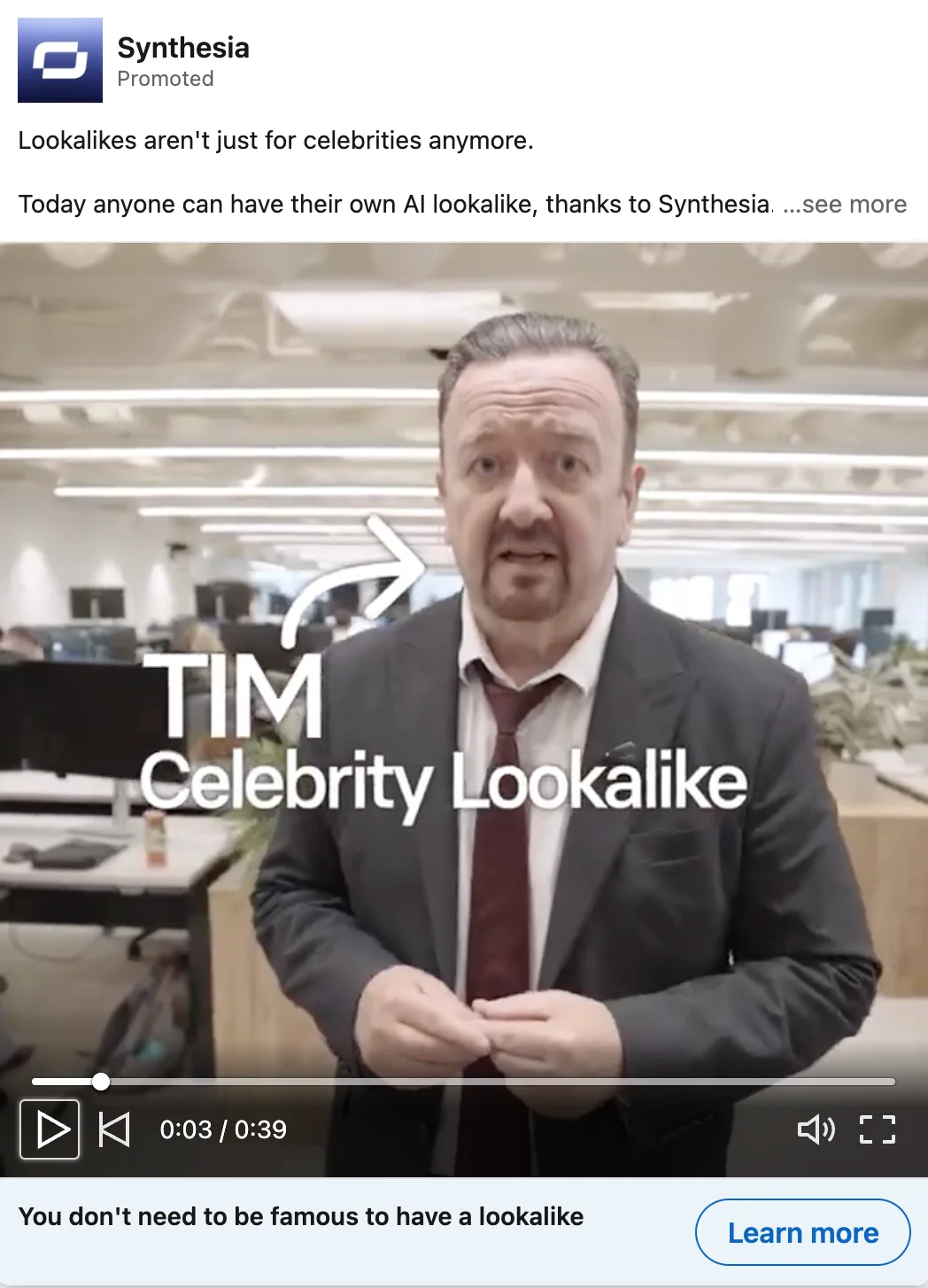
Lesson: AI works exceptionally well when the goal is scalable, multilingual video production rather than cinematic storytelling.
2. Jasper — Using AI to market an AI product
When Jasper launched new AI features, the team created large volumes of social ads, landing page visuals, and copy variations using generative AI as part of its own creative workflow. Rather than producing one hero campaign, they continuously tested different hooks and messaging across channels.
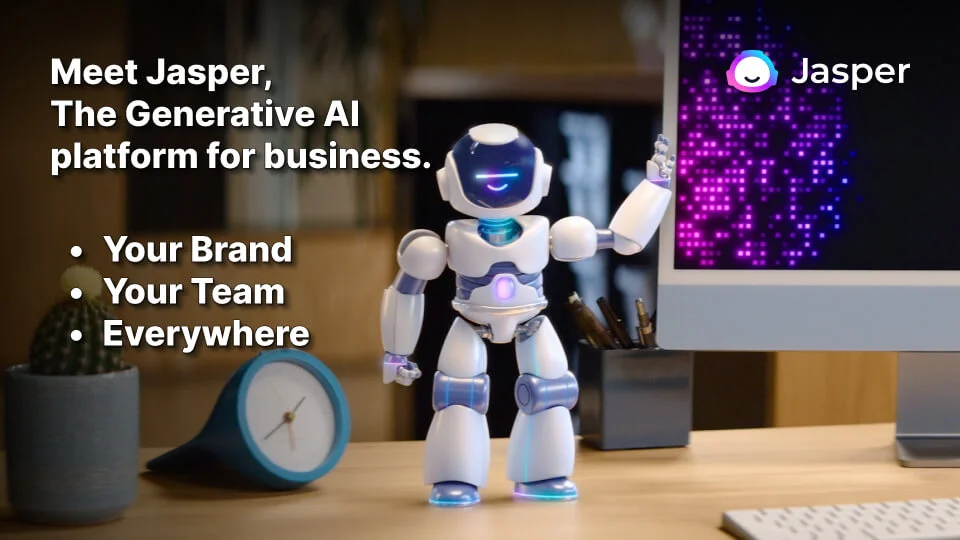
Lesson: AI is most valuable for generating and testing many creative ideas without replacing creative strategy.
3. Experian × Pencil — Always-on enterprise creative
Experian worked with Pencil and Jellyfish to solve a common enterprise problem: keeping Google Performance Max campaigns fresh. AI generated and refreshed over 2,000 creative assets per quarter, while human teams retained control over brand, concepts, and quality. The result was a 14% uplift in PMax conversions and a 15% increase in clicks.
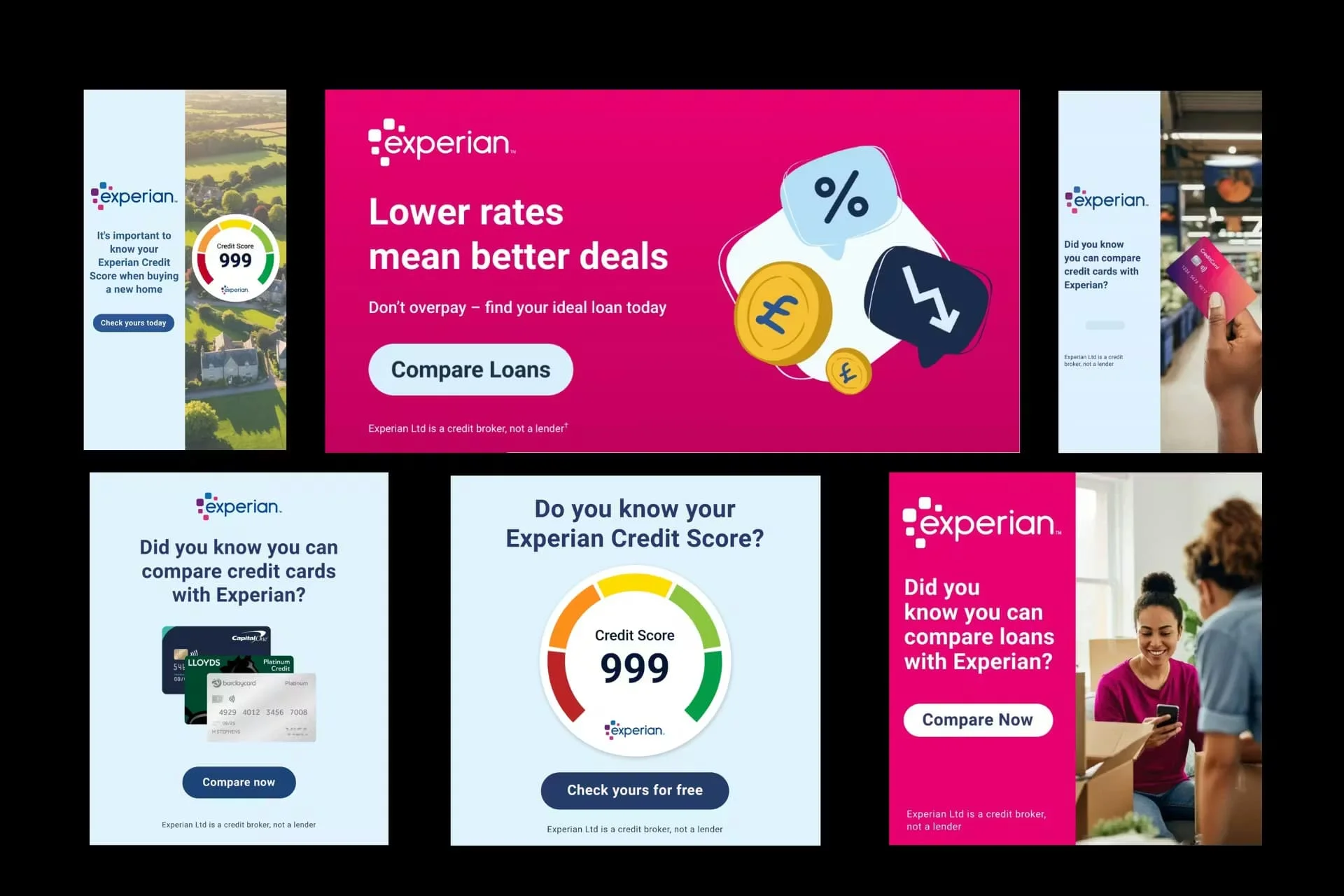
Lesson: The highest-performing enterprise workflows use AI for volume and optimization, while humans own creative direction.
4. Kalshi — A Super Bowl-quality ad for under $2,000
Prediction market Kalshi created a 30-second commercial almost entirely with generative AI using tools like ChatGPT, Runway, Pika, and ElevenLabs. Instead of hiring a large production crew, the team produced a broadcast-quality campaign for under $2,000, and it reached millions during the NBA Finals.

Lesson: AI dramatically lowers production costs, making high-impact video accessible to much smaller marketing teams.
5. Duolingo — What happens when AI replaces the wrong people
Not every AI story is a creative success. Duolingo's AI-first strategy sparked backlash after the company reduced its reliance on human translators and language experts, with many users arguing that lesson quality and cultural nuance suffered. The criticism spread widely across Reddit and social media, becoming a cautionary tale about treating AI as a replacement rather than a creative partner.
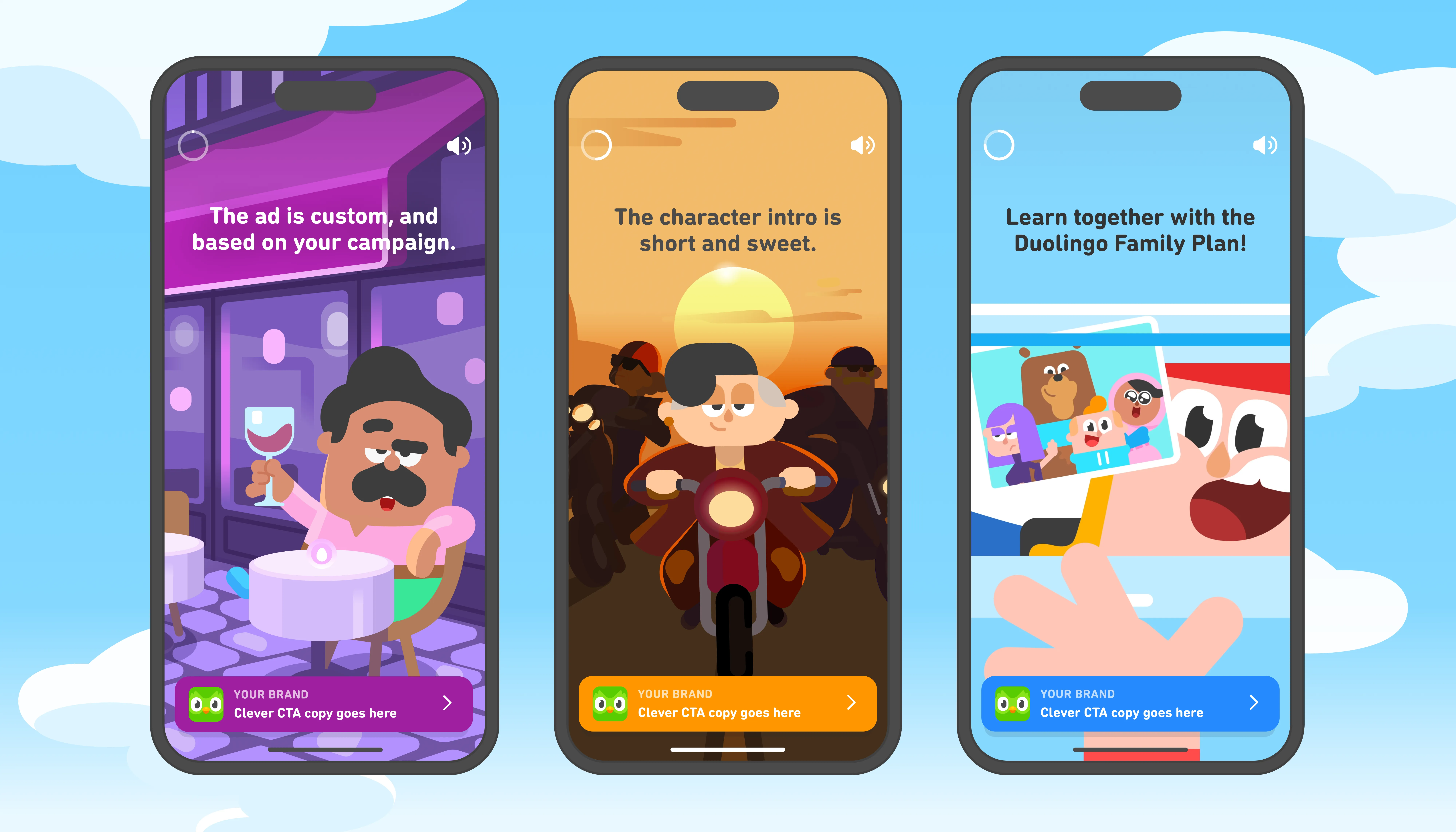
Lesson: AI can accelerate content production, but removing human expertise, especially in language, culture, and creative judgment can damage both quality and brand trust.
The brand consistency problem in AI ad creative, and how to fix it
Ask anyone who has tried to run AI ad creative across more than one platform, and brand consistency comes up almost immediately. Marketers report that generic tools produce output that looks polished but has drifted from their actual brand voice, tone, or visual guidelines, and fixing that after the fact often takes more time than starting from scratch would have.
This happens because most generation tools are built to produce a wide range of styles by default, which is useful for exploration but works against consistency once every asset needs to look and sound like the same brand. A tool that doesn't understand your specific brand terms, tone, or how your brand should adapt across different markets will keep drifting no matter how many times you regenerate the output.
A better approach is to use AI as an adaptation tool, not the source of every idea. Teams create the core creative direction in Figma, Adobe, or Canva, then use AI to turn approved designs into different sizes, formats, and languages. Humans make the creative decisions, while AI handles the repetitive production work.
There's one thing you should always check before paying for any AI ad creative tool. Sometimes, changing one small element like a headline causes the entire design to regenerate instead of editing that single part. Before choosing a tool, ask how precise its editing controls are. It can save a lot of time during live campaigns.That's exactly where thinking about AI ad creative tools as three separate categories, rather than one big pool of interchangeable software, starts to help.
| Category | What it does | Example tools | Best for |
|---|---|---|---|
| Generation tools | Create new ad concepts, images, copy, or video from a brief or prompt | AdCreative.ai, Creatify, Recraft | Teams that need volume and speed on new concepts |
| Optimization and analytics tools | Score, predict, or analyze how a creative is likely to perform before or after launch | Pencil, Madgicx, Revealbot, ad-vertly | Teams that already generate creative but need to know what to test next |
| Localization tools | Adapt approved creative into new languages, markets, or brand-safe variations | Platforms like Vitra.ai, which localize both images and video while keeping brand terminology locked and consistent | Teams scaling one campaign across many markets |
When should AI step aside?
AI is great at speed and scale. Human designers are still the better choice when the creative decision matters most.
- Building a brand campaign: Big ideas, positioning, and memorable concepts still need human creative thinking.
- Selling premium products: Luxury and high-ticket brands rely on trust, taste, and emotional storytelling more than volume.
- Creating emotional ads: The best stories connect with people because they're directed with empathy, not just generated from prompts.
- Working in sensitive industries: Healthcare, finance, and legal ads need careful human review for accuracy, compliance, and ethics.
- Protecting brand consistency: AI can generate hundreds of variations, but art direction ensures every ad still feels unmistakably like your brand. Teams like magier pair AI with dedicated designers and art director review to keep quality consistent at scale.

{{cta}}
A practical AI + human workflow for producing ad creatives
The strongest ad creative workflows don't rely on AI alone. They combine AI's speed with human creative judgment. Here's a process that works whether you're producing five ads or fifty.
- Write a clear creative brief: Define your audience, offer, brand guidelines, and one specific goal for the campaign.
- Generate initial concepts with AI: Use AI to explore multiple headlines, visuals, scripts, and creative directions from the same brief.
- Create variations of the strongest ideas: Produce different hooks, formats, and visual styles for testing rather than committing to a single concept.
- Refine everything with a human designer: Polish layout, pacing, typography, color, and brand consistency while removing anything that feels obviously AI-generated.
- Test the final creatives: Launch multiple variations with a real budget across your ad platform and measure performance.
- Feed the results back into the next round: Keep the winning hooks and creative patterns, then use those insights to generate better iterations.
Don't skip Step 4. AI is excellent at generating options, but human designers are still better at spotting weak storytelling, inconsistent branding, and the small design details that make an ad feel premium. The highest-performing teams use AI for exploration and humans for creative direction.
Step 3 also deserves extra attention. Hook quality is estimated to drive around 80% of the performance difference between direct-response video ads. A simple framework is Persona × Desire × Awareness (PDA): match the opening hook to who the viewer is, what they want, and how familiar they already are with your product before introducing the offer.
Best practices for AI ad creative that perform well
Once your workflow is solid, a handful of platform-level details separate ads that perform from ads that quietly underperform.
- Hook in the first three seconds: Lead with a surprising statement, a question, or an unexpected visual, since most viewers decide whether to keep watching almost immediately.
- One message per ad: Trying to communicate five benefits in fifteen seconds usually means the viewer remembers none of them.
- Show the product early: Hiding your product until the final second costs you the viewers who never make it that far.
- Match the platform's native look: An ad built for TikTok should look like it belongs on TikTok, and the same goes for LinkedIn.
- Refresh creative roughly every two weeks: Most concepts peak in performance within the first three days and start degrading noticeably by day ten, so a two-week refresh cycle keeps you ahead of that decline.
| Placement | Recommended size | Safe zone |
|---|---|---|
| Feed | 1440 x 1800 pixels (4:5) | Standard margins |
| Stories and Reels | 1440 x 2560 pixels (9:16) | Keep roughly the bottom 35% clear so captions and buttons don't overlap |
Meta Advantage+ recommends keeping at least 150 creatives active per campaign for its algorithm to learn effectively, while Google Performance Max asks for a minimum of five images per aspect ratio. Meta's Andromeda quality signal also rewards high-resolution, genuinely varied assets and quietly penalizes creative that looks like the same template with the colors swapped, which is one more reason generic AI output tends to underperform over time. Most of what's described above falls under a broader industry term called Dynamic Creative Optimization, or DCO, which just means assembling and testing ad variations automatically instead of by hand.
The regulations shaping AI ad creative in 2026
This is the part of AI ad creative that gets skipped most often, and it shouldn't be. Rules around AI-generated advertising are moving from optional guidance to real legal requirements in several major markets, and ignoring them creates risk that has nothing to do with how good your ad looks.
Why should a marketing team pay attention to legislation instead of leaving it entirely to legal? Compliance requirements increasingly shape creative decisions directly, including whether an ad needs a visible label saying it was made with AI, or whether a synthetic voice needs disclosure before it airs.
| Framework or region | What it requires | What it means for your ad creative |
|---|---|---|
| EU AI Act | Risk-based rules for AI systems, with transparency obligations for generative content | AI-generated ads shown in the EU may need clear disclosure that they were made with AI |
| California AI Safety Act | State-level safety and disclosure requirements for AI systems | Ads targeting California audiences should be reviewed against current state disclosure rules |
| GDPR and CPRA | Data protection rules covering how personal data is collected and used | Personalized AI ad creative built from customer data needs a clear legal basis for that data use |
| Canada's AIDA | Proposed accountability requirements for AI systems | Canadian campaigns should track this legislation as it moves toward enforcement |
| India's DPDP Act | Data protection requirements for personal data processing | Relevant for any AI ad creative that personalizes based on Indian user data |
| NIST AI Risk Management Framework | A voluntary US framework for identifying and managing AI risk | A useful internal checklist even without a legal requirement to follow it |
| ISO/IEC 42001 | An international standard for AI management systems | Signals a mature, auditable AI process to enterprise clients and partners |
| UK AI Safety Institute | Government-backed AI safety testing and guidance, not yet a binding law | Worth monitoring for UK campaigns, since its guidance often signals where regulation is headed |
| Singapore AI Governance Framework | A voluntary model governance framework for AI systems | Relevant for APAC campaigns and a useful reference model even outside Singapore |
Beyond these named frameworks, three practical issues come up constantly. Ads using a synthetic voice or a digital likeness increasingly need clear labeling so viewers know what they're looking at. Any AI ad creative built from customer data needs to handle personally identifiable information carefully, and the copyright status of AI-generated images and video is still being actively debated in several jurisdictions, so treating every generated asset as fully yours to use however you like is a real risk rather than a safe assumption.
The best AI ad creative tools right now
Let's be honest, every vendor's homepage claims to be the best option available, which is a little like asking a restaurant if their food is good. Here's a plain look at the tools that show up most often in real workflows, without the marketing spin.
| Tool | Key feature | Best for |
|---|---|---|
| AdCreative.ai | Fast bulk generation of static ad variations with built-in brand kit support | Teams that need high-volume static ads quickly |
| Creatify | Turns product URLs or text prompts into UGC-style video ads | E-commerce brands producing TikTok and Reels content |
| Recraft | Visual-first workflow built around uploaded reference photos | Brands that want tighter creative control over visual style |
| Pencil | Predicts how a creative is likely to perform before you spend budget on it | Teams focused on video ad testing across Meta and TikTok |
| Canva (Magic Studio and Grow) | Combines AI ad generation with Canva's existing design and publishing tools | Smaller teams that want generation and design in one place |
| Arcads | Generates, edits, translates, and remixes video ads from a large avatar library | Teams running localized video campaigns at scale |
| HeyGen | AI avatars with synthetic voice for UGC-style and presenter-led video ads | Brands producing avatar-led video without hiring on-camera talent |
| Madgicx | Optimization and automation layered on top of existing ad accounts | Teams whose bottleneck is testing and analysis rather than raw generation |
| Omneky | Pulls in brand guidelines to generate tailored ad variations across channels | Teams whose main problem is brand consistency rather than raw output volume |
How to choose an AI ad creative tool
With this many options, the fastest way to choose is to answer a few questions before comparing feature lists.
- What's your actual bottleneck? If it's generating enough concepts, start with a generation tool. If it's knowing which concept to trust, an optimization tool matters more.
- Which platforms are you running on? A tool built for Meta and TikTok won't necessarily handle LinkedIn or Google Display well.
- Do you need video, static images, or both? Several tools specialize in one format over the other, and using the wrong tool for the format usually means more manual cleanup later.
- How many markets are you serving? If localization is a real need, weigh it as heavily as generation quality, since it's the gap most generation-first tools leave open.
- What does the editing workflow actually look like? Ask for a live demo of changing one small element, since that reveals more about day-to-day usability than any feature list.
Pricing varies by tool and category. AdCreative.ai runs from roughly $29 to $599 a month depending on tier, Canva's AI features are available from around $15 a month, and Creatify runs from about $35 to $155 a month. Enterprise-focused platforms like Pencil can start at $5,000 or more a month. Treat these as a starting point rather than a final answer, since pricing across this category changes often.
If budget is the main constraint, a few options are worth checking first. Canva's AI ad creative generator has a genuinely usable free tier, and several newer AI ad generators offer free plans, though most cap you at a handful of exports per month. An AI ad creative app with a free plan is usually a reasonable way to test whether a given tool fits your workflow before committing to a paid one.
Where magier fits in
AI ad creative can really speed up how much you produce and test, and everything above this section should make that clear. What it can't do on its own is replace the judgment that keeps a hundred ad variations from drifting away from your brand, or the review process that keeps you ahead of a rule like the EU AI Act before it becomes a problem.
That's where a team like magier comes in. We pair AI-assisted production with pre-qualified human designers, so you get the speed of AI generation without losing the brand judgment that keeps every ad recognizably yours.
We work with 150+ brands under a fixed monthly fee, with unlimited revisions and a 48-hour turnaround on most requests, so you're not stuck waiting weeks for a fix or paying by the project every time your creative needs to change. You can see the full range of what we cover on our design services page.
The bottom line
AI ad creative isn't a shortcut around good creative thinking, but it is a real way to produce and test more of it, faster and at a lower cost than most teams could manage a few years ago. Getting there takes actual setup work, including a clear brief process, a plan for brand consistency, and a working knowledge of the rules that apply to your markets. None of that happens automatically just because you added an AI tool to your stack.
If you'd rather have a team handle that setup for you, check out how magier works, and take a look at all the ads we have created so far for our clients. If you're just getting started, pick the tool comparison section or the regulations table above and start there. Everything else in this guide will still be here when you're ready for it.
{{cta}}
FAQ
They can, especially when a generic tool is fed a generic prompt with no brand-specific direction. Treating AI as an adaptation layer on top of an existing brand system, rather than the sole source of ideas, is the most reliable way to avoid that problem.
Yes, with real nuance. AI-generated creative tends to win on cost, speed, and testing volume, while human-made creative still tends to win for premium products and the very top tier of overall quality.
There isn't one single best option, since generation tools, optimization tools, and localization tools solve different problems. The right choice depends on whether your bottleneck is producing enough concepts, knowing which ones will perform, or adapting creative across markets.
Start with a clear brief covering your audience, offer, and one goal for the ad. Generate concepts from that brief, produce several variations of the strongest ones, then run everything through a human editing pass before testing on the actual platform.
It depends heavily on the tool. AdCreative.ai runs from about $29 to $599 a month, Canva's AI features start around $15 a month, and enterprise-focused platforms like Pencil can start at $5,000 or more a month. Treat any specific number as a starting point, since pricing across this category changes often.
Several frameworks now apply depending on where your audience is, including the EU AI Act, California's AI Safety Act, GDPR, and Canada's AIDA. The regulations section above breaks down what each one actually requires for your ad creative specifically.
Yes, AI copywriting tools can generate radio scripts and voiceover copy without much trouble, since this is closer to text generation than visual production. It's one of the more reliable use cases in this whole category, since there's no image or video quality to second-guess.
Regulations in several markets, including the EU AI Act, are starting to require clear labeling when an ad uses a synthetic voice, avatar, or AI-generated visuals. Outside of explicit disclosure, look for the practical tells covered in this guide, such as inconsistent lighting or physics that don't quite behave like a real camera.
Most tools follow a script-to-video pipeline, where AI generates a script or voiceover, pairs it with an avatar or generated visuals, and assembles the final cut automatically. A human editing pass is still typically needed to fix pacing, audio sync, and anything that looks obviously synthetic.
AI tools can swap visuals, copy, language, and cultural references while keeping the underlying offer identical, producing dozens of locally relevant versions from one core campaign. This works especially well for reaching different countries or audience segments without rebuilding the creative from scratch each time.
.avif)

.avif)