Startup Accelerator vs Incubator: Which One is Right for Your Stage?
One of the most common confusion among the newly launched startups is whether they should choose a startup accelerator or a startup incubator.
This confusion is way too expensive to get wrong. A startup accelerator is a short, intensive program that helps a company with an existing product grow faster, usually in exchange for equity. On the other hand, a startup incubator is a longer, lower-pressure program built for founders who are still shaping their idea, and it rarely asks for equity at all. Choosing the wrong one at the wrong stage can mean giving up equity before you have the traction to justify it, or spending a year in a program that never pushes you toward a real milestone.
Research from Wharton's Knowledge at Wharton shows the same pattern. Startups that joined an accelerator at the right stage, once they had a product and real traction, raised $1.8 million more in year-one funding than startups that skipped the program entirely. That's the flip side of the equity cost mentioned above: joining too early punishes you, joining ready rewards you. Being in a similar industry, we have seen the mistake being repeated too many times, which led us to writing this guide on startup accelerator vs incubator.
Here's what this guide covers:
- What is a startup incubator
- What is a startup accelerator
- A full side-by-side comparison of stage, duration, equity, and structure
- Why you should consider a pre-seed accelerator
- When you should consider venture studios
- Examples of each categories
- Real startups that took each path, with real outcomes
Read along to learn more.
Startup accelerator vs incubator: the key differences
This is the core startup incubator vs accelerator comparison, and it's the one worth bookmarking. The table below lays out the differences across the three models worth knowing, including the pre-seed accelerator, which we'll explain in more detail below.
The table captures the structure, but the more useful way to think about it is this. Incubators serve exploration, accelerators serve growth, and pre-seed programs serve the gap between the two. Once you know which of those three describes where you are, the rest of the decision gets a lot easier.
{{freebie}}
What is a startup incubator
A startup incubator is a long-term support program built for founders who are still developing an idea rather than scaling an existing one. Most incubators run anywhere from one to five years, are affiliated with universities, corporations, or government economic development groups, and rarely take equity in exchange for their support. The lack of pressure is the point: incubators exist so founders can test assumptions before they've committed to a specific business model.
Founders in an incubator typically don't need a finished product or a proven go-to-market plan to join. Programs like Harvard Innovation Labs, Capital Factory, and TechNexus focus on giving founders workspace, mentorship, and access to a peer community while they figure out what to build. The tradeoff is that most incubators provide little or no direct funding, since their value comes from time and access rather than a check.
Incubators tend to offer a specific set of resources, and they're worth naming plainly:
- Physical or virtual workspace, so you're not building alone in a coffee shop
- Mentorship and expert coaching, usually from people who've built companies in your space before
- A peer community, which matters more than it sounds like it should when you're the only person you know trying to validate an idea
- Access to research or institutional resources, especially at university-affiliated incubators
Examples of startup incubators

What is a startup accelerator
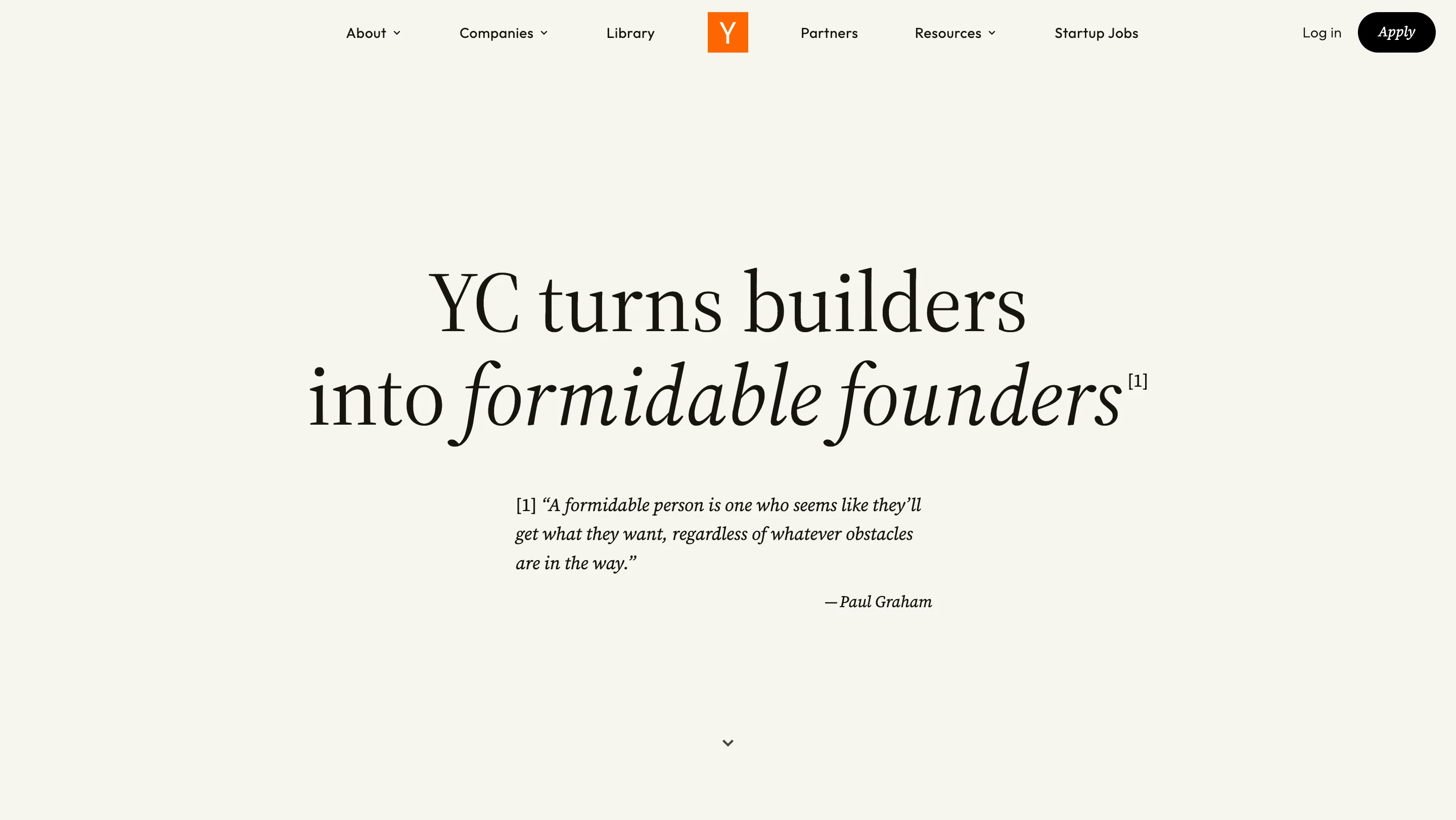
A startup accelerator is a fixed-term, cohort-based program that helps an existing startup grow quickly, usually in exchange for equity. Most accelerators run three to six months and end in a demo day, where founders pitch their company to a room full of investors. The model was pioneered by Y Combinator in 2005, and it has since become the dominant format for early-stage startup support worldwide.
Accelerators generally expect you to arrive with something already built. Y Combinator invests $500,000 in exchange for roughly 7 percent equity, structured as a mix of a post-money SAFE and an uncapped MFN SAFE. Techstars invests up to $120,000 for around 6 percent equity and runs cohorts across more than 50 cities. Both programs assume your team is full time, your product exists in some working form, and you already have early signs that people want it.
What you get in exchange is real, and it's worth listing out:
- Funding, typically ranging from $20,000 to $500,000 depending on the program
- Structured curriculum, covering growth, fundraising, and go-to-market strategy on a set schedule
- Investor access, including warm introductions and the demo day pitch itself
- A cohort of peers who are building at the same pace you are, which creates real accountability
Applying to Y Combinator with an idea and no product is a bit like showing up to a marathon with running shoes still in the box. The race organizers aren't going to stop and wait while you lace up.
Examples of startup accelerators

How much equity a startup accelerator takes vs an incubator
Equity is the sharpest practical difference between these programs, and it's the one with permanent consequences for your cap table. Most incubators take no equity at all, since they're funded by universities, government budgets, or nonprofit grants rather than investment returns. Traditional accelerators, on the other hand, take equity because that's how they get paid back for the capital and access they provide.
A typical accelerator deal looks like $100,000 to $500,000 for 6 to 10 percent equity. Most of these deals use a SAFE (Simple Agreement for Future Equity), which converts into actual shares once you raise a priced round, so you're not giving up a fixed dollar valuation today. That math only works in your favor if your company's actual value at the time you join is meaningfully higher than what the deal implies. A $150,000 check for 7 percent equity implies a $2 million valuation, and if you have no product and no customers yet, that valuation is almost certainly too low to accept comfortably.
There's a cost to this beyond equity that rarely gets mentioned. Two co-founders relocating for a 12-week in-person accelerator in a hub like San Francisco can expect to spend around $20,000 on living expenses alone, on top of whatever equity the program takes.
A typical week inside a startup accelerator vs an incubator
Numbers only tell part of the story. The pace inside each program is different enough that it's worth seeing what an actual week looks like.
An incubator week is built around learning, and success looks like discovering what actually works. An accelerator week is built around growth, and success looks like a measurable number moving in the right direction. Joining an accelerator when you're still incubator-stage feels a little like enrolling in advanced calculus before you've finished basic algebra. You might survive the semester, but you'll spend most of it catching up instead of learning what the class was actually meant to teach you.
What is a pre-seed accelerator? The middle ground no one considers
Most startups think they only have two choice, but that leaves out the stage where most first-time founders actually live. That's where the pre-seed accelerator comes in.
A pre-seed accelerator is built for founders who are committed to an idea and taking it seriously, but who haven't yet built or validated a product. It sits between an incubator and a traditional accelerator, offering the structure of the latter without demanding the traction the former doesn't require.
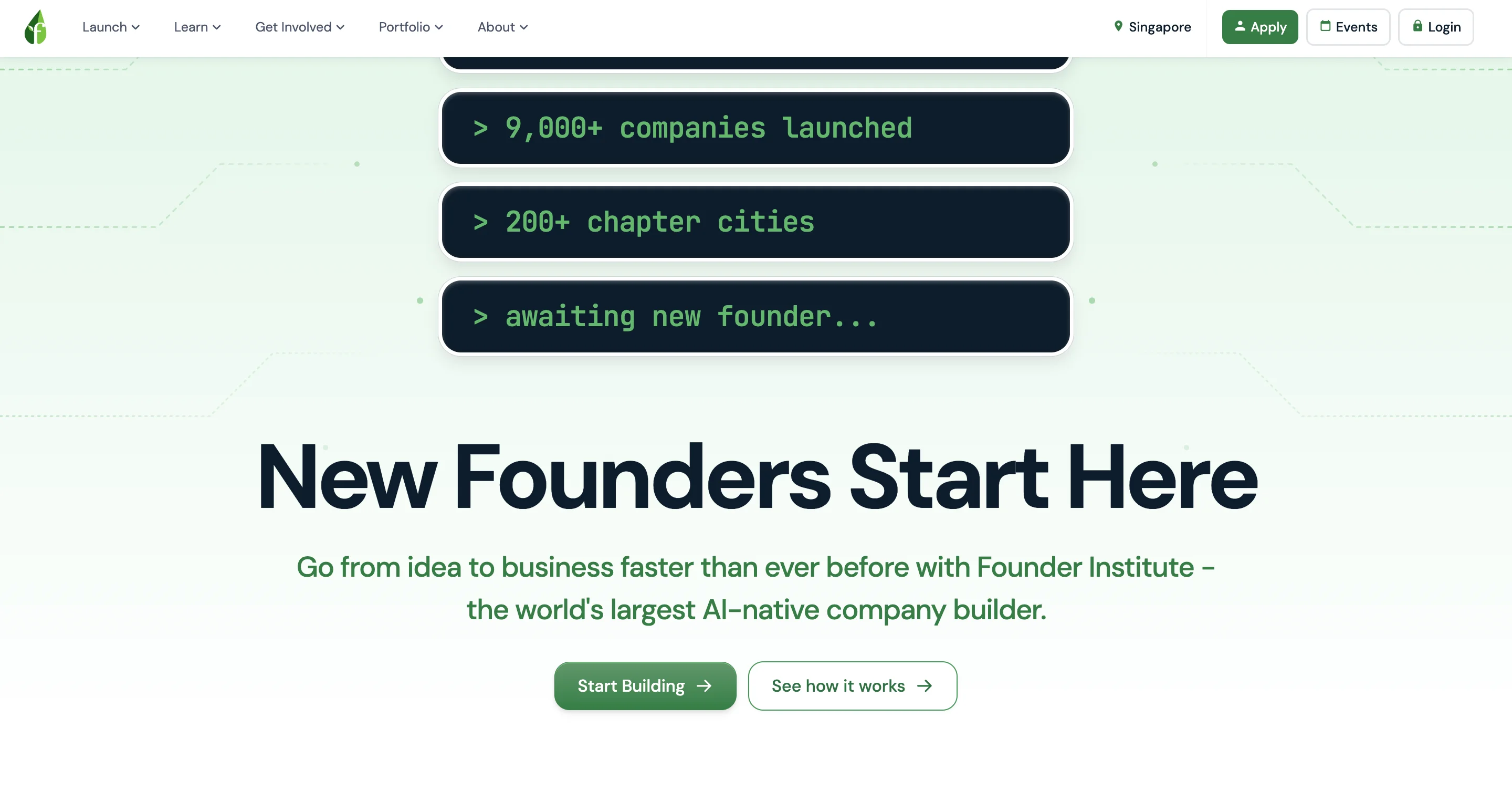
Founder Institute is the clearest example of this model at scale. Since 2009, it has run more than 1,200 cohorts across 200-plus cities, working with over 8,900 alumni who have collectively raised more than $2 billion. Instead of evaluating idea quality at the application stage, Founder Institute leans on an Entrepreneur DNA Assessment, a psychometric tool benchmarked against more than 250,000 candidates, to evaluate traits like curiosity, perseverance, and self-reliance. The reasoning holds up. Ideas change constantly in the first year of a startup, but founder traits tend to hold steady, and that makes them a better early predictor of who actually makes it through.
Many pre-seed programs, including government and university partnership tracks, operate without taking any equity at all. If you have an idea you're committed to but nothing built yet, this is almost certainly the right first stop, not a traditional accelerator and not a long-term incubator.
Examples of pre-seed accelerators
Venture studio vs startup accelerator: what's the difference?
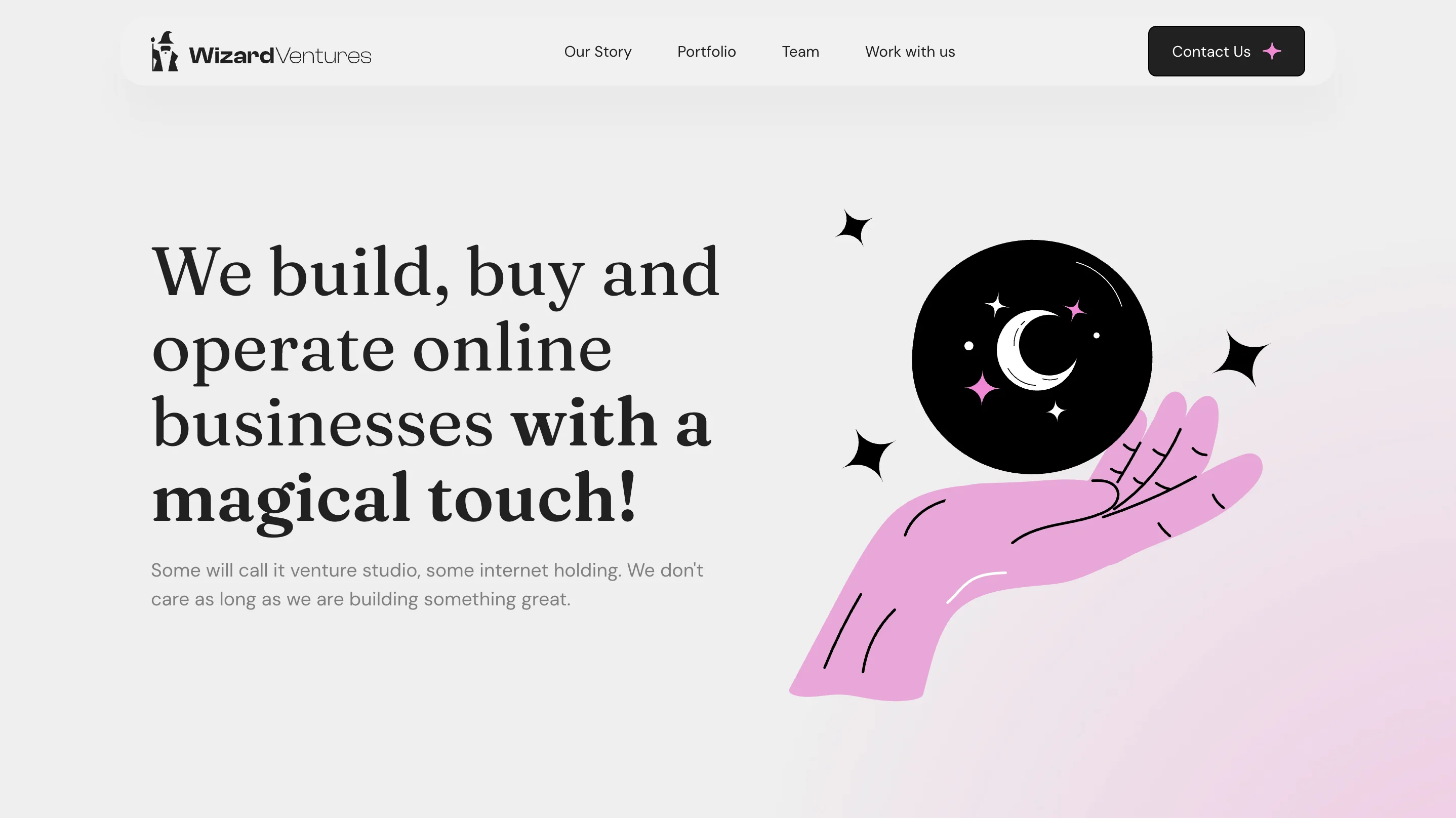
If you've spent any time researching this topic, you may have run into the term venture studio (sometimes called a venture builder) and wondered if it's a fourth category you missed. It is, but it's different enough from the other three that it deserves its own quick explanation rather than a full section.
A venture studio builds companies from scratch internally, often building several in parallel, rather than accepting outside founders into a cohort. Studios like Idealab and High Alpha provide centralized engineering, design, and operational support, since they're co-creating the company from day one rather than mentoring one that already exists. That level of involvement is also why the equity stake runs so much higher than an accelerator or incubator ever takes, typically 15 to 50 percent, compared to 6 to 10 percent for a traditional accelerator and usually none for an incubator.
Because a studio is building the company itself, it can move certain milestones faster than a founder starting alone. Venture studio-built companies reach seed funding roughly twice as fast and exit about a third faster than the typical independent startup. That speed comes with a real tradeoff: giving up a much larger piece of the company from the very beginning, before the idea has proven itself at all.
Startup accelerators show a different kind of advantage, and it's worth being precise about what that advantage actually is rather than forcing it into the same comparison. Wharton research analyzing more than 8,500 startups across over 400 accelerators found that accelerator graduates were over 3 percent more likely to raise external funding, and typically raised close to $2 million more in their first year, than startups that never went through a program. That's not a speed advantage in the way a venture studio's is, it's a funding-outcome advantage, and it shows up after the program ends rather than during it.
Incubators aren't in this table because there isn't a credible, comparable statistic available for their funding speed or funding likelihood specifically, and a table full of guesses would undercut the two real data points sitting next to it. What incubators do offer instead, time, low pressure, and no equity ask, is covered earlier in this guide, and it's a genuinely different value than either of the two models above.
If you already have your own idea and team, a venture studio probably isn't the right fit regardless of its speed advantage, since the model is built for founders who want a company built with them, not for founders who've already started building it themselves.
Examples of venture studios

Real startups that took each path
Abstract definitions are useful, but real outcomes make the differences easier to trust. Two examples from Europe's startup community show what each path can actually look like.
Celonis, a process-mining software company founded in 2011, went through the German Accelerator program in 2013. By late 2019, the company had raised roughly €330 million and crossed a billion-dollar valuation, and it won Germany's national innovation prize the same year. That's a clear case of an accelerator compressing years of growth into a shorter runway, once the company already had something worth accelerating.
Two more examples are shared in the following section.
Can a startup join both an accelerator and an incubator?
Yes, and for most first-time founders, this is actually the more realistic path than picking one and staying there. A common sequence looks like this:
- Join an incubator or pre-seed program while you validate the idea. Use this stage to talk to customers, test assumptions, and figure out what you're actually building.
- Build a working MVP. You don't need it polished, but you do need evidence that someone besides you wants it.
- Acquire early customers or users. This is the traction that makes an accelerator application credible instead of premature.
- Apply to a traditional accelerator once you have that traction. At this point, the equity tradeoff starts to make sense, because your valuation reflects real progress.
- Use the accelerator to raise a seed round. This is the growth and fundraising push the accelerator model is actually built for.
LovePop is a good example of exactly this sequence. The 3D pop-up greeting card company started at the Harvard Innovation Labs in 2014, while its founders were still Harvard Business School students shaping the idea with no pressure to hit a growth milestone yet. It later went through Techstars Boston's accelerator program, and that traction helped it raise roughly $37 million across multiple funding rounds in the years since.
Not every founder needs the full sequence to work, though. Udemy went through Founder Institute at the idea stage, and its co-founders have said the company might never have raised any money without that early structure. But instead of moving on to a traditional accelerator next, Udemy went straight from Founder Institute to a $1 million seed round, then a $3 million Series A backed by 500 Global and Groupon's investors. It skipped the accelerator step entirely and still became a publicly traded company. That's a real reminder that the five-step sequence above is a common path, not a required one, if a pre-seed program alone builds enough traction, a founder can sometimes go straight to investors from there.
Founders who complete a pre-seed or incubator stage before applying to a traditional accelerator, or before raising directly, tend to report stronger outcomes: cleaner cap tables, more developed products, and negotiating leverage they wouldn't have had if they'd applied a year earlier.
How to get accepted into a startup accelerator or incubator
Every program, whether it's an incubator, a pre-seed track, or a traditional accelerator, is evaluating more than just your idea. Selection committees are looking for signals that you understand your own business and can communicate it clearly. That's exactly where a founder's brand and website end up mattering more than most people expect, and it comes through in how your brand and web presence look before you've said a single word in the room.
Let's be honest, a lot of founders spend weeks polishing their pitch deck and then send investors to a landing page that looks like it was built the night before the application deadline. That mismatch tells a selection committee something you didn't mean to say. Here's what tends to matter most:
- A landing page that clearly explains what you do, in language a stranger could understand in ten seconds
- A brand identity that looks intentional, even if it's simple, since a scrappy but coherent look reads better than a generic template
- Consistency between your deck, your website, and how you talk about the company, since mismatches make evaluators wonder what else is inconsistent
- Basic proof of traction presented cleanly, whether that's early users, waitlist signups, or a working demo
This is exactly where a founder's website and brand start to matter as much as the pitch itself, and it's the part of the process most comparison guides never mention. magier works with early-stage startups on exactly this, building the Webflow sites and brand systems founders bring into an application or a demo day. The subscription model covers both design and Webflow development in one place, with a dedicated project manager and a 48-hour turnaround per task, so a founder juggling an accelerator application isn't also trying to coordinate three different freelancers.
"A founder asked us once if a Webflow site could really move the needle on getting into a program. We said probably not on its own, but a confusing one can absolutely get you a pass."

See how magier approaches Webflow design if you're building toward an application deadline and need your brand and site to actually look ready.
{{cta}}
The bottom line
A few quick questions settle most of this:
Do you have a working product and early users? An accelerator is probably next.
Are you still validating the problem itself? Start with an incubator or a pre-seed program.
Do you need funding right now more than you need mentorship? That points toward an accelerator or a business angel, not an incubator.
Answer those honestly, and the equity, timeline, and structure differences in this guide become a lot easier to weigh.
None of this is easy to execute alone, and that includes the parts that happen before you even submit an application. If your idea is solid but your landing page and brand don't reflect that yet, see how magier covers both design and Webflow and get that piece handled before your next deadline. Pick the section above that matches where you actually are right now, incubator, pre-seed, or accelerator, and start there.
Book a free demo with magier if you want to talk through what your site and brand need before your next application window.
FAQ
Business angels are individual investors who provide capital in exchange for equity, without the structured curriculum or fixed cohort schedule of an accelerator. A founder can raise money from angels instead of, or alongside, an accelerator or incubator program.
Yes. Venture studios build companies internally and typically take a larger equity stake in exchange for hands-on support, while direct angel or venture capital funding skips a structured program entirely. Government and university-backed programs also exist, and many of these operate without taking equity.
Yes, and it's a common path. Many founders join an incubator or pre-seed program first to validate their idea, then apply to an accelerator once they have the traction to raise funding and scale faster.
Both Y Combinator and Techstars are startup accelerators, not incubators, even though the terms get used loosely in casual conversation. Y Combinator runs a three-month, cohort-based program that invests $500,000 for roughly 7 percent equity and ends in a demo day in front of investors. That structure, a fixed timeline, cohort format, equity investment, and a public pitch day, is the defining shape of an accelerator, not an incubator.
Techstars follows the same model. It invests up to $120,000 for around 6 percent equity, runs cohorts across more than 50 cities worldwide, and culminates in its own demo day. Neither program is designed for founders who are still exploring an idea without a working product, which is the incubator's job, not theirs.
A startup incubator is a longer-term program built for founders who are still developing their idea or business model. Incubators typically run one to five years, rarely take equity, and focus on workspace, mentorship, and early experimentation rather than fast growth.
A startup accelerator is a short, structured program that helps a startup with an existing product grow faster. Programs usually run three to six months, provide funding in exchange for equity, and end with a pitch to investors on demo day.
MIT's flagship accelerator is called delta v, run by the Martin Trust Center for MIT Entrepreneurship. It's a full-time summer program for MIT and Wellesley student teams, running from June through early September and ending in demo days in Cambridge, New York, and the Bay Area. Delta v is equity-free and provides participants with up to $75,000 in funding, along with mentorship from experienced founders and operators.
A pre-seed accelerator supports founders who have an idea they're committed to but no finished product or paying customers yet. Programs usually run 8 to 16 weeks, focus on validation and founder development rather than growth metrics, and many operate without taking equity.
Startups apply and go through a competitive selection process based on their team, product, and early traction. If accepted, they receive funding, mentorship, and a structured curriculum over a fixed period, ending with a demo day pitch to investors.
Y Combinator and Techstars are the two most recognized global accelerators, and 500 Global runs one of the largest international networks. For founders who aren't yet ready for those programs, Founder Institute operates as the largest pre-seed accelerator, with cohorts in more than 200 cities.
.avif)