What is a Digital Experience Platform? Complete Guide on DXP & How to Choose One (2026)
About 76% of customers become frustrated when the digital experiences they encounter aren't personalized to their needs. That frustration doesn't just affect satisfaction scores. It impacts revenue, retention, and whether a prospect chooses you or the competitor whose website seemed to “get” them better.
If you've been hearing the term DXP or Digital Experience Platform in vendor pitches, analyst reports, or marketing conferences and wondering whether it's something your organization actually needs, you're not alone. In simple terms, a DXP is an integrated software platform that helps companies create, manage, and personalize digital experiences across websites, apps, portals, and other channels, going well beyond what a traditional CMS can do. The market is growing fast, but the information available is almost entirely written by DXP vendors who, unsurprisingly, conclude that you should buy their platform.
We have written this guide from the buyer's perspective, not the seller's. We'll explain what a DXP actually is, how it compares to a CMS, when you need one (and when you don't), how composable and monolithic architectures differ in practice, and how to evaluate vendors without relying solely on their marketing. We also cover agentic AI, the Gartner Magic Quadrant, implementation challenges, and whether Webflow can serve as part of a DXP stack.
And because we're not a DXP vendor yet come with a vast experience of web development, we can talk about this category without a sales agenda and you can trust in our analysis.
Here's what we cover:
- What a digital experience platform is
- DXP vs CMS
- An honest assessment of whether you actually need a DXP
- The core components of a modern DXP
- Composable vs monolithic architectures explained
- Ttop DXP platforms in 2026
- The rise of agentic AI and what it means for DXPs
- How to choose the right DXP
- Implementation challenges
… and so much more. By the end of this article, you’ll know whether you need a DXP and if yes, which one you’d need.
What is a digital experience platform (DXP)?
A digital experience platform is an integrated software platform that helps organizations create, manage, personalize, and optimize digital experiences across websites, mobile apps, customer portals, ecommerce stores, and other digital touchpoints. Think of it as the operating system for your company's entire digital presence.
Unlike a traditional content management system (CMS), which focuses primarily on publishing web pages, a DXP combines content management with customer data, personalization, analytics, automation, AI capabilities, and omnichannel content delivery. The goal is to deliver relevant, personalized experiences throughout the customer journey rather than just publishing static content.
In 2026, DXPs have evolved beyond content publishing into platforms that power AI-driven customer experiences. Marketing, sales, and customer success teams use them as a shared digital foundation for coordinating how customers interact with the brand across every channel.
It's worth noting that digital employee experience platforms are a related but distinct category. While a DXP focuses on external customer-facing experiences, employee experience platforms manage internal digital interactions such as onboarding, training, internal portals, and HR workflows. Some enterprise DXPs serve both audiences, but the two categories have different buyers and different evaluation criteria.
{{freebie}}
DXP vs CMS: what are the differences
This is the most common question in the DXP space, and most answers oversimplify it. A CMS and a DXP serve different purposes, and understanding the distinction helps you avoid buying more platform than you need or less than your organization requires.
A CMS answers one question: "How do we publish content?" A DXP answers a broader question: "How do we create personalized digital experiences that help customers achieve their goals?"
Here's how they compare across the attributes that actually matter for your decision.
| Attribute | CMS | DXP |
|---|---|---|
| Primary purpose | Publish and manage website content | Manage the complete digital experience across channels |
| Scope | Websites (sometimes blogs and landing pages) | Websites, apps, portals, email, chatbots, voice assistants, digital signage, ecommerce |
| Personalization | Limited or none (same content for everyone) | Advanced AI-driven personalization based on behavior, data, and context |
| Analytics | Basic page views, traffic, and bounce rates | Customer journey analytics, conversion funnels, attribution, and revenue impact |
| Integration capability | A few plugins or connectors | Hundreds of API integrations with CRM, CDP, ERP, marketing automation, and commerce |
| AI features | Basic (if any) | Content generation, predictive personalization, automated optimization, intelligent search |
| Content delivery | Coupled (content tied to the website) | Headless or hybrid (content delivered to any channel via APIs) |
| Typical users | Marketing team or webmaster | Cross-functional: marketing, sales, customer success, IT, product |
| Typical cost | $0 to $500/month for most tools | $25,000 to $500,000+/year for enterprise platforms |
| Best for | Small to mid-size organizations with simple websites | Enterprises managing complex, multi-channel digital experiences |
So when does a CMS stop being enough? That's where the next section comes in.
Do you actually need a DXP?
This is the section that DXP vendors will never write, because the honest answer is that many organizations don't need a full DXP. The platform is powerful, but it's also expensive, complex to implement, and overkill for companies whose digital needs are simpler than vendor marketing would have them believe.
Here's a practical framework for figuring out where your organization falls.
You probably need a DXP if you:
- Manage multiple websites, brands, or digital properties
- Operate across multiple countries and languages with localized content
- Require advanced personalization based on customer data and behavior
- Publish large volumes of content across many channels simultaneously
- Need deep integrations with CRM, commerce, and marketing automation platforms
- Have complex governance requirements with multiple teams creating content
- Want to support web, mobile, portals, and other channels from a shared platform
You probably need a composable stack (modern CMS + integrations) if you:
- Have one primary website with growing complexity and content needs
- Want some personalization and analytics without enterprise overhead
- Need flexibility to add capabilities over time as your digital presence matures
- Are a mid-market company with an ambitious digital roadmap but a realistic budget
- Want to avoid the 12-18 month implementation timelines that enterprise DXPs often require
A well-designed website is enough if you:
- Are a small business or startup with a single marketing website
- Primarily need lead generation, brand presence, and basic content publishing
- Don't require advanced personalization or multi-channel content delivery
- Have a small team that doesn't need complex editorial workflows or governance
By 2026, Gartner projects that at least 70% of organizations will be mandated to acquire composable DXP technology, up from 50% in 2023. But "composable DXP technology" doesn't necessarily mean buying a full enterprise platform. It can mean assembling the right tools (CMS, CDP, personalization, analytics) into a stack that fits your actual needs.
Core components of a modern DXP
Most enterprise DXPs include several interconnected capabilities. Understanding these components helps you evaluate what you actually need versus what vendors want to sell you.
Content management
Every DXP includes a content management layer, either as a traditional CMS, a headless CMS, or a hybrid approach. The key difference from a standalone CMS is that content in a DXP is designed to be created once and published across multiple channels (website, app, email, chatbot) rather than being tied to a single website. Many DXPs also include or integrate with a Digital Asset Management (DAM) system for organizing images, videos, documents, and other media files alongside the content they support.
Personalization engine
This is where DXPs create the most visible value. Modern DXPs personalize content using visitor behavior, purchase history, CRM data, location, device, industry, company size, referral source, and AI predictions. Instead of showing every visitor the same homepage, a DXP can serve different experiences to different audiences based on who they are and what they need. This matters because 76% of customers become frustrated when interactions aren't personalized to them.
Customer data integration
A DXP connects data from CRM systems, marketing automation platforms, customer support tools, product analytics, ERP systems, and data warehouses to create a unified customer profile. The Customer Data Platform (CDP) is often the engine behind this integration, aggregating first-party data from across the organization so that personalization and analytics have a complete picture of each customer.
Omnichannel delivery
Content created in a DXP can be delivered to websites, mobile apps, customer portals, digital signage, email, chatbots, voice assistants, and smart devices. The "create once, publish everywhere" model is one of the core value propositions of a DXP, because it eliminates the duplicate work of reformatting content for each channel.
AI capabilities (2026 update)
In 2026, AI is a core DXP feature rather than an add-on. Leading platforms offer AI-generated content suggestions, automatic translations, image generation, SEO recommendations, AI-powered search, intelligent product recommendations, predictive personalization, and automated content tagging. The latest evolution is agentic AI, where AI agents don't just generate content but autonomously orchestrate workflows, run experiments, and optimize experiences. We'll cover this trend in depth later in the guide.

Analytics and experimentation
DXP analytics go beyond page views and traffic. They measure user journeys, conversion funnels, content performance, engagement patterns, attribution, revenue impact, and customer lifetime value. Most DXPs also include A/B testing, multivariate testing, and feature flags that enable continuous improvement based on real user behavior rather than assumptions.
Workflow and governance
Enterprise organizations often have dozens of content creators across multiple teams, regions, and brands. DXPs support editorial workflows, approval chains, version history, role-based permissions, content scheduling, governance rules, and localization workflows. This capability is what makes DXPs viable for large organizations where content chaos would otherwise be inevitable.
Composable vs. monolithic DXPs: Why the difference matters for your decision
This is the most important architectural decision in DXP selection, and it's also the most misunderstood. The choice between composable and monolithic affects your flexibility, cost, implementation timeline, and vendor dependency for years to come.
What monolithic means
A monolithic DXP is an all-in-one platform from a single vendor. Content management, personalization, analytics, commerce, and other capabilities are all built into one integrated suite. Adobe Experience Cloud and the traditional versions of Sitecore are examples of monolithic DXPs.
The advantage is simplicity: one vendor, one contract, one support team, and tight integration between components. The disadvantage is less flexibility. You're locked into that vendor's roadmap, their tools, and their pricing structure. If one component doesn't meet your needs, you can't easily swap it out.
What composable means
A composable DXP is built from multiple specialized tools connected through APIs. You might use Contentful for content management, Segment for customer data, Optimizely for experimentation, and your own frontend framework for the presentation layer. Each component is best-in-breed for its specific function.
The advantage is flexibility and control. You choose the best tool for each capability and can swap components as better options emerge. The disadvantage is integration complexity. Research shows that 85% of effort and cost in a DXP program is typically spent on integrations, and composable architectures have more integration points to manage.
The MACH framework
The composable approach is often described using the MACH framework: Microservices, API-first, Cloud-native, Headless. MACH is both an architectural standard and an industry alliance that certifies platforms meeting these criteria. If a vendor describes their platform as "MACH-certified," it means the platform is designed for composable architectures.
How to decide
| Attribute | Monolithic DXP | Composable DXP |
|---|---|---|
| Vendor structure | One vendor for everything | Multiple specialized vendors |
| Customization | Limited to vendor's framework | Highly customizable |
| Initial deployment | Faster (pre-integrated) | More implementation effort |
| Flexibility | Vendor-controlled roadmap | You control your stack |
| Integration burden | Lower (pre-built connections) | Higher (APIs between components) |
| Cost model | Large upfront license + services | Pay per component, scales with usage |
| Vendor lock-in risk | Higher | Lower (swap individual components) |
| Best for | Enterprises wanting simplicity | Organizations wanting flexibility and control |
Neither approach is universally better. Monolithic works well for organizations that want a single integrated solution and are comfortable with a single vendor relationship. Composable works better for organizations that want to choose best-of-breed tools and have the technical capability to manage integrations.
Top digital experience platforms in 2026
Every "what is a DXP" and “best digital experience platform” article on the internet is published by a DXP vendor, and every one ends with "and that's why our platform is the best choice." Here's an honest comparison of the leading DXP platforms in 2026, organized by type and strength. Because we are not a digital experience platform vendor, you can trust our reconnmendation.
| Platform | Type | Best for | Pricing tier | AI capabilities | Notable feature |
|---|---|---|---|---|---|
| Adobe Experience Cloud | Monolithic | Large enterprises with big budgets and existing Adobe investment | $$$$ | Firefly, Sensei, AEM Site Optimizer | Most comprehensive suite |
| Optimizely | Composable (leaning full-suite) | Organizations that prioritize experimentation and optimization | $$$ | Opal AI assistant | Best experimentation heritage |
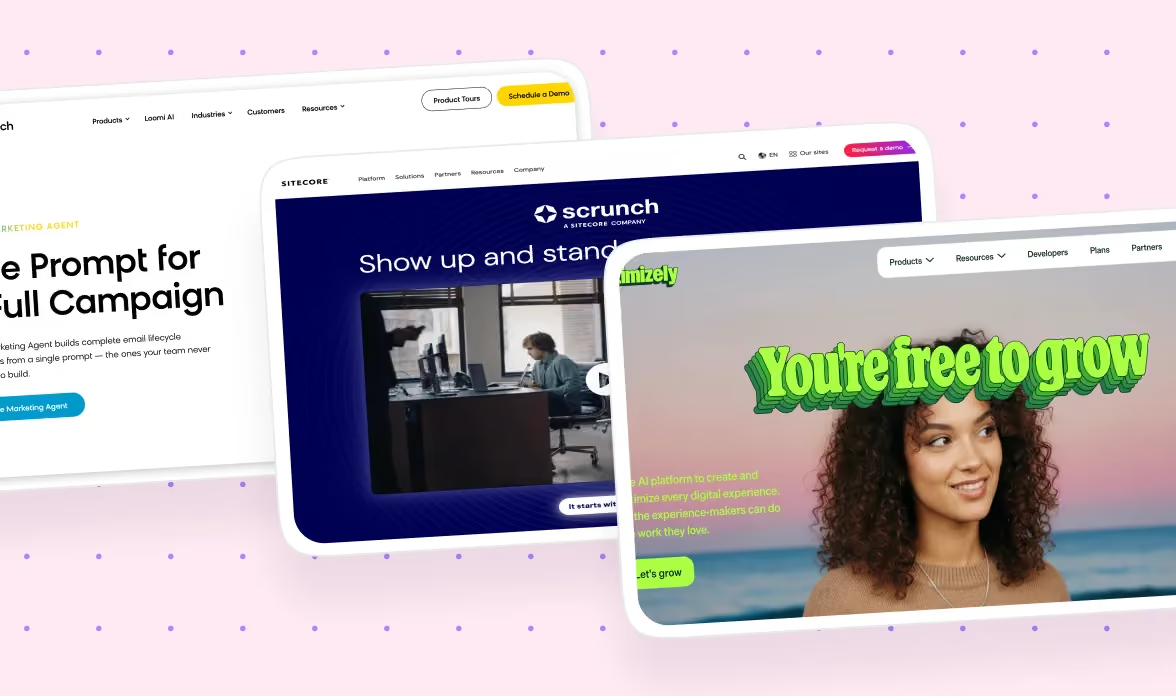
| Sitecore | Composable (XM Cloud) | Enterprises in the Microsoft technology stack | $$$ | Agentic Studio | Strong .NET developer community |
| Contentful | Composable (headless) | Developer-led organizations building custom experiences | $$ - $$$ | Palmata | Leading headless/API-first platform |
| Bloomreach | Composable | Ecommerce-heavy organizations | $$ - $$$ | Loomi AI | Best commerce search and merchandising |
| Liferay | Open source / Enterprise | Organizations wanting open-source flexibility with enterprise support | $$ | AI-assisted content | Strong portal and intranet capabilities |
| Acquia | Composable (Drupal-based) | Organizations invested in Drupal with enterprise needs | $$ - $$$ | Acquia AI | Open-source foundation (Drupal) |
| Contentstack | Composable (headless) | Enterprises wanting headless with strong support | $$ - $$$ | AI Assist | MACH-certified, strong developer tools |
| Storyblok | Composable (headless) | Mid-market companies wanting visual editing + headless | $$ | AI features | Best visual editor in headless category |
| Builder.io | Composable (headless) | Marketing teams wanting visual, no-code content creation | $ - $$ | AI generation | Strongest no-code builder |
| Kentico | Hybrid | Mid-market organizations wanting DXP capabilities without enterprise complexity | $$ | AI content features | Good balance of power and usability |
| Magnolia | Composable | Enterprises wanting a modular, integration-friendly platform | $$$ | AI authoring tools | Strong integration architecture |
A note on pricing tiers in this table: The dollar signs represent approximate annual licensing costs: $ is under $10,000/year, $$ is $10,000 to $50,000/year, $$$ is $50,000 to $200,000/year, and $$$$ is 200,000 to $500,000+/year. Platforms listed as "$ - $$$" span both tiers depending on your plan and usage level. Keep in mind that these are license fees only. Gartner data suggests that 85% of total DXP program cost goes to integrations, migration, training, and customization, so a platform at $100K/year in licensing could easily cost $300K to $500K in the first year when you factor in everything else.
Adobe Experience Cloud
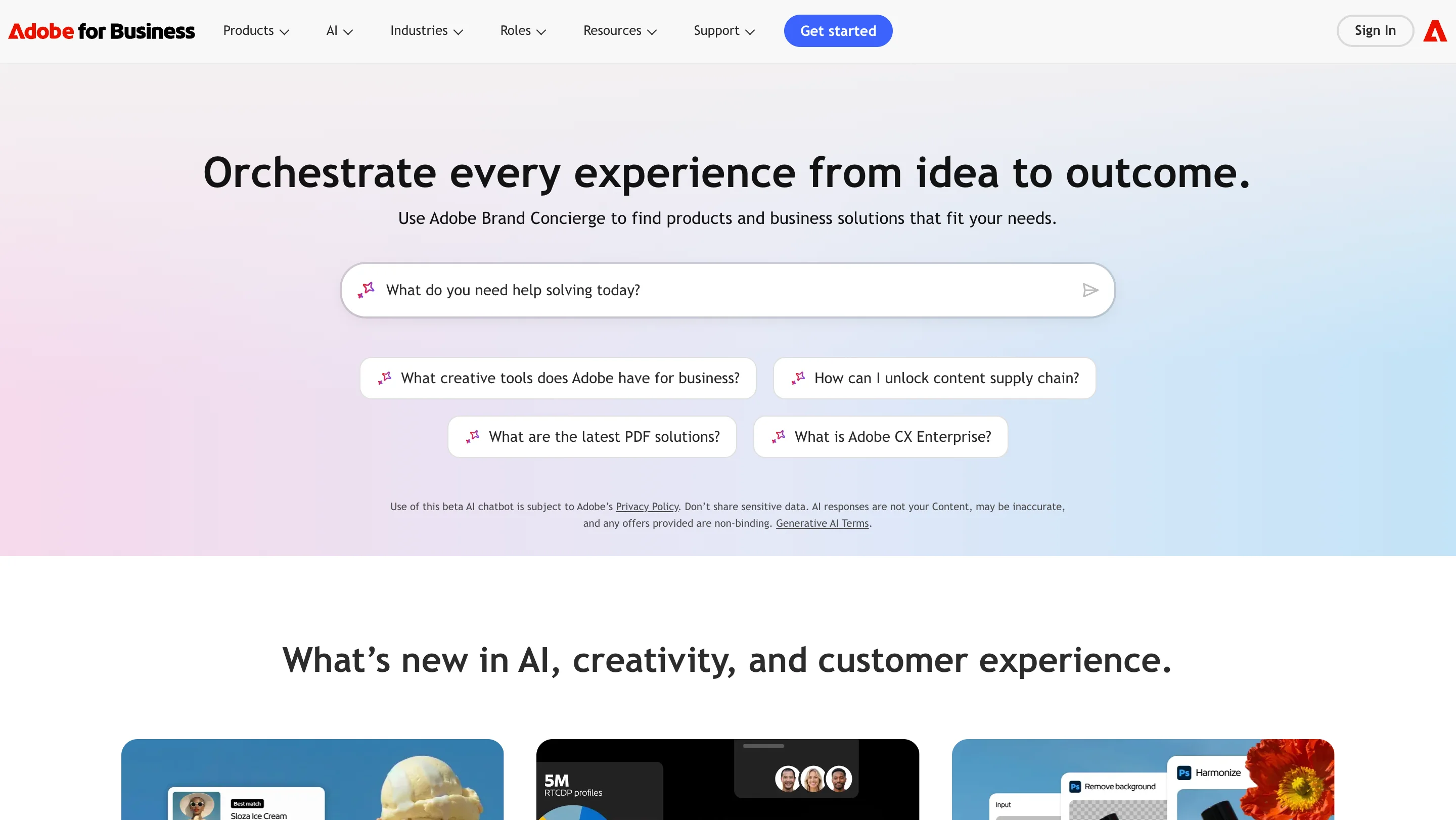
Adobe remains the largest player in the DXP market, offering the most comprehensive suite of integrated tools (AEM, Target, Analytics, Campaign, Commerce). The platform is best suited for large enterprises that have already invested in Adobe's product suite and have the budget and technical resources to manage it. Adobe's AI capabilities (Firefly for content generation, Sensei for personalization) are strong, but the total cost of ownership is the highest in the category.
Optimizely
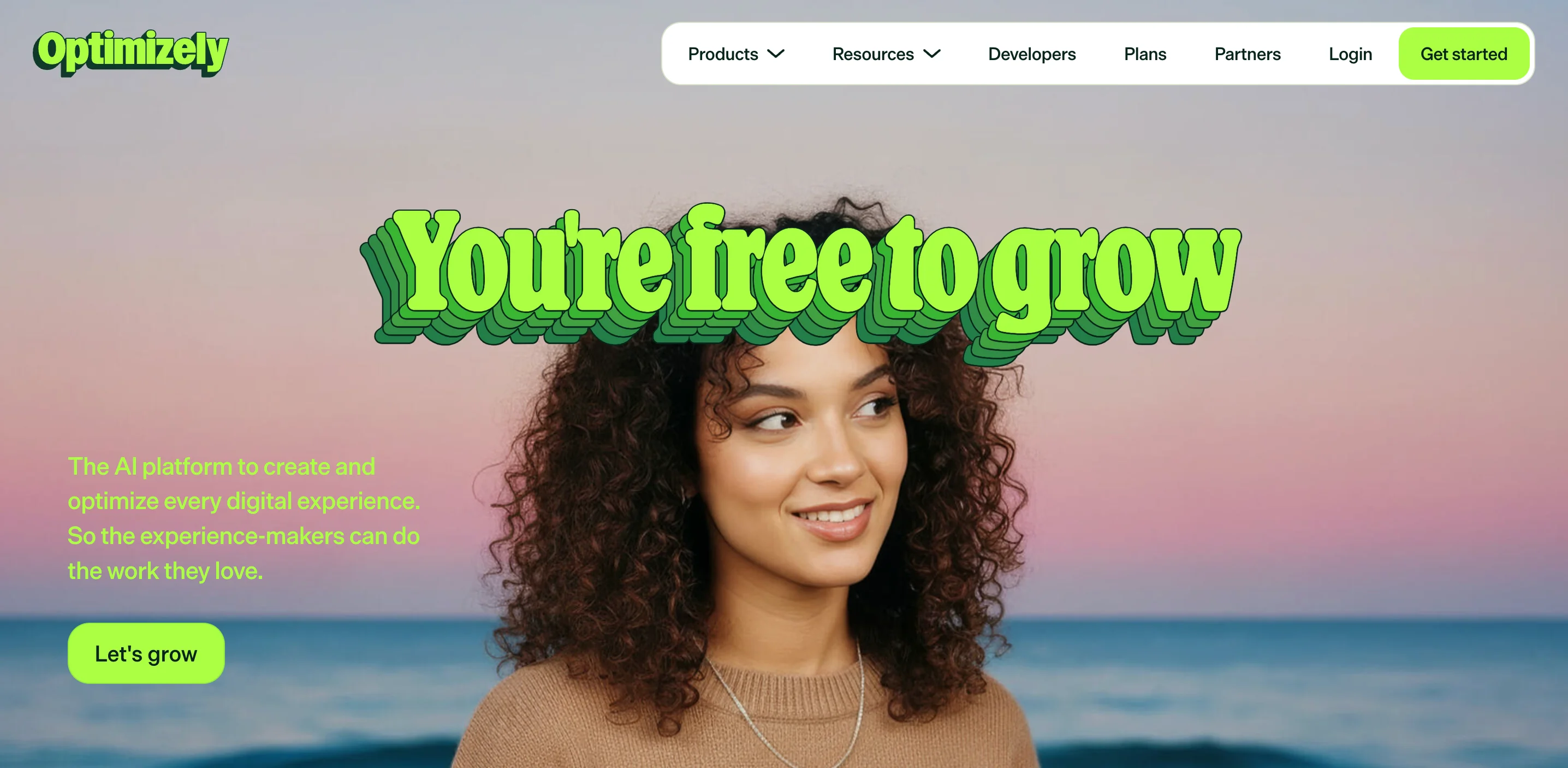
Optimizely has evolved from an experimentation platform into a full DXP, and in recent Gartner evaluations it has gained ground on Adobe. The platform's strength is its experimentation heritage, which means testing and optimization are built into everything rather than bolted on. The Opal AI assistant handles content creation, optimization, and campaign management. Optimizely is a good fit for organizations that want data-driven optimization at the core of their digital experience strategy.
Sitecore
Sitecore has undergone a significant transformation, moving from a monolithic .NET platform to a composable cloud architecture with XM Cloud. The Agentic Studio AI feature positions Sitecore for the agentic AI trend. Sitecore is strongest for enterprises already invested in the Microsoft technology stack and those who value a large developer community and partner network.
Contentful
Contentful is the leading headless CMS that has expanded into DXP territory. Its API-first, composable approach makes it the preferred choice for developer-led organizations that want maximum flexibility in how they build and deliver digital experiences. The Palmata AI suite handles content creation, translation, and optimization. Contentful works best when your team has strong technical capabilities and wants to build custom rather than configure pre-built.

Bloomreach
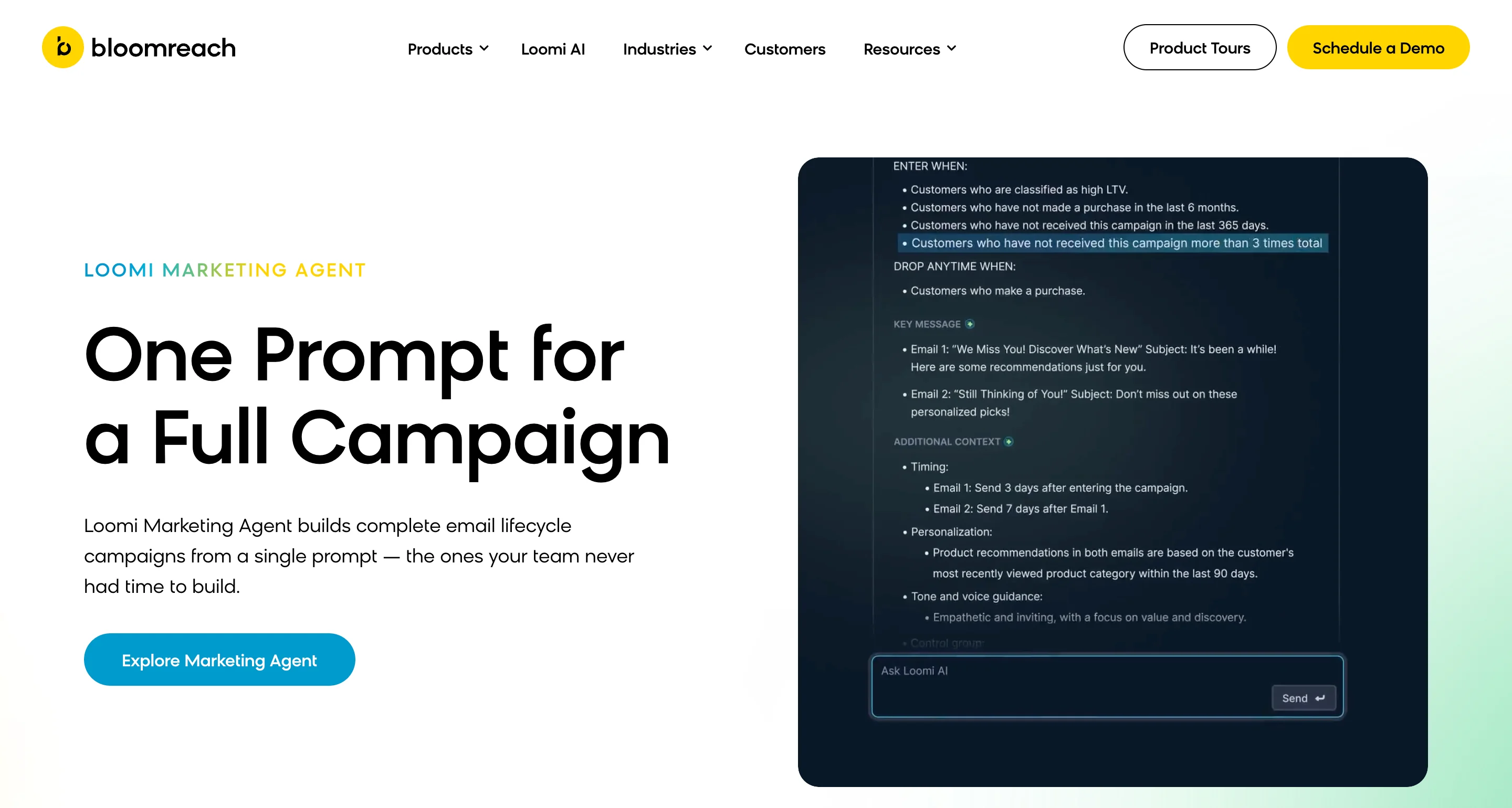
Bloomreach is the strongest DXP for ecommerce-focused organizations. Its Loomi AI powers product discovery, search, merchandising, and personalized recommendations. If your digital experience centers around a product catalog and buying journey, Bloomreach offers capabilities that general-purpose DXPs don't match.
Understanding Gartner Magic Quadrant and Forrester Wave for digital experience platforms
If you've started evaluating DXPs, someone has probably mentioned the Gartner Magic Quadrant or the Forrester Wave. These analyst reports heavily influence enterprise purchasing decisions, so it's worth understanding what they actually measure and how to use them without over-relying on them.
Gartner Magic Quadrant
Gartner evaluates DXP vendors across two dimensions: "completeness of vision" (strategy, innovation, market understanding) and "ability to execute" (product, sales, customer experience). Vendors are placed into four quadrants: Leaders, Challengers, Visionaries, and Niche Players.
In the most recent evaluations, Optimizely has gained significant ground, and the traditional dominance of Adobe and Sitecore has become less clear-cut. This shift reflects the market's move toward composable architectures and experimentation-led approaches.
Forrester Wave
Forrester evaluates DXPs on current offering strength, strategy, and market presence. The Wave format ranks vendors as Leaders, Strong Performers, Contenders, or Challengers. Forrester's evaluation tends to emphasize orchestration (how well the platform coordinates experiences across touchpoints) rather than just feature breadth.
How to use analyst reports wisely
These reports are useful starting points, but they shouldn't be your only decision tool. They evaluate vendors on criteria that may not match your specific requirements, they're updated infrequently (the market moves faster than annual report cycles), and vendor positions can shift based on methodology changes rather than actual product improvements. Use them to build a shortlist, then evaluate that shortlist against your own requirements.
The rise of agentic AI in DXPs in 2026
If there's one trend that defines the DXP market in 2026, it's the shift from generative AI to agentic AI. This distinction matters because it changes what a DXP can do for your organization.
Generative AI, which became mainstream in 2023-2024, focuses on content creation. It helps teams write copy, generate images, translate content, and summarize documents. Most DXPs now include generative AI features, and they're useful but incremental. They speed up production without fundamentally changing how digital experiences work.
Agentic AI is different. Instead of waiting for a human to give it a task, an agentic AI system can autonomously orchestrate workflows, run experiments, analyze results, and optimize experiences based on what it learns. In a DXP context, this means AI agents that can test different content variations across audience segments, identify which personalization rules are working and which aren't, coordinate campaigns across channels, and optimize conversion paths without human intervention at every step.
Irina Guseva from Gartner has described this shift directly, stating that the DXP as we know it will cease to exist in the next couple of years and that this is an inflection point demanding categorical transformation. Joe Cicman from Forrester has put it more practically, advising that if your digital experience platform is still a collection of parts, you shouldn't just add more features but instead let agents orchestrate the connections between systems.
The major DXP vendors are responding. Optimizely's Opal, Contentful's Palmata, and Sitecore's Agentic Studio are all early implementations of agentic capabilities. The practical question for buyers is not whether agentic AI will matter (it will) but whether the platform you choose today will be able to support it as these capabilities mature.
Research from Gartner suggests that by 2027, 40% of organizations will fail to deliver impactful digital customer experiences because they lack AI-driven intelligent content coordination. That's a meaningful risk for organizations choosing platforms today without considering their AI roadmap.
How to choose a digital experience platform
Choosing a DXP is one of the most consequential technology decisions a marketing or digital team can make, because you'll live with the platform (and its limitations) for years. Here's a vendor-neutral framework for making that decision well.
1. Define your business requirements first
Start with what you need to achieve rather than which features sound impressive in a demo. Map your actual digital experience goals (personalization, omnichannel publishing, global content operations, commerce integration) and rank them by business impact. This prevents you from buying a platform optimized for capabilities you don't need.
2. Assess your current tech stack
Map every tool your organization currently uses for content, data, analytics, marketing automation, CRM, and commerce. Identify what's working, what's redundant, and what's missing. The goal is to understand whether you need a platform that replaces everything (monolithic) or one that connects with what you already have (composable).
3. Decide composable vs. monolithic
Use the framework from earlier in this guide. Factor in your team's technical capability, your integration budget, and your tolerance for vendor dependency. If your team has strong developers and wants maximum flexibility, composable is likely the better fit. If you want a single vendor relationship and faster initial deployment, monolithic may make more sense.
4. Evaluate 3-5 vendors against your actual requirements
Use the comparison table in this guide as a starting point, but test each platform against your specific use cases. Request demos that address your scenarios, not the vendor's standard presentation. Ask vendors to demonstrate how they handle your most complex requirement, not their easiest one.
5. Calculate total cost of ownership
License fees are just the beginning. Include implementation costs, integration work (which typically accounts for 85% of total effort and cost), staff training, ongoing maintenance, and the cost of migrating from your current system. A platform that's cheaper to license but requires six months of integration work may cost more in the end than a pricier platform that integrates out of the box.
6. Run a proof of concept
Before committing to a multi-year contract, test the platform with a real project. Most DXP vendors offer trial environments or limited deployments. Use this to validate that the platform actually works for your team, not just for the vendor's demo environment.
7. Plan for organizational change
DXP adoption fails most often when organizations buy the technology but don't change their content operations, workflows, or team structure to use it effectively. Plan for training, process redesign, and the cultural shift from "we publish pages" to "we orchestrate experiences." Without organizational readiness, even the best DXP becomes expensive shelf-ware.
"Vendor comparison tables are useful, but the real question isn't which platform has the most features. It's which one your team will actually use well. A simpler tool used to its full potential will always outperform a powerful tool used at 20% capacity."

DXP implementation challenges
Digital experience platform vendors are understandably optimistic about implementation. The reality is more complex, and going in with realistic expectations helps you plan better and avoid the most common pitfalls.
Integration complexity is the biggest cost driver
Research consistently shows that 85% of effort and cost in a DXP program goes to integrations, not the platform itself. Connecting the DXP to your CRM, commerce platform, data warehouse, marketing automation, and existing content systems takes more time and budget than most teams anticipate. Build integration time and cost into your plan from the start, not as an afterthought.
Implementation timelines are longer than vendor estimates
Enterprise DXP implementations typically take 6 to 18 months, depending on complexity. Vendors will often quote faster timelines based on a basic deployment, but real-world projects that include data migration, integration, customization, and training consistently take longer. Plan for the realistic timeline, not the optimistic one.
Content migration is more painful than expected
Moving content from a legacy system to a new DXP involves more than copying and pasting. Content structures change, metadata needs to be mapped, redirects need to be configured, and quality needs to be verified across hundreds or thousands of pages. Budget dedicated time for migration rather than treating it as a minor task.
Organizational change management is essential
The technology is the easy part. Getting teams to adopt new workflows, use personalization features, follow governance rules, and think in terms of "experiences" rather than "pages" is the hard part. Without dedicated change management, the DXP becomes an expensive CMS because teams default to what they know.
The "pilot trap"
Many organizations run a successful DXP pilot on a single site or campaign and then struggle to scale it across the organization. The pilot succeeds because it gets focused attention and resources. Scaling requires different skills, including standardized processes, reusable components, and cross-team coordination. Plan your scaling strategy before you start the pilot.
Vendor lock-in is real (especially with monolithic platforms)
Switching DXP vendors is expensive and disruptive. Once your content, integrations, and workflows are built on a platform, the cost of migrating away creates a strong incentive to stay even if the platform stops meeting your needs. Composable architectures reduce this risk (you can swap individual components) but don't eliminate it entirely.
Is Webflow a DXP?
Not by itself. Webflow is primarily a visual website platform and CMS. It doesn't include built-in personalization, customer data management, omnichannel delivery, or the other capabilities that define a full DXP.
But here's where it gets interesting. When integrated with tools like customer data platforms (Segment, Lytics), personalization engines (Ninetailed, Mutiny), analytics platforms (Google Analytics 4, Amplitude), and marketing automation (HubSpot, Marketo), Webflow can form the content management and design layer of a composable DXP architecture. This approach gives mid-market organizations enterprise-level capabilities without the cost and complexity of a traditional DXP suite.
This composable Webflow stack is increasingly popular with companies that want a beautiful, fast, designer-controlled website combined with data-driven personalization and analytics. It works best for mid-market companies with one primary website, growing digital ambitions, and a team that values design flexibility and speed of iteration over the breadth of an enterprise platform.
At magier, we work with Webflow as the design and content layer of these kinds of composable stacks. If your organization is exploring whether a full DXP or a composable approach is the right fit, we can help with the design and Webflow side of the equation.
Real DXP results and case studies
The value of a DXP (or a well-designed composable stack) becomes clearest when you look at measurable outcomes. Here are results from both enterprise DXP deployments and composable Webflow projects that demonstrate what good digital experience investment looks like.
Enterprise DXP case studies
| Company | Platform | Result |
|---|---|---|
| Calendly | Optimizely | 11.2% increase in lead conversions |
| Australian Red Cross | Optimizely | 37% increase in average order value |
| Travel industry (aggregate) | Adobe | AI traffic to travel sites surged 200% |
Composable stack case studies (magier clients)
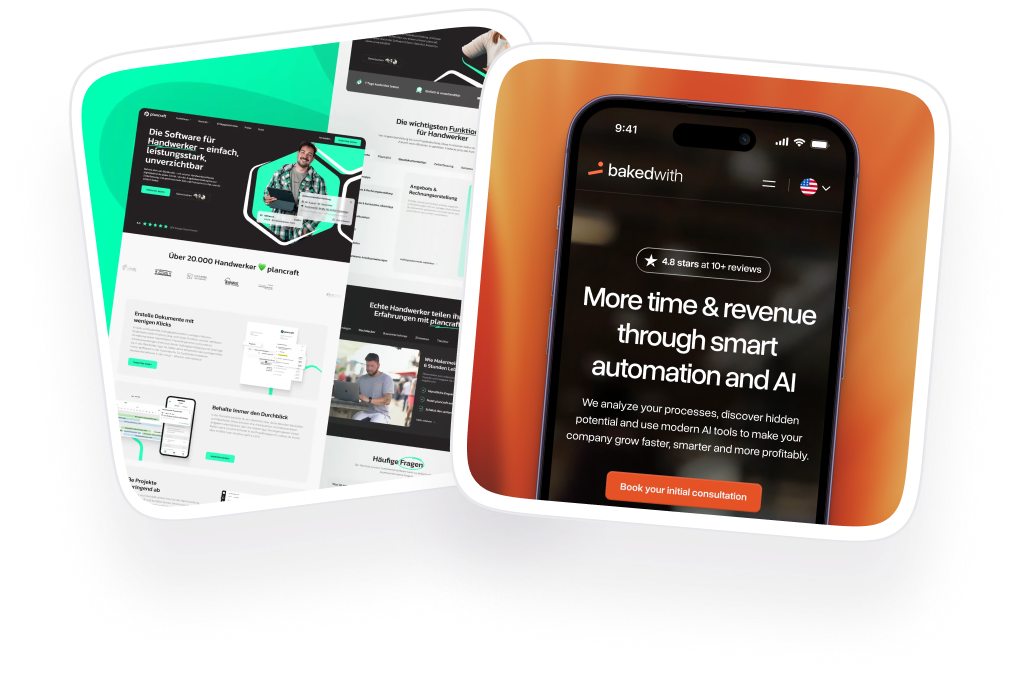
Plancraft is a VC-backed SaaS startup that helps 20,000+ European craftsmen manage their business operations. When their website couldn't keep up with the company's growth, they partnered with magier to redesign and migrate the entire site to Webflow. The project involved migrating 200+ URLs, rebuilding the information architecture, and optimizing conversion paths. The results were a 20% increase in conversion rate, a 25% increase in time on site, and a website that finally matched the company's maturity as one of Europe's leading construction tech startups.
Kertos is one of Europe's leading AI compliance platforms, trusted by companies like Personio and Flink. Their old WordPress site was slow, hard to manage, and out of sync with the brand. magier handled a complete redesign and migration to Webflow over 4 months. The result was 2x website traffic and a measurable increase in inbound leads, proving that a modern CMS with strong design can deliver enterprise-level results without the overhead of a traditional DXP.
These case studies illustrate an important point. Whether you invest in an enterprise DXP or a composable stack built around a modern CMS, the ROI comes from the same place: better experiences that convert more visitors into customers.
Final thoughts
Digital experience platforms are powerful tools, but they're not for everyone. The right choice depends on your organization's complexity, your content operations maturity, and your digital ambitions. An enterprise managing dozens of websites across multiple countries with advanced personalization needs is a strong DXP candidate. A growing company with one primary website and a lean team might get better results from a composable stack built around a modern CMS like Webflow.
The most important advice in this entire guide is this: start with your requirements, not with vendor marketing. Define what you need to achieve for your customers, map the capabilities required, and then evaluate platforms against those specific needs. The best DXP for your organization is the one that fits your actual situation, not the one that won the latest analyst award.
If your team needs help with the design and Webflow layer of a digital experience stack, magier can help. You can see how we work on our web deveopment services page.
FAQ
The most significant DXP trends in 2026 are agentic AI (autonomous AI agents orchestrating experiences rather than just generating content), composable architectures, first-party data strategies (as third-party cookies decline), omnichannel delivery, and optimization for AI-driven search and assistant experiences.
The Gartner Magic Quadrant is an analyst report that evaluates DXP vendors on two dimensions: completeness of vision and ability to execute. Vendors are categorized as Leaders, Challengers, Visionaries, or Niche Players. The report is widely referenced in enterprise purchasing decisions but should be used as a starting point for evaluation, not as the final verdict.
DXP costs vary widely by platform and organization size. Mid-market composable platforms might cost $25,000 to $100,000 per year in licensing, while enterprise suites like Adobe can exceed $500,000 annually. Implementation costs often double or triple the license fee, with integrations accounting for the largest share. Total cost of ownership over three years is the right metric to evaluate, not annual license fees alone.
The leading DXP vendors in 2026 include Adobe Experience Cloud, Optimizely, Sitecore, Contentful, Bloomreach, Liferay, Acquia, Contentstack, and Storyblok. The best choice depends on your organization's size, technical capabilities, budget, and specific digital experience requirements. See our vendor comparison table above for a detailed breakdown.
Usually not. Businesses with a single website and simple content needs get more value from a modern CMS like Webflow, WordPress, or HubSpot. A DXP becomes worth the investment when content operations, channels, personalization requirements, and integrations grow to the point where a standalone CMS can't keep up.
A composable DXP is built from specialized, API-connected tools rather than relying on a single all-in-one vendor. For example, you might combine a headless CMS (Contentful), a CDP (Segment), a personalization engine (Ninetailed), and an analytics platform (Amplitude) into a flexible stack where each component can be swapped independently.
A CMS focuses on creating and publishing website content. A DXP goes further by combining content management with personalization, customer data integration, omnichannel delivery, analytics, and AI capabilities. A CMS manages content, while a DXP manages the entire digital experience.
.avif)