Top TYPO3 Alternatives in 2026: Options of Modern CMS for Businesses
TYPO3 is one of the most important enterprise CMS platforms in German-speaking markets. The system enables efficient management of massive page structures, the assignment of complex user permissions, and native multilingual content. For many mid-sized marketing websites, however, this feature set is larger than what's actually needed. Webflow, WordPress, Contentful, and other TYPO3 alternatives can speed up day-to-day work, make it more purposeful, and/or reduce technical dependencies.
While there are solid arguments in favor of TYPO3, they come alongside high demands for setup and design, often labor-intensive version upgrades, and the hard-to-access configuration language TypoScript. As a result, many companies remain dependent on specialized developers. Even minor changes to components, templates, or page types quickly end up on their desks. New campaign pages take longer, budgets go toward maintenance, and marketing has less control.
Modern CMS platforms for mid-sized businesses take different, more flexible approaches. Whether a solution is a better fit depends less on the maximum number of features. What really matters is your actual workflow and how much technical responsibility your team is willing and able to take on. In this comparison, you'll learn which TYPO3 alternatives tend to serve mid-sized and larger companies more effectively and which solutions are best suited for different needs.
The 6 best TYPO3 alternatives in 2026
The CMS market now offers a wide range of mature systems with clear strengths that may be a better fit for specific requirements than TYPO3. A mid-sized manufacturer with one main company website, five language versions, and a few landing pages doesn't automatically need the same complex architecture as a government ministry with hundreds of editors.
Some solutions give marketing teams maximum freedom, while others make it possible to distribute content to many channels at the same time. Data privacy and GDPR compliance are also becoming increasingly important. Even smaller projects can benefit from TYPO3 alternatives because they don't have to fund an oversized technical foundation.
The following CMS platforms were chosen to cover the widest possible range of industries and needs.
Alternative 1: Webflow gives marketing teams more control over the website
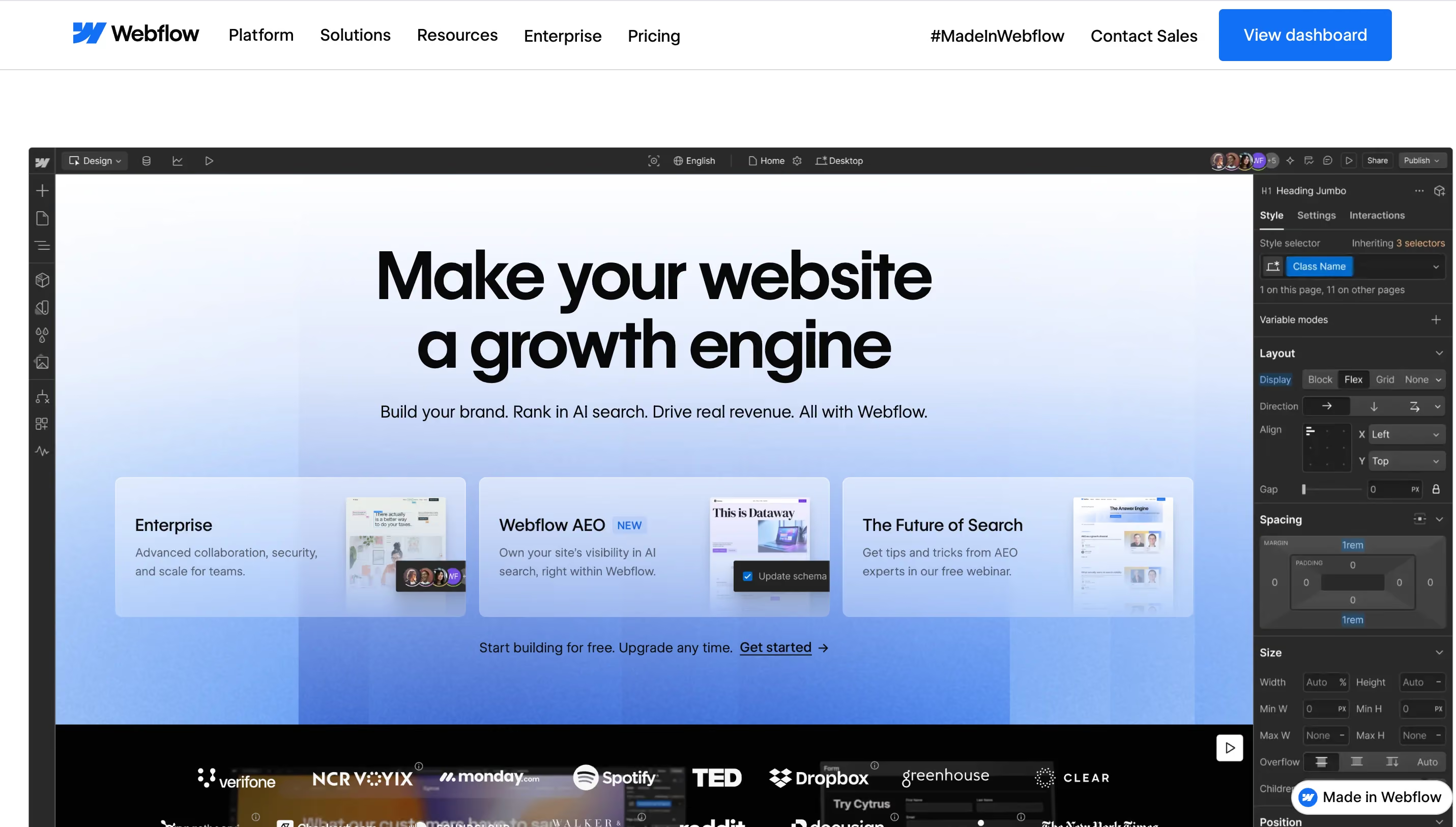
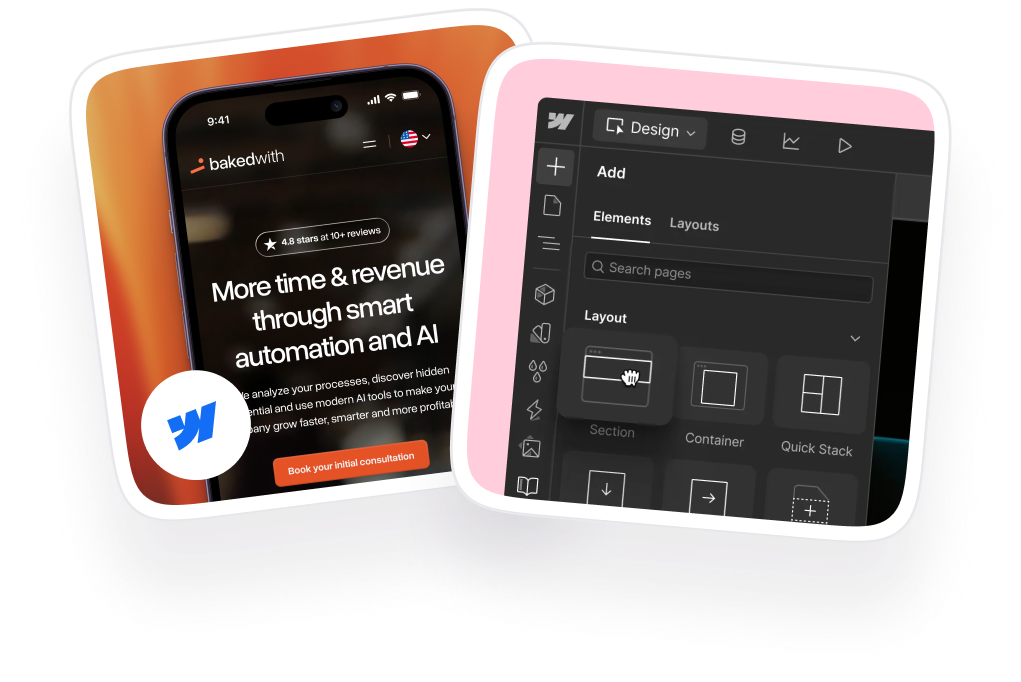
Design, CMS, reusable components like headers, footers, teasers, contact sections, forms, and call-to-action blocks, and hosting all live in Webflow within a shared working environment. Designers build responsive pages visually without having to code every interface from scratch. Editors manage content through structured CMS Collections or create pages from approved building blocks.
Especially for typical business websites, this dramatically shortens the path from idea to publication. Marketing teams can build landing pages, service pages, or campaigns faster while incorporating important SEO fundamentals right into the structure. On that topic, we also recommend our guide "Designing a website for SEO."
Developers or agencies like magier remain important for integrations, complex logic, and technical edge cases. But they're needed less often for everyday changes. Check out our comparison of the 15 best Webflow development agencies in 2026 for more.
Webflow Enterprise adds features for larger and internationally operating organizations. These include single sign-on, SCIM user provisioning, custom roles, granular permissions, activity logs, security headers, and contractual service levels. For multilingual websites, Webflow Localization provides dedicated language versions of individual pages, CMS content, images, and SEO settings.
Key features:
- Visual designer with responsive layouts and CSS-based styling
- Webflow CMS with Collections, reference fields, and dynamic pages
- Reusable Components and Shared Libraries
- Page building with approved components
- Staging, publishing permissions, and role-based access
- Webflow Localization for language and regional variants
- SSO, SCIM, Audit Log API, and custom roles in Enterprise
- Integrated hosting, CDN, SSL, and DDoS protection
Ideal for: Mid-sized companies and larger organizations that want to maintain and evolve a high-quality, potentially multilingual marketing website more quickly.

{{freebie}}
Alternative 2: WordPress has the largest extension ecosystem
.avif)
Almost any typical business website can be built with WordPress. The open-source CMS has an enormous selection of themes, plugins, form solutions, SEO tools, and integrations. Companies also easily find developers and agencies with WordPress experience, since it's the most widely used CMS in the world.
That freedom comes with responsibility, though. Quality and security depend heavily on the selection of extensions, the hosting, and the maintenance process. A lean WordPress project can work well and be managed entirely in-house. An installation with many plugins and custom APIs, on the other hand, can quickly become hard to manage. Hosting and therefore a solid foundation for GDPR compliance can be freely chosen.
Key features:
- Gutenberg editor with blocks and reusable patterns
- More than 60,000 free plugins and a huge theme selection
- REST API for external applications
- Multisite capability for website networks
- Extensible roles and user permissions
- Multilingual support via plugins like WPML or Polylang
- Free choice of hosting provider and server location
Ideal for: Small to mid-sized companies looking for a flexible standard CMS with a large service provider ecosystem that gives the team plenty of hands-on control. WordPress works well when a reliable maintenance partner or an internal IT team handles the technical upkeep.
Alternative 3: Storyblok combines the headless principle with visual editing

As a headless CMS, Storyblok separates content from the visible frontend. Editors manage structured content in the background, while developers deliver it via APIs to websites, apps, shops, or any other digital channels. A visual editor shows changes directly as a preview.
This solves a common problem with traditional headless systems: marketing doesn't work exclusively in abstract input forms. The enormous technical freedom of decoupling that Storyblok (and similar solutions) offers over TYPO3 remains fully intact. The frontend can be built with Next.js, Nuxt, or any other framework.
Key features:
- Headless CMS with content delivery and management APIs
- Visual editor with live preview
- Reusable content components
- Multilingual content and region-specific variants
- Roles, workflows, and approvals
- Content delivery to websites, apps, and other channels
- Selectable data regions in higher-tier plans
Ideal for: Mid-sized and large companies with multiple channels, custom frontend requirements, and a strong internal development team. For a single marketing website, the headless setup is often more technical effort than necessary.
Alternative 4: Contentful manages content for many digital products
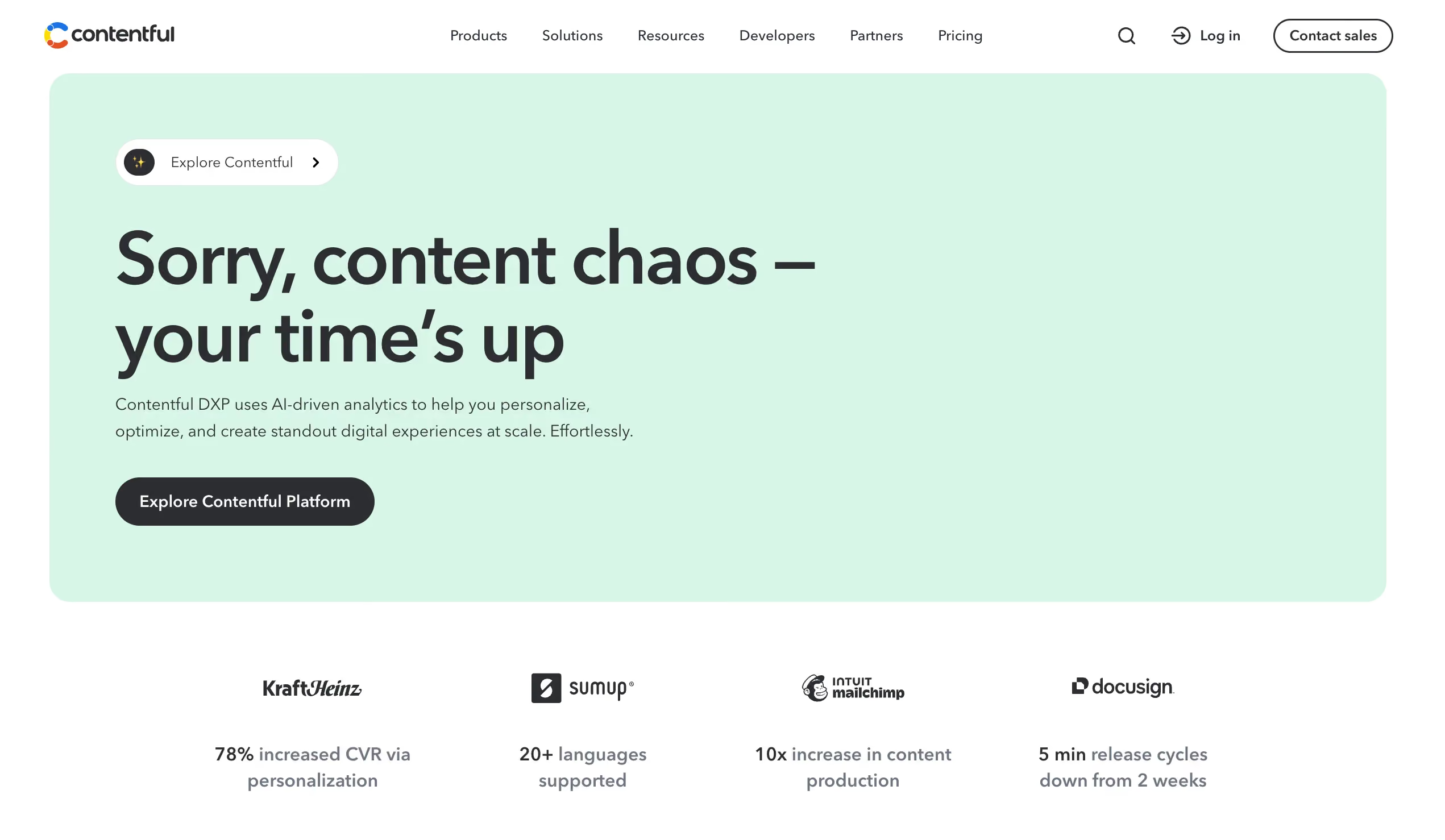
Contentful is one of the best-known headless platforms for structured content management. Content is created as independent data models and then delivered via APIs to various applications, similar to Storyblok. This is particularly well suited for typical omnichannel companies like retail chains, manufacturers with international product ecosystems, media companies, or platform operators with multiple digital distribution channels.
The focus is clearly on the technical content infrastructure. Editors manage content centrally in clearly structured input fields, coordinate changes within the team, and can schedule publications for a later time per channel. The learning curve is relatively steep, and the visible website is built separately. You need your own frontend that's operated independently. More extensive development tasks are almost always part of the picture.
Key features:
- Structured content models
- APIs and SDKs for various programming languages
- Roles, tasks, and editorial collaboration
- Multiple languages and regions
- Scheduled publishing
- Extensibility via apps and integrations
- EU data residency as an add-on in the premium offering
Ideal for: Large companies, platform operators, and product teams that distribute content to many channels and applications. Mid-sized marketing teams without in-house developers usually benefit more from an integrated platform like Webflow.
Alternative 5: Statamic combines a lean CMS with Laravel
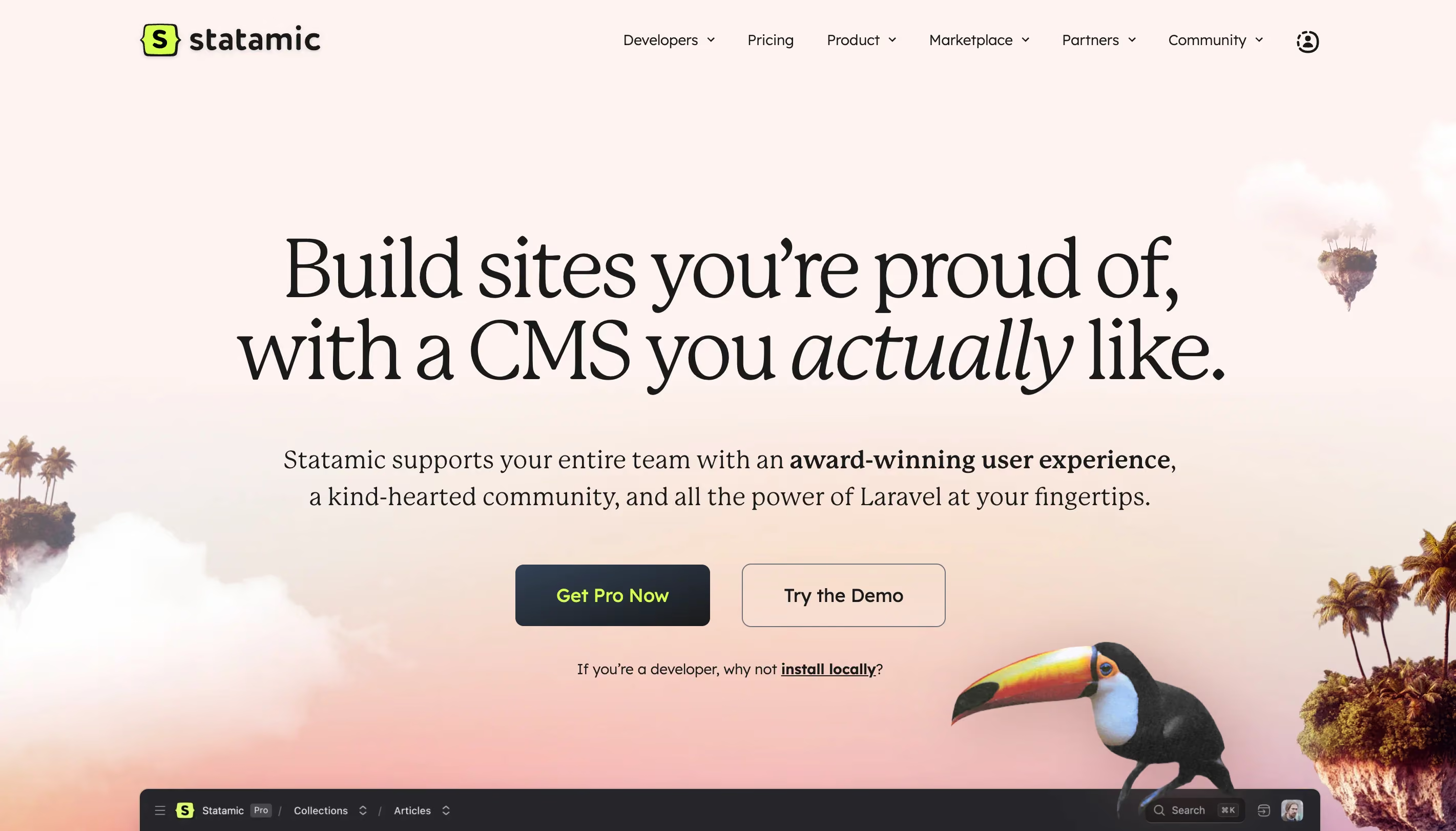
Statamic is built on the PHP framework Laravel and can store content without a traditional database using flat files. Alternatively, it can also run with a database. This gives developers full control over hosting, code, and data structure.
Editors can manage text, images, downloads, and language versions in clearly structured input fields without needing to work directly in code or complicated page structures. It's relatively simple to create separate content versions for different languages. Statamic often feels leaner than TYPO3 or Drupal but still requires a custom-built frontend and Laravel expertise.
Key features:
- Laravel-based architecture
- Flat-file or database operation
- Flexible blueprints for content models
- Roles and unlimited users in the Pro plan
- Revisions, drafts, and content history
- Multisite and multilingual support natively
- REST API and GraphQL
- Free choice of hosting and server location
Ideal for: Small and mid-sized companies with a Laravel partner that want high technical control and the freedom to choose their own hosting.
Alternative 6: Drupal is built for demanding open-source projects
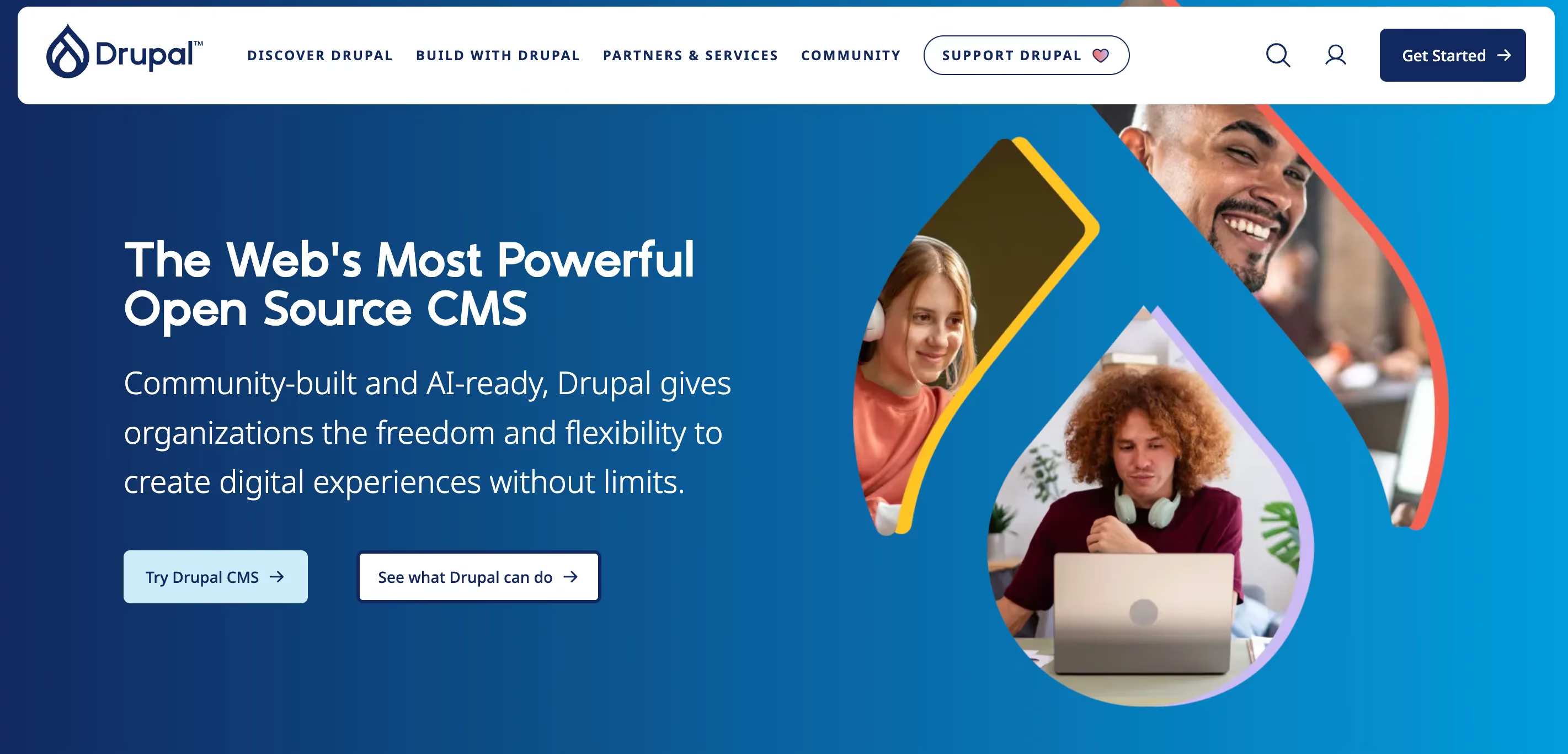
Flexible content types, finely tuned user permissions, and numerous integration options make Drupal a very powerful open-source CMS. Organizations can self-host the system and customize it to their own processes.
Compared to TYPO3, Drupal is more widely used internationally and more consistently oriented toward API-based, decoupled applications. This makes it easier to connect apps, portals, and custom frontends. Drupal also makes it easier to build accessible websites, because many features and default outputs are already designed for keyboard navigation, screen readers, and clean HTML structures. Setup, updates, and operations should still be handled by an experienced team or a specialized agency, though.
Key features:
- Flexible content types and taxonomies
- Granular roles and permissions
- Multilingual support in the core
- Multisite capability
- API-first architecture
- Extensions via modules
- Free choice of hosting
- No license costs for the software
Ideal for: Large organizations, associations, universities, and public institutions with custom workflows. Drupal is less suitable when fast marketing autonomy is the primary goal, but its API-first orientation gives it a strong argument over TYPO3 for certain use cases.
Another popular choice is Framer. If you're thinking about it, read our comparison blog.
Top CMS alternatives to TYPO3 in a direct comparison
Prices for Webflow, Contentful, and Statamic reflect the publicly listed provider prices as of June 2026. Taxes, additional users, localization, bandwidth, hosting, or custom enterprise services can change the total price.
- For small companies, Webflow, WordPress, and for more specialized needs, Statamic are often good TYPO3 alternatives.
- For mid-sized businesses, Webflow is also frequently a practical choice for typical marketing websites. Storyblok can be the right fit for headless projects.
- Large organizations with complex content structures or multi-channel marketing should take a closer look at Webflow Enterprise, Contentful, or Drupal.
You'll find more useful details on specific use cases in our comparison of Webflow vs. TYPO3.
Final thoughts
Powerful multisite features, native multilingual support, and finely granular user permissions make TYPO3 still relevant for large organizations. But there's an important question to consider: does your company really need that depth in day-to-day work?
As we've already highlighted in our comparisons of the best WordPress alternatives and Contentful alternatives, the most feature-rich CMS is rarely the best choice by default. A smaller but more focused solution can simplify processes, lower costs, and give your marketing more essential freedom. Teams can respond faster to critical developments, publish relevant content sooner, and more easily adapt the website to growth and new markets.
Webflow is often the strongest TYPO3 alternative for modern marketing websites in the mid-market segment. With integrated design, structured CMS features, managed hosting, and Webflow Enterprise, the platform covers a very wide range of needs. The spectrum ranges from lean startup websites to extensive, multilingual corporate presences with granular roles and high requirements for compliance and GDPR. The technical and editorial complexity remains comparatively manageable throughout.
WordPress is a good fit when budget, extensibility, and a large service provider ecosystem are priorities. Storyblok works well for companies looking for a modern headless CMS with a visual content preview. Contentful plays to its strengths in extensive digital product landscapes. Statamic is worth considering if you have Laravel expertise and value a lean system with free hosting choice. Drupal remains an option for large open-source portals with custom processes.
"From over 100 website projects, we know that a migration is never just a data export from one CMS to another. Especially with TYPO3 installations that have grown over years, you should carefully review (or have someone review) content, URLs, forms, integrations, language versions, and user roles before making the switch. An experienced agency like magier can help you sort out outdated components and unnecessary custom solutions that no longer add value."

FAQ
TYPO3 often works well for very large website networks, complex permissions, and heavily customized enterprise processes. Webflow is better suited for modern corporate sites and marketing websites where flexible maintenance by an internal team is important. The decision shouldn't be based on company size alone but rather on actual workflows and technical requirements.
The effort depends primarily on the number of pages, content types, languages, forms, and integrations. Content can be partially transferred to Webflow CMS via CSV. However, templates, components, and page designs need to be rebuilt. Redirects, metadata, and tracking also require a clean migration so that visibility and existing campaigns aren't lost. There's no magic button to transfer everything. Given the complexity, it usually makes sense to bring in an experienced Webflow expert like magier.
Yes, Webflow Enterprise is designed for larger companies with multiple teams and higher security requirements. Features like SSO, SCIM, custom roles, publishing workflows, activity logs, and contractual service levels support comprehensive governance needs. For highly complex portals, internal business applications, or fully custom backend processes, a headless or open-source system may still be a better fit.
No CMS is automatically GDPR-compliant just through its base features. What matters is the hosting, the data processing agreement, the services used, forms, cookies, and the technical configuration. WordPress, Statamic, and Drupal can be hosted with European providers, which creates a strong GDPR foundation. Storyblok and Contentful offer EU data regions in certain plans. Webflow provides a DPA but does not guarantee fully EU-only hosting in its standard offering.
For many mid-sized marketing websites, Webflow is the best TYPO3 alternative in 2026. The system reduces ongoing technical maintenance and gives marketing teams more control over pages and content. For cross-channel projects, Storyblok may be a better fit. WordPress is a good choice when a large plugin ecosystem and low entry costs are the main priorities.


.avif)
.avif)